WiFi6 Cellular Internet Router
Official Store Deal
Expert Analysis Overview
The WiFi6 Wireless Router is a budget-conscious cellular-enabled Networking device tailored for users prioritizing flexible internet access and basic smart home connectivity over bleeding-edge wireless speeds. This unit positions itself as an accessible solution for scenarios where traditional broadband is unavailable or as a reliable backup system. Its core functionality revolves around converting a 4G LTE signal into a Wi-Fi hotspot, a practical approach for mobile connectivity needs.
This router's primary appeal lies in its integrated SIM card slot, enabling it to function as a mobile broadband gateway. Users insert a standard SIM card, transforming a cellular data plan into a Wi-Fi network. This capability is crucial for remote installations, temporary setups, or as a failover internet connection for smart homes. The device supports 4G LTE frequency bands, offering download speeds up to 150 Mbps and upload speeds up to 50 Mbps. These speeds are consistent with typical 4G LTE performance.
Such cellular integration provides unparalleled location flexibility. Imagine setting up a smart home system in a rural cabin without cable or fiber infrastructure; this router offers a direct path to online functionality. It ensures essential smart devices remain connected, regardless of fixed-line availability. Unlike conventional routers that demand a physical WAN connection, this unit operates autonomously on a cellular network, a significant advantage for dynamic environments.
Compared to tethering directly from a smartphone, this dedicated router offers more stable performance and can handle more connected devices without draining a phone's battery. It's a more robust and permanent solution for providing internet to a small office or a smart home ecosystem in a remote setting. The dedicated hardware is designed for continuous operation, unlike a smartphone's intermittent use as a hotspot.
The product title explicitly mentions "WiFi6," suggesting the latest wireless standard. However, the stated wireless transfer rate of 300 Mbps indicates compatibility with the older 802.11n (Wi-Fi 4) standard. This is a critical distinction for potential smart home builders. While the branding might imply next-generation performance, the actual throughput aligns with previous generations.
For most smart home devices, 300 Mbps remains perfectly adequate. Smart lights, thermostats, door sensors, and even many smart plugs consume minimal bandwidth. A network at this speed can comfortably keep 50+ smart devices connected stable, preventing common router crashes that plague less capable units. Low latency for automation, such as triggering a light when a door opens, is generally maintained. However, high-bandwidth applications like multiple simultaneous 4K security camera streams or extensive cloud backups might experience bottlenecks. The four external antennas visible on the device are designed to enhance signal coverage and stability within the coverage area. These antennas are adjustable, allowing for some optimization of the wireless signal direction.
Standard entry-level routers often struggle with a high client count, leading to dropped connections or slow response times. This router, despite its 300 Mbps speed, benefits from dedicated hardware for network management, which can offer greater stability for a multitude of low-bandwidth IoT devices. It provides a more reliable foundation for home automation than relying on a basic, overtaxed router. The dedicated nature of the device means fewer interruptions for critical smart home functions.
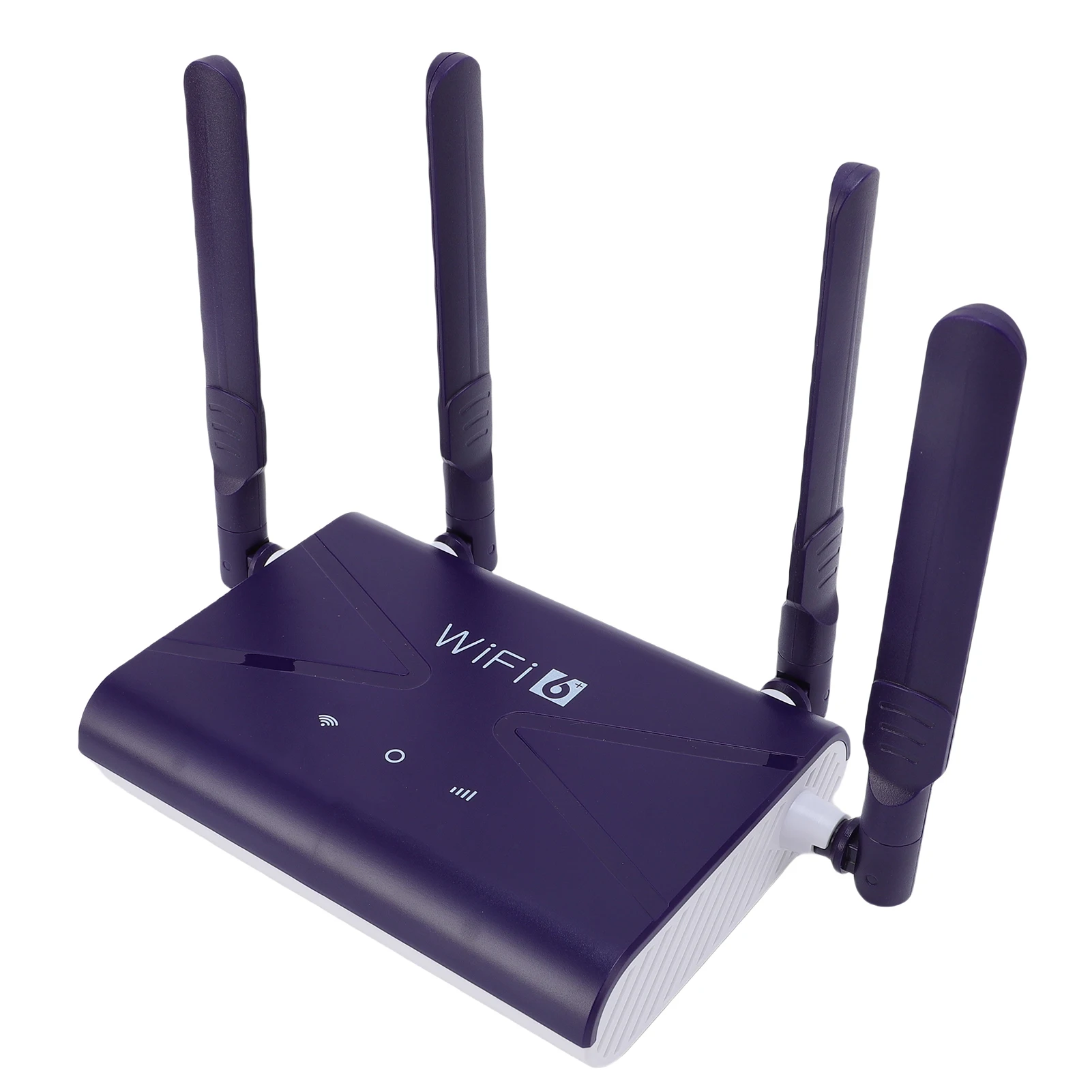
The router features a compact, dark purple casing with a clean aesthetic. Its four external antennas are prominent, suggesting a focus on signal reach. The device includes a single Ethernet port, which allows for a stable wired connection to a desktop PC, a smart home hub, or an additional access point. This port is essential for devices requiring maximum reliability or higher bandwidth than wireless can consistently provide. The power input is a standard barrel jack, and a USB port is also visible, though its specific function (e.g., storage sharing, charging) is not detailed.
Physical controls appear minimal, likely consisting of a power button and potentially a reset pinhole. LED indicators on the front panel provide status updates on power, Wi-Fi activity, and cellular signal strength. This streamlined design emphasizes ease of setup and operation. The unit's small footprint allows for discreet placement within a smart home environment, minimizing visual clutter.
Unlike many routers that rely on internal antennas, the external antennae on this model offer a degree of flexibility in optimizing signal propagation. This design choice can be particularly beneficial in homes with challenging layouts or multiple floors. The inclusion of an Ethernet port also differentiates it from purely wireless hotspots, providing an option for connecting a central smart home controller directly for enhanced reliability and speed. This ensures critical components of a smart home system maintain optimal communication.
At its competitive price point, this router offers significant value for specific use cases. It provides a gateway to internet access where traditional options are limited, making it an attractive proposition for remote workers, vacation homes, or as an emergency internet solution. The combination of cellular connectivity and Wi-Fi distribution at this cost is compelling. It democratizes access to network infrastructure for smart home deployments that might otherwise be cost-prohibitive.
For the smart home builder, this device represents a foundational piece for establishing connectivity in a new or challenging location. It enables the initial setup and ongoing operation of essential smart devices without a hefty upfront investment in more complex networking gear. The ability to simply insert a SIM card and go makes deployment quick and straightforward. This router focuses on core functionality, delivering reliable internet access without unnecessary premium features.
This unit is a pragmatic choice for those who need to get a smart home online without fuss or excessive expense. It’s not designed to compete with high-end Wi-Fi 6 mesh systems, but rather to provide a functional and stable network for the devices that need it most. Its simplicity and dedicated cellular capability make it a valuable tool for specific smart home scenarios. Imagine a fully automated compact living space, reliably connected to the cloud, all powered by this unassuming yet capable device, ensuring every command is executed promptly and every sensor reports its status without delay.
Cellular Connectivity and Flexibility
This router's primary appeal lies in its integrated SIM card slot, enabling it to function as a mobile broadband gateway. Users insert a standard SIM card, transforming a cellular data plan into a Wi-Fi network. This capability is crucial for remote installations, temporary setups, or as a failover internet connection for smart homes. The device supports 4G LTE frequency bands, offering download speeds up to 150 Mbps and upload speeds up to 50 Mbps. These speeds are consistent with typical 4G LTE performance.
Such cellular integration provides unparalleled location flexibility. Imagine setting up a smart home system in a rural cabin without cable or fiber infrastructure; this router offers a direct path to online functionality. It ensures essential smart devices remain connected, regardless of fixed-line availability. Unlike conventional routers that demand a physical WAN connection, this unit operates autonomously on a cellular network, a significant advantage for dynamic environments.
Compared to tethering directly from a smartphone, this dedicated router offers more stable performance and can handle more connected devices without draining a phone's battery. It's a more robust and permanent solution for providing internet to a small office or a smart home ecosystem in a remote setting. The dedicated hardware is designed for continuous operation, unlike a smartphone's intermittent use as a hotspot.
Wireless Performance and Smart Home Integration
The product title explicitly mentions "WiFi6," suggesting the latest wireless standard. However, the stated wireless transfer rate of 300 Mbps indicates compatibility with the older 802.11n (Wi-Fi 4) standard. This is a critical distinction for potential smart home builders. While the branding might imply next-generation performance, the actual throughput aligns with previous generations.
For most smart home devices, 300 Mbps remains perfectly adequate. Smart lights, thermostats, door sensors, and even many smart plugs consume minimal bandwidth. A network at this speed can comfortably keep 50+ smart devices connected stable, preventing common router crashes that plague less capable units. Low latency for automation, such as triggering a light when a door opens, is generally maintained. However, high-bandwidth applications like multiple simultaneous 4K security camera streams or extensive cloud backups might experience bottlenecks. The four external antennas visible on the device are designed to enhance signal coverage and stability within the coverage area. These antennas are adjustable, allowing for some optimization of the wireless signal direction.
Standard entry-level routers often struggle with a high client count, leading to dropped connections or slow response times. This router, despite its 300 Mbps speed, benefits from dedicated hardware for network management, which can offer greater stability for a multitude of low-bandwidth IoT devices. It provides a more reliable foundation for home automation than relying on a basic, overtaxed router. The dedicated nature of the device means fewer interruptions for critical smart home functions.
Physical Design and Peripheral Connectivity
The router features a compact, dark purple casing with a clean aesthetic. Its four external antennas are prominent, suggesting a focus on signal reach. The device includes a single Ethernet port, which allows for a stable wired connection to a desktop PC, a smart home hub, or an additional access point. This port is essential for devices requiring maximum reliability or higher bandwidth than wireless can consistently provide. The power input is a standard barrel jack, and a USB port is also visible, though its specific function (e.g., storage sharing, charging) is not detailed.
Physical controls appear minimal, likely consisting of a power button and potentially a reset pinhole. LED indicators on the front panel provide status updates on power, Wi-Fi activity, and cellular signal strength. This streamlined design emphasizes ease of setup and operation. The unit's small footprint allows for discreet placement within a smart home environment, minimizing visual clutter.
Unlike many routers that rely on internal antennas, the external antennae on this model offer a degree of flexibility in optimizing signal propagation. This design choice can be particularly beneficial in homes with challenging layouts or multiple floors. The inclusion of an Ethernet port also differentiates it from purely wireless hotspots, providing an option for connecting a central smart home controller directly for enhanced reliability and speed. This ensures critical components of a smart home system maintain optimal communication.
Value Proposition and Target User
At its competitive price point, this router offers significant value for specific use cases. It provides a gateway to internet access where traditional options are limited, making it an attractive proposition for remote workers, vacation homes, or as an emergency internet solution. The combination of cellular connectivity and Wi-Fi distribution at this cost is compelling. It democratizes access to network infrastructure for smart home deployments that might otherwise be cost-prohibitive.
For the smart home builder, this device represents a foundational piece for establishing connectivity in a new or challenging location. It enables the initial setup and ongoing operation of essential smart devices without a hefty upfront investment in more complex networking gear. The ability to simply insert a SIM card and go makes deployment quick and straightforward. This router focuses on core functionality, delivering reliable internet access without unnecessary premium features.
This unit is a pragmatic choice for those who need to get a smart home online without fuss or excessive expense. It’s not designed to compete with high-end Wi-Fi 6 mesh systems, but rather to provide a functional and stable network for the devices that need it most. Its simplicity and dedicated cellular capability make it a valuable tool for specific smart home scenarios. Imagine a fully automated compact living space, reliably connected to the cloud, all powered by this unassuming yet capable device, ensuring every command is executed promptly and every sensor reports its status without delay.