Waveshare P15 Raspberry Pi Port Relocation Adapter
Official Store Deal
Expert Analysis Overview
The Waveshare P15 Raspberry Pi Port Relocation Adapter is a specialized connectivity solution engineered for Raspberry Pi 5 and 4B users seeking optimized cable management and enhanced accessibility. This adapter addresses the common frustration of awkward port placement on the Raspberry Pi, particularly when integrating the single-board computer into compact enclosures or custom projects. It consolidates essential ports, including Micro HDMI and USB, to a single, more convenient side of the Raspberry Pi, significantly streamlining the physical setup.
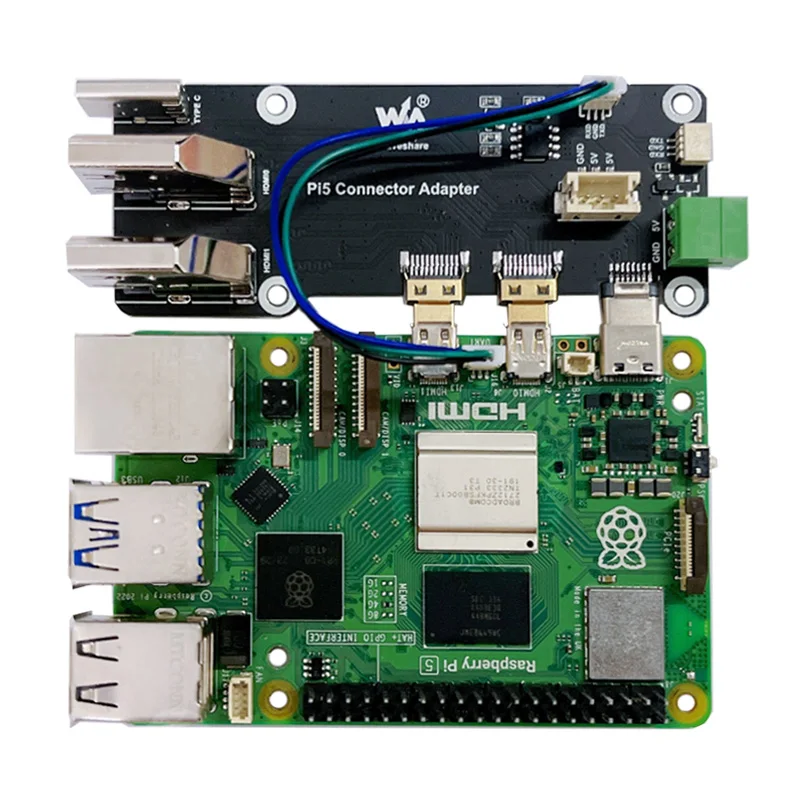
The adapter board visibly features multiple input and output connections. Two Micro HDMI inputs are present, designed to connect directly to the Raspberry Pi's native Micro HDMI ports. These inputs are then converted to full-size HDMI outputs on the adapter board, providing a more universally compatible and robust connection for displays.
This conversion to standard HDMI eliminates the need for specialized Micro HDMI cables for external displays, simplifying cable procurement and reducing potential points of failure. Users will experience immediate benefits in scenarios requiring frequent display connections or when integrating the Pi into existing home theater or workstation setups that predominantly use standard HDMI.
Compared to direct Micro HDMI connections, which often involve fragile adapters or thin cables, this solution offers a more stable and durable interface. It provides a clear upgrade path for users who prioritize reliability and ease of use in their Raspberry Pi projects, moving beyond the often-fiddly nature of Micro HDMI.
Beyond HDMI, the adapter also integrates multiple USB-A ports. These ports are positioned alongside the HDMI outputs, creating a unified I/O panel on one side of the Raspberry Pi. This design is crucial for projects where space is at a premium or where a clean, single-sided cable exit is desired.
The implication of this ergonomic design is a dramatically cleaner and more manageable Raspberry Pi setup. Imagine a compact media center or an industrial control system where all cables exit neatly from one side, rather than sprawling across multiple faces of the board. This significantly reduces cable clutter and improves airflow around the Pi, potentially aiding thermal management.
Standard Raspberry Pi setups, by contrast, often present a tangle of cables emerging from various directions, complicating enclosure design and maintenance. This adapter provides a distinct advantage by centralizing connections, making the entire system more aesthetically pleasing and functionally superior for embedded applications.
An additional power input port is clearly visible on the adapter board, typically a 2-pin screw terminal. This suggests the adapter can receive supplementary power, potentially to stabilize voltage for connected USB devices or to ensure robust signal integrity for the HDMI outputs, especially when driving 4K displays.
This dedicated power input ensures that the adapter itself does not draw excessive power directly from the Raspberry Pi's GPIO or USB lines, preserving the Pi's power budget for its core operations. It offers peace of mind for users who plan to connect power-hungry peripherals or run their Pi in demanding environments where stable power delivery is paramount.
Unlike passive adapters that rely solely on the Pi's power, the provision for external power input offers a layer of redundancy and stability. This feature elevates the adapter beyond a simple pass-through, positioning it as a more robust solution for professional and enthusiast applications alike, where consistent performance is non-negotiable.
The adapter board itself appears to be constructed from a standard PCB material, likely FR-4, with a matte black finish. The connectors, including the USB-A and HDMI ports, are securely soldered, indicating a solid mechanical connection. The overall build quality suggests a component designed for longevity within its intended operating environment.
The robust construction implies that the adapter can withstand the typical stresses of repeated cable insertions and removals, a common wear point in many DIY electronics projects. This durability is critical for applications where the Raspberry Pi might be frequently reconfigured or moved, ensuring the adapter remains a reliable part of the system.
Many generic adapters on the market often feature flimsy construction or poorly soldered joints, leading to premature failure. This Waveshare adapter, with its visible attention to component integration and board finish, offers a higher degree of reliability compared to those less-engineered alternatives. It's built to last.
This adapter is specifically designed for the Raspberry Pi 5 and Raspberry Pi 4B, leveraging their particular port layouts. The precise alignment of the Micro HDMI and USB connectors ensures a snug and reliable fit onto the respective Pi models. This targeted design minimizes compatibility issues and ensures optimal electrical contact.
For users integrating a Raspberry Pi 5 or 4B into a custom enclosure, this adapter simplifies the design process by presenting a consolidated port interface. It allows for a single, larger cutout in the case, rather than multiple, precisely aligned smaller cutouts for individual ports, which can be challenging to manufacture accurately.
Compared to attempting to extend individual ports with separate cables or custom PCBs, this integrated adapter offers a far more elegant and less error-prone solution. It's a purpose-built component that saves significant time and effort in the design and assembly phases of a Raspberry Pi project, especially for those aiming for a professional finish.
The adapter's ability to convert Micro HDMI to full-size HDMI, combined with its port relocation capabilities, supports 4K resolution output. This is a critical feature for modern display setups, ensuring that the visual fidelity of the Raspberry Pi is not compromised by the adapter. High-resolution output is maintained.
This 4K capability means that users can leverage the full graphical potential of their Raspberry Pi 5 or 4B for applications such as media playback, digital signage, or even light desktop computing on high-resolution monitors. The adapter acts as a transparent conduit for video signals, preserving quality.
Unlike older or lower-quality adapters that might introduce signal degradation or limit resolution, this adapter is engineered to pass through high-bandwidth video signals without compromise. It ensures that the investment in a 4K-capable Raspberry Pi is fully realized, providing crisp, clear visuals for any compatible display.
This Waveshare P15 Raspberry Pi Port Relocation Adapter is an indispensable tool for anyone building a compact, organized, and high-performance Raspberry Pi 5 or 4B system. Imagine the satisfaction of a perfectly routed setup, free from cable clutter, where every peripheral connects effortlessly to a single, accessible side. This adapter transforms a potentially messy project into a clean, professional-grade solution, allowing you to focus on your innovations rather than wrestling with connectivity.
Reimagining Pi Connectivity
The adapter board visibly features multiple input and output connections. Two Micro HDMI inputs are present, designed to connect directly to the Raspberry Pi's native Micro HDMI ports. These inputs are then converted to full-size HDMI outputs on the adapter board, providing a more universally compatible and robust connection for displays.
This conversion to standard HDMI eliminates the need for specialized Micro HDMI cables for external displays, simplifying cable procurement and reducing potential points of failure. Users will experience immediate benefits in scenarios requiring frequent display connections or when integrating the Pi into existing home theater or workstation setups that predominantly use standard HDMI.
Compared to direct Micro HDMI connections, which often involve fragile adapters or thin cables, this solution offers a more stable and durable interface. It provides a clear upgrade path for users who prioritize reliability and ease of use in their Raspberry Pi projects, moving beyond the often-fiddly nature of Micro HDMI.
Engineering for Ergonomics
Beyond HDMI, the adapter also integrates multiple USB-A ports. These ports are positioned alongside the HDMI outputs, creating a unified I/O panel on one side of the Raspberry Pi. This design is crucial for projects where space is at a premium or where a clean, single-sided cable exit is desired.
The implication of this ergonomic design is a dramatically cleaner and more manageable Raspberry Pi setup. Imagine a compact media center or an industrial control system where all cables exit neatly from one side, rather than sprawling across multiple faces of the board. This significantly reduces cable clutter and improves airflow around the Pi, potentially aiding thermal management.
Standard Raspberry Pi setups, by contrast, often present a tangle of cables emerging from various directions, complicating enclosure design and maintenance. This adapter provides a distinct advantage by centralizing connections, making the entire system more aesthetically pleasing and functionally superior for embedded applications.
The Power Pathway
An additional power input port is clearly visible on the adapter board, typically a 2-pin screw terminal. This suggests the adapter can receive supplementary power, potentially to stabilize voltage for connected USB devices or to ensure robust signal integrity for the HDMI outputs, especially when driving 4K displays.
This dedicated power input ensures that the adapter itself does not draw excessive power directly from the Raspberry Pi's GPIO or USB lines, preserving the Pi's power budget for its core operations. It offers peace of mind for users who plan to connect power-hungry peripherals or run their Pi in demanding environments where stable power delivery is paramount.
Unlike passive adapters that rely solely on the Pi's power, the provision for external power input offers a layer of redundancy and stability. This feature elevates the adapter beyond a simple pass-through, positioning it as a more robust solution for professional and enthusiast applications alike, where consistent performance is non-negotiable.
Durability in Design
The adapter board itself appears to be constructed from a standard PCB material, likely FR-4, with a matte black finish. The connectors, including the USB-A and HDMI ports, are securely soldered, indicating a solid mechanical connection. The overall build quality suggests a component designed for longevity within its intended operating environment.
The robust construction implies that the adapter can withstand the typical stresses of repeated cable insertions and removals, a common wear point in many DIY electronics projects. This durability is critical for applications where the Raspberry Pi might be frequently reconfigured or moved, ensuring the adapter remains a reliable part of the system.
Many generic adapters on the market often feature flimsy construction or poorly soldered joints, leading to premature failure. This Waveshare adapter, with its visible attention to component integration and board finish, offers a higher degree of reliability compared to those less-engineered alternatives. It's built to last.
Seamless Integration Scenarios
This adapter is specifically designed for the Raspberry Pi 5 and Raspberry Pi 4B, leveraging their particular port layouts. The precise alignment of the Micro HDMI and USB connectors ensures a snug and reliable fit onto the respective Pi models. This targeted design minimizes compatibility issues and ensures optimal electrical contact.
For users integrating a Raspberry Pi 5 or 4B into a custom enclosure, this adapter simplifies the design process by presenting a consolidated port interface. It allows for a single, larger cutout in the case, rather than multiple, precisely aligned smaller cutouts for individual ports, which can be challenging to manufacture accurately.
Compared to attempting to extend individual ports with separate cables or custom PCBs, this integrated adapter offers a far more elegant and less error-prone solution. It's a purpose-built component that saves significant time and effort in the design and assembly phases of a Raspberry Pi project, especially for those aiming for a professional finish.
A Clear Path Forward
The adapter's ability to convert Micro HDMI to full-size HDMI, combined with its port relocation capabilities, supports 4K resolution output. This is a critical feature for modern display setups, ensuring that the visual fidelity of the Raspberry Pi is not compromised by the adapter. High-resolution output is maintained.
This 4K capability means that users can leverage the full graphical potential of their Raspberry Pi 5 or 4B for applications such as media playback, digital signage, or even light desktop computing on high-resolution monitors. The adapter acts as a transparent conduit for video signals, preserving quality.
Unlike older or lower-quality adapters that might introduce signal degradation or limit resolution, this adapter is engineered to pass through high-bandwidth video signals without compromise. It ensures that the investment in a 4K-capable Raspberry Pi is fully realized, providing crisp, clear visuals for any compatible display.
This Waveshare P15 Raspberry Pi Port Relocation Adapter is an indispensable tool for anyone building a compact, organized, and high-performance Raspberry Pi 5 or 4B system. Imagine the satisfaction of a perfectly routed setup, free from cable clutter, where every peripheral connects effortlessly to a single, accessible side. This adapter transforms a potentially messy project into a clean, professional-grade solution, allowing you to focus on your innovations rather than wrestling with connectivity.