VONETS VAP11G-300 Portable Multi-Functional WiFi Repeater/Bridge
Official Store Deal
Expert Analysis Overview
The VONETS VAP11G-300: A Versatile Network Utility
The VONETS VAP11G-300 is a compact, multi-functional network appliance engineered for flexible deployment in scenarios demanding adaptable wireless connectivity. This device targets users requiring a portable solution for extending network reach or integrating wired devices into a wireless infrastructure. Its design prioritizes versatility and ease of integration over raw throughput, making it a specialized tool for specific networking challenges.
Enclosure Integrity and Connectivity Architecture
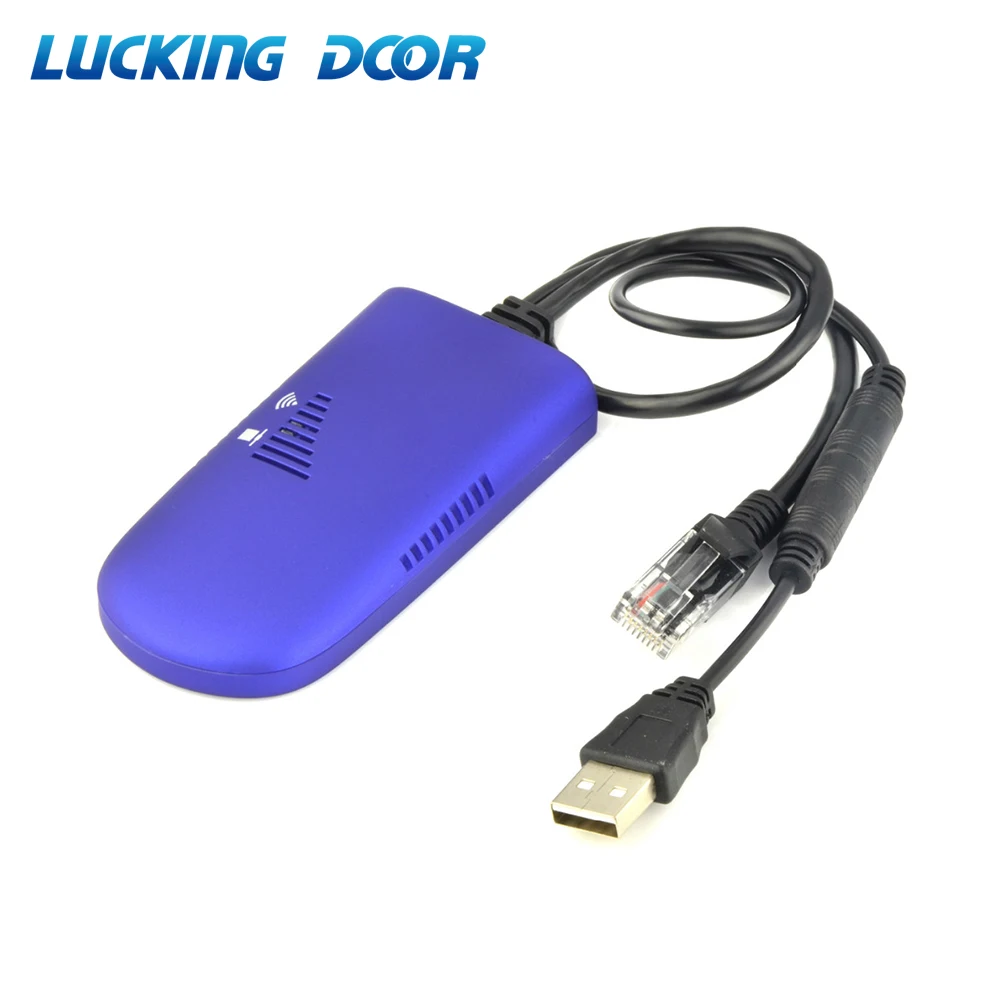
The device presents a minimalist blue ABS plastic enclosure, featuring integrated ventilation slots on its upper and lower surfaces. Connectivity is facilitated via a single RJ45 Ethernet port and a USB Type-A connector for power delivery. The physical dimensions suggest a highly portable form factor.
This design suggests a focus on portability and discreet integration into existing network infrastructures. The USB power option simplifies deployment in environments where a dedicated power adapter might be cumbersome or unavailable, such as powering from a television's USB port or a portable battery pack. Its small footprint minimizes physical intrusion.
Unlike bulkier, wall-wart style repeaters that occupy an entire power outlet, this form factor allows for more versatile placement. Standard consumer-grade repeaters often require proprietary power bricks, limiting their adaptability. This unit offers a more streamlined power solution.
Wireless Data Plane and Protocol Adherence
The VAP11G-300 operates on the 2.4GHz frequency band, adhering to the 802.11b/g/n wireless standards. It specifies a maximum theoretical throughput of 300Mbps. This specification positions the device for general internet browsing, email, and standard definition media streaming.
This wireless specification implies suitability for environments where legacy device compatibility is crucial or where high-bandwidth applications are not the primary concern. The 2.4GHz band offers greater penetration through obstacles compared to 5GHz, which can be advantageous in older buildings or areas with numerous physical barriers. Signal propagation is a key factor.
Compared to modern 802.11ac or 802.11ax devices, the VAP11G-300's 802.11n standard provides a more modest bandwidth ceiling. Contemporary networking hardware often supports dual-band or tri-band operation, offering significantly higher aggregate speeds. This device is not designed for gigabit wireless performance.
Operational Modes and Network Topology Flexibility
The VAP11G-300 supports multiple operational modes, including Repeater, Bridge, AP (Access Point), and Router. This multi-functional capability allows it to adapt to various network requirements. Mode selection is critical for optimal performance.
These modes enable the device to serve distinct roles within a network. As a repeater, it extends the range of an existing Wi-Fi signal. In bridge mode, it connects a wired Ethernet device to a wireless network. As an AP, it creates a new wireless network from a wired connection. Router mode provides basic NAT and DHCP services. This versatility enhances its utility.
Many entry-level network extenders are limited to a single mode, typically repeater functionality. The VAP11G-300's ability to switch between these core networking roles provides a significant advantage in diverse deployment scenarios. It offers more than just signal boosting.
Power Delivery and Portability Considerations
Power is supplied via a standard USB 5V input, typically drawing around 1W. This low power consumption makes it suitable for powering from various sources, including USB ports on televisions, game consoles, or portable power banks. Energy efficiency is a notable attribute.
This power scheme facilitates extreme portability and reduces reliance on dedicated wall outlets. For travelers, or in temporary setups, the ability to power the device from a laptop or a USB charger simplifies deployment. It minimizes cable clutter.
Traditional repeaters often require a dedicated AC adapter, which can be bulky and limit placement options. The USB power input of the VAP11G-300 offers a more flexible and universally compatible power solution. This is a practical design choice.
Firmware Capabilities and Configuration Interface
While specific details on the firmware are not extensively visible, devices of this class typically feature a web-based graphical user interface (GUI) for configuration. This interface allows for setting up Wi-Fi parameters, security protocols, and selecting operational modes. Firmware stability is paramount.
An intuitive web interface is crucial for user accessibility, allowing network administrators or end-users to configure the device without specialized software. The ability to update firmware is also important for security patches and feature enhancements. Network management becomes straightforward.
Compared to enterprise-grade access points that might offer command-line interfaces or SNMP management, the VAP11G-300's web GUI is designed for simplicity. While advanced features like VLAN tagging or extensive QoS might be limited, the core functionalities are typically well-supported. OpenWRT compatibility, if present, would significantly expand its capabilities.
Throughput Dynamics and Latency Profile
The 300Mbps 802.11n specification implies a practical throughput significantly lower than the theoretical maximum, especially in repeater mode where half-duplex operation can reduce effective bandwidth. Real-world performance will vary based on environmental factors. Latency can also be a concern.
In a typical home or small office environment, users can expect sufficient bandwidth for streaming 1080p video on a single device or supporting multiple concurrent users for basic internet tasks. However, heavy file transfers or multiple simultaneous high-definition streams might experience buffering or slowdowns. Network congestion is a factor.
Unlike direct Ethernet connections or higher-end Wi-Fi 6 solutions, this device is not engineered for ultra-low latency or multi-gigabit data transfer. Its strength lies in extending basic connectivity reliably rather than delivering peak performance. It serves a different niche.
Security Protocols and Network Hardening
The device supports standard Wi-Fi security protocols, including WPA2-PSK (AES). This ensures a reasonable level of encryption for wireless communications. Proper security configuration is essential. WPA3 is not expected.
Implementing WPA2-PSK provides a robust defense against unauthorized access to the wireless network, protecting data in transit. Users must configure a strong passphrase to maximize security effectiveness. This prevents eavesdropping.
While WPA2 remains widely used, newer standards like WPA3 offer enhanced security features, particularly against brute-force attacks. For the VAP11G-300's target market, WPA2-PSK is generally considered adequate for home and small business use. It meets baseline requirements.
Deployment Scenarios and Value Proposition
This device is particularly well-suited for niche applications such as providing Wi-Fi to a smart TV or gaming console lacking native wireless capabilities (bridge mode), extending a weak Wi-Fi signal in a specific room (repeater mode), or creating a temporary hotspot. Its adaptability is its core strength. Cost-effectiveness is also a factor.
Imagine integrating a legacy Ethernet-only device, like an older network printer or a desktop PC, into your wireless network without running new cables. This unit provides that seamless bridge. Or consider boosting a weak signal in a garage or basement. The VAP11G-300 offers a practical, low-cost solution for these specific connectivity gaps. It simplifies complex setups.
For those who require a highly portable, versatile network utility to address specific connectivity challenges without investing in a full-fledged, high-performance router, the VONETS VAP11G-300 presents a compelling value proposition. It is a specialized tool. This device empowers users to build a robust, enterprise-grade network at home by filling in the gaps where traditional infrastructure falls short, managing traffic efficiently by segmenting wired and wireless clients, and potentially customizing firmware settings for advanced control, if OpenWRT support is available. The ability to adapt to various network roles means less expenditure on multiple single-function devices, offering a significant return on investment through its sheer utility and flexibility. This is a strategic acquisition for any network toolkit.