USB-C & USB-A Dual Interface TF/SD Card Reader
Official Store Deal
Expert Analysis Overview
The USB-C & USB-A Dual Interface TF/SD Card Reader is a highly accessible data bridge designed for users prioritizing broad device compatibility and fundamental memory card access over raw, sustained transfer speeds. This device offers a pragmatic solution for connecting common SD and MicroSD cards to a diverse ecosystem of USB-A and USB-C enabled hardware, including mobile phones, tablets, and computers. It's a simple tool. While marketed with "high-speed transmission," the explicit mention of USB 2.0 defines its performance ceiling, a critical detail for anyone moving significant data volumes.
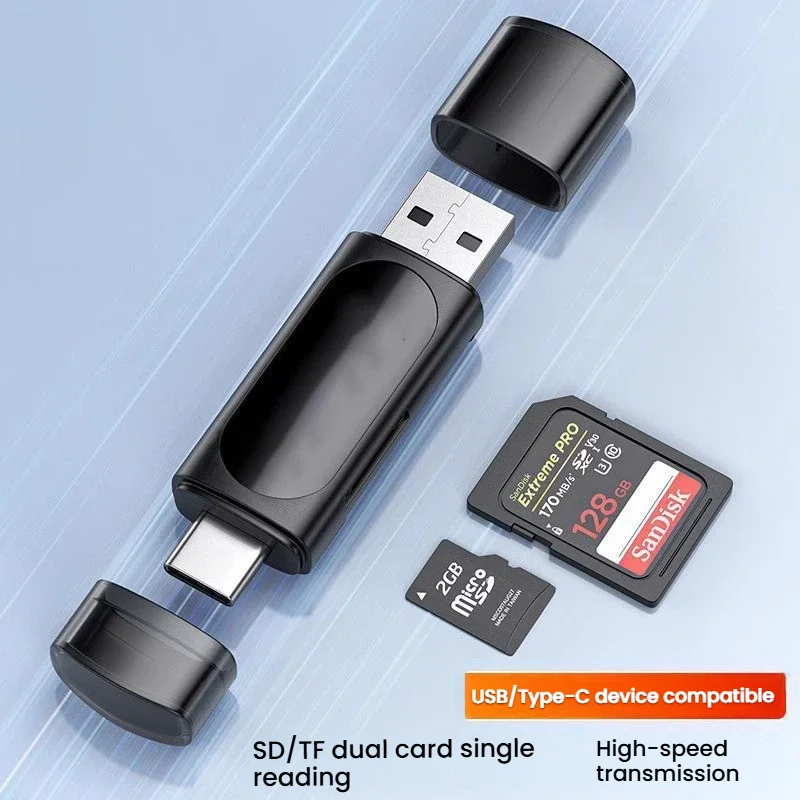
This card reader presents a dual-interface design, featuring both a standard USB-A connector and a reversible USB-C port. Both interfaces are protected by individual, removable caps, a thoughtful inclusion for portability and longevity. The physical construction appears to be a durable plastic, suggesting resilience against daily wear and tear. This dual-connector approach eliminates the need for multiple adapters.
The integration of both USB-A and USB-C ports directly into a single dongle streamlines connectivity. Users can effortlessly switch between legacy and modern devices without searching for separate converters. This is a significant convenience for mixed-device environments. Imagine moving photos from an older digital camera to a new USB-C laptop. It just works.
Unlike single-interface readers that force users into a specific port type or require an additional adapter, this unit offers immediate plug-and-play functionality across a wider range of hardware. Standard readers often limit compatibility. This design choice maximizes utility for a minimal footprint.
Crucially, the device operates on the USB 2.0 standard, which mandates a theoretical maximum transfer rate of 480 Mbps. This translates to approximately 60 MB/s under ideal conditions. Real-world speeds will be lower. For small document transfers or occasional photo offloads, this speed is adequate.
When dealing with larger files, such as high-resolution video footage or extensive photo libraries, the USB 2.0 limitation becomes a bottleneck. Moving a 10GB 4K video file could take several minutes, a frustration for professionals or content creators. Modern SD and MicroSD cards, like the SanDisk Extreme visible in the imagery, are capable of significantly higher speeds, often exceeding 100 MB/s, which this reader cannot fully utilize. The card is faster than the reader.
Compared to card readers leveraging USB 3.0 (5 Gbps) or USB 3.1/3.2 Gen 2 (10 Gbps), this reader's performance is distinctly entry-level. While those advanced standards offer rapid data ingestion, they typically come at a higher price point. This reader prioritizes cost-effectiveness and broad compatibility over raw speed, a trade-off that is acceptable for its target demographic of casual users.
The reader supports both SD (Secure Digital) and TF (TransFlash, commonly known as MicroSD) memory card formats. It features dedicated slots for each, allowing for direct insertion without requiring a MicroSD-to-SD adapter. The product explicitly states "SD/TF dual card single reading," meaning only one card can be accessed at a time. This is a common design for compact, budget readers.
For users who frequently work with both card types, this integrated design simplifies their workflow. No more fumbling with tiny adapters. It's a clean solution. The direct slot access reduces potential points of failure often associated with adapters. The reader accommodates standard memory card sizes.
Many entry-level readers either support only one card type or require an adapter for MicroSD cards. This reader's ability to directly accept both major formats without simultaneous access offers a balance. It's more convenient than a single-slot device, yet simpler than a complex, multi-LUN (Logical Unit Number) reader that can handle multiple cards concurrently.
The physical design is compact and lightweight, suggesting high portability. The black plastic casing appears understated and functional. The inclusion of protective caps for both the USB-A and USB-C connectors is a practical touch, safeguarding the delicate interfaces from dust and physical damage when not in use. This protects the connectors.
Its small form factor makes it an ideal accessory for laptop bags, camera kits, or even a pocket. The design minimizes snagging or accidental damage during transport. It's built for travel. The caps ensure that lint and debris do not accumulate in the ports, which could otherwise lead to connectivity issues or premature wear.
Unlike bulkier, multi-port hubs or readers with integrated cables that can be cumbersome, this dongle-style reader maintains a minimalist profile. Its straightforward design focuses solely on its core function: card reading. This simplicity contributes to its reliability and ease of use, making it a reliable companion for on-the-go data transfers.
This reader is designed for OTG (On-The-Go) functionality, allowing direct connection to compatible mobile phones and tablets. This enables users to view, transfer, and manage files on their memory cards directly from their portable devices. No computer is needed. This capability is invaluable for photographers or videographers who need to quickly offload content in the field.
Connecting the reader to a smartphone or tablet transforms the mobile device into a portable data management hub. Users can preview images, backup important files, or free up space on their camera's memory card without relying on a laptop. This enhances workflow flexibility significantly. It's a powerful feature for mobile users.
Many devices require proprietary cables or cloud services for file transfer, which can be slow or inconvenient without internet access. This OTG-enabled reader offers a direct, physical connection, bypassing network dependencies and offering a faster, more secure local transfer method, especially for those critical moments when connectivity is unreliable.
At its price point, this card reader delivers exceptional value for users with basic data transfer needs across diverse devices. It's an economical choice. The combination of dual interfaces and dual card slot support in a compact form factor makes it highly versatile for casual use. The low cost makes it an easy purchase.
This product is best suited for students, casual photographers, or anyone needing to occasionally transfer files between memory cards and various devices without demanding peak performance. It's a workhorse for everyday tasks. Its affordability means it can be purchased as a backup or a dedicated reader for a specific kit without significant investment.
While professional users handling massive, time-sensitive data transfers will find its USB 2.0 speeds limiting, this reader is not designed for that segment. It serves the vast majority of users who prioritize convenience, compatibility, and cost-effectiveness. It's a practical, no-frills tool for common data management scenarios. Imagine effortlessly moving vacation photos from your camera's SD card to your tablet for quick sharing, or backing up important documents from a MicroSD card to your work laptop, all with one compact tool that fits in any pocket. This device simplifies your digital life, ensuring your memories and files are always accessible, regardless of the device at hand.
Interfacing Capabilities
This card reader presents a dual-interface design, featuring both a standard USB-A connector and a reversible USB-C port. Both interfaces are protected by individual, removable caps, a thoughtful inclusion for portability and longevity. The physical construction appears to be a durable plastic, suggesting resilience against daily wear and tear. This dual-connector approach eliminates the need for multiple adapters.
The integration of both USB-A and USB-C ports directly into a single dongle streamlines connectivity. Users can effortlessly switch between legacy and modern devices without searching for separate converters. This is a significant convenience for mixed-device environments. Imagine moving photos from an older digital camera to a new USB-C laptop. It just works.
Unlike single-interface readers that force users into a specific port type or require an additional adapter, this unit offers immediate plug-and-play functionality across a wider range of hardware. Standard readers often limit compatibility. This design choice maximizes utility for a minimal footprint.
Data Throughput Dynamics
Crucially, the device operates on the USB 2.0 standard, which mandates a theoretical maximum transfer rate of 480 Mbps. This translates to approximately 60 MB/s under ideal conditions. Real-world speeds will be lower. For small document transfers or occasional photo offloads, this speed is adequate.
When dealing with larger files, such as high-resolution video footage or extensive photo libraries, the USB 2.0 limitation becomes a bottleneck. Moving a 10GB 4K video file could take several minutes, a frustration for professionals or content creators. Modern SD and MicroSD cards, like the SanDisk Extreme visible in the imagery, are capable of significantly higher speeds, often exceeding 100 MB/s, which this reader cannot fully utilize. The card is faster than the reader.
Compared to card readers leveraging USB 3.0 (5 Gbps) or USB 3.1/3.2 Gen 2 (10 Gbps), this reader's performance is distinctly entry-level. While those advanced standards offer rapid data ingestion, they typically come at a higher price point. This reader prioritizes cost-effectiveness and broad compatibility over raw speed, a trade-off that is acceptable for its target demographic of casual users.
Card Compatibility and Handling
The reader supports both SD (Secure Digital) and TF (TransFlash, commonly known as MicroSD) memory card formats. It features dedicated slots for each, allowing for direct insertion without requiring a MicroSD-to-SD adapter. The product explicitly states "SD/TF dual card single reading," meaning only one card can be accessed at a time. This is a common design for compact, budget readers.
For users who frequently work with both card types, this integrated design simplifies their workflow. No more fumbling with tiny adapters. It's a clean solution. The direct slot access reduces potential points of failure often associated with adapters. The reader accommodates standard memory card sizes.
Many entry-level readers either support only one card type or require an adapter for MicroSD cards. This reader's ability to directly accept both major formats without simultaneous access offers a balance. It's more convenient than a single-slot device, yet simpler than a complex, multi-LUN (Logical Unit Number) reader that can handle multiple cards concurrently.
Design and Portability Considerations
The physical design is compact and lightweight, suggesting high portability. The black plastic casing appears understated and functional. The inclusion of protective caps for both the USB-A and USB-C connectors is a practical touch, safeguarding the delicate interfaces from dust and physical damage when not in use. This protects the connectors.
Its small form factor makes it an ideal accessory for laptop bags, camera kits, or even a pocket. The design minimizes snagging or accidental damage during transport. It's built for travel. The caps ensure that lint and debris do not accumulate in the ports, which could otherwise lead to connectivity issues or premature wear.
Unlike bulkier, multi-port hubs or readers with integrated cables that can be cumbersome, this dongle-style reader maintains a minimalist profile. Its straightforward design focuses solely on its core function: card reading. This simplicity contributes to its reliability and ease of use, making it a reliable companion for on-the-go data transfers.
Operational Convenience
This reader is designed for OTG (On-The-Go) functionality, allowing direct connection to compatible mobile phones and tablets. This enables users to view, transfer, and manage files on their memory cards directly from their portable devices. No computer is needed. This capability is invaluable for photographers or videographers who need to quickly offload content in the field.
Connecting the reader to a smartphone or tablet transforms the mobile device into a portable data management hub. Users can preview images, backup important files, or free up space on their camera's memory card without relying on a laptop. This enhances workflow flexibility significantly. It's a powerful feature for mobile users.
Many devices require proprietary cables or cloud services for file transfer, which can be slow or inconvenient without internet access. This OTG-enabled reader offers a direct, physical connection, bypassing network dependencies and offering a faster, more secure local transfer method, especially for those critical moments when connectivity is unreliable.
Value Proposition and Target User
At its price point, this card reader delivers exceptional value for users with basic data transfer needs across diverse devices. It's an economical choice. The combination of dual interfaces and dual card slot support in a compact form factor makes it highly versatile for casual use. The low cost makes it an easy purchase.
This product is best suited for students, casual photographers, or anyone needing to occasionally transfer files between memory cards and various devices without demanding peak performance. It's a workhorse for everyday tasks. Its affordability means it can be purchased as a backup or a dedicated reader for a specific kit without significant investment.
While professional users handling massive, time-sensitive data transfers will find its USB 2.0 speeds limiting, this reader is not designed for that segment. It serves the vast majority of users who prioritize convenience, compatibility, and cost-effectiveness. It's a practical, no-frills tool for common data management scenarios. Imagine effortlessly moving vacation photos from your camera's SD card to your tablet for quick sharing, or backing up important documents from a MicroSD card to your work laptop, all with one compact tool that fits in any pocket. This device simplifies your digital life, ensuring your memories and files are always accessible, regardless of the device at hand.