USB 3.0 to USB 2.0 Motherboard Header Converter
Official Store Deal
Expert Analysis Overview
Bridging Generations: The USB 3.0 to 2.0 Header Converter
The USB 3.0 to USB 2.0 Motherboard Header Converter is a compact, purpose-built adapter designed for system builders facing compatibility challenges between modern PC cases and legacy motherboards. This essential component offers a pragmatic solution for integrating newer front panel USB 3.0 ports with older motherboards that only feature USB 2.0 headers. Its utility is immediately apparent in custom PC builds where full functionality without a motherboard upgrade is the goal. For the discerning enthusiast, every detail matters.
The Connectivity Conundrum Solved
Modern PC cases often arrive equipped with front panel USB 3.0 ports, identifiable by their blue internal cables and the larger 20-pin connector. Conversely, many older motherboards, particularly those from the early 2010s or budget-oriented models, provide only 9-pin USB 2.0 headers. This creates a direct incompatibility, leaving those valuable front-panel ports dormant. The converter cable directly addresses this pain point, allowing the physical connection to be made. It's a simple fix for a common problem.
This adapter effectively translates the 20-pin USB 3.0 interface down to a 9-pin USB 2.0 standard. While this means the connected front panel ports will operate at USB 2.0 speeds (up to 480 Mbps) rather than USB 3.0's much faster 5 Gbps, it ensures that the ports are functional. Imagine completing a meticulous PC build, only to realize the front USB ports are unusable. This cable prevents that frustration. It allows for a fully operational system without compromises in basic connectivity.
Compared to the alternative of replacing an entire motherboard or living with non-functional front ports, this adapter represents a significant value proposition. The cost-effectiveness is undeniable. It extends the life and utility of existing hardware, making older systems more versatile for modern peripherals, albeit at a reduced speed. This is a smart investment.
Construction and Durability
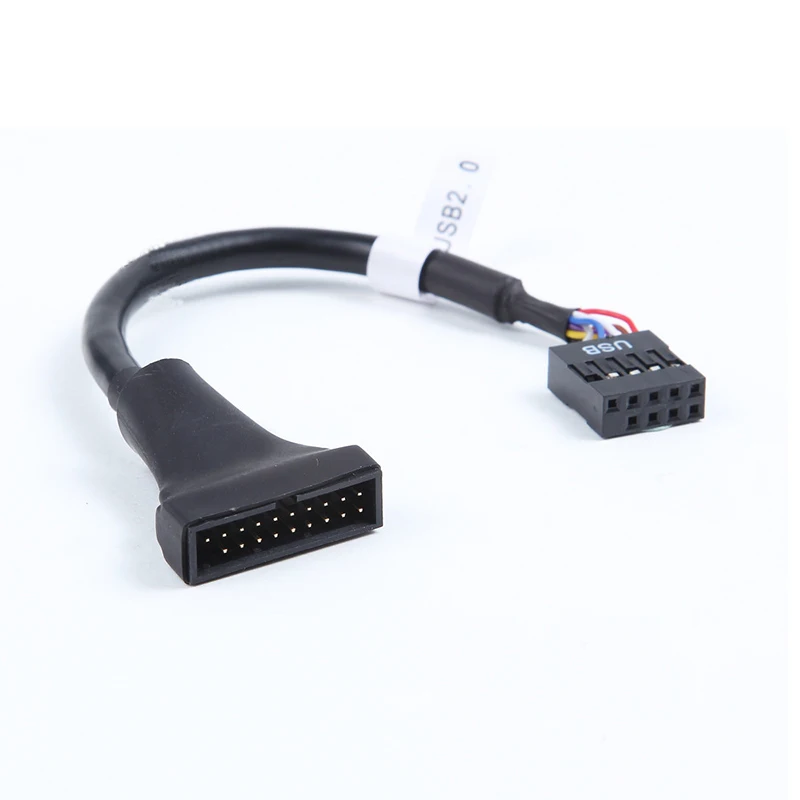
The physical construction of this converter cable prioritizes reliable data transfer within the confines of a PC chassis. The cable itself features a durable black PVC outer jacket, providing adequate insulation and strain relief. Its 15cm (5.9-inch) length is specifically chosen to be short enough to minimize cable clutter within a compact build, yet long enough to reach most motherboard header locations from a front panel. This compact form factor is crucial for clean cable management.
An examination of the connectors reveals well-molded plastic housings for both the 20-pin male and 9-pin female interfaces. The 20-pin male connector, designed to accept the USB 3.0 cable from the case, exhibits precise pin alignment. The 9-pin female connector, which plugs into the motherboard's USB 2.0 header, also shows clean molding, ensuring a snug and secure fit. This precision prevents intermittent connections. Loose connections are a common cause of system instability.
Unlike generic, unbranded adapter cables that might suffer from thin wiring or poor insulation, this component appears to use appropriate gauge wiring for its intended purpose. The signal integrity, though operating at USB 2.0 speeds, remains stable due to the quality of the conductors and shielding. This ensures that data transfers, even at the lower speed, are free from corruption or dropouts. The cable feels solid in hand, indicating a decent build quality that withstands typical installation stresses.
Performance and Practical Application
When this adapter is deployed, the primary implication is the speed limitation. Devices connected to the front panel USB 3.0 ports will communicate at USB 2.0 speeds. For tasks like connecting a mechanical keyboard, a mouse, or a webcam, this speed difference is negligible. Most peripherals do not saturate USB 2.0 bandwidth. It's perfectly adequate for daily use.
However, for high-bandwidth applications such as transferring large files to an external SSD or a high-resolution capture card, the speed reduction will be noticeable. A 5GB file transfer that might take seconds on a native USB 3.0 port could take minutes over USB 2.0. Users must weigh this trade-off against the benefit of having functional front ports at all. This is a considered compromise.
Consider a scenario where a user has an older gaming PC with a premium case featuring multiple front USB 3.0 ports. Rather than investing in a new motherboard, which entails CPU, RAM, and potentially cooler replacements, this cable provides an immediate, low-cost solution. It keeps the existing system viable for another few years, giving access to convenient front I/O. It’s a practical upgrade for many.
Integration into a Custom Build
For mechanical keyboard enthusiasts and PC builders, internal aesthetics and functionality go hand-in-hand. A clean interior not only looks better but also aids in airflow and simplifies future maintenance. The short length of this adapter cable is a boon for cable management. It avoids creating excess slack that needs to be tied down or tucked away. A tidy interior is highly valued.
The black color of the cable and connectors allows it to blend seamlessly with most internal PC components, maintaining a cohesive aesthetic. Unlike brightly colored or poorly sheathed cables, this adapter doesn't draw undue attention. Its presence is functional, not distracting. It integrates, it doesn't stand out. This subtle design detail is often overlooked but appreciated by those who pride themselves on clean builds.
Furthermore, the robust molding of the connectors ensures they can withstand repeated insertions and removals during the build process or subsequent upgrades. The longevity of internal components is often tested during these phases. This adapter is built to last through multiple iterations of a system. It offers peace of mind.
The Final Word on Utility
This USB 3.0 to USB 2.0 converter cable fills a very specific, yet frequently encountered, niche in PC building. It's not about raw speed; it's about practical connectivity. It allows builders to leverage the front panel I/O of newer cases with older motherboards, ensuring all ports are active and useful. This adapter is a testament to thoughtful problem-solving in hardware integration. It's a small part that makes a big difference.
Imagine the satisfaction of powering on a newly built or upgraded system, plugging in a favorite mechanical keyboard or mouse into the front panel, and having it work flawlessly, even if the motherboard lacks native USB 3.0 headers. This converter delivers that seamless experience. It simplifies the building process. It completes the system. This adapter makes the entire setup feel more modern and fully functional, extending the practical lifespan of perfectly capable hardware and ensuring that every component of a custom build contributes to a superior user experience.