Tenda OS3 5GHz Outdoor Wireless Bridge
Official Store Deal
Expert Analysis Overview
The Tenda OS3 is a purpose-built outdoor wireless bridge engineered for robust point-to-point (PTP) and point-to-multipoint (PTMP) network extensions, primarily targeting surveillance and remote connectivity applications. This device integrates a high-performance 5GHz radio with an 802.11ac chipset, delivering a maximum wireless transmission rate of 867Mbps. Its design emphasizes long-range stability and efficient data throughput, making it suitable for scenarios requiring reliable outdoor network infrastructure.
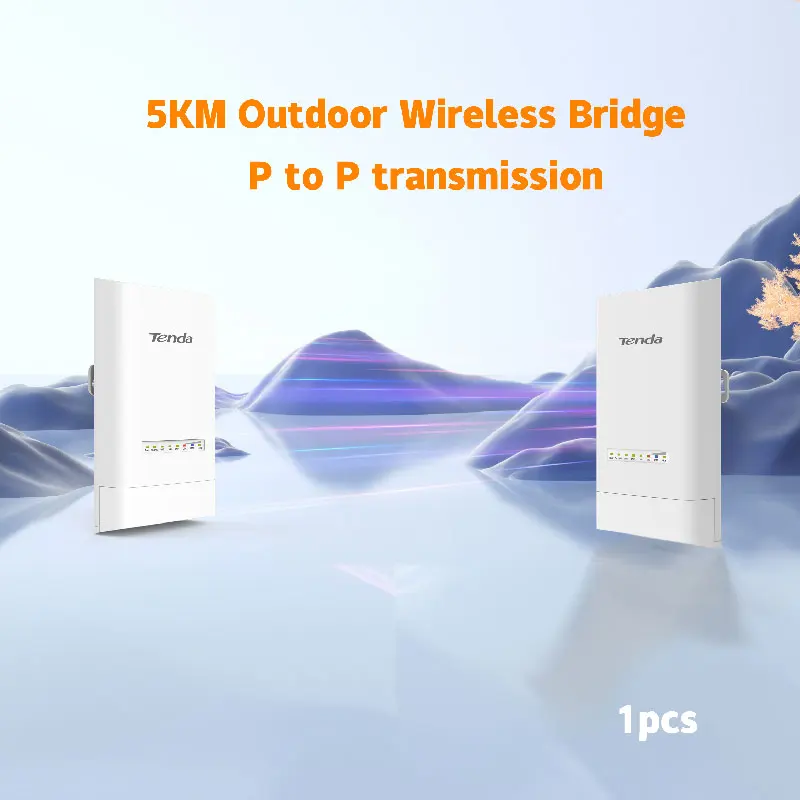
The OS3's physical form factor is a compact, weather-resistant enclosure, indicative of its outdoor deployment intention. The unit is designed for pole mounting, a common practice for maximizing line-of-sight in wireless bridge applications. Its minimalist aesthetic belies a functional design focused on environmental resilience. The device is white.
Network engineers often prioritize durability in outdoor equipment. The OS3's housing appears to be constructed from UV-stabilized plastic, a material choice that resists degradation from prolonged sun exposure and harsh weather conditions. This ensures operational longevity.
Compared to typical indoor access points, which are not designed to withstand environmental stressors, the OS3's robust casing is a critical differentiator for sustained outdoor performance. This is a significant design consideration.
Operating on the 5GHz frequency band, the Tenda OS3 leverages the IEEE 802.11a/n/ac wireless standards. The 802.11ac protocol is crucial here. It enables the advertised 867Mbps wireless transmission rate, a substantial improvement over older 802.11n devices.
This higher throughput is vital for bandwidth-intensive applications. Consider high-definition video surveillance streams. Multiple 1080P IP cameras can be aggregated without significant latency or packet loss. The 5GHz band also offers less interference compared to the congested 2.4GHz spectrum, leading to more stable connections.
Many legacy wireless bridges still operate on 802.11n, which typically caps out at 300Mbps or 450Mbps. The OS3's 867Mbps capability represents a near doubling of potential bandwidth, directly impacting the number and quality of concurrent data streams it can support.
One of the OS3's standout features is its advertised 5-kilometer point-to-point transmission range. This extended reach is achieved through a combination of high-power radio output and a directional antenna system, which focuses the wireless signal into a narrow beam. Such focused transmission minimizes signal dispersion.
This capability is particularly beneficial for establishing network links between distant buildings, such as in large corporate campuses, agricultural operations, or remote monitoring sites. The ability to span 5KM reduces infrastructure costs. It eliminates the need for trenching fiber optic cables or deploying multiple intermediate wireless repeaters.
Standard consumer-grade Wi-Fi extenders are limited to a few hundred meters at best. The OS3's 5KM range places it firmly in the category of enterprise-grade outdoor wireless backhaul solutions, offering a significant leap in connectivity distance.
The Tenda OS3 is presented as a 'bridge switch 2 in 1' device, implying integrated switching capabilities. This is a critical feature for surveillance deployments. The device can support multi-camera transmission from a single pole.
This integrated switching functionality means that multiple IP cameras can connect directly to the OS3 via Ethernet ports, eliminating the need for a separate 5-port switch at the remote location. This simplifies installation. It also reduces the overall equipment footprint and power requirements.
Traditional wireless bridges often provide only a single Ethernet port, necessitating an additional switch for multiple devices. The OS3's integrated switch streamlines the deployment process, making it a more compact and cost-effective solution for distributed camera networks.
The OS3 features a dual power supply design, supporting both DC power and passive Power over Ethernet (PoE). This flexibility is a significant advantage for outdoor installations where power outlets may be scarce or impractical to run. Passive PoE simplifies cabling.
Passive PoE allows both power and data to be transmitted over a single Ethernet cable, reducing the complexity and cost of installation. This is particularly useful for pole-mounted devices where running separate power lines can be challenging. The device can also be solar-powered.
Many outdoor CPEs rely solely on proprietary PoE injectors, limiting power source options. The OS3's support for standard DC input alongside passive PoE offers greater adaptability, allowing integration into existing power infrastructures or off-grid solar setups.
The device supports both Master and Slave bridge configurations, enabling the creation of point-to-point or point-to-multipoint wireless links. In a PTP setup, one unit acts as the Master, broadcasting the network, while the other acts as the Slave, receiving and extending it. This is a fundamental networking concept.
This configuration flexibility allows for various network topologies. A Master bridge can connect to multiple Slave bridges, forming a PTMP network suitable for covering a wider area with multiple remote access points. Smooth surveillance video is achievable.
Unlike simpler wireless extenders that operate only as repeaters, the dedicated Master/Slave roles in the OS3 ensure a more stable and efficient wireless backbone, optimizing signal integrity and minimizing latency across the link.
While specific firmware details are not explicitly provided, a device categorized as an 'AP Access Point Wi-Fi Bridge' typically offers a web-based management interface. This interface allows for configuration of network parameters, including SSID, security protocols (WPA2-PSK is standard), channel selection, and potentially VLAN tagging. VLAN support is crucial for traffic segmentation.
Effective traffic management is essential in surveillance networks. The ability to prioritize video streams over other data traffic ensures consistent performance for critical applications. Quality of Service (QoS) settings would be expected for this purpose.
Compared to basic consumer routers, professional outdoor CPEs like the OS3 provide more granular control over network settings, allowing administrators to fine-tune performance and security according to specific deployment requirements. This level of control is paramount for enterprise-grade deployments.
The 'outdoor' designation implies a design resilient to environmental factors. This includes temperature extremes, humidity, and precipitation. The sealed enclosure protects internal components from dust and moisture ingress. IP ratings are typically associated with such devices.
Reliable operation in diverse climates is a key performance indicator for outdoor networking equipment. The materials and construction must prevent water penetration and withstand thermal cycling without compromising structural integrity. This ensures continuous service.
Indoor-only networking devices would fail rapidly when exposed to outdoor elements. The OS3's specific design for outdoor deployment ensures it can maintain connectivity and performance where standard equipment cannot.
The Tenda OS3 5KM 5GHz 867Mbps Outdoor Wireless Bridge presents a compelling solution for extending network infrastructure beyond conventional wired limitations. Its combination of high-speed 802.11ac performance, extended 5KM range, integrated switching capabilities, and flexible power options positions it as a versatile tool for network engineers. The device facilitates the creation of robust, enterprise-grade outdoor networks, particularly for multi-camera surveillance systems and remote site connectivity. Imagine the seamless integration of remote IP cameras into your existing network, delivering crystal-clear 1080P video streams across kilometers, all powered by a single, reliable wireless link. This device empowers the deployment of efficient and scalable outdoor network segments, transforming previously unreachable locations into fully connected nodes within your infrastructure.
Architectural Design and Connectivity
The OS3's physical form factor is a compact, weather-resistant enclosure, indicative of its outdoor deployment intention. The unit is designed for pole mounting, a common practice for maximizing line-of-sight in wireless bridge applications. Its minimalist aesthetic belies a functional design focused on environmental resilience. The device is white.
Network engineers often prioritize durability in outdoor equipment. The OS3's housing appears to be constructed from UV-stabilized plastic, a material choice that resists degradation from prolonged sun exposure and harsh weather conditions. This ensures operational longevity.
Compared to typical indoor access points, which are not designed to withstand environmental stressors, the OS3's robust casing is a critical differentiator for sustained outdoor performance. This is a significant design consideration.
Wireless Protocol and Throughput
Operating on the 5GHz frequency band, the Tenda OS3 leverages the IEEE 802.11a/n/ac wireless standards. The 802.11ac protocol is crucial here. It enables the advertised 867Mbps wireless transmission rate, a substantial improvement over older 802.11n devices.
This higher throughput is vital for bandwidth-intensive applications. Consider high-definition video surveillance streams. Multiple 1080P IP cameras can be aggregated without significant latency or packet loss. The 5GHz band also offers less interference compared to the congested 2.4GHz spectrum, leading to more stable connections.
Many legacy wireless bridges still operate on 802.11n, which typically caps out at 300Mbps or 450Mbps. The OS3's 867Mbps capability represents a near doubling of potential bandwidth, directly impacting the number and quality of concurrent data streams it can support.
Extended Range Capabilities
One of the OS3's standout features is its advertised 5-kilometer point-to-point transmission range. This extended reach is achieved through a combination of high-power radio output and a directional antenna system, which focuses the wireless signal into a narrow beam. Such focused transmission minimizes signal dispersion.
This capability is particularly beneficial for establishing network links between distant buildings, such as in large corporate campuses, agricultural operations, or remote monitoring sites. The ability to span 5KM reduces infrastructure costs. It eliminates the need for trenching fiber optic cables or deploying multiple intermediate wireless repeaters.
Standard consumer-grade Wi-Fi extenders are limited to a few hundred meters at best. The OS3's 5KM range places it firmly in the category of enterprise-grade outdoor wireless backhaul solutions, offering a significant leap in connectivity distance.
Multi-Camera Integration and Switching Functionality
The Tenda OS3 is presented as a 'bridge switch 2 in 1' device, implying integrated switching capabilities. This is a critical feature for surveillance deployments. The device can support multi-camera transmission from a single pole.
This integrated switching functionality means that multiple IP cameras can connect directly to the OS3 via Ethernet ports, eliminating the need for a separate 5-port switch at the remote location. This simplifies installation. It also reduces the overall equipment footprint and power requirements.
Traditional wireless bridges often provide only a single Ethernet port, necessitating an additional switch for multiple devices. The OS3's integrated switch streamlines the deployment process, making it a more compact and cost-effective solution for distributed camera networks.
Power Delivery and Installation Flexibility
The OS3 features a dual power supply design, supporting both DC power and passive Power over Ethernet (PoE). This flexibility is a significant advantage for outdoor installations where power outlets may be scarce or impractical to run. Passive PoE simplifies cabling.
Passive PoE allows both power and data to be transmitted over a single Ethernet cable, reducing the complexity and cost of installation. This is particularly useful for pole-mounted devices where running separate power lines can be challenging. The device can also be solar-powered.
Many outdoor CPEs rely solely on proprietary PoE injectors, limiting power source options. The OS3's support for standard DC input alongside passive PoE offers greater adaptability, allowing integration into existing power infrastructures or off-grid solar setups.
Master and Slave Bridge Configuration
The device supports both Master and Slave bridge configurations, enabling the creation of point-to-point or point-to-multipoint wireless links. In a PTP setup, one unit acts as the Master, broadcasting the network, while the other acts as the Slave, receiving and extending it. This is a fundamental networking concept.
This configuration flexibility allows for various network topologies. A Master bridge can connect to multiple Slave bridges, forming a PTMP network suitable for covering a wider area with multiple remote access points. Smooth surveillance video is achievable.
Unlike simpler wireless extenders that operate only as repeaters, the dedicated Master/Slave roles in the OS3 ensure a more stable and efficient wireless backbone, optimizing signal integrity and minimizing latency across the link.
Network Management and Security Considerations
While specific firmware details are not explicitly provided, a device categorized as an 'AP Access Point Wi-Fi Bridge' typically offers a web-based management interface. This interface allows for configuration of network parameters, including SSID, security protocols (WPA2-PSK is standard), channel selection, and potentially VLAN tagging. VLAN support is crucial for traffic segmentation.
Effective traffic management is essential in surveillance networks. The ability to prioritize video streams over other data traffic ensures consistent performance for critical applications. Quality of Service (QoS) settings would be expected for this purpose.
Compared to basic consumer routers, professional outdoor CPEs like the OS3 provide more granular control over network settings, allowing administrators to fine-tune performance and security according to specific deployment requirements. This level of control is paramount for enterprise-grade deployments.
Operational Environment and Durability
The 'outdoor' designation implies a design resilient to environmental factors. This includes temperature extremes, humidity, and precipitation. The sealed enclosure protects internal components from dust and moisture ingress. IP ratings are typically associated with such devices.
Reliable operation in diverse climates is a key performance indicator for outdoor networking equipment. The materials and construction must prevent water penetration and withstand thermal cycling without compromising structural integrity. This ensures continuous service.
Indoor-only networking devices would fail rapidly when exposed to outdoor elements. The OS3's specific design for outdoor deployment ensures it can maintain connectivity and performance where standard equipment cannot.
Conclusion: Building Resilient Outdoor Networks
The Tenda OS3 5KM 5GHz 867Mbps Outdoor Wireless Bridge presents a compelling solution for extending network infrastructure beyond conventional wired limitations. Its combination of high-speed 802.11ac performance, extended 5KM range, integrated switching capabilities, and flexible power options positions it as a versatile tool for network engineers. The device facilitates the creation of robust, enterprise-grade outdoor networks, particularly for multi-camera surveillance systems and remote site connectivity. Imagine the seamless integration of remote IP cameras into your existing network, delivering crystal-clear 1080P video streams across kilometers, all powered by a single, reliable wireless link. This device empowers the deployment of efficient and scalable outdoor network segments, transforming previously unreachable locations into fully connected nodes within your infrastructure.