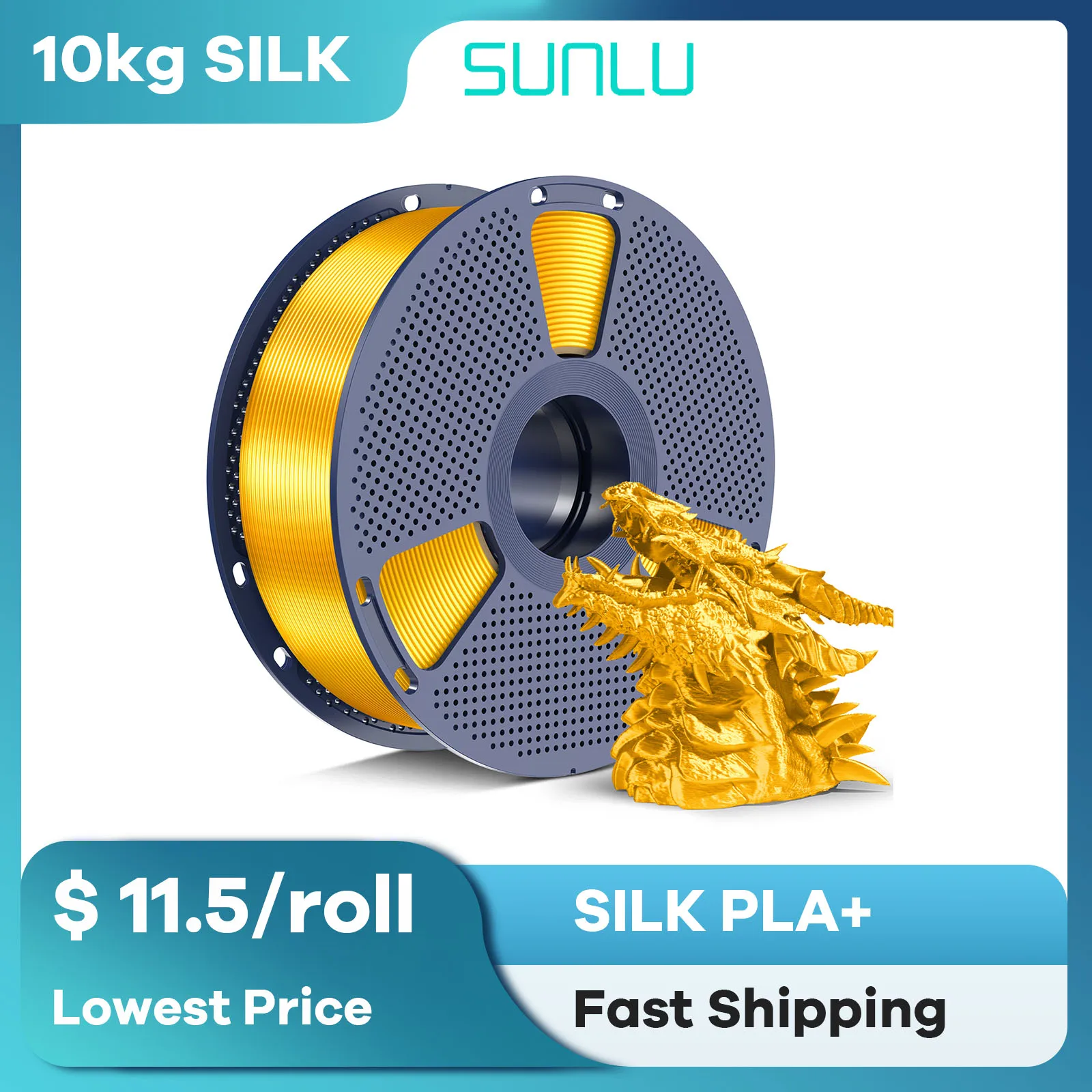
SUNLU Silk PLA+ 1.75mm Filament
Official Store Deal
Expert Analysis Overview
The Allure of Silk PLA+ for the Dedicated Maker
SUNLU Silk PLA+ filament is a distinct offering in the world of 3D printing, tailored for creators who prioritize both aesthetic brilliance and enhanced material properties. This isn't merely another roll of plastic; it represents an upgrade for projects demanding a premium, lustrous finish combined with improved durability. It's a material that encourages experimentation, pushing the boundaries of what home 3D printers can achieve visually and functionally. The visual sheen of silk PLA often transforms ordinary models into captivating display pieces. It's truly eye-catching.
Material Science and Aesthetic Appeal
This filament is composed of Polylactic Acid Plus (PLA+), a modified version of standard PLA. While regular PLA offers ease of printing and biodegradability, PLA+ typically features increased strength, better layer adhesion, and higher impact resistance. The "Silk" designation refers to additives that give prints a unique, glossy, and often iridescent finish, mimicking the appearance of polished metal or silk fabric. This material feels smooth to the touch, almost slippery, a direct result of the surface finish it imparts on printed objects. The tactile experience is notably different from standard matte PLA.
Compared to a generic, unoptimized PLA, the Silk PLA+ blend aims to mitigate common frustrations like brittle prints or visible layer lines that detract from the final product. The enhanced formulation provides a more forgiving printing experience, particularly for intricate geometries where structural integrity and visual continuity are paramount. For makers keen on evolving their output, this material provides a tangible step forward.
Printing Performance and Optimization
The recommended printing temperature for SUNLU Silk PLA+ ranges from 205-215°C, with the heated bed typically set between 60-80°C. This range is fairly standard for PLA variants, making it accessible to most FDM printers. Printing speeds are suggested between 50-100mm/s, offering a good balance between speed and print quality. Faster speeds might slightly reduce the silk effect or introduce minor artifacts, but slower speeds truly enhance the luster.
Achieving optimal results with silk PLA often involves fine-tuning retraction settings to combat stringing, which can be more prevalent with glossy filaments. A retraction distance of 0.8-1.5mm and a speed of 40-60mm/s typically serves as a good starting point for direct drive extruders. Bowden setups might require greater distances. Experimentation is key. The material flows consistently once dialed in.
When comparing this to a standard matte PLA, the slightly wider temperature window for optimal sheen and structural integrity requires a bit more attention. However, the payoff in visual quality is substantial. Makers frequently share their specific slicer profiles within community forums, providing a wealth of information for new users to quickly adapt. This collaborative spirit is a cornerstone of the 3D printing hobby.
The 10kg Spool Advantage and Reusable Design
This offering of a 10kg spool of filament presents significant advantages for the prolific maker or small print farm. Bulk purchasing drastically reduces the cost per kilogram, making large-scale projects more economically viable. Imagine needing to print hundreds of small parts; constantly swapping 1kg spools becomes a chore. A 10kg spool streamlines workflow, minimizing interruptions during long print jobs. It's a huge time saver.
A standout feature is the reusable filament spool, compatible with Bambu Lab refill filaments. This design choice addresses both cost and environmental concerns. Instead of discarding a plastic spool after each use, the core can be refilled, reducing plastic waste and potentially offering a lower price point for future filament purchases. This aligns perfectly with the maker mindset of optimizing resources and reducing ecological footprint. It's a clever solution.
This system offers a clear upgrade over traditional disposable spools. Users who typically accumulate dozens of empty spools will appreciate the reduction in clutter and the simplified storage. The rotary locking mechanism ensures secure loading, preventing snags or unwinding during critical print operations. This commitment to sustainability and practical design makes the SUNLU filament a thoughtful choice for the forward-thinking maker.
Durability and Functional Prints
Despite its aesthetic focus, the "PLA+" designation indicates improved mechanical properties. The printed dragon and headphone hook examples in the visuals demonstrate the material's capability for both intricate, decorative pieces and functional, load-bearing parts. The enhanced strength means parts are less likely to snap under moderate stress, a common limitation of standard PLA. This adds versatility.
For those looking to create custom tools, jigs, or even upgraded components for their 3D printer, this filament's toughness is a welcome attribute. The glossy finish, while beautiful, also tends to hide minor surface imperfections more effectively than matte finishes, contributing to a perception of higher quality in functional prints. The layer adhesion is noticeably stronger than basic PLA, resisting delamination even under moderate bending forces. This makes prints more reliable.
This material bridges the gap between purely aesthetic filaments and more engineering-focused options like PETG, offering a blend that satisfies many common maker needs. It allows for the creation of prototypes that not only perform well but also look professionally finished, an important consideration for presenting designs or creating end-use products. The tactile feedback of a strong, silky print is satisfying.
Community and Customization Potential
The vibrant 3D printing community provides an invaluable resource for optimizing and troubleshooting specific filaments like SUNLU Silk PLA+. Forums and social media groups are replete with users sharing their successful print settings, modifications for better flow, and custom parts designed specifically for handling large spools or improving filament drying. This collaborative environment empowers users to get the most out of their material.
For the tinkerer, the stable properties of PLA+ make it an excellent candidate for experimenting with custom printer parts. Imagine printing upgraded fan ducts, specialized filament guides, or even custom enclosures with a material that offers both strength and a visually appealing finish. The consistency of the filament diameter (1.75mm with a tolerance of ±0.02mm) ensures reliable extrusion, which is crucial for precision parts. Small deviations can cause big problems.
This filament encourages continued engagement with the 3D printing process, moving beyond simply loading and printing. It invites users to become part of a larger ecosystem of problem-solvers and innovators, leveraging shared knowledge to refine their craft and improve their machines. The ability to modify and improve the 3D printer itself, using materials like this, is a core aspect of the maker ethos. It's a continuous learning curve.
The Final Polish
Owning SUNLU Silk PLA+ means embracing a filament that elevates creations with a distinctive visual appeal and improved resilience. Imagine your next project, perhaps a detailed miniature or a functional desk organizer, gleaming with a metallic luster that immediately catches the eye. The smooth finish and robust nature of the prints allow for greater confidence in both their appearance and their longevity. The bulk 10kg spool ensures an uninterrupted flow of creativity, reducing the hassle of frequent filament changes and providing significant long-term value. This filament allows makers to produce prints that stand out, reflecting a dedication to quality and an appreciation for refined aesthetics. It's a tool for elevated craftsmanship.