SUNLU S4 3D Filament Dryer Box
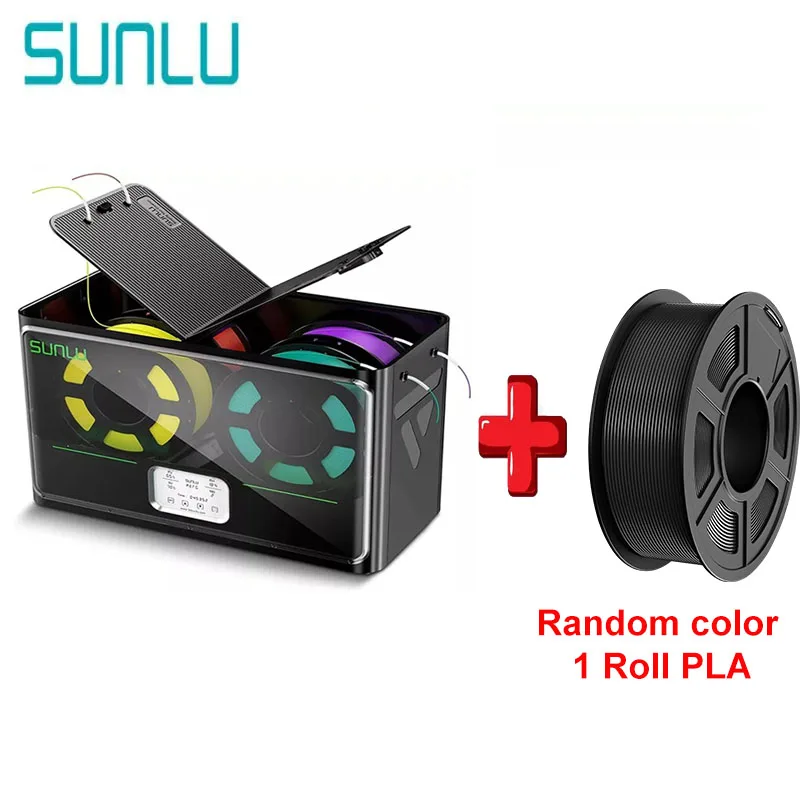
Official Store Deal
Expert Analysis Overview
The SUNLU S4 Filament Dryer Box is a high-capacity environmental control unit designed for serious 3D printing enthusiasts and small-scale print farms. This device addresses the critical issue of moisture absorption in 3D printing filaments, a pervasive problem that frequently degrades print quality and leads to costly failures. Its robust design and feature set position it as a significant upgrade over passive drying methods or smaller, single-spool alternatives, catering to users who prioritize consistent print quality and material longevity.
Filament drying is an often-underestimated aspect of successful 3D printing. The SUNLU S4 aims to mitigate the common frustrations associated with moisture-laden filament, such as stringing, bubbling, poor layer adhesion, and nozzle clogs. By actively heating and circulating air, the dryer removes absorbed moisture, returning the filament to its optimal printing state.
Visible material degradation in damp filament often manifests as audible popping or crackling during extrusion. This indicates water vaporizing rapidly in the hot end, causing micro-explosions that compromise the structural integrity and aesthetic finish of printed parts. A dedicated filament dryer like the S4 directly counteracts these issues.
Compared to merely storing filament in airtight containers with desiccant, which primarily prevents *further* moisture absorption, active drying units like the S4 *remove* existing moisture. This distinction is crucial for materials like Nylon (PA) or PVA, which are highly hygroscopic and can absorb significant moisture even in relatively short periods. The S4 offers a proactive solution rather than a purely preventative one.
One of the most compelling features of the SUNLU S4 is its super large space, accommodating up to four 1KG filament rolls simultaneously. This generous capacity is a game-changer for multi-color or multi-material printing setups, allowing users to keep multiple spools primed and ready for use.
The ability to dry four spools concurrently significantly streamlines workflow, particularly for users running multiple 3D printers or engaging in complex projects requiring frequent filament changes. It eliminates the downtime often associated with drying individual spools, which can take several hours per roll. This capacity means less waiting.
Many standard filament dryers are limited to one or two spools, forcing users to rotate filaments in and out of the drying chamber. The S4's quad-spool design means a print farm operator can keep a variety of essential filaments — perhaps PLA, PETG, ABS, and a support material — all at optimal dryness. This contrasts sharply with smaller units that necessitate constant swapping, interrupting continuous printing operations.
The S4 boasts high compatibility with a wide range of filament types, including PLA, PETG, ABS, TPU, PA, HIPS, WOOD, ASA, and PC. This broad spectrum ensures that users are not limited in their material choices by the dryer's capabilities. Each material has specific drying requirements, and the S4 is designed to meet them.
Different filaments absorb moisture at varying rates and require distinct temperature and duration settings for effective drying. The S4's control system allows for precise adjustments, crucial for delicate materials like TPU or highly hygroscopic ones like Nylon.
Unlike generic food dehydrators or DIY drying solutions that often lack precise temperature control or consistent heat distribution, the S4 provides a tailored environment for specific filament types. This dedicated approach minimizes the risk of overheating or under-drying, preserving filament properties and ensuring optimal print performance across the material spectrum.
At the core of the S4's performance is its 350W PTC heater, which facilitates rapid heating and efficient moisture removal. PTC (Positive Temperature Coefficient) heaters are self-regulating, meaning their resistance increases with temperature, providing inherent overheat protection and stable heat output. This makes them a safe and reliable choice for filament drying applications.
The 350W power rating is substantial for a filament dryer, enabling quicker attainment of target temperatures and more efficient drying cycles. This higher wattage translates directly into reduced waiting times for users, a critical factor for busy makers or those with tight project deadlines. Faster drying means more printing.
Many entry-level filament dryers operate with significantly lower wattage, often in the 40-100W range, which can lead to prolonged drying times or insufficient heat for heavily saturated filaments. The S4's 350W PTC heater ensures that even challenging materials like PA can reach their optimal drying temperatures and shed moisture effectively in a reasonable timeframe. It's a noticeable performance difference.
The SUNLU S4 features an integrated display and controls, simplifying operation. This user interface provides direct access to temperature and time settings, allowing for easy configuration based on the filament type being dried. Clear monitoring is essential for precise control.
For makers and tinkerers, the presence of an integrated display and accessible controls hints at potential avenues for modification. While not explicitly stated, such systems often run on embedded microcontrollers, which in some cases can be accessed for custom firmware. This could allow for more granular control, logging of drying cycles, or integration into larger smart home or print farm management systems.
Compared to dryers that rely on simple dials or fixed presets, the S4's digital interface offers greater precision and feedback. This accuracy is invaluable for experimental filament types or for fine-tuning drying profiles to achieve specific material properties. The level of control makes a difference.
The physical construction of the SUNLU S4 appears designed for durability and extended use. The enclosure protects the filament from dust and ambient humidity during the drying process, and the internal layout seems optimized for heat distribution.
For a permanent fixture in a workshop or a print farm, the build quality is important. The unit's ability to withstand continuous operation for several hours or even days, as required for some highly hygroscopic filaments, speaks to its engineering. This durability reduces the need for frequent replacements.
Considering the typical environment of a 3D printing workshop – often dusty or susceptible to temperature fluctuations – a robust enclosure helps maintain a stable internal environment for the filament. This focus on long-term stability distinguishes it from more temporary or less protected drying solutions.
The S4 incorporates third-level security protection, a crucial aspect for any heating appliance intended for prolonged operation. While specific details are not provided, this typically refers to multiple layers of safety mechanisms, such as over-temperature protection, short-circuit prevention, and potentially a fuse or thermal cutoff. Safety is paramount when dealing with heat.
Operating heating elements for extended periods demands robust safety protocols. The inclusion of multi-level security measures provides reassurance that the device is designed to prevent overheating or electrical faults, reducing fire risk. This is a significant consideration for unattended operation.
Unlike improvised drying solutions that may lack proper safety certifications or integrated protective circuits, the S4's stated security features align with expectations for dedicated consumer electronics. This adherence to safety standards provides peace of mind for users who might leave the dryer running overnight or for long durations. It's a professionally engineered product.
The SUNLU S4, with its defined dimensions and visible components like fans and heaters, presents intriguing possibilities for the maker community. Its super large space could be adapted for custom spool holders, desiccant trays, or even integrated humidity sensors that communicate with external systems. Makers often find ways to enhance functionality.
Imagine a scenario where a tinkerer integrates a Raspberry Pi or ESP32 microcontroller to monitor internal humidity and temperature, automatically adjusting drying cycles based on real-time data. The S4's relatively open internal volume suggests room for such additions without major structural modifications. This opens up advanced control options.
Compared to fully enclosed, proprietary systems, the S4's design appears to offer a degree of accessibility for those inclined to experiment. The standard components, such as the PTC heater and fans, might also be serviceable or even upgradeable by the community, extending the life and capabilities of the unit beyond its factory specifications. This encourages active user involvement.
Investing in a dedicated filament dryer like the SUNLU S4 translates into significant long-term value for a 3D printing setup. By ensuring filaments are always at their optimal dryness, users will experience fewer failed prints, reduced material waste, and consistently higher print quality. This directly impacts the return on investment for filament purchases.
Consider the cumulative cost of wasted filament from failed prints due to moisture. A single 1KG spool of specialty filament can be expensive. The S4 helps protect that investment by preserving material quality, even for spools that have been exposed to humid environments for extended periods. It saves money over time.
The S4 ultimately empowers users to achieve professional-grade results from their 3D printers, regardless of ambient humidity conditions. The ability to reliably dry and store multiple spools means that print quality becomes a function of printer calibration and model design, rather than being compromised by degraded material. This consistency is invaluable for serious projects.
Imagine confidently initiating a multi-day print, knowing that all four spools of filament in the SUNLU S4 are perfectly conditioned, ready to feed your printer without a hitch. Visualize intricate details emerging flawlessly, layer after layer, free from the tell-tale signs of moisture contamination. This dryer simplifies the complex variables of 3D printing, allowing your creativity to flow unimpeded, producing professional-grade parts with remarkable consistency and reliability, project after project.
Optimizing Filament Integrity for Superior Prints
Filament drying is an often-underestimated aspect of successful 3D printing. The SUNLU S4 aims to mitigate the common frustrations associated with moisture-laden filament, such as stringing, bubbling, poor layer adhesion, and nozzle clogs. By actively heating and circulating air, the dryer removes absorbed moisture, returning the filament to its optimal printing state.
Visible material degradation in damp filament often manifests as audible popping or crackling during extrusion. This indicates water vaporizing rapidly in the hot end, causing micro-explosions that compromise the structural integrity and aesthetic finish of printed parts. A dedicated filament dryer like the S4 directly counteracts these issues.
Compared to merely storing filament in airtight containers with desiccant, which primarily prevents *further* moisture absorption, active drying units like the S4 *remove* existing moisture. This distinction is crucial for materials like Nylon (PA) or PVA, which are highly hygroscopic and can absorb significant moisture even in relatively short periods. The S4 offers a proactive solution rather than a purely preventative one.
Expansive Capacity and Broad Material Compatibility
One of the most compelling features of the SUNLU S4 is its super large space, accommodating up to four 1KG filament rolls simultaneously. This generous capacity is a game-changer for multi-color or multi-material printing setups, allowing users to keep multiple spools primed and ready for use.
The ability to dry four spools concurrently significantly streamlines workflow, particularly for users running multiple 3D printers or engaging in complex projects requiring frequent filament changes. It eliminates the downtime often associated with drying individual spools, which can take several hours per roll. This capacity means less waiting.
Many standard filament dryers are limited to one or two spools, forcing users to rotate filaments in and out of the drying chamber. The S4's quad-spool design means a print farm operator can keep a variety of essential filaments — perhaps PLA, PETG, ABS, and a support material — all at optimal dryness. This contrasts sharply with smaller units that necessitate constant swapping, interrupting continuous printing operations.
The S4 boasts high compatibility with a wide range of filament types, including PLA, PETG, ABS, TPU, PA, HIPS, WOOD, ASA, and PC. This broad spectrum ensures that users are not limited in their material choices by the dryer's capabilities. Each material has specific drying requirements, and the S4 is designed to meet them.
Different filaments absorb moisture at varying rates and require distinct temperature and duration settings for effective drying. The S4's control system allows for precise adjustments, crucial for delicate materials like TPU or highly hygroscopic ones like Nylon.
Unlike generic food dehydrators or DIY drying solutions that often lack precise temperature control or consistent heat distribution, the S4 provides a tailored environment for specific filament types. This dedicated approach minimizes the risk of overheating or under-drying, preserving filament properties and ensuring optimal print performance across the material spectrum.
Efficient and Rapid Thermal Management
At the core of the S4's performance is its 350W PTC heater, which facilitates rapid heating and efficient moisture removal. PTC (Positive Temperature Coefficient) heaters are self-regulating, meaning their resistance increases with temperature, providing inherent overheat protection and stable heat output. This makes them a safe and reliable choice for filament drying applications.
The 350W power rating is substantial for a filament dryer, enabling quicker attainment of target temperatures and more efficient drying cycles. This higher wattage translates directly into reduced waiting times for users, a critical factor for busy makers or those with tight project deadlines. Faster drying means more printing.
Many entry-level filament dryers operate with significantly lower wattage, often in the 40-100W range, which can lead to prolonged drying times or insufficient heat for heavily saturated filaments. The S4's 350W PTC heater ensures that even challenging materials like PA can reach their optimal drying temperatures and shed moisture effectively in a reasonable timeframe. It's a noticeable performance difference.
Intuitive Interface and Potential for Customization
The SUNLU S4 features an integrated display and controls, simplifying operation. This user interface provides direct access to temperature and time settings, allowing for easy configuration based on the filament type being dried. Clear monitoring is essential for precise control.
For makers and tinkerers, the presence of an integrated display and accessible controls hints at potential avenues for modification. While not explicitly stated, such systems often run on embedded microcontrollers, which in some cases can be accessed for custom firmware. This could allow for more granular control, logging of drying cycles, or integration into larger smart home or print farm management systems.
Compared to dryers that rely on simple dials or fixed presets, the S4's digital interface offers greater precision and feedback. This accuracy is invaluable for experimental filament types or for fine-tuning drying profiles to achieve specific material properties. The level of control makes a difference.
Robust Design for Extended Operation
The physical construction of the SUNLU S4 appears designed for durability and extended use. The enclosure protects the filament from dust and ambient humidity during the drying process, and the internal layout seems optimized for heat distribution.
For a permanent fixture in a workshop or a print farm, the build quality is important. The unit's ability to withstand continuous operation for several hours or even days, as required for some highly hygroscopic filaments, speaks to its engineering. This durability reduces the need for frequent replacements.
Considering the typical environment of a 3D printing workshop – often dusty or susceptible to temperature fluctuations – a robust enclosure helps maintain a stable internal environment for the filament. This focus on long-term stability distinguishes it from more temporary or less protected drying solutions.
Safety and Operational Security
The S4 incorporates third-level security protection, a crucial aspect for any heating appliance intended for prolonged operation. While specific details are not provided, this typically refers to multiple layers of safety mechanisms, such as over-temperature protection, short-circuit prevention, and potentially a fuse or thermal cutoff. Safety is paramount when dealing with heat.
Operating heating elements for extended periods demands robust safety protocols. The inclusion of multi-level security measures provides reassurance that the device is designed to prevent overheating or electrical faults, reducing fire risk. This is a significant consideration for unattended operation.
Unlike improvised drying solutions that may lack proper safety certifications or integrated protective circuits, the S4's stated security features align with expectations for dedicated consumer electronics. This adherence to safety standards provides peace of mind for users who might leave the dryer running overnight or for long durations. It's a professionally engineered product.
Community Integration and Modding Potential
The SUNLU S4, with its defined dimensions and visible components like fans and heaters, presents intriguing possibilities for the maker community. Its super large space could be adapted for custom spool holders, desiccant trays, or even integrated humidity sensors that communicate with external systems. Makers often find ways to enhance functionality.
Imagine a scenario where a tinkerer integrates a Raspberry Pi or ESP32 microcontroller to monitor internal humidity and temperature, automatically adjusting drying cycles based on real-time data. The S4's relatively open internal volume suggests room for such additions without major structural modifications. This opens up advanced control options.
Compared to fully enclosed, proprietary systems, the S4's design appears to offer a degree of accessibility for those inclined to experiment. The standard components, such as the PTC heater and fans, might also be serviceable or even upgradeable by the community, extending the life and capabilities of the unit beyond its factory specifications. This encourages active user involvement.
Long-Term Value and Print Quality Assurance
Investing in a dedicated filament dryer like the SUNLU S4 translates into significant long-term value for a 3D printing setup. By ensuring filaments are always at their optimal dryness, users will experience fewer failed prints, reduced material waste, and consistently higher print quality. This directly impacts the return on investment for filament purchases.
Consider the cumulative cost of wasted filament from failed prints due to moisture. A single 1KG spool of specialty filament can be expensive. The S4 helps protect that investment by preserving material quality, even for spools that have been exposed to humid environments for extended periods. It saves money over time.
The S4 ultimately empowers users to achieve professional-grade results from their 3D printers, regardless of ambient humidity conditions. The ability to reliably dry and store multiple spools means that print quality becomes a function of printer calibration and model design, rather than being compromised by degraded material. This consistency is invaluable for serious projects.
Imagine confidently initiating a multi-day print, knowing that all four spools of filament in the SUNLU S4 are perfectly conditioned, ready to feed your printer without a hitch. Visualize intricate details emerging flawlessly, layer after layer, free from the tell-tale signs of moisture contamination. This dryer simplifies the complex variables of 3D printing, allowing your creativity to flow unimpeded, producing professional-grade parts with remarkable consistency and reliability, project after project.