Sunlu Filament Connector FC01 Fusion Splicer
Official Store Deal
Expert Analysis Overview
The Filament Alchemist's Tool: Sunlu FC01 Fusion Splicer
The Sunlu Filament Connector FC01 Fusion Splicer is a precision tool engineered for 3D printing enthusiasts and professionals who aim to maximize filament utility and minimize material waste. It is a critical piece of equipment for makers, enabling the seamless fusion of 1.75mm diameter PLA, ABS, PETG, PCL, PA, and PC filaments. This device is a significant upgrade from manual splicing methods, offering consistent and reliable filament bonds that can drastically improve print success rates and overall material efficiency.
Embracing Filament Economy
Many makers face the frustration of accumulating short filament ends. These remnants often become waste, or at best, are relegated to small, non-critical prints. The FC01 directly addresses this pain point. It transforms these disparate lengths into usable, continuous strands, ensuring every last meter of expensive material finds its purpose.
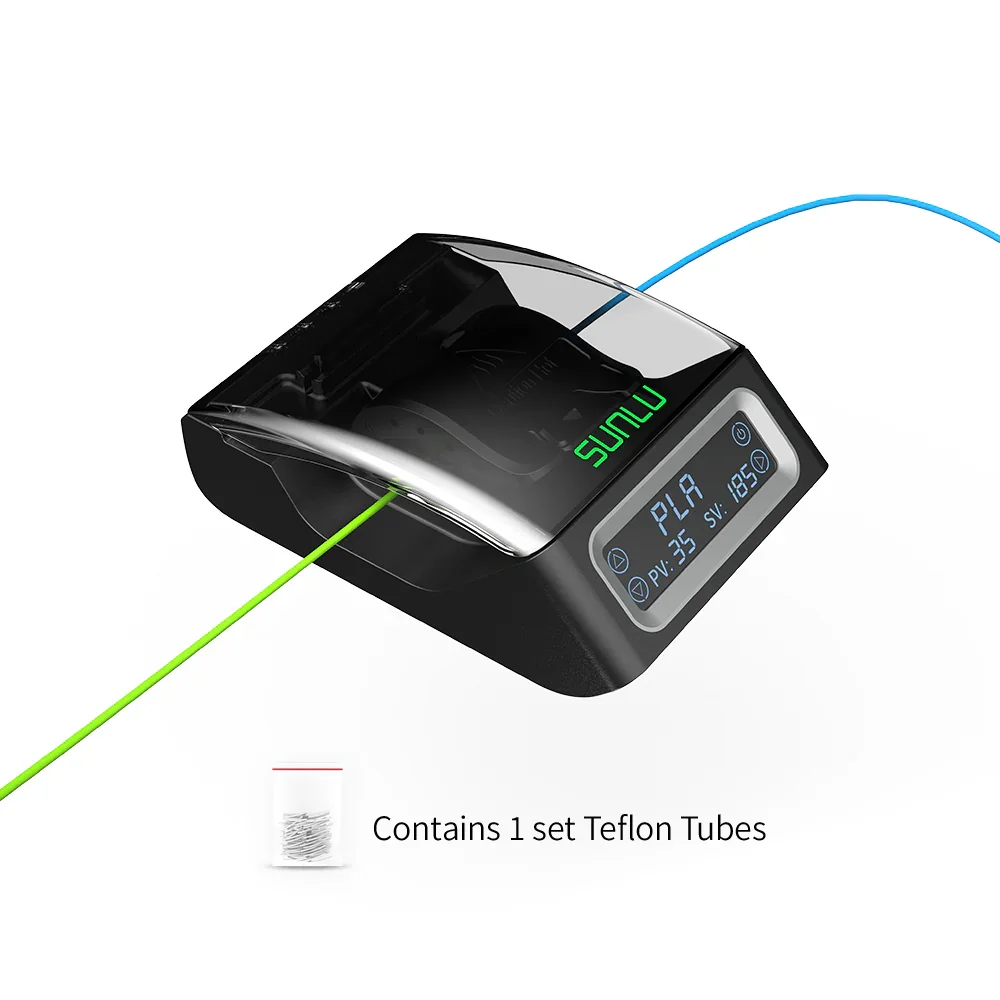
The visible design emphasizes user-friendliness, with clear indicators and accessible controls. The device appears robust. It is a practical solution for filament management.
Compared to discarding filament, this tool offers a tangible return on investment. The cost savings from salvaged material quickly offset the initial purchase price, making it an economically sound choice for any active 3D printing setup. This capability significantly enhances the sustainability aspect of 3D printing by reducing environmental impact through less material waste.
Precision Heating for Strong Bonds
At the core of the FC01's functionality is its controlled heating element. The device is capable of heating up to 240°C, a temperature range suitable for welding a broad spectrum of common 3D printing plastics, including PLA, ABS, and PETG. This controlled thermal environment is crucial for achieving strong, consistent fusions.
The visual data indicates specific temperature presets for different filament types: 85°C for PCL, 185°C for PLA, 220°C for ABS, 210°C for PETG, and 230°C for PA/PC. These pre-calibrated settings simplify the fusion process. Users can select the appropriate material, and the device manages the heating cycle, reducing guesswork and increasing the likelihood of a successful splice. A small temperature tolerance of approximately 3°C between the displayed and actual temperature is noted, which is acceptable for most standard filaments but may require minor adjustments for highly sensitive or exotic materials.
Manual methods for joining filament, such as using a lighter or heat gun, often result in inconsistent bonds, bubbles, or brittle sections. The FC01's internal heating mechanism, along with its structured filament guides, ensures even heat distribution and proper alignment, leading to much more reliable and print-ready connections. This consistency is paramount for long, uninterrupted print jobs where filament integrity is critical.
Streamlined Operation and Workflow Integration
The FC01 is designed for straightforward integration into any 3D printing workflow. Its compact form factor means it won't clutter a workspace, and its portability allows for easy movement between different printing stations or storage. This tool isn't just about repairing; it's about optimizing.
Operating the device involves a few simple steps: selecting the filament type, inserting the ends, and initiating the heating process. The digital display provides real-time feedback on temperature and status, keeping the user informed. This streamlined process minimizes downtime, allowing makers to quickly prepare new filament rolls from remnants or repair breaks without significant delays to their projects.
Unlike ad-hoc solutions, the FC01 provides a dedicated and repeatable process. This repeatability is a key advantage for makers who value consistency in their print quality. It reduces the variables associated with filament handling, allowing for more focus on print parameters and design iterations rather than material preparation.
Durability and Maker-Centric Design
Construction details suggest a durable and practical device. The black casing and clear display give it a professional appearance suitable for both hobbyist workshops and more professional environments. The inclusion of Teflon tubes is a thoughtful addition, designed to facilitate smooth filament loading and protect the filament during the heating process. These small details contribute to the overall user experience and longevity of the product.
The internal components, as shown in the exploded view, reveal a focused design around the heating chamber and filament path. This direct approach to filament fusion suggests reliability. The device is built to perform its specific task efficiently, without unnecessary complexity. The 'safe protection against burnt hands' feature mentioned highlights a commitment to user safety, which is always appreciated in tools that involve heating elements.
For the tinkerer, the simplicity of the design also implies potential for modification or repair. Community support often grows around tools that are easily understood and can be serviced. The visible components suggest a device that can be maintained. This fosters a sense of ownership and encourages long-term use, aligning with the maker ethos of understanding and improving tools.
Community and Customization Potential
The Sunlu FC01, by its very nature, encourages a community-driven approach to problem-solving in 3D printing. Users can share tips for optimal fusion settings for various exotic filaments or even discuss potential upgrades. The explicit mention of a +/-3°C temperature tolerance opens the door for advanced users to experiment with precise temperature offsets, fine-tuning the fusion process for unique material blends or specific strength requirements.
Future iterations or user-created modifications could explore alternative clamping mechanisms or even integrate smart home connectivity for remote monitoring. The device's fundamental design provides a solid base. Its straightforward operation makes it accessible for modification. This creates opportunities for users to experiment with custom parts, such as alternative filament guides or cooling jigs, to further optimize the splicing process for specific applications. The FC01 is not just a tool; it's a platform for improvement.
Expanding the Filament Horizon
This fusion splicer significantly broadens the practical application of leftover filament. It transforms what would otherwise be waste into a valuable resource, allowing for more ambitious projects without the fear of running out of material mid-print. Imagine starting a large print knowing that even your smallest filament scraps can contribute to its completion. The device ensures continuous production. It empowers creators to focus on their designs.
Consider the scenario where a critical print is underway, and the filament spool runs dry. Instead of a failed print and wasted hours, the FC01 allows for a quick splice, seamlessly continuing the job. This capability drastically reduces print failures caused by material exhaustion, saving both time and precious material. It's a reliable backup system.
For makers, the ability to join different colors or material types (within compatibility limits) also opens up new creative avenues. It facilitates multi-color prints without needing a multi-material printer, or allows for experimental material blends. This expands the artistic and functional possibilities. The FC01 empowers users to push creative boundaries.
The Future of Filament Management
Owning the Sunlu Filament Connector FC01 means embracing a future of efficient, waste-conscious 3D printing. It means saying goodbye to the frustration of discarded filament and interrupted prints, and instead, enjoying the satisfaction of utilizing every last bit of your material. Imagine the freedom of starting any print, no matter how large, with the confidence that you have an endless supply of filament, seamlessly joined and ready for action. Your workshop will operate with greater efficiency, your projects will run smoother, and your material costs will shrink, allowing you to invest more in new ideas and innovative designs. This tool fundamentally changes the economics of your 3D printing endeavors, making every spool go further and every print more sustainable. It's an investment in smarter making.