Sony Dual-Interface USB-C & USB 3.0 Flash Drive
Official Store Deal
Expert Analysis Overview
The Sony Dual-Interface USB-C & USB 3.0 Flash Drive is a highly ambitious portable storage solution targeting users who demand cross-device compatibility and significant capacity on a budget. This device presents itself as a versatile tool for quick data transfers between various platforms, from modern smartphones and tablets with USB-C ports to traditional laptops and desktops utilizing USB-A 3.0. Its dual connectivity is a primary draw.
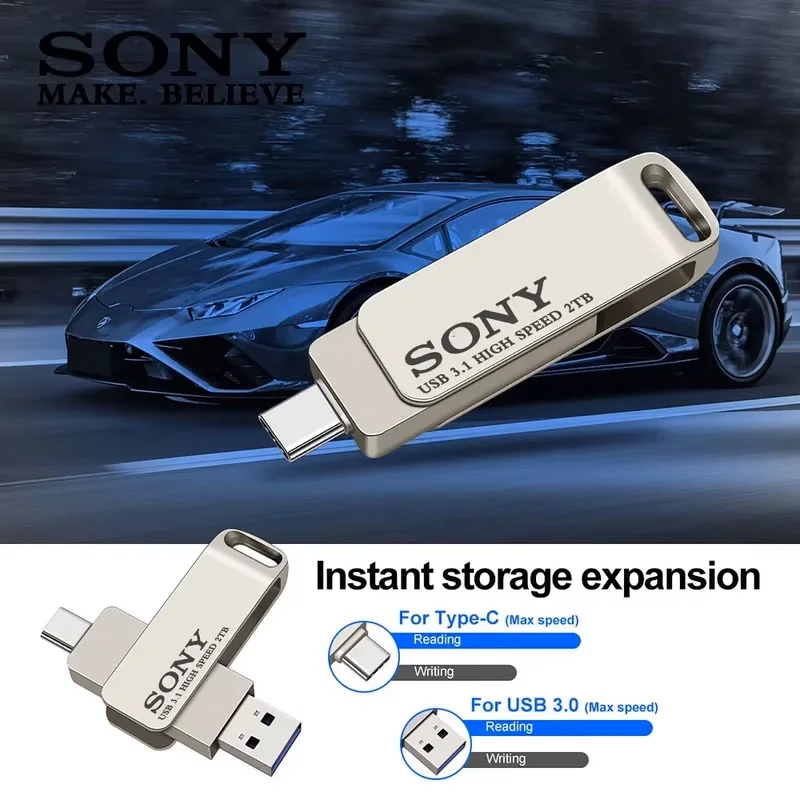
This flash drive's standout feature is its dual-interface design. It integrates both a USB Type-C connector and a standard USB 3.0 Type-A connector. This means universal compatibility.
For users constantly moving files between different ecosystems, this design eliminates the need for multiple adapters or drives. Imagine transferring large video files from a new Android phone to an older desktop PC without a hitch. This capability streamlines workflows significantly.
Unlike many single-interface drives that force users into a specific port standard, this unit offers immediate access. It's a direct solution for mixed technology environments.
The product advertises an astonishing capacity range, from 1TB up to 64TB. This is an extraordinary claim for a device priced at approximately $5 USD. Such capacities typically command prices hundreds, if not thousands, of times higher.
From a technical standpoint, manufacturing a genuine 64TB flash drive at this size and price point is currently impossible with existing NAND flash technology. This discrepancy strongly suggests the actual usable capacity will be drastically lower, often achieved through firmware manipulation that reports false storage. Data integrity becomes a significant concern.
Standard flash drives typically offer capacities up to 2TB for premium models. The advertised 64TB pushes well beyond current market realities, making it crucial for buyers to manage expectations regarding actual storage. Verify capacity immediately upon purchase.
The drive is marketed as USB 3.0, implying theoretical maximum transfer speeds of up to 5 Gbps (625 MB/s). The promotional material specifically mentions a read speed of 170 MB/s. This is a respectable speed for a flash drive.
However, real-world sustained transfer speeds for budget-tier flash drives, especially those with potentially manipulated firmware, often fall short of advertised figures. Factors like the quality of the NAND flash, the controller chip, and the presence (or absence) of a proper cache significantly impact performance. Moving massive video files quickly requires consistent performance.
Compared to older USB 2.0 drives, which are capped at 480 Mbps (60 MB/s), even a modest USB 3.0 implementation offers a substantial speed upgrade. This allows for faster backups and quicker access to large media libraries. Avoid speed throttling by ensuring connection to a true USB 3.0 port.
The visual evidence indicates a metallic casing, likely an aluminum alloy. This material choice suggests a focus on durability. A metal body offers better protection against physical impacts than plastic alternatives.
Such construction is beneficial for a portable device that will frequently be carried in pockets, bags, or attached to keychains. It resists minor scratches and dings from daily use. The drive needs to withstand daily abuse.
Many entry-level flash drives utilize plastic enclosures, which can crack or break under stress. The metallic build provides a more premium feel and enhanced resilience, an upgrade in physical robustness.
This drive is designed for broad compatibility. Images depict it being used with laptops, smartphones, and tablets. The OTG (On-The-Go) functionality via the USB-C port is particularly useful for mobile users.
For mobile phone users, this means instant storage expansion for photos, videos, and documents without needing a computer as an intermediary. It simplifies media management on the go. Easy access to photos and videos is a key benefit.
Unlike drives that require specific software or drivers, this unit is plug-and-play. It integrates seamlessly into most operating systems, including Windows, macOS, Linux, and Android, providing immediate utility across devices.
With a price point of approximately $5 USD, this flash drive positions itself as an ultra-budget option. This low cost is a primary driver for its appeal, making high-capacity storage seemingly accessible to everyone.
However, the extremely low price, combined with the unrealistic capacity claims, necessitates a cautious approach. The value proposition here is less about genuine high capacity and more about the convenience of dual interfaces at a disposable price. It's a cost-per-use calculation for basic tasks.
Users seeking reliable, genuine high-capacity storage should expect to invest significantly more. This drive offers a cheap alternative for temporary or non-critical data, but it's not a direct competitor to premium, verified storage solutions.
Imagine a scenario where you're quickly offloading a day's worth of 4K drone footage from your USB-C enabled tablet to your desktop for editing, all within minutes. This drive, despite its caveats, aims to provide that immediate, friction-free data exchange. The convenience of its dual connectors means you're never scrambling for an adapter or waiting for cloud uploads. It's about maintaining your digital momentum, ensuring your files are where you need them, when you need them, without unnecessary delays. This drive supports a more fluid digital workflow across all your devices.
Bridging the Connectivity Divide
This flash drive's standout feature is its dual-interface design. It integrates both a USB Type-C connector and a standard USB 3.0 Type-A connector. This means universal compatibility.
For users constantly moving files between different ecosystems, this design eliminates the need for multiple adapters or drives. Imagine transferring large video files from a new Android phone to an older desktop PC without a hitch. This capability streamlines workflows significantly.
Unlike many single-interface drives that force users into a specific port standard, this unit offers immediate access. It's a direct solution for mixed technology environments.
The Capacity Conundrum
The product advertises an astonishing capacity range, from 1TB up to 64TB. This is an extraordinary claim for a device priced at approximately $5 USD. Such capacities typically command prices hundreds, if not thousands, of times higher.
From a technical standpoint, manufacturing a genuine 64TB flash drive at this size and price point is currently impossible with existing NAND flash technology. This discrepancy strongly suggests the actual usable capacity will be drastically lower, often achieved through firmware manipulation that reports false storage. Data integrity becomes a significant concern.
Standard flash drives typically offer capacities up to 2TB for premium models. The advertised 64TB pushes well beyond current market realities, making it crucial for buyers to manage expectations regarding actual storage. Verify capacity immediately upon purchase.
Transfer Velocity Expectations
The drive is marketed as USB 3.0, implying theoretical maximum transfer speeds of up to 5 Gbps (625 MB/s). The promotional material specifically mentions a read speed of 170 MB/s. This is a respectable speed for a flash drive.
However, real-world sustained transfer speeds for budget-tier flash drives, especially those with potentially manipulated firmware, often fall short of advertised figures. Factors like the quality of the NAND flash, the controller chip, and the presence (or absence) of a proper cache significantly impact performance. Moving massive video files quickly requires consistent performance.
Compared to older USB 2.0 drives, which are capped at 480 Mbps (60 MB/s), even a modest USB 3.0 implementation offers a substantial speed upgrade. This allows for faster backups and quicker access to large media libraries. Avoid speed throttling by ensuring connection to a true USB 3.0 port.
Durability in Transit
The visual evidence indicates a metallic casing, likely an aluminum alloy. This material choice suggests a focus on durability. A metal body offers better protection against physical impacts than plastic alternatives.
Such construction is beneficial for a portable device that will frequently be carried in pockets, bags, or attached to keychains. It resists minor scratches and dings from daily use. The drive needs to withstand daily abuse.
Many entry-level flash drives utilize plastic enclosures, which can crack or break under stress. The metallic build provides a more premium feel and enhanced resilience, an upgrade in physical robustness.
Operational Versatility
This drive is designed for broad compatibility. Images depict it being used with laptops, smartphones, and tablets. The OTG (On-The-Go) functionality via the USB-C port is particularly useful for mobile users.
For mobile phone users, this means instant storage expansion for photos, videos, and documents without needing a computer as an intermediary. It simplifies media management on the go. Easy access to photos and videos is a key benefit.
Unlike drives that require specific software or drivers, this unit is plug-and-play. It integrates seamlessly into most operating systems, including Windows, macOS, Linux, and Android, providing immediate utility across devices.
The Budgetary Equation
With a price point of approximately $5 USD, this flash drive positions itself as an ultra-budget option. This low cost is a primary driver for its appeal, making high-capacity storage seemingly accessible to everyone.
However, the extremely low price, combined with the unrealistic capacity claims, necessitates a cautious approach. The value proposition here is less about genuine high capacity and more about the convenience of dual interfaces at a disposable price. It's a cost-per-use calculation for basic tasks.
Users seeking reliable, genuine high-capacity storage should expect to invest significantly more. This drive offers a cheap alternative for temporary or non-critical data, but it's not a direct competitor to premium, verified storage solutions.
Seamless Digital Flow
Imagine a scenario where you're quickly offloading a day's worth of 4K drone footage from your USB-C enabled tablet to your desktop for editing, all within minutes. This drive, despite its caveats, aims to provide that immediate, friction-free data exchange. The convenience of its dual connectors means you're never scrambling for an adapter or waiting for cloud uploads. It's about maintaining your digital momentum, ensuring your files are where you need them, when you need them, without unnecessary delays. This drive supports a more fluid digital workflow across all your devices.