SenseCAP T1000-E Meshtastic Tracker
Official Store Deal
Expert Analysis Overview
The Overclocker's Verdict on Mobile Mesh
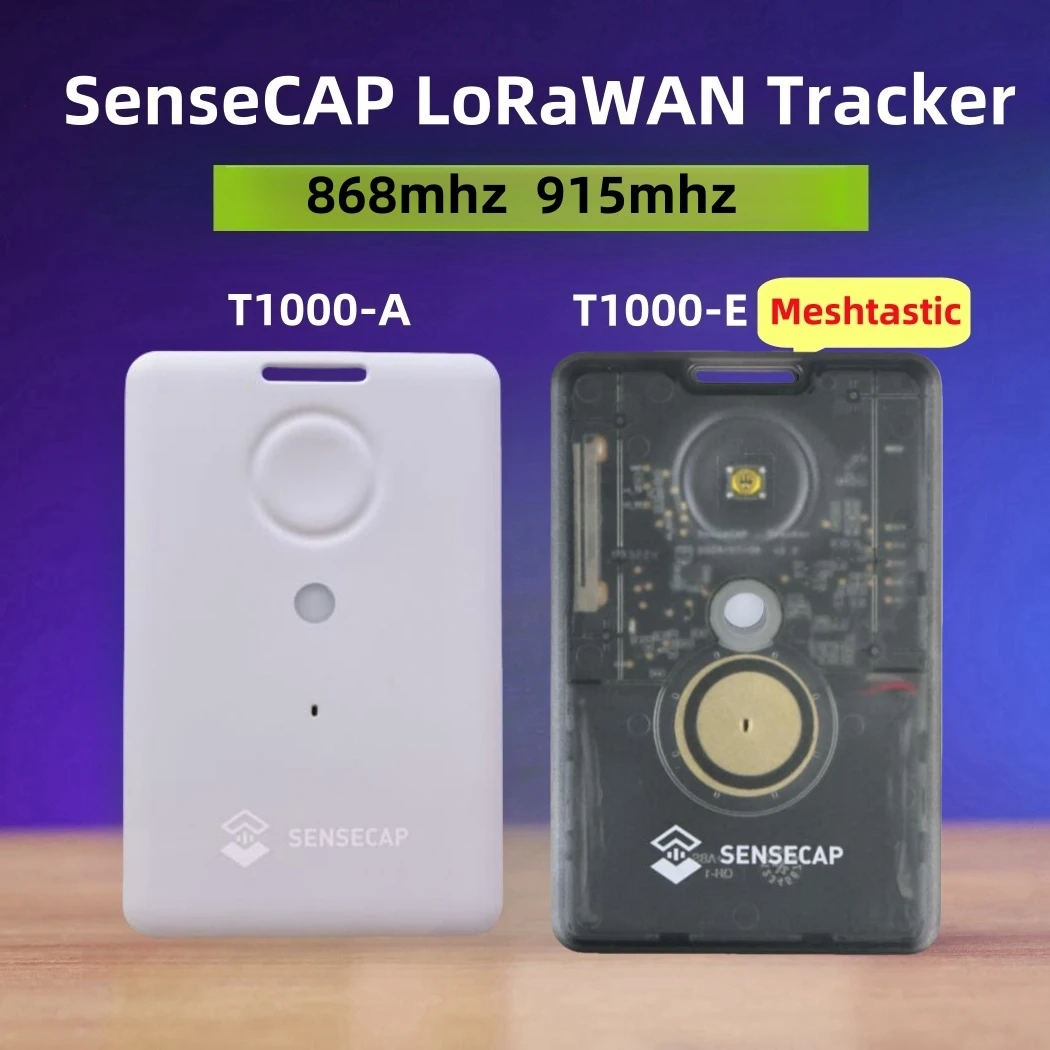
The SenseCAP T1000-E Meshtastic Tracker is a robust, high-performance communication device engineered for users demanding reliable off-grid connectivity and precise location tracking. It targets enthusiasts and professionals who require a compact, durable platform capable of operating beyond conventional network infrastructures, particularly in demanding outdoor environments. This device is not merely a tracker; it is a foundation for pushing the boundaries of low-power, long-range mesh Networking.
Its design integrates critical components that suggest a deliberate focus on resilience and efficiency, making it a prime candidate for those seeking to optimize firmware and squeeze every ounce of performance from its silicon. The unit's inherent capabilities position it as a significant upgrade over generic, less integrated tracking solutions, offering a compelling blend of hardware potential and open-source flexibility.
Engineered for Endurance: Core Silicon Analysis
#
The LR1110 LoRaWAN Transceiver: Range Beyond Spec
The SenseCAP T1000-E integrates the Semtech LR1110 LoRaWAN transceiver, operating across both 868MHz and 915MHz frequency bands. This chip is renowned for its exceptional long-range communication capabilities and low power consumption, critical for extended field deployments.
This specific transceiver allows for maintaining communication over vast distances in remote environments, essential where traditional cellular networks are nonexistent or unreliable. Its architecture implies a base level of efficiency, but the real potential lies in optimizing transmit power and duty cycles to maximize range without compromising stability. Tweaking these parameters can yield significant gains.
Unlike standard, less integrated LoRa modules, the LR1110's advanced features, including passive Wi-Fi and GNSS scanning, suggest a more robust signal integrity and less susceptibility to noise. This is a crucial factor when attempting to maximize transmission power and range beyond factory settings, offering a stable foundation for aggressive tuning.
#
The nRF52840 Microcontroller: Firmware's Playground
At the heart of the T1000-E lies the Nordic nRF52840 microcontroller, featuring an ARM Cortex-M4F processor. This powerful yet energy-efficient chip provides the processing muscle for custom firmware and robust Bluetooth Low Energy (BLE) connectivity.
This microcontroller serves as the primary processing unit, handling all device logic and communication protocols. Its floating-point unit and ample memory offer substantial headroom for complex Meshtastic firmware modifications, enabling advanced features or specialized data processing. The potential for custom code is immense.
Compared to microcontrollers found in more basic trackers, the nRF52840's architecture offers superior power management and computational capacity. This allows for more aggressive clock speed adjustments or the implementation of power-intensive algorithms, provided the power delivery system can sustain peak loads without voltage drops.
#
AG3335 GPS: Precision Under Pressure
Positioning is handled by the AG3335 GPS module, which supports multi-constellation satellite systems. This ensures accurate and rapid location acquisition, vital for reliable tracking in diverse geographical settings.
This module delivers precise positioning data, crucial for both real-time tracking and post-mission analysis. The ability to lock onto multiple satellite constellations significantly reduces Time To First Fix (TTFF) and improves accuracy in challenging environments like urban canyons or dense foliage. Maintaining a strong signal is paramount.
Generic GPS solutions often struggle with signal acquisition and accuracy under adverse conditions. The AG3335, by contrast, offers a more resilient solution, though continuous high-rate position updates can be a significant drain on battery life. Balancing update frequency with power consumption is key to extended operation.
Encasing the Power: Thermal and Structural Integrity
#
The IP65 Shield: Environmental Resilience
The SenseCAP T1000-E boasts an IP65 ingress protection rating. This designation confirms the device is dust-tight and protected against water jets from any direction.
This level of environmental sealing ensures the tracker's operational integrity in harsh outdoor conditions, from dusty desert trails to light rain. The robust enclosure prevents ingress of particulate matter and water, safeguarding the sensitive internal electronics from common field hazards. Durability is a core asset.
Unlike many consumer-grade electronics, which offer minimal protection, the IP65 rating positions the T1000-E for genuine outdoor deployment. This enhanced protection, however, can also act as a thermal barrier, potentially limiting the natural dissipation of heat generated by the internal components, especially under sustained high-power operation.
#
Compact Form Factor: Heat Dissipation Challenges
The device is presented in a card-sized form factor, emphasizing portability and discreet deployment. Its compact dimensions make it easy to carry and integrate with existing gear.
This small footprint is ideal for users who prioritize minimal bulk and weight, allowing the tracker to be attached to backpacks, clothing, or equipment without hindrance. Its unobtrusive nature is a significant advantage for covert operations or personal safety applications. Small size, big impact.
While highly portable, the compact design presents inherent challenges for thermal management. Aggressive overclocking of the nRF52840 or sustained high-power transmissions from the LR1110 will generate heat. The limited surface area and sealed enclosure mean that careful monitoring of operating temperatures is necessary to prevent thermal throttling or long-term component degradation. External cooling solutions might be considered for extreme use cases.
Fueling the Beast: Power Delivery and Longevity
#
Battery Architecture: Sustaining Peak Performance
The SenseCAP T1000-E is powered by an integrated rechargeable battery. This internal power source is designed to provide sustained operation in the field.
An integrated rechargeable battery simplifies power management for the user, eliminating the need for disposable cells. Its capacity dictates the operational endurance of the device, directly impacting mission length between recharges. A stable power supply is non-negotiable.
Compared to devices relying on swappable standard batteries, an integrated unit requires careful charge cycle management. For performance-oriented users, understanding the battery's discharge curve under varying loads—especially when pushing transmit power or GPS update rates—is crucial for predicting real-world longevity. Over-discharging can reduce its lifespan.
#
Charging Protocol: Efficiency for Rapid Deployment
While specific charging details are not extensively detailed, the presence of a USB port implies a standard charging mechanism. Efficient charging is paramount for rapid redeployment.
An efficient charging protocol minimizes downtime, allowing the tracker to be quickly replenished and returned to service. This is particularly important for users who operate on tight schedules or require continuous monitoring capabilities. Fast charging capability would be a significant advantage.
Many portable devices suffer from slow charging times, limiting their practical utility in high-tempo environments. For the T1000-E, optimizing the charging environment—using a high-quality, stable power adapter—ensures the battery receives consistent current without undue stress, preserving its long-term health and readiness.
The Mesh Advantage: Unrestricted Communication
#
Meshtastic Protocol: Open-Source Overclocking Potential
The SenseCAP T1000-E is designed with Meshtastic compatibility. This open-source firmware enables peer-to-peer mesh networking, creating resilient communication channels without reliance on central infrastructure.
Meshtastic transforms the tracker into a powerful mesh node, allowing users to send messages, share locations, and extend network coverage in remote areas. The open-source nature of Meshtastic means the community can develop and deploy custom features, optimize power usage, and even experiment with advanced routing algorithms. This flexibility is a major draw for power users.
Unlike proprietary communication systems, Meshtastic offers unparalleled transparency and customization. This allows for direct manipulation of communication parameters, such as packet size, channel bandwidth, and transmit intervals, enabling users to fine-tune the network for specific performance goals—whether that's maximizing range, throughput, or battery life. The potential for pushing the envelope is inherent.
#
Sensor Integration: Data for Dynamic Optimization
The device includes onboard sensors for temperature, light, and motion. These integrated sensors provide valuable environmental and contextual data.
These sensors allow the tracker to gather real-time information about its surroundings and operational state. Temperature data can be crucial for monitoring the device's thermal performance during strenuous operation. Motion detection can trigger alerts or conserve power when stationary. Contextual data enhances utility.
Many basic trackers only provide location data. The T1000-E's additional sensors offer a richer dataset, enabling more intelligent and adaptive tracking strategies. For example, motion data could be used to dynamically adjust GPS update rates, conserving power when the device is still. This integrated data stream presents opportunities for advanced automation and performance optimization through custom firmware.
The Verdict on Capability: Beyond Stock Limits
The SenseCAP T1000-E Meshtastic Tracker stands as a formidable piece of hardware, offering a robust platform for advanced users. Its combination of high-performance LoRaWAN, a capable microcontroller, and precise GPS, all encased in an IP65-rated shell, makes it an ideal candidate for those who push their gear to the absolute limit. The open-source Meshtastic integration is not just a feature; it is an invitation to explore and redefine its operational parameters. Imagine deploying a network of these, each tuned for maximum range and stability, providing critical communication in environments where all other systems fail. This device offers the capability to build, optimize, and rely on your own communication backbone, making it an indispensable tool for the truly self-reliant. Its potential for customization and raw performance makes it a compelling choice for any enthusiast or professional looking to build a resilient, high-performance mesh network.