RJ45 Ethernet Splitter Adapter
Official Store Deal
Expert Analysis Overview
The Network Connection Splitter: A Gamer's Utility Check
The RJ45 Ethernet Splitter Adapter is a compact, passive network component designed for basic physical port expansion. It is not a switch. This device targets users needing to connect two low-bandwidth devices to a single Ethernet port, prioritizing convenience and cable management over raw, uncompromised network performance. Competitive gamers understand that every millisecond counts, and this adapter’s utility must be evaluated with that critical lens.
Architectural Limitations and Throughput Dynamics
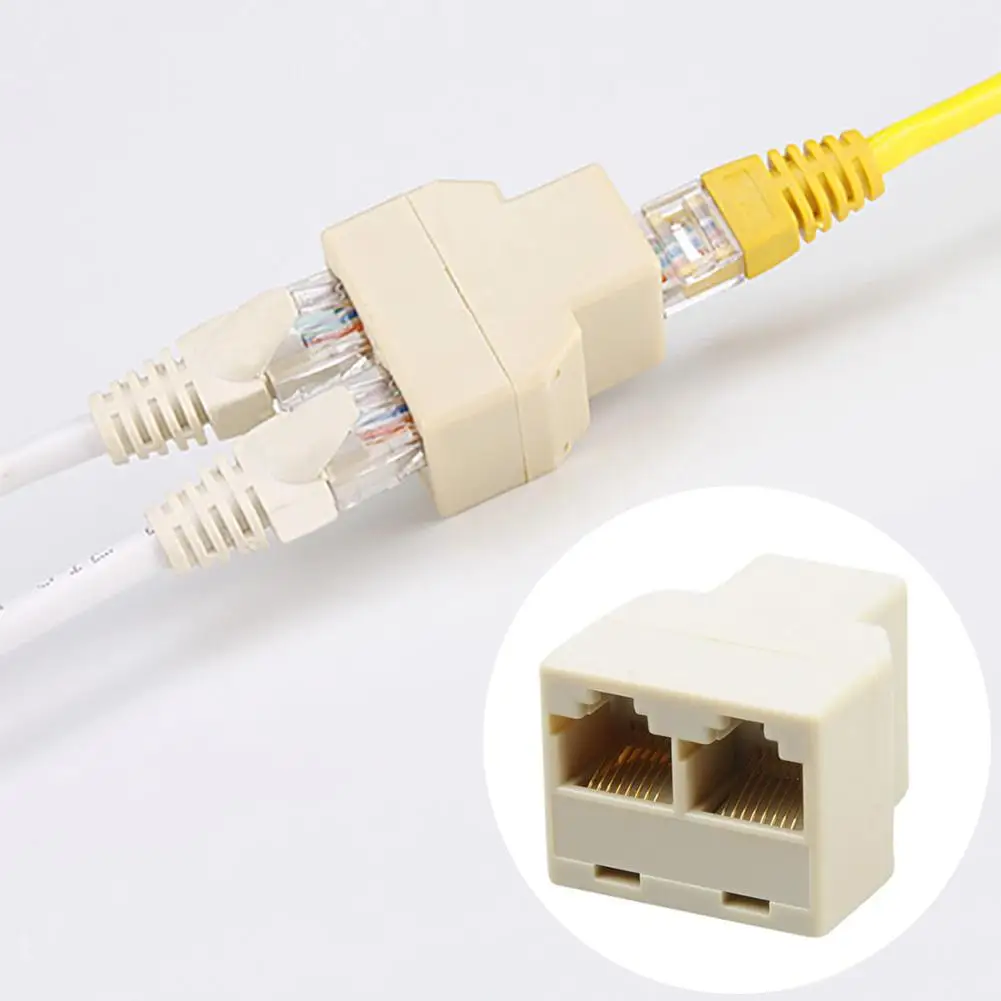
This adapter features a single male RJ45 input feeding into two female RJ45 outputs. The visible design indicates a simple, unpowered Y-split configuration. This means it physically divides the available conductors of a single Ethernet cable across two output ports.
The real-world implication is critical: this device does not function as a network switch. A switch intelligently manages traffic, allowing multiple devices to communicate simultaneously at their rated speeds up to the switch's capacity. This splitter, however, shares the *physical* connection. For standard 100 Mbps or 1 Gbps Ethernet, it typically routes only four of the eight available wires to each output port. This effectively downgrades a gigabit connection to 100 Mbps for *both* connected devices, and often means only one device can actively transmit or receive data effectively at any given moment.
Compared to a dedicated network switch, which is an active device with its own power source and processing capabilities, this splitter is an entirely passive solution. A switch provides dedicated bandwidth per port, making it the standard for high-performance networking. This splitter simply offers a physical workaround for limited ports, a clear downgrade from a true network hub or switch.
Build Quality and Physical Integration
The adapter is constructed from a lightweight, beige plastic housing. The visible RJ45 female ports feature standard gold-plated contacts. Gold plating helps resist corrosion, maintaining connection integrity.
This construction implies a focus on cost-effectiveness and basic functionality. The plastic shell is unlikely to withstand significant physical abuse. Its compact size ensures it does not consume excessive space, which is a minor win for cable management in tight setups.
Unlike more robust, shielded network components, this unshielded plastic housing offers minimal protection against electromagnetic interference (EMI). While perfectly adequate for casual home use, critical gaming setups demand superior shielding to prevent signal degradation, particularly in environments with numerous electronic devices emitting interference. This is a trade-off for its ultra-low price point.
Performance Implications for Competitive Play
For a competitive gamer, network performance is paramount. Latency, packet loss, and consistent bandwidth are non-negotiable. Using this RJ45 splitter for a primary gaming connection—be it a PC or console—is a strategic error.
The splitter's inherent bandwidth limitation to 100 Mbps, coupled with the potential for connection instability due to shared physical lines, directly impacts online gaming. High-speed data transfers are critical. Reduced bandwidth means slower download speeds for game updates and potential bottlenecks during intense multiplayer sessions. More critically, sharing the physical connection introduces a significant risk of increased latency and packet loss. Both are fatal flaws in competitive FPS or MOBA titles where every millisecond dictates victory or defeat. Input lag can feel insurmountable.
Dedicated gaming setups often feature high-quality Cat6 or Cat7 Ethernet cables connected directly to a router or a high-performance network switch. This ensures the full gigabit or even 10-gigabit potential of the network interface is realized. Introducing a passive splitter into this critical path degrades the connection, making it unsuitable for any application requiring low latency or high, stable throughput. This device actively works against the goal of minimizing input lag and ensuring reliable tracking in critical moments.
Strategic Application and Value Proposition
While detrimental for core gaming, this adapter still holds niche utility for a gamer's broader ecosystem. Consider a scenario where a router only has one free Ethernet port, but a smart TV and a streaming stick both require a wired connection. Neither of these devices demands the ultra-low latency or gigabit speeds of a gaming PC.
In such cases, the splitter allows for physical port expansion without the expense or complexity of a full network switch. It simplifies cable management by consolidating two less critical devices onto a single cable run. This frees up the premium, dedicated Ethernet ports on a router or switch for the gaming rig itself, ensuring that the primary competitive setup maintains optimal performance.
This device's value is purely in its ability to manage physical connections for *secondary*, low-priority devices. It prevents the constant unplugging and replugging of cables, which can wear out ports over time. For less demanding applications like smart home hubs, IP cameras, or certain streaming devices, the bandwidth limitation is often negligible. The low cost makes it an attractive organizational tool, particularly if a full switch is overkill or budget-prohibitive for these minor connections. It prevents unnecessary wear and tear on your router's ports.
Imagine a battle station where your gaming PC is directly wired, enjoying uncompromised speeds and minimal latency. Meanwhile, a media server and a smart display, which don't demand gigabit speeds, share a single port through this splitter. Your setup remains clean, organized, and, most importantly, your competitive edge is preserved. This adapter ensures your primary gaming connection remains pristine, while auxiliary devices still benefit from a stable, wired connection without tying up crucial high-performance ports. You get to maintain a pristine, dedicated pipeline for your gaming hardware, pushing every frame with minimal delay, while lesser devices share a practical, cost-effective link.