Raspberry Pi Zero / Zero W / Zero 2W
Official Store Deal
Expert Analysis Overview
The Raspberry Pi Zero series represents a spectrum of compact, high-potential single-board computers, engineered for enthusiasts pushing the boundaries of embedded systems and extreme miniaturization. This lineup offers distinct capabilities, from the foundational Zero to the significantly more powerful Zero 2W, each demanding a nuanced approach for optimal performance extraction.
The original Raspberry Pi Zero, and its wireless counterpart the Zero W, are built around the Broadcom BCM2835 system-on-chip (SoC). This features a single-core ARM1176JZF-S processor clocked at 1GHz. For an overclocker, this older ARMv6 architecture presents a limited canvas. Performance gains are marginal; the core simply lacks the modern instruction sets and pipeline depth for aggressive frequency scaling. This unit is best suited for stable, low-power applications where absolute clock speed is not the primary objective. It runs cool. Its strength lies in sheer cost-effectiveness for basic tasks.
In contrast, the Raspberry Pi Zero 2W elevates the game significantly. It integrates the Broadcom BCM2710A1 SoC, a quad-core 64-bit ARM Cortex-A53 processor also clocked at 1GHz by default. This is a substantial architectural leap. The BCM2710A1 is the same silicon found in the Raspberry Pi 3 A+, offering true multi-core capabilities and a much more modern ARMv8-A instruction set. This is the platform where an overclocker can truly begin to experiment. Pushing this quad-core beyond its stock 1GHz is not just feasible but often expected for demanding embedded projects.
Unlike minimalist SBCs with dated architectures, the Zero 2W provides a modern 64-bit quad-core platform, offering a true foundation for advanced projects. The sheer computational headroom allows for more complex tasks, from lightweight servers to advanced robotics, without immediately hitting a performance wall. This is a critical distinction for anyone considering pushing the limits of a compact board. The older Zero models are for basic tasks. The 2W is for ambition.
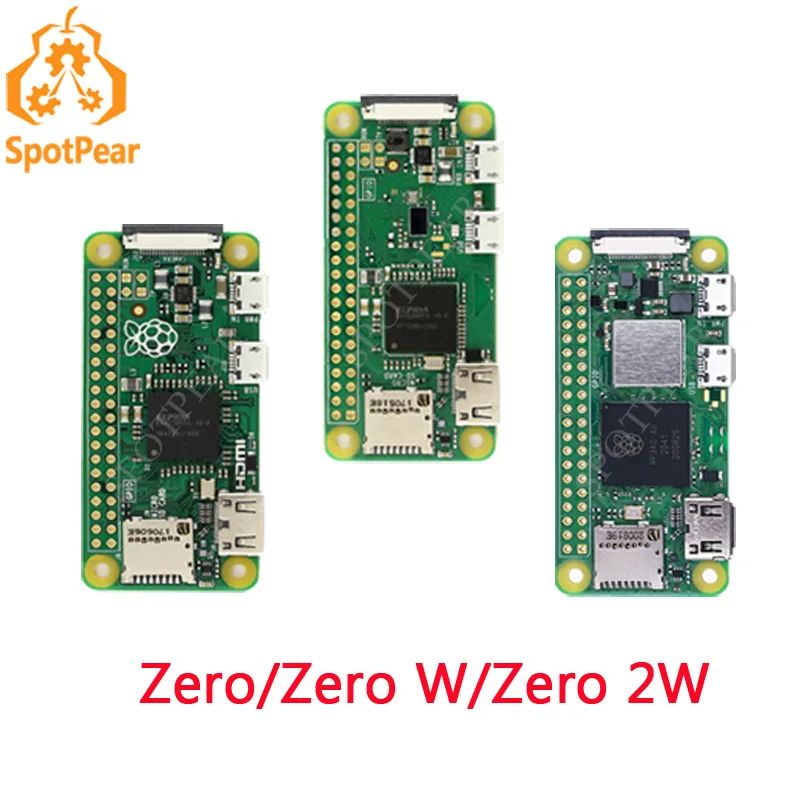
Examining the boards reveals standard power regulation components typical of Raspberry Pi designs. The Zero series relies on a 5V input, usually supplied via a micro-USB port. For stock operation, the onboard voltage regulator modules (VRMs) are generally sufficient. However, when pushing the processor beyond its factory settings, stable power delivery becomes paramount. Overclocking directly translates to increased current draw and sensitivity to voltage fluctuations.
The visible power circuitry, while compact, indicates a design optimized for efficiency at stock speeds. Aggressive overclocking, especially on the Zero 2W, will inevitably stress these components. Voltage droop under heavy load can lead to system instability, crashes, or even data corruption on the SD card. Monitoring the 5V rail and ensuring a high-quality power supply with ample current capacity is not merely recommended; it is mandatory. A stable input is everything.
Compared to larger Raspberry Pi models with more elaborate power stages, the Zero series demands external consideration for power stability during performance tuning. Users might need to investigate direct 5V power injection via the GPIO pins, bypassing some of the onboard regulation for cleaner power to the SoC, though this requires advanced soldering skills and careful circuit analysis. This ensures consistent voltage. It prevents unexpected shutdowns.
Given the diminutive form factor of all Zero boards, thermal management is a significant challenge, especially for the Zero 2W. The BCM2835 in the original Zero and Zero W runs relatively cool due to its low power consumption and single-core nature. Passive cooling, or even no cooling, is often sufficient for these models in typical workloads. Heat is rarely an issue.
The BCM2710A1 in the Zero 2W, however, generates considerably more heat when under load, particularly during sustained multi-core operations or when overclocked. The small surface area of the board offers limited natural heat dissipation. Without adequate cooling, the SoC will quickly throttle its clock speed to prevent overheating, negating any benefits of an overclock. This is a critical bottleneck.
For any serious performance enthusiast, a heatsink is non-negotiable for the Zero 2W. Even a small passive heatsink can significantly improve thermal headroom. For more aggressive overclocks, active cooling solutions, such as a small fan attached to the GPIO pins, are essential. This maintains peak performance. The thermal design dictates the overclocking ceiling. Ignoring heat management means sacrificing performance. It's that simple.
The Zero series offers a surprisingly rich set of input/output options for its size. All models include a mini-HDMI port for video output, two micro-USB ports (one for power, one for USB On-The-Go data), and a CSI camera connector. The 40-pin GPIO header is a standard feature across the range, providing extensive opportunities for interfacing with external hardware.
For an overclocker and embedded systems developer, the versatility of the GPIO pins is invaluable. These pins allow for direct control of peripherals, sensor integration, and, crucially, access to power rails for monitoring or alternative power injection. The ability to add custom cooling solutions, such as fans, directly controlled by the board, leverages these I/O capabilities. It expands functionality greatly.
While the original Zero lacks wireless connectivity, the Zero W and Zero 2W integrate 802.11n Wi-Fi and Bluetooth 4.1 (Zero W) or Bluetooth 4.2/BLE (Zero 2W). This built-in wireless capability dramatically simplifies network access and peripheral communication, reducing the need for external USB dongles that would otherwise consume the precious single USB OTG port. This provides essential networking. It makes projects cleaner.
All Raspberry Pi Zero models come with 512MB of RAM. The original Zero and Zero W utilize LPDDR2 memory, while the Zero 2W features LPDDR3. While 512MB might seem modest by modern computing standards, it is often sufficient for many embedded applications. However, the type of memory and its speed can impact overall system responsiveness, especially when the CPU is operating at elevated frequencies.
LPDDR3 on the Zero 2W offers higher bandwidth and lower latency compared to LPDDR2, contributing to a snappier user experience and better performance in memory-intensive tasks. While the RAM itself is not directly overclockable in the same way the CPU is, the faster memory effectively reduces a potential bottleneck, allowing the overclocked CPU to operate more efficiently. Every bit of bandwidth helps.
Storage on all Zero models is handled via a microSD card slot. The speed of the microSD card is a frequently overlooked factor that profoundly impacts the perceived performance of any Raspberry Pi. A slow card will bottleneck boot times, application loading, and overall system responsiveness, even with an aggressively overclocked CPU. Investing in a high-speed, reputable A1 or A2-rated microSD card is essential for maximizing the performance of an overclocked Zero 2W. It's a cheap upgrade. It makes a huge difference.
The Raspberry Pi Zero 2W, with its BCM2710A1 SoC, is the true overclocker's target in this lineup. The quad-core Cortex-A53 architecture has proven capable of stable operation well above its stock 1GHz. Users commonly achieve 1.2GHz or even 1.3GHz with adequate cooling and stable power. This offers a significant performance boost for CPU-bound tasks, making the tiny board capable of workloads previously reserved for larger Pis.
Aggressive frequency scaling requires careful manipulation of system configuration files, typically `config.txt`, to adjust core voltage (over_voltage) and frequency (arm_freq, core_freq, gpu_freq). Incrementally increasing these values while meticulously monitoring temperatures and stability is the methodology. It is a delicate balance. Pushing too far results in instability.
For the older Zero and Zero W models, overclocking is less impactful. While minor frequency bumps might be possible, the architectural limitations of the ARM11 core mean that the performance gains are often negligible compared to the increased power consumption and heat. These boards are not designed for extreme performance. They excel at efficiency. Their purpose is different.
An overclocked Raspberry Pi Zero 2W transforms into a remarkably capable embedded system. Its enhanced processing power makes it suitable for applications such as retro gaming emulation, where higher clock speeds translate to smoother frame rates. It can power more sophisticated IoT devices, handling complex sensor data processing or running lightweight machine learning inference models at the edge. This expands its utility greatly.
Consider a scenario where a compact, low-power server is required for a home automation system. An overclocked Zero 2W can reliably run a Node-RED instance, manage MQTT brokers, and even serve a small web interface with greater responsiveness than its stock configuration. The increased clock speed directly translates to faster response times for automation triggers and data logging. This creates a more responsive system.
For robotics, the Zero 2W's quad-core processing, when pushed, can manage more complex algorithms for navigation, vision processing (via the CSI camera port), and motor control simultaneously. The ability to handle multiple threads efficiently makes it a strong contender for autonomous drone or robot projects where every millisecond of processing time counts. It performs critical calculations faster. This is a significant advantage.
The Raspberry Pi Zero series, particularly the Zero 2W, stands as a testament to miniaturized computing power. For the overclocker, it offers a compelling blend of low cost and surprising performance potential, provided the critical factors of power stability and thermal management are addressed. The ability to extract significant additional horsepower from such a tiny board opens up a vast array of possibilities for embedded projects, custom electronics, and even educational endeavors.
Imagine crafting a pocket-sized gaming console that runs classic titles flawlessly, or deploying a stealthy, high-performance network monitoring tool that fits in the palm of your hand. Picture a sophisticated home automation hub, responsive and reliable, operating silently in the background, all powered by this unassuming green board. The Zero 2W, when optimized, is not just a component; it is the beating heart of innovation, waiting for its full potential to be unleashed by those daring enough to push its limits.
The Core Silicon: Examining the Processing Power
The original Raspberry Pi Zero, and its wireless counterpart the Zero W, are built around the Broadcom BCM2835 system-on-chip (SoC). This features a single-core ARM1176JZF-S processor clocked at 1GHz. For an overclocker, this older ARMv6 architecture presents a limited canvas. Performance gains are marginal; the core simply lacks the modern instruction sets and pipeline depth for aggressive frequency scaling. This unit is best suited for stable, low-power applications where absolute clock speed is not the primary objective. It runs cool. Its strength lies in sheer cost-effectiveness for basic tasks.
In contrast, the Raspberry Pi Zero 2W elevates the game significantly. It integrates the Broadcom BCM2710A1 SoC, a quad-core 64-bit ARM Cortex-A53 processor also clocked at 1GHz by default. This is a substantial architectural leap. The BCM2710A1 is the same silicon found in the Raspberry Pi 3 A+, offering true multi-core capabilities and a much more modern ARMv8-A instruction set. This is the platform where an overclocker can truly begin to experiment. Pushing this quad-core beyond its stock 1GHz is not just feasible but often expected for demanding embedded projects.
Unlike minimalist SBCs with dated architectures, the Zero 2W provides a modern 64-bit quad-core platform, offering a true foundation for advanced projects. The sheer computational headroom allows for more complex tasks, from lightweight servers to advanced robotics, without immediately hitting a performance wall. This is a critical distinction for anyone considering pushing the limits of a compact board. The older Zero models are for basic tasks. The 2W is for ambition.
Power Delivery: The Unsung Hero of Stability
Examining the boards reveals standard power regulation components typical of Raspberry Pi designs. The Zero series relies on a 5V input, usually supplied via a micro-USB port. For stock operation, the onboard voltage regulator modules (VRMs) are generally sufficient. However, when pushing the processor beyond its factory settings, stable power delivery becomes paramount. Overclocking directly translates to increased current draw and sensitivity to voltage fluctuations.
The visible power circuitry, while compact, indicates a design optimized for efficiency at stock speeds. Aggressive overclocking, especially on the Zero 2W, will inevitably stress these components. Voltage droop under heavy load can lead to system instability, crashes, or even data corruption on the SD card. Monitoring the 5V rail and ensuring a high-quality power supply with ample current capacity is not merely recommended; it is mandatory. A stable input is everything.
Compared to larger Raspberry Pi models with more elaborate power stages, the Zero series demands external consideration for power stability during performance tuning. Users might need to investigate direct 5V power injection via the GPIO pins, bypassing some of the onboard regulation for cleaner power to the SoC, though this requires advanced soldering skills and careful circuit analysis. This ensures consistent voltage. It prevents unexpected shutdowns.
Thermal Dynamics: Taming the Beast
Given the diminutive form factor of all Zero boards, thermal management is a significant challenge, especially for the Zero 2W. The BCM2835 in the original Zero and Zero W runs relatively cool due to its low power consumption and single-core nature. Passive cooling, or even no cooling, is often sufficient for these models in typical workloads. Heat is rarely an issue.
The BCM2710A1 in the Zero 2W, however, generates considerably more heat when under load, particularly during sustained multi-core operations or when overclocked. The small surface area of the board offers limited natural heat dissipation. Without adequate cooling, the SoC will quickly throttle its clock speed to prevent overheating, negating any benefits of an overclock. This is a critical bottleneck.
For any serious performance enthusiast, a heatsink is non-negotiable for the Zero 2W. Even a small passive heatsink can significantly improve thermal headroom. For more aggressive overclocks, active cooling solutions, such as a small fan attached to the GPIO pins, are essential. This maintains peak performance. The thermal design dictates the overclocking ceiling. Ignoring heat management means sacrificing performance. It's that simple.
Connectivity and I/O: Bridging the Gap
The Zero series offers a surprisingly rich set of input/output options for its size. All models include a mini-HDMI port for video output, two micro-USB ports (one for power, one for USB On-The-Go data), and a CSI camera connector. The 40-pin GPIO header is a standard feature across the range, providing extensive opportunities for interfacing with external hardware.
For an overclocker and embedded systems developer, the versatility of the GPIO pins is invaluable. These pins allow for direct control of peripherals, sensor integration, and, crucially, access to power rails for monitoring or alternative power injection. The ability to add custom cooling solutions, such as fans, directly controlled by the board, leverages these I/O capabilities. It expands functionality greatly.
While the original Zero lacks wireless connectivity, the Zero W and Zero 2W integrate 802.11n Wi-Fi and Bluetooth 4.1 (Zero W) or Bluetooth 4.2/BLE (Zero 2W). This built-in wireless capability dramatically simplifies network access and peripheral communication, reducing the need for external USB dongles that would otherwise consume the precious single USB OTG port. This provides essential networking. It makes projects cleaner.
Memory and Storage: Bottlenecks and Boosts
All Raspberry Pi Zero models come with 512MB of RAM. The original Zero and Zero W utilize LPDDR2 memory, while the Zero 2W features LPDDR3. While 512MB might seem modest by modern computing standards, it is often sufficient for many embedded applications. However, the type of memory and its speed can impact overall system responsiveness, especially when the CPU is operating at elevated frequencies.
LPDDR3 on the Zero 2W offers higher bandwidth and lower latency compared to LPDDR2, contributing to a snappier user experience and better performance in memory-intensive tasks. While the RAM itself is not directly overclockable in the same way the CPU is, the faster memory effectively reduces a potential bottleneck, allowing the overclocked CPU to operate more efficiently. Every bit of bandwidth helps.
Storage on all Zero models is handled via a microSD card slot. The speed of the microSD card is a frequently overlooked factor that profoundly impacts the perceived performance of any Raspberry Pi. A slow card will bottleneck boot times, application loading, and overall system responsiveness, even with an aggressively overclocked CPU. Investing in a high-speed, reputable A1 or A2-rated microSD card is essential for maximizing the performance of an overclocked Zero 2W. It's a cheap upgrade. It makes a huge difference.
The Overclocker's Playground: Pushing the Limits
The Raspberry Pi Zero 2W, with its BCM2710A1 SoC, is the true overclocker's target in this lineup. The quad-core Cortex-A53 architecture has proven capable of stable operation well above its stock 1GHz. Users commonly achieve 1.2GHz or even 1.3GHz with adequate cooling and stable power. This offers a significant performance boost for CPU-bound tasks, making the tiny board capable of workloads previously reserved for larger Pis.
Aggressive frequency scaling requires careful manipulation of system configuration files, typically `config.txt`, to adjust core voltage (over_voltage) and frequency (arm_freq, core_freq, gpu_freq). Incrementally increasing these values while meticulously monitoring temperatures and stability is the methodology. It is a delicate balance. Pushing too far results in instability.
For the older Zero and Zero W models, overclocking is less impactful. While minor frequency bumps might be possible, the architectural limitations of the ARM11 core mean that the performance gains are often negligible compared to the increased power consumption and heat. These boards are not designed for extreme performance. They excel at efficiency. Their purpose is different.
Real-World Applications: Beyond the Bench
An overclocked Raspberry Pi Zero 2W transforms into a remarkably capable embedded system. Its enhanced processing power makes it suitable for applications such as retro gaming emulation, where higher clock speeds translate to smoother frame rates. It can power more sophisticated IoT devices, handling complex sensor data processing or running lightweight machine learning inference models at the edge. This expands its utility greatly.
Consider a scenario where a compact, low-power server is required for a home automation system. An overclocked Zero 2W can reliably run a Node-RED instance, manage MQTT brokers, and even serve a small web interface with greater responsiveness than its stock configuration. The increased clock speed directly translates to faster response times for automation triggers and data logging. This creates a more responsive system.
For robotics, the Zero 2W's quad-core processing, when pushed, can manage more complex algorithms for navigation, vision processing (via the CSI camera port), and motor control simultaneously. The ability to handle multiple threads efficiently makes it a strong contender for autonomous drone or robot projects where every millisecond of processing time counts. It performs critical calculations faster. This is a significant advantage.
Concluding Thoughts: The Future of Miniaturized Performance
The Raspberry Pi Zero series, particularly the Zero 2W, stands as a testament to miniaturized computing power. For the overclocker, it offers a compelling blend of low cost and surprising performance potential, provided the critical factors of power stability and thermal management are addressed. The ability to extract significant additional horsepower from such a tiny board opens up a vast array of possibilities for embedded projects, custom electronics, and even educational endeavors.
Imagine crafting a pocket-sized gaming console that runs classic titles flawlessly, or deploying a stealthy, high-performance network monitoring tool that fits in the palm of your hand. Picture a sophisticated home automation hub, responsive and reliable, operating silently in the background, all powered by this unassuming green board. The Zero 2W, when optimized, is not just a component; it is the beating heart of innovation, waiting for its full potential to be unleashed by those daring enough to push its limits.