Raspberry Pi Zero 2 W Development Board with Case
Official Store Deal
Expert Analysis Overview
The Raspberry Pi Zero 2 W is a remarkably compact yet powerful single-board computer, engineered for embedded systems developers and hobbyists seeking a low-power, high-performance solution in a miniature footprint. This iteration significantly upgrades the processing capability over its predecessor, making it suitable for more demanding applications without a substantial increase in physical size or power consumption. The inclusion of a protective case directly addresses concerns regarding component fragility and environmental exposure, a common pain point for bare development boards.
At its core, the Raspberry Pi Zero 2 W features the Broadcom BCM2710A1 system-on-chip (SoC). This is a quad-core 64-bit ARM Cortex-A53 processor, clocked at 1GHz. This specific SoC is a significant leap from the single-core processor found in the original Zero W.
This architectural upgrade translates directly into enhanced computational throughput. Projects that previously experienced bottlenecks due to CPU limitations, such as complex data logging, lightweight server applications, or even basic image processing, now run with considerably more fluidity. The quad-core design allows for parallel processing, meaning multiple tasks can be handled concurrently, improving overall system responsiveness.
Compared to standard single-core microcontrollers or even the original Raspberry Pi Zero W, this board offers a substantial performance increase. Developers can migrate more complex Python scripts or C++ applications to this platform, expanding the scope of portable and low-power projects. It's a true upgrade.
Connectivity is a critical aspect of modern embedded systems, and the Zero 2 W excels here with integrated wireless features. It includes 2.4GHz 802.11 b/g/n Wi-Fi and Bluetooth 4.2 with Bluetooth Low Energy (BLE). These are essential for IoT and network-dependent projects.
These wireless modules enable seamless communication with other devices and networks, eliminating the need for external dongles that can add bulk and complexity. For instance, a smart home sensor project can transmit data wirelessly to a central hub, or a portable media streamer can connect to a local network. This integration simplifies bill of materials and reduces potential points of failure.
Unlike many entry-level development boards that require separate Wi-Fi or Bluetooth modules, often consuming valuable GPIO pins, the Zero 2 W provides these capabilities out-of-the-box. This streamlines development, allowing immediate focus on application logic rather than connectivity hardware. Setup is straightforward.
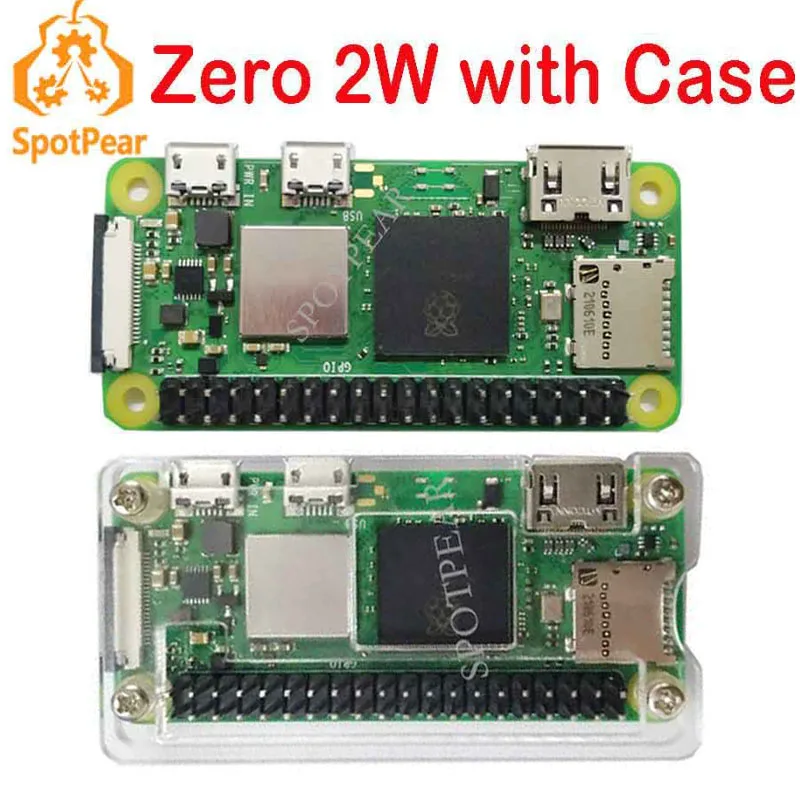
The board provides a comprehensive set of interfaces despite its diminutive size. Key ports include a Mini HDMI port, Micro USB On-The-Go (OTG) port, a Micro USB power input, a CSI-2 camera connector, and a 40-pin GPIO header. These allow for diverse project integration.
These interfaces facilitate a wide array of applications, from driving a display for a small kiosk project via Mini HDMI to connecting various sensors and actuators through the GPIO pins. The CSI-2 camera connector is particularly useful for vision-based projects, enabling direct connection of a Raspberry Pi camera module. This versatility is a major asset.
Compared to generic microcontroller boards, the Raspberry Pi Zero 2 W offers a much broader ecosystem of peripherals and software support, thanks to its Linux-based operating system. The 40-pin GPIO header maintains compatibility with existing Raspberry Pi HATs and add-ons, ensuring a rich expansion path for advanced users. It's highly compatible.
The product includes a clear acrylic case, visible in the provided images, designed specifically for the Raspberry Pi Zero 2 W. This case appears to be a multi-piece assembly, likely secured with small screws, offering full protection while allowing access to essential ports and the GPIO header. The clear material allows for visual inspection of the board.
This protective enclosure is crucial for safeguarding the delicate electronic components from dust, accidental spills, and physical damage during handling or deployment. For projects deployed in less-than-ideal environments, such as outdoor sensors or portable devices, the case provides a necessary layer of resilience. It extends the operational lifespan of the board significantly.
Unlike purchasing a bare board, which leaves components exposed and vulnerable, the included case provides immediate protection. This saves users the time and effort of sourcing a compatible enclosure separately, ensuring a perfect fit and proper ventilation from the outset. The case is a practical addition.
The Raspberry Pi Zero 2 W is designed for low power consumption, typically drawing around 1W under light load and up to 2.5W under heavy load. Power is supplied via a Micro USB port, requiring a 5V power source. This makes it ideal for battery-powered applications.
Its efficient power profile means it can be powered by portable battery packs, USB wall adapters, or even directly from a computer's USB port for development purposes. This flexibility is vital for mobile or remote projects where a constant mains power supply is unavailable. Battery life is extended.
Compared to larger Raspberry Pi models, the Zero 2 W's power requirements are substantially lower, making it a more viable option for energy-sensitive projects. Users can deploy this board in scenarios where power budget is a primary concern, such as IoT edge devices or wearable electronics. It sips power.
The enhanced processing power and integrated wireless capabilities open up a wider range of real-world applications for the Zero 2 W. It can serve as the brain for smart home devices, robotics projects, portable gaming emulators, network ad-blockers (Pi-hole), or lightweight web servers. Its small size is a major advantage.
Imagine deploying a compact security camera system that streams video wirelessly, or creating a custom environmental monitoring station that logs data and sends alerts. The Zero 2 W provides the computational muscle to handle these tasks efficiently, making complex projects more accessible and reliable. Performance is reliable.
This board represents a significant upgrade for anyone currently using an original Zero W or considering a compact single-board computer. It provides a more robust platform for expanding project complexity and functionality without compromising on the small form factor. It is a powerful upgrade.
While the BCM2710A1 SoC is efficient, sustained high loads can generate heat, especially within a confined enclosure. The clear acrylic case, while protective, can influence thermal dissipation. Proper ventilation or the addition of a small heatsink might be necessary for demanding, continuous operations. Heat management is key.
In scenarios where the CPU is consistently utilized at near 100%, such as continuous video encoding or heavy computational tasks, monitoring the board's temperature is advisable. The case design appears to offer some clearance, but passive cooling might be limited. Overheating can lead to performance throttling and system instability.
Unlike open-air setups, an enclosed system requires careful consideration of heat. For most typical IoT or light server applications, the passive cooling provided by the board and case should suffice. However, for power users pushing the limits, supplementary cooling solutions are a worthwhile investment. Plan for heat.
Imagine the satisfaction of seeing your custom-built IoT device seamlessly collect data, your retro gaming console flawlessly emulate classic titles, or your compact server reliably handle requests, all powered by this diminutive yet potent board. This development board, encased in its protective shell, empowers creators to bring ambitious projects to life with enhanced performance and robust protection, ensuring your innovations are both powerful and resilient.
Miniature Powerhouse Architecture
At its core, the Raspberry Pi Zero 2 W features the Broadcom BCM2710A1 system-on-chip (SoC). This is a quad-core 64-bit ARM Cortex-A53 processor, clocked at 1GHz. This specific SoC is a significant leap from the single-core processor found in the original Zero W.
This architectural upgrade translates directly into enhanced computational throughput. Projects that previously experienced bottlenecks due to CPU limitations, such as complex data logging, lightweight server applications, or even basic image processing, now run with considerably more fluidity. The quad-core design allows for parallel processing, meaning multiple tasks can be handled concurrently, improving overall system responsiveness.
Compared to standard single-core microcontrollers or even the original Raspberry Pi Zero W, this board offers a substantial performance increase. Developers can migrate more complex Python scripts or C++ applications to this platform, expanding the scope of portable and low-power projects. It's a true upgrade.
Integrated Wireless Capabilities
Connectivity is a critical aspect of modern embedded systems, and the Zero 2 W excels here with integrated wireless features. It includes 2.4GHz 802.11 b/g/n Wi-Fi and Bluetooth 4.2 with Bluetooth Low Energy (BLE). These are essential for IoT and network-dependent projects.
These wireless modules enable seamless communication with other devices and networks, eliminating the need for external dongles that can add bulk and complexity. For instance, a smart home sensor project can transmit data wirelessly to a central hub, or a portable media streamer can connect to a local network. This integration simplifies bill of materials and reduces potential points of failure.
Unlike many entry-level development boards that require separate Wi-Fi or Bluetooth modules, often consuming valuable GPIO pins, the Zero 2 W provides these capabilities out-of-the-box. This streamlines development, allowing immediate focus on application logic rather than connectivity hardware. Setup is straightforward.
Essential Peripheral Interfacing
The board provides a comprehensive set of interfaces despite its diminutive size. Key ports include a Mini HDMI port, Micro USB On-The-Go (OTG) port, a Micro USB power input, a CSI-2 camera connector, and a 40-pin GPIO header. These allow for diverse project integration.
These interfaces facilitate a wide array of applications, from driving a display for a small kiosk project via Mini HDMI to connecting various sensors and actuators through the GPIO pins. The CSI-2 camera connector is particularly useful for vision-based projects, enabling direct connection of a Raspberry Pi camera module. This versatility is a major asset.
Compared to generic microcontroller boards, the Raspberry Pi Zero 2 W offers a much broader ecosystem of peripherals and software support, thanks to its Linux-based operating system. The 40-pin GPIO header maintains compatibility with existing Raspberry Pi HATs and add-ons, ensuring a rich expansion path for advanced users. It's highly compatible.
Protective Enclosure Design
The product includes a clear acrylic case, visible in the provided images, designed specifically for the Raspberry Pi Zero 2 W. This case appears to be a multi-piece assembly, likely secured with small screws, offering full protection while allowing access to essential ports and the GPIO header. The clear material allows for visual inspection of the board.
This protective enclosure is crucial for safeguarding the delicate electronic components from dust, accidental spills, and physical damage during handling or deployment. For projects deployed in less-than-ideal environments, such as outdoor sensors or portable devices, the case provides a necessary layer of resilience. It extends the operational lifespan of the board significantly.
Unlike purchasing a bare board, which leaves components exposed and vulnerable, the included case provides immediate protection. This saves users the time and effort of sourcing a compatible enclosure separately, ensuring a perfect fit and proper ventilation from the outset. The case is a practical addition.
Energy Efficiency and Power Delivery
The Raspberry Pi Zero 2 W is designed for low power consumption, typically drawing around 1W under light load and up to 2.5W under heavy load. Power is supplied via a Micro USB port, requiring a 5V power source. This makes it ideal for battery-powered applications.
Its efficient power profile means it can be powered by portable battery packs, USB wall adapters, or even directly from a computer's USB port for development purposes. This flexibility is vital for mobile or remote projects where a constant mains power supply is unavailable. Battery life is extended.
Compared to larger Raspberry Pi models, the Zero 2 W's power requirements are substantially lower, making it a more viable option for energy-sensitive projects. Users can deploy this board in scenarios where power budget is a primary concern, such as IoT edge devices or wearable electronics. It sips power.
Real-World Application Potential
The enhanced processing power and integrated wireless capabilities open up a wider range of real-world applications for the Zero 2 W. It can serve as the brain for smart home devices, robotics projects, portable gaming emulators, network ad-blockers (Pi-hole), or lightweight web servers. Its small size is a major advantage.
Imagine deploying a compact security camera system that streams video wirelessly, or creating a custom environmental monitoring station that logs data and sends alerts. The Zero 2 W provides the computational muscle to handle these tasks efficiently, making complex projects more accessible and reliable. Performance is reliable.
This board represents a significant upgrade for anyone currently using an original Zero W or considering a compact single-board computer. It provides a more robust platform for expanding project complexity and functionality without compromising on the small form factor. It is a powerful upgrade.
Thermal Considerations for Sustained Operation
While the BCM2710A1 SoC is efficient, sustained high loads can generate heat, especially within a confined enclosure. The clear acrylic case, while protective, can influence thermal dissipation. Proper ventilation or the addition of a small heatsink might be necessary for demanding, continuous operations. Heat management is key.
In scenarios where the CPU is consistently utilized at near 100%, such as continuous video encoding or heavy computational tasks, monitoring the board's temperature is advisable. The case design appears to offer some clearance, but passive cooling might be limited. Overheating can lead to performance throttling and system instability.
Unlike open-air setups, an enclosed system requires careful consideration of heat. For most typical IoT or light server applications, the passive cooling provided by the board and case should suffice. However, for power users pushing the limits, supplementary cooling solutions are a worthwhile investment. Plan for heat.
Imagine the satisfaction of seeing your custom-built IoT device seamlessly collect data, your retro gaming console flawlessly emulate classic titles, or your compact server reliably handle requests, all powered by this diminutive yet potent board. This development board, encased in its protective shell, empowers creators to bring ambitious projects to life with enhanced performance and robust protection, ensuring your innovations are both powerful and resilient.