Raspberry Pi 4 Model B Development Board
Official Store Deal
Expert Analysis Overview
The Raspberry Pi 4 Model B is a versatile single-board computer engineered for hobbyists, educators, and developers seeking a powerful yet compact platform. This iteration significantly upgrades processing power, memory, and connectivity options, positioning it as a robust choice for a myriad of projects from embedded systems to light desktop computing.
The board features a Broadcom BCM2711 quad-core Cortex-A72 (ARM v8) 64-bit SoC, clocked at 1.5GHz. Available RAM configurations include 2GB, 4GB, or 8GB LPDDR4-3200 SDRAM. This is a substantial leap.
This processing capability translates into significantly smoother multitasking and more demanding application execution compared to previous generations. Users can run desktop-level applications, host web servers, or manage complex IoT projects with greater efficiency. The increased clock speed directly impacts responsiveness.
Unlike the Raspberry Pi 3B+, which often struggled with concurrent heavy workloads, the Pi 4's upgraded architecture provides a substantial performance uplift. This allows for a more responsive user experience, reducing frustrating lag during development or media consumption. It handles more tasks.
The availability of 2GB, 4GB, and 8GB LPDDR4-3200 SDRAM options directly influences the board's suitability for various applications. The 8GB variant, in particular, opens doors for more memory-intensive tasks.
For basic server applications or simple automation, 2GB might suffice. However, for running a full desktop environment, compiling code, or managing multiple browser tabs, the 4GB or 8GB models offer a dramatically improved experience. More RAM means less swapping.
This tiered memory offering contrasts with older Raspberry Pi models that had fixed, lower RAM capacities. The flexibility to choose memory based on project requirements means users don't overspend on unused resources or find themselves bottlenecked by insufficient memory. It's a smart upgrade path.
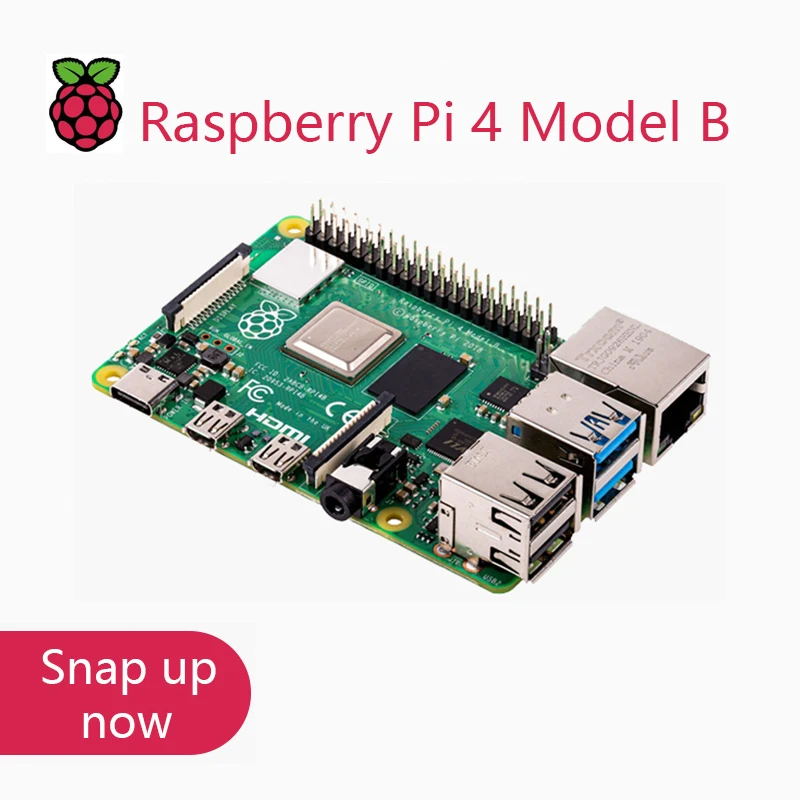
Connectivity options on the Raspberry Pi 4 Model B are extensive, including two micro-HDMI ports supporting up to 4Kp60, two USB 3.0 ports, two USB 2.0 ports, Gigabit Ethernet, dual-band 802.11ac Wi-Fi, and Bluetooth 5.0. These ports are well-spaced.
These diverse interfaces enable a wide range of peripherals and network connections. Dual micro-HDMI outputs allow for multi-monitor setups, enhancing productivity for coding or media playback. USB 3.0 provides faster data transfer for external storage. Fast networking is crucial.
Compared to its predecessors, the inclusion of native Gigabit Ethernet and USB 3.0 ports significantly boosts data throughput. This is particularly beneficial for network-attached storage (NAS) projects or applications requiring high-speed peripheral communication, avoiding the shared bus limitations of older models. Data moves quicker.
The Raspberry Pi 4 Model B requires a 5V/3A power supply via its USB-C port, supporting USB Power Delivery (PD). This is a change from previous micro-USB power inputs. Proper power is essential.
Adequate power delivery is critical for stable operation, especially when connecting multiple USB peripherals or running the CPU at full load. An underpowered supply can lead to unexpected reboots or performance throttling. A reliable power source prevents issues.
This shift to USB-C PD is a modern upgrade, providing a more robust and reversible power connection than the older micro-USB standard. However, it also means users need a compatible USB-C PD power supply, as older Pi power bricks will not work. Check your power brick.
Thermal management is also a consideration due to the increased performance. Under heavy loads, the SoC can generate significant heat. Active cooling solutions, such as heatsinks and fans, are often recommended, especially if the board is enclosed in a case. Heat can reduce lifespan.
Ensuring proper airflow and considering a case with good ventilation is paramount for sustained performance. Without adequate cooling, the CPU may throttle its speed to prevent overheating, impacting overall project responsiveness. Good cooling maintains speed.
Unlike earlier models where passive cooling was often sufficient, the Pi 4's enhanced capabilities necessitate a more proactive approach to thermal management for demanding applications. This is a trade-off for higher performance. Plan for cooling.
The standard 40-pin GPIO header remains, ensuring compatibility with a vast ecosystem of HATs (Hardware Attached on Top) and other expansion boards. This header is a cornerstone of Pi projects.
This continuity allows existing projects and accessories to be easily migrated or integrated with the new board, minimizing the need for complete overhauls. The GPIO pins facilitate direct interaction with sensors, actuators, and custom hardware. It fosters innovation.
The enduring 40-pin GPIO interface provides a consistent platform for hardware development, unlike other single-board computers that may have proprietary or less common expansion headers. This broad compatibility strengthens the Raspberry Pi's position in the maker community. Compatibility is key.
The Raspberry Pi 4 Model B runs on Raspberry Pi OS (formerly Raspbian), a Debian-based Linux distribution optimized for the ARM architecture. A wide range of other operating systems are also supported. Linux is its native tongue.
This robust software foundation provides access to countless open-source tools, programming languages, and applications. The active community ensures extensive documentation and support for various projects. Learning resources are abundant.
Unlike proprietary embedded platforms, the open-source nature of Raspberry Pi OS offers unparalleled flexibility and control over the operating environment. Users can customize every aspect, from the kernel to the desktop environment, to suit specific project needs. Freedom is a major benefit.
For PC builders and system integrators, the Raspberry Pi 4 Model B presents a unique opportunity to create compact, low-power systems for specialized tasks. Its small form factor allows for integration into tight spaces. Small footprint, big potential.
Consider its use in custom home automation hubs, retro gaming consoles, or even as a lightweight development workstation. The ability to select RAM capacity means tailoring the board precisely to the application's memory demands. Customization is straightforward.
When comparing it to traditional desktop components, the Raspberry Pi offers a significantly lower power draw and a much smaller physical footprint. While it won't replace a high-end gaming PC, its efficiency and versatility for dedicated tasks are unmatched. It's a focused tool.
Imagine a scenario where a compact, fanless media server seamlessly streams 4K content to your living room, drawing minimal power. Picture a robust home automation controller, managing smart devices with open-source software, all powered by this single board. Envision a portable coding environment, allowing you to develop on the go without the bulk of a laptop. The Raspberry Pi 4 Model B empowers these and countless other innovative projects, providing the foundational computing power to bring your ideas to life with efficiency and flexibility.
Processing Prowess
The board features a Broadcom BCM2711 quad-core Cortex-A72 (ARM v8) 64-bit SoC, clocked at 1.5GHz. Available RAM configurations include 2GB, 4GB, or 8GB LPDDR4-3200 SDRAM. This is a substantial leap.
This processing capability translates into significantly smoother multitasking and more demanding application execution compared to previous generations. Users can run desktop-level applications, host web servers, or manage complex IoT projects with greater efficiency. The increased clock speed directly impacts responsiveness.
Unlike the Raspberry Pi 3B+, which often struggled with concurrent heavy workloads, the Pi 4's upgraded architecture provides a substantial performance uplift. This allows for a more responsive user experience, reducing frustrating lag during development or media consumption. It handles more tasks.
Memory Configurations and Impact
The availability of 2GB, 4GB, and 8GB LPDDR4-3200 SDRAM options directly influences the board's suitability for various applications. The 8GB variant, in particular, opens doors for more memory-intensive tasks.
For basic server applications or simple automation, 2GB might suffice. However, for running a full desktop environment, compiling code, or managing multiple browser tabs, the 4GB or 8GB models offer a dramatically improved experience. More RAM means less swapping.
This tiered memory offering contrasts with older Raspberry Pi models that had fixed, lower RAM capacities. The flexibility to choose memory based on project requirements means users don't overspend on unused resources or find themselves bottlenecked by insufficient memory. It's a smart upgrade path.
Interfacing Horizons
Connectivity options on the Raspberry Pi 4 Model B are extensive, including two micro-HDMI ports supporting up to 4Kp60, two USB 3.0 ports, two USB 2.0 ports, Gigabit Ethernet, dual-band 802.11ac Wi-Fi, and Bluetooth 5.0. These ports are well-spaced.
These diverse interfaces enable a wide range of peripherals and network connections. Dual micro-HDMI outputs allow for multi-monitor setups, enhancing productivity for coding or media playback. USB 3.0 provides faster data transfer for external storage. Fast networking is crucial.
Compared to its predecessors, the inclusion of native Gigabit Ethernet and USB 3.0 ports significantly boosts data throughput. This is particularly beneficial for network-attached storage (NAS) projects or applications requiring high-speed peripheral communication, avoiding the shared bus limitations of older models. Data moves quicker.
Power Delivery and Thermal Considerations
The Raspberry Pi 4 Model B requires a 5V/3A power supply via its USB-C port, supporting USB Power Delivery (PD). This is a change from previous micro-USB power inputs. Proper power is essential.
Adequate power delivery is critical for stable operation, especially when connecting multiple USB peripherals or running the CPU at full load. An underpowered supply can lead to unexpected reboots or performance throttling. A reliable power source prevents issues.
This shift to USB-C PD is a modern upgrade, providing a more robust and reversible power connection than the older micro-USB standard. However, it also means users need a compatible USB-C PD power supply, as older Pi power bricks will not work. Check your power brick.
Thermal management is also a consideration due to the increased performance. Under heavy loads, the SoC can generate significant heat. Active cooling solutions, such as heatsinks and fans, are often recommended, especially if the board is enclosed in a case. Heat can reduce lifespan.
Ensuring proper airflow and considering a case with good ventilation is paramount for sustained performance. Without adequate cooling, the CPU may throttle its speed to prevent overheating, impacting overall project responsiveness. Good cooling maintains speed.
Unlike earlier models where passive cooling was often sufficient, the Pi 4's enhanced capabilities necessitate a more proactive approach to thermal management for demanding applications. This is a trade-off for higher performance. Plan for cooling.
Expandability and Ecosystem
The standard 40-pin GPIO header remains, ensuring compatibility with a vast ecosystem of HATs (Hardware Attached on Top) and other expansion boards. This header is a cornerstone of Pi projects.
This continuity allows existing projects and accessories to be easily migrated or integrated with the new board, minimizing the need for complete overhauls. The GPIO pins facilitate direct interaction with sensors, actuators, and custom hardware. It fosters innovation.
The enduring 40-pin GPIO interface provides a consistent platform for hardware development, unlike other single-board computers that may have proprietary or less common expansion headers. This broad compatibility strengthens the Raspberry Pi's position in the maker community. Compatibility is key.
Software Environment
The Raspberry Pi 4 Model B runs on Raspberry Pi OS (formerly Raspbian), a Debian-based Linux distribution optimized for the ARM architecture. A wide range of other operating systems are also supported. Linux is its native tongue.
This robust software foundation provides access to countless open-source tools, programming languages, and applications. The active community ensures extensive documentation and support for various projects. Learning resources are abundant.
Unlike proprietary embedded platforms, the open-source nature of Raspberry Pi OS offers unparalleled flexibility and control over the operating environment. Users can customize every aspect, from the kernel to the desktop environment, to suit specific project needs. Freedom is a major benefit.
The Builder's Edge
For PC builders and system integrators, the Raspberry Pi 4 Model B presents a unique opportunity to create compact, low-power systems for specialized tasks. Its small form factor allows for integration into tight spaces. Small footprint, big potential.
Consider its use in custom home automation hubs, retro gaming consoles, or even as a lightweight development workstation. The ability to select RAM capacity means tailoring the board precisely to the application's memory demands. Customization is straightforward.
When comparing it to traditional desktop components, the Raspberry Pi offers a significantly lower power draw and a much smaller physical footprint. While it won't replace a high-end gaming PC, its efficiency and versatility for dedicated tasks are unmatched. It's a focused tool.
Imagine a scenario where a compact, fanless media server seamlessly streams 4K content to your living room, drawing minimal power. Picture a robust home automation controller, managing smart devices with open-source software, all powered by this single board. Envision a portable coding environment, allowing you to develop on the go without the bulk of a laptop. The Raspberry Pi 4 Model B empowers these and countless other innovative projects, providing the foundational computing power to bring your ideas to life with efficiency and flexibility.