QPIX Digital Film and Slide Converter
Official Store Deal
Expert Analysis Overview
The QPIX Digital Film and Slide Converter is a dedicated media digitization tool engineered for individuals and small offices managing extensive archives of legacy photographic film. This device focuses on streamlining the conversion of various film formats into digital files, prioritizing operational independence and high-resolution output. Its design suggests a commitment to reliable, volume-focused processing, crucial for administrative tasks involving historical document preservation.
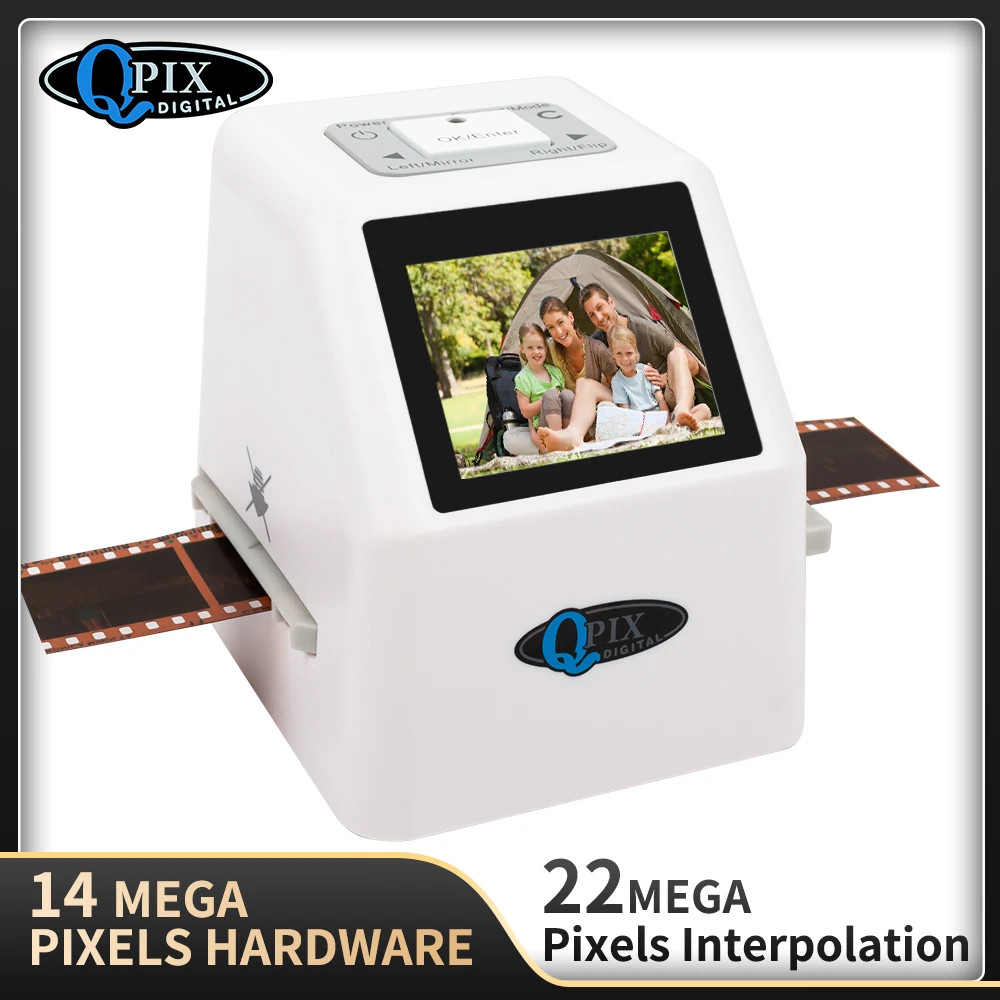
This film scanner boasts a 14-megapixel hardware resolution, which is then interpolated to a 22-megapixel output. The hardware resolution dictates the actual detail captured by the sensor, representing the true optical fidelity. Interpolation, a software-based process, enhances the pixel count, potentially smoothing images and making them suitable for larger displays or prints, though it does not add original detail.
For an office environment tasked with digitizing decades of visual records, this resolution capability is significant. It ensures that scanned images retain sufficient detail for archival purposes, allowing for future enlargements or detailed examination. The ability to capture finer nuances from old slides and negatives means less time spent on post-processing to recover lost information.
Compared to entry-level scanners that often provide 5-megapixel optical resolution, the QPIX unit offers a substantial upgrade in capture fidelity. This higher native resolution minimizes the need for repeated scans or reliance on complex enhancement software, thereby optimizing workflow efficiency for busy administrative staff.
The QPIX converter is designed for broad compatibility, supporting 35mm slides, 35mm film negatives, 110 film, 126KPK film, and Super 8 film. This extensive support covers a significant range of consumer film formats prevalent over the last century. The inclusion of specific holders for each film type is visible, ensuring proper alignment and feeding.
This wide format acceptance addresses a common challenge in archival work: the disparate nature of historical media. Instead of requiring multiple specialized devices or outsourcing, a single unit can manage diverse film collections. This consolidation simplifies inventory management and reduces equipment overhead.
Many standard document scanners or even basic photo scanners lack the specialized mechanisms to handle film and slides, let alone such a variety of formats. The QPIX unit's dedicated design for these specific media types positions it as a more efficient and less error-prone solution for comprehensive film digitization.
A key feature of this device is its standalone operation, requiring no computer or additional software during the scanning process. Images are saved directly to an SD card. This independence is facilitated by a 2.4-inch LCD screen for previewing, playback, and basic editing functions.
This self-contained functionality is invaluable in environments where dedicated computer workstations are scarce or where portability is a concern. An administrator can process film batches away from a desk, reducing bottlenecks and increasing flexibility. The direct-to-SD card saving mechanism also simplifies data transfer and storage management.
Unlike many conventional scanners that are tethered to a computer and require proprietary software, this unit offers immediate usability. This minimizes setup time and reduces potential IT support issues, allowing staff to focus on the task of digitization rather than troubleshooting connectivity or software compatibility.
The integrated 2.4-inch LCD screen not only provides visual feedback but also serves as the primary interface for device control. The visual input indicates support for 8 languages, including English, Spanish, French, German, Italian, Chinese, Russian, and Japanese. This broad language support is crucial for diverse workforces.
An intuitive interface reduces the learning curve for new users, ensuring that staff can quickly become proficient in operating the scanner. The ability to navigate menus and understand prompts in a preferred language minimizes errors and enhances user comfort, particularly important in busy office settings.
Many specialized devices often come with interfaces limited to one or two languages, creating barriers for international teams or non-native speakers. The QPIX scanner's multilingual support demonstrates a design consideration for broader accessibility, which can significantly improve adoption rates and operational efficiency in varied professional environments.
While designed for standalone operation, the QPIX scanner also offers PC connectivity via a USB cable and TV output via an AV cable. The USB connection allows for direct transfer of digitized images to a computer, while the TV output enables larger group viewing or presentation of scanned media.
These connectivity options provide flexibility for different workflows. For instance, after a batch of films is scanned to an SD card, the card can be inserted into a computer, or the scanner can be connected directly for bulk transfer. The TV output is useful for quick reviews or sharing memories in a collaborative setting without needing a computer.
Compared to devices that only offer one mode of operation, the QPIX unit's dual approach caters to both independent field work and integrated office workflows. This adaptability ensures that the digitized content can be accessed and utilized across various platforms and display types, enhancing its utility in a dynamic administrative context.
The visible construction of the QPIX scanner suggests a focus on functional durability. Its compact, white plastic casing appears designed for desktop use, capable of withstanding regular handling in an office environment. The film trays and slide holders are engineered to guide media smoothly, which is critical for minimizing potential jams or damage to delicate film.
For an office administrator, the ability of equipment to work consistently without frequent maintenance is paramount. The design of the film feeding mechanism, which appears to be a direct pass-through, aims to reduce complex internal pathways where film might snag. This directly contributes to minimizing interruptions and maintaining a steady workflow, especially when processing large volumes of film.
Unlike consumer-grade devices that might prioritize aesthetics over robust functionality, this scanner's practical design emphasizes reliable performance. The inclusion of a cleaning brush and gloves indicates an understanding of the need for routine care to maintain image quality and prevent dust accumulation, extending the device's operational lifespan and reducing the need for service calls.
The QPIX Digital Film and Slide Converter presents a compelling value proposition for organizations or individuals with significant film archives. Its combination of high-resolution scanning, broad media compatibility, and standalone operation positions it as an efficient tool for preserving historical visual data. The investment in such a device can be justified by the time savings and enhanced data integrity it offers over manual methods or less capable scanners.
Imagine the efficiency gained when an entire collection of family slides or corporate historical negatives can be systematically digitized without being tethered to a computer. Visualize the ease of sharing these revitalized memories on a large screen, bringing old moments to life with clarity. This converter is not merely a gadget; it is a dedicated solution for safeguarding visual heritage, transforming fragile physical media into enduring digital assets that can be easily stored, shared, and enjoyed for generations. The operational simplicity and robust feature set ensure that the task of digital preservation becomes a manageable and rewarding endeavor, freeing up valuable administrative time for other critical tasks.
Precision in Digital Conversion
This film scanner boasts a 14-megapixel hardware resolution, which is then interpolated to a 22-megapixel output. The hardware resolution dictates the actual detail captured by the sensor, representing the true optical fidelity. Interpolation, a software-based process, enhances the pixel count, potentially smoothing images and making them suitable for larger displays or prints, though it does not add original detail.
For an office environment tasked with digitizing decades of visual records, this resolution capability is significant. It ensures that scanned images retain sufficient detail for archival purposes, allowing for future enlargements or detailed examination. The ability to capture finer nuances from old slides and negatives means less time spent on post-processing to recover lost information.
Compared to entry-level scanners that often provide 5-megapixel optical resolution, the QPIX unit offers a substantial upgrade in capture fidelity. This higher native resolution minimizes the need for repeated scans or reliance on complex enhancement software, thereby optimizing workflow efficiency for busy administrative staff.
Versatile Media Handling
The QPIX converter is designed for broad compatibility, supporting 35mm slides, 35mm film negatives, 110 film, 126KPK film, and Super 8 film. This extensive support covers a significant range of consumer film formats prevalent over the last century. The inclusion of specific holders for each film type is visible, ensuring proper alignment and feeding.
This wide format acceptance addresses a common challenge in archival work: the disparate nature of historical media. Instead of requiring multiple specialized devices or outsourcing, a single unit can manage diverse film collections. This consolidation simplifies inventory management and reduces equipment overhead.
Many standard document scanners or even basic photo scanners lack the specialized mechanisms to handle film and slides, let alone such a variety of formats. The QPIX unit's dedicated design for these specific media types positions it as a more efficient and less error-prone solution for comprehensive film digitization.
Operational Autonomy
A key feature of this device is its standalone operation, requiring no computer or additional software during the scanning process. Images are saved directly to an SD card. This independence is facilitated by a 2.4-inch LCD screen for previewing, playback, and basic editing functions.
This self-contained functionality is invaluable in environments where dedicated computer workstations are scarce or where portability is a concern. An administrator can process film batches away from a desk, reducing bottlenecks and increasing flexibility. The direct-to-SD card saving mechanism also simplifies data transfer and storage management.
Unlike many conventional scanners that are tethered to a computer and require proprietary software, this unit offers immediate usability. This minimizes setup time and reduces potential IT support issues, allowing staff to focus on the task of digitization rather than troubleshooting connectivity or software compatibility.
Intuitive User Interface and Multilingual Support
The integrated 2.4-inch LCD screen not only provides visual feedback but also serves as the primary interface for device control. The visual input indicates support for 8 languages, including English, Spanish, French, German, Italian, Chinese, Russian, and Japanese. This broad language support is crucial for diverse workforces.
An intuitive interface reduces the learning curve for new users, ensuring that staff can quickly become proficient in operating the scanner. The ability to navigate menus and understand prompts in a preferred language minimizes errors and enhances user comfort, particularly important in busy office settings.
Many specialized devices often come with interfaces limited to one or two languages, creating barriers for international teams or non-native speakers. The QPIX scanner's multilingual support demonstrates a design consideration for broader accessibility, which can significantly improve adoption rates and operational efficiency in varied professional environments.
Flexible Connectivity and Output Options
While designed for standalone operation, the QPIX scanner also offers PC connectivity via a USB cable and TV output via an AV cable. The USB connection allows for direct transfer of digitized images to a computer, while the TV output enables larger group viewing or presentation of scanned media.
These connectivity options provide flexibility for different workflows. For instance, after a batch of films is scanned to an SD card, the card can be inserted into a computer, or the scanner can be connected directly for bulk transfer. The TV output is useful for quick reviews or sharing memories in a collaborative setting without needing a computer.
Compared to devices that only offer one mode of operation, the QPIX unit's dual approach caters to both independent field work and integrated office workflows. This adaptability ensures that the digitized content can be accessed and utilized across various platforms and display types, enhancing its utility in a dynamic administrative context.
Durability and Workflow Integration
The visible construction of the QPIX scanner suggests a focus on functional durability. Its compact, white plastic casing appears designed for desktop use, capable of withstanding regular handling in an office environment. The film trays and slide holders are engineered to guide media smoothly, which is critical for minimizing potential jams or damage to delicate film.
For an office administrator, the ability of equipment to work consistently without frequent maintenance is paramount. The design of the film feeding mechanism, which appears to be a direct pass-through, aims to reduce complex internal pathways where film might snag. This directly contributes to minimizing interruptions and maintaining a steady workflow, especially when processing large volumes of film.
Unlike consumer-grade devices that might prioritize aesthetics over robust functionality, this scanner's practical design emphasizes reliable performance. The inclusion of a cleaning brush and gloves indicates an understanding of the need for routine care to maintain image quality and prevent dust accumulation, extending the device's operational lifespan and reducing the need for service calls.
Value Proposition for Archival Tasks
The QPIX Digital Film and Slide Converter presents a compelling value proposition for organizations or individuals with significant film archives. Its combination of high-resolution scanning, broad media compatibility, and standalone operation positions it as an efficient tool for preserving historical visual data. The investment in such a device can be justified by the time savings and enhanced data integrity it offers over manual methods or less capable scanners.
Imagine the efficiency gained when an entire collection of family slides or corporate historical negatives can be systematically digitized without being tethered to a computer. Visualize the ease of sharing these revitalized memories on a large screen, bringing old moments to life with clarity. This converter is not merely a gadget; it is a dedicated solution for safeguarding visual heritage, transforming fragile physical media into enduring digital assets that can be easily stored, shared, and enjoyed for generations. The operational simplicity and robust feature set ensure that the task of digital preservation becomes a manageable and rewarding endeavor, freeing up valuable administrative time for other critical tasks.