PTFE Bowden Tube for 3D Printers
Official Store Deal
Expert Analysis Overview
The IdeaFormer PTFE Bowden Tube is a critical component designed for reliable filament guidance in FDM 3D printers, particularly beneficial for educational settings and prototyping labs where consistent performance is paramount. This tubing is not merely a conduit; it is a meticulously engineered pathway that directly impacts print quality and operational efficiency. Its selection reflects an understanding of the intricate mechanics involved in additive manufacturing.
This tubing is crafted from Polytetrafluoroethylene (PTFE), a synthetic fluoropolymer of tetrafluoroethylene. PTFE is renowned for its extraordinarily low coefficient of friction, often cited as one of the lowest of any solid material. This property is fundamental to its application in 3D printing.
Filament glides effortlessly through this smooth inner surface. Imagine the difference this makes during long print jobs, where even minor resistance can lead to inconsistent extrusion or, worse, a complete blockage. The filament experiences minimal drag, ensuring a steady, uninterrupted flow to the hotend.
Generic plastic tubing, often found in entry-level kits, creates significantly more drag. This increased friction can cause wear on the filament, leading to dust accumulation and premature clogs within the hotend. The PTFE tube offers a clear upgrade in material science.
Beyond low friction, PTFE exhibits excellent non-stick properties. This characteristic is vital for preventing filament residue buildup inside the tube, which can otherwise narrow the internal diameter over time.
Any stray plastic particles struggle to adhere. This significantly reduces the frequency of maintenance required to clear blockages. A clean path is essential.
Furthermore, PTFE is chemically inert, resisting degradation from most solvents, acids, and bases. This ensures the tube maintains its structural integrity and performance even when exposed to various environmental factors or cleaning agents, unlike less resilient polymers.
One of the most impressive attributes of this PTFE tubing is its wide working temperature range, spanning from -180°C to 260°C. This broad thermal tolerance is crucial for the demanding conditions within a 3D printer.
This extensive range protects against common issues like heat creep from the hotend. Heat creep occurs when heat travels up the hotend into the cold end, softening the filament prematurely and causing jams. The tube resists this thermal transfer effectively.
Standard plastic tubes often soften or deform at sustained temperatures above 200°C, leading to increased friction, deformation, and eventual failure. The PTFE tube maintains its rigidity and internal diameter even when positioned close to the hotend, ensuring consistent performance over thousands of printing hours.
In an educational setting, safety is paramount. The tubing also provides electrical insulation. This property adds an extra layer of protection.
While not directly part of the electrical circuit, its insulating nature means it will not conduct electricity if it accidentally comes into contact with live components. This is a subtle but important safety feature.
Other materials might pose a risk. This tube minimizes potential hazards, making it a safer choice for student-operated equipment.
The visual inspection reveals a tube with high toughness and bendability. It feels pliable yet robust, indicating a material that can withstand repeated flexing without cracking.
The tube maintains its integrity and internal lumen even when routed around tight corners within a printer's enclosure. This flexibility is essential for Bowden extrusion systems, where the tube often moves with the print head or gantry. It bends without kinking.
Brittle alternatives crack or pinch easily, leading to immediate filament flow issues and print failures. This PTFE tube offers superior mechanical resilience, ensuring a long service life even in printers with dynamic Bowden setups. Its structural integrity is impressive.
Durability directly translates to a long service life. This means fewer replacements and less printer downtime. For a classroom or busy lab, this is invaluable.
Imagine a scenario in a busy school workshop: constant use, various users, and the occasional accidental snag. A durable tube resists wear and tear, ensuring the printer remains operational for critical projects. Downtime costs valuable learning time.
Compared to components that require frequent replacement, this PTFE tube represents a significant long-term value. Its resilience contributes to a more reliable and cost-effective printing experience over time, reducing the overall total cost of ownership.
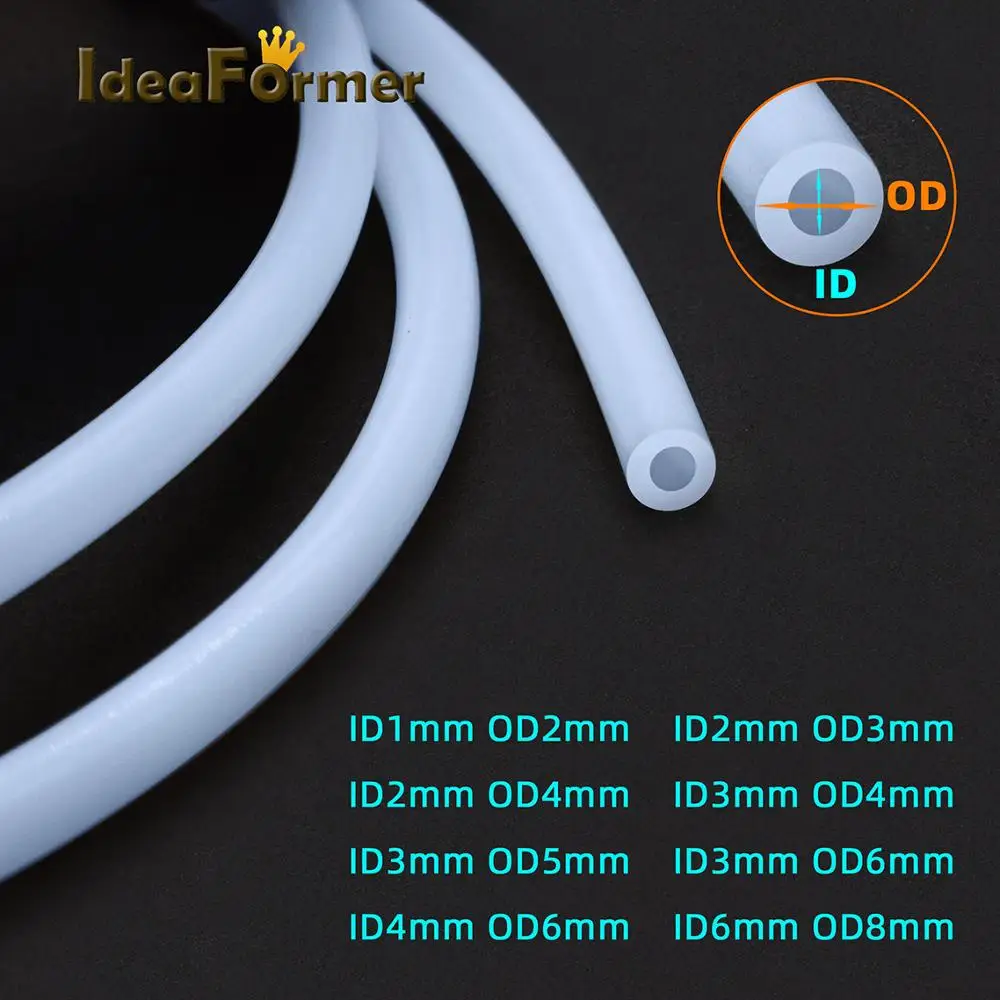
The product offers a range of precise Inner Diameter (ID) and Outer Diameter (OD) options, including 1mm ID/2mm OD, 2mm ID/3mm OD, 2mm ID/4mm OD, 3mm ID/4mm OD, 3mm ID/5mm OD, 3mm ID/6mm OD, 4mm ID/6mm OD, and 6mm ID/8mm OD. This variety ensures compatibility with both 1.75mm and 3.0mm filaments.
Matching the tube's inner diameter precisely to the filament diameter is crucial for optimal performance. A tube with a slightly larger ID than the filament can lead to 'bowden gap' issues, where the filament buckles inside the tube, causing inconsistent extrusion or jams. A snug fit is key.
Conversely, a tube that is too tight increases friction, making it harder for the extruder to push the filament through. This can lead to under-extrusion and motor skipping. The availability of multiple precise dimensions allows users to select the perfect fit for their specific filament and printer setup, unlike generic tubes that offer limited choices.
This tubing is specifically designed for Bowden extruder systems, including popular models like the V5/V6 J-head. In a Bowden setup, the extruder motor is separate from the hotend, pushing filament through a long tube.
The quality of this tube directly impacts the effectiveness of the Bowden system. A low-friction, precisely sized tube minimizes the 'play' in the system, leading to more responsive extrusion and retraction. This improves print accuracy.
Compared to direct drive systems where the extruder is mounted directly on the hotend, Bowden systems rely heavily on the tube for consistent filament delivery. This PTFE tube enhances the inherent advantages of a Bowden setup, such as reduced print head weight and faster movements, by ensuring reliable filament transport.
For educators, providing students with reliable equipment is essential for fostering an engaging learning environment. Frequent print failures due to subpar components can quickly lead to frustration and disinterest. This tube prevents such issues.
By incorporating high-quality PTFE tubing, educators can minimize hardware-related print problems, allowing students to focus on design principles, slicing parameters, and problem-solving within the digital realm. It simplifies the hands-on experience.
Imagine a classroom where students can confidently initiate prints, knowing that the hardware will perform consistently. This reliability empowers students to experiment more freely, learn from design iterations, and achieve successful outcomes, ultimately enhancing their understanding of STEM concepts through practical application. This tube supports that vision.
The Material Science Behind Smooth Prints
This tubing is crafted from Polytetrafluoroethylene (PTFE), a synthetic fluoropolymer of tetrafluoroethylene. PTFE is renowned for its extraordinarily low coefficient of friction, often cited as one of the lowest of any solid material. This property is fundamental to its application in 3D printing.
Filament glides effortlessly through this smooth inner surface. Imagine the difference this makes during long print jobs, where even minor resistance can lead to inconsistent extrusion or, worse, a complete blockage. The filament experiences minimal drag, ensuring a steady, uninterrupted flow to the hotend.
Generic plastic tubing, often found in entry-level kits, creates significantly more drag. This increased friction can cause wear on the filament, leading to dust accumulation and premature clogs within the hotend. The PTFE tube offers a clear upgrade in material science.
Non-Stick and Chemical Inertness
Beyond low friction, PTFE exhibits excellent non-stick properties. This characteristic is vital for preventing filament residue buildup inside the tube, which can otherwise narrow the internal diameter over time.
Any stray plastic particles struggle to adhere. This significantly reduces the frequency of maintenance required to clear blockages. A clean path is essential.
Furthermore, PTFE is chemically inert, resisting degradation from most solvents, acids, and bases. This ensures the tube maintains its structural integrity and performance even when exposed to various environmental factors or cleaning agents, unlike less resilient polymers.
Enduring Extreme Environments
One of the most impressive attributes of this PTFE tubing is its wide working temperature range, spanning from -180°C to 260°C. This broad thermal tolerance is crucial for the demanding conditions within a 3D printer.
This extensive range protects against common issues like heat creep from the hotend. Heat creep occurs when heat travels up the hotend into the cold end, softening the filament prematurely and causing jams. The tube resists this thermal transfer effectively.
Standard plastic tubes often soften or deform at sustained temperatures above 200°C, leading to increased friction, deformation, and eventual failure. The PTFE tube maintains its rigidity and internal diameter even when positioned close to the hotend, ensuring consistent performance over thousands of printing hours.
Electrical Insulation for Enhanced Safety
In an educational setting, safety is paramount. The tubing also provides electrical insulation. This property adds an extra layer of protection.
While not directly part of the electrical circuit, its insulating nature means it will not conduct electricity if it accidentally comes into contact with live components. This is a subtle but important safety feature.
Other materials might pose a risk. This tube minimizes potential hazards, making it a safer choice for student-operated equipment.
Flexibility and Durability for Dynamic Systems
The visual inspection reveals a tube with high toughness and bendability. It feels pliable yet robust, indicating a material that can withstand repeated flexing without cracking.
The tube maintains its integrity and internal lumen even when routed around tight corners within a printer's enclosure. This flexibility is essential for Bowden extrusion systems, where the tube often moves with the print head or gantry. It bends without kinking.
Brittle alternatives crack or pinch easily, leading to immediate filament flow issues and print failures. This PTFE tube offers superior mechanical resilience, ensuring a long service life even in printers with dynamic Bowden setups. Its structural integrity is impressive.
Long Service Life and Reduced Downtime
Durability directly translates to a long service life. This means fewer replacements and less printer downtime. For a classroom or busy lab, this is invaluable.
Imagine a scenario in a busy school workshop: constant use, various users, and the occasional accidental snag. A durable tube resists wear and tear, ensuring the printer remains operational for critical projects. Downtime costs valuable learning time.
Compared to components that require frequent replacement, this PTFE tube represents a significant long-term value. Its resilience contributes to a more reliable and cost-effective printing experience over time, reducing the overall total cost of ownership.
Precision Engineering for Filament Compatibility
The product offers a range of precise Inner Diameter (ID) and Outer Diameter (OD) options, including 1mm ID/2mm OD, 2mm ID/3mm OD, 2mm ID/4mm OD, 3mm ID/4mm OD, 3mm ID/5mm OD, 3mm ID/6mm OD, 4mm ID/6mm OD, and 6mm ID/8mm OD. This variety ensures compatibility with both 1.75mm and 3.0mm filaments.
Matching the tube's inner diameter precisely to the filament diameter is crucial for optimal performance. A tube with a slightly larger ID than the filament can lead to 'bowden gap' issues, where the filament buckles inside the tube, causing inconsistent extrusion or jams. A snug fit is key.
Conversely, a tube that is too tight increases friction, making it harder for the extruder to push the filament through. This can lead to under-extrusion and motor skipping. The availability of multiple precise dimensions allows users to select the perfect fit for their specific filament and printer setup, unlike generic tubes that offer limited choices.
Optimizing Bowden Extruder Performance
This tubing is specifically designed for Bowden extruder systems, including popular models like the V5/V6 J-head. In a Bowden setup, the extruder motor is separate from the hotend, pushing filament through a long tube.
The quality of this tube directly impacts the effectiveness of the Bowden system. A low-friction, precisely sized tube minimizes the 'play' in the system, leading to more responsive extrusion and retraction. This improves print accuracy.
Compared to direct drive systems where the extruder is mounted directly on the hotend, Bowden systems rely heavily on the tube for consistent filament delivery. This PTFE tube enhances the inherent advantages of a Bowden setup, such as reduced print head weight and faster movements, by ensuring reliable filament transport.
A Foundation for Successful 3D Printing Education
For educators, providing students with reliable equipment is essential for fostering an engaging learning environment. Frequent print failures due to subpar components can quickly lead to frustration and disinterest. This tube prevents such issues.
By incorporating high-quality PTFE tubing, educators can minimize hardware-related print problems, allowing students to focus on design principles, slicing parameters, and problem-solving within the digital realm. It simplifies the hands-on experience.
Imagine a classroom where students can confidently initiate prints, knowing that the hardware will perform consistently. This reliability empowers students to experiment more freely, learn from design iterations, and achieve successful outcomes, ultimately enhancing their understanding of STEM concepts through practical application. This tube supports that vision.