NOYAFA NF-488 PoE & Network Cable Tester
Official Store Deal
Expert Analysis Overview
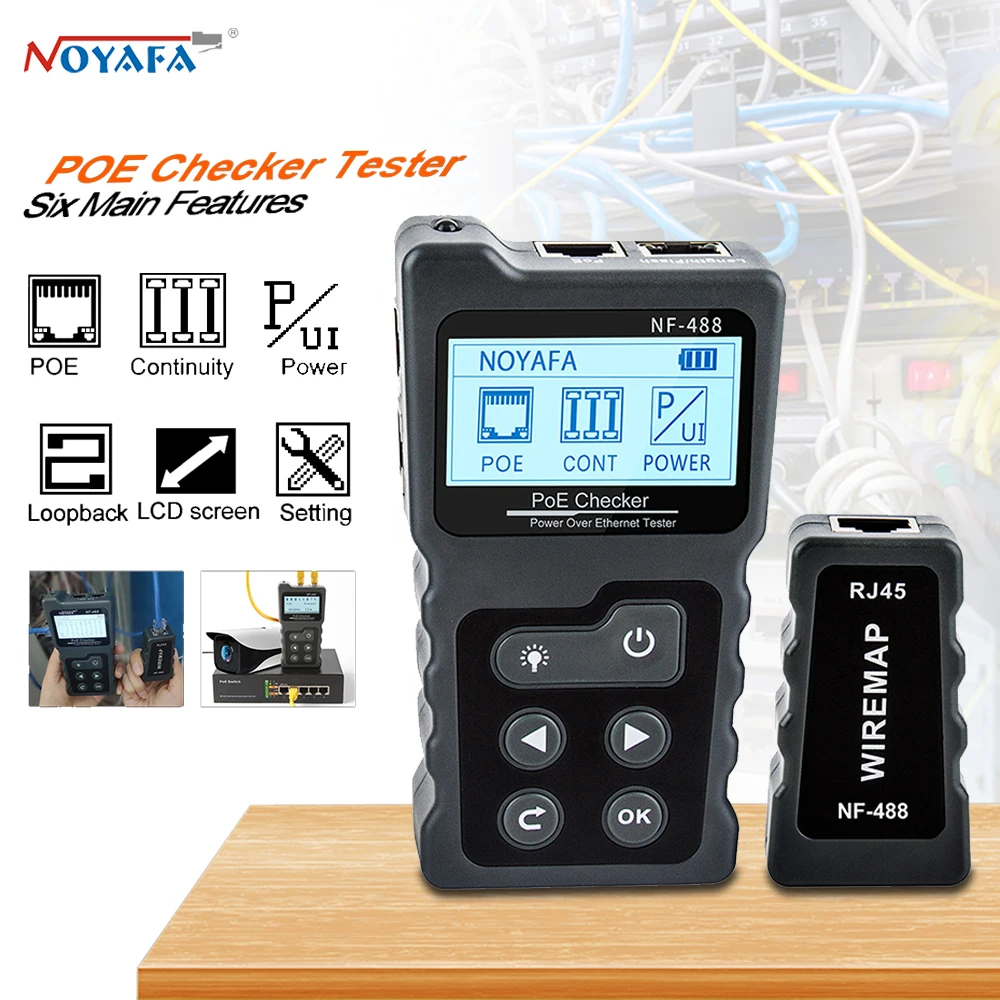
The NOYAFA NF-488 is a specialized network diagnostic instrument engineered for field technicians requiring precise Power over Ethernet (PoE) and cable continuity verification. This device consolidates multiple essential testing functions into a single, handheld unit, streamlining the troubleshooting process for Ethernet infrastructure. Its design prioritizes efficiency in identifying common network cable faults and validating PoE deployments, which are critical for maintaining robust and reliable network operations.
The NF-488 integrates comprehensive testing functionalities, including PoE voltage detection, power consumption assessment, and detailed wiremap analysis. These capabilities are fundamental for diagnosing issues in modern network environments where PoE is prevalent. The device's ability to quickly identify the presence and type of PoE, along with the power delivered, significantly reduces diagnostic time.
This integrated approach allows network engineers to rapidly ascertain the health of a cable run and the power delivery status of a PoE port. For instance, when deploying IP cameras or VoIP phones, verifying the correct PoE standard and available power is paramount. The NF-488 provides this immediate feedback, preventing misconfigurations or underpowered devices.
Unlike rudimentary PoE injectors that merely indicate power presence, the NF-488 offers granular data. Standard entry-level testers often provide only a pass/fail for continuity. This unit, however, details the specific PoE standard (e.g., 802.3af, 802.3at) and the voltage, which is a significant upgrade for professional diagnostics.
The unit's primary function involves the meticulous analysis of Power over Ethernet circuits. It displays the PoE standard, voltage, and power draw, providing critical insights into the power delivery system. This data is essential for ensuring that powered devices (PDs) receive adequate and stable power.
In a scenario where a new access point fails to power on, the NF-488 can quickly determine if the issue lies with the power sourcing equipment (PSE) or the cable itself. It can measure the actual power consumed by a connected device, allowing for capacity planning and troubleshooting of power budget overruns. This prevents costly downtime.
Many basic network testers lack any PoE diagnostic capabilities. They cannot differentiate between a non-PoE port and a faulty PoE port. The NF-488's dedicated PoE testing elevates it beyond simple cable verification, offering a more complete picture of the network's physical layer.
Beyond PoE, the NF-488 performs thorough cable continuity and wiremap tests for RJ45 Ethernet cables. It identifies open circuits, short circuits, cross-overs, and split pairs, which are common culprits for network performance degradation. The included remote unit facilitates end-to-end testing of installed cabling.
Accurate wiremap information is crucial for certifying new cable installations and troubleshooting existing ones. A miswired cable, even if it passes basic continuity, can lead to intermittent connectivity or reduced data rates. The visual representation on the LCD screen simplifies the identification of specific pin-out errors.
Generic continuity testers often use simple LED indicators, which can be ambiguous. They might show a fault but not pinpoint the exact wire or type of fault. The NF-488's detailed LCD readout provides precise pin-to-pin mapping, offering superior diagnostic clarity compared to simpler, less informative tools.
The device features a monochrome LCD screen that presents test results clearly and concisely. Its compact form factor and intuitive button layout contribute to ease of use in various field conditions. The illuminated keys are a practical addition for low-light environments.
Field technicians frequently operate in server closets, under desks, or in dimly lit utility rooms. A clear, backlit display and illuminated controls are not merely conveniences; they are necessities for efficient operation. The device's robust housing suggests resilience against typical job site wear and tear.
Compared to older generation testers that rely on a series of blinking LEDs, the NF-488's LCD provides a direct, textual, and graphical representation of data. This reduces interpretation errors and speeds up the diagnostic process significantly. The user interface is straightforward.
A loopback port is integrated into the main unit, allowing for self-testing or specific diagnostic scenarios. This feature can be used to verify the functionality of the tester itself or to simulate network conditions for advanced troubleshooting. It is a simple yet effective tool.
For instance, if a technician suspects the main unit is malfunctioning, connecting a short patch cable to the loopback port can quickly confirm its operational status. This self-diagnostic capability enhances confidence in the test results obtained from the device.
Many basic cable testers lack any form of self-test or loopback. This often means a technician must rely on external known-good cables or devices to verify the tester's accuracy, adding complexity and time to the diagnostic workflow. The NF-488 simplifies this.
The NOYAFA NF-488 is constructed with a durable, impact-resistant plastic casing, designed to withstand the rigors of field use. Its two-part design, comprising a main tester and a remote identifier, enhances its utility for testing long cable runs. The compact dimensions ensure portability.
Network technicians often carry a multitude of tools, and space is at a premium. A device that is both robust and portable, fitting comfortably into a tool bag, is highly valued. The physical separation of the remote unit allows for single-person testing of installed cables across different locations.
Unlike bulkier, more fragile network certification tools, the NF-488 strikes a balance between functionality and practical portability. Its construction appears to prioritize durability over aesthetic flourishes, which is appropriate for a utility-focused instrument. The remote unit is small.
For organizations aiming to build and maintain a robust, enterprise-grade network, the NF-488 offers significant value. Its ability to accurately diagnose PoE issues and cable faults directly contributes to network stability and uptime. This tool helps ensure that the physical layer, the foundation of any network, is sound.
Efficient traffic management begins with a reliable physical infrastructure. By quickly identifying and rectifying cable and PoE problems, the NF-488 prevents bottlenecks and intermittent connectivity that can cripple network performance. It allows technicians to proactively address issues before they escalate into major outages.
While the NF-488 does not directly customize firmware settings, its role in verifying the underlying cabling and power delivery is indirectly critical for devices that do. A stable physical layer is a prerequisite for any advanced network configuration or firmware deployment. Without a solid foundation, even the most optimized firmware will struggle.
This instrument represents a strategic investment for any IT department or network professional. It minimizes the time spent on troubleshooting, reduces the need for expensive call-outs, and extends the lifespan of network infrastructure by ensuring proper installation and maintenance. The cost-per-use becomes negligible over time, given the efficiency gains. Imagine the confidence in deploying new PoE devices, knowing that the power delivery and cabling have been thoroughly validated, eliminating common installation headaches and ensuring immediate operational success. This tool empowers technicians to maintain peak network performance with minimal effort.
Core Diagnostic Capabilities
The NF-488 integrates comprehensive testing functionalities, including PoE voltage detection, power consumption assessment, and detailed wiremap analysis. These capabilities are fundamental for diagnosing issues in modern network environments where PoE is prevalent. The device's ability to quickly identify the presence and type of PoE, along with the power delivered, significantly reduces diagnostic time.
This integrated approach allows network engineers to rapidly ascertain the health of a cable run and the power delivery status of a PoE port. For instance, when deploying IP cameras or VoIP phones, verifying the correct PoE standard and available power is paramount. The NF-488 provides this immediate feedback, preventing misconfigurations or underpowered devices.
Unlike rudimentary PoE injectors that merely indicate power presence, the NF-488 offers granular data. Standard entry-level testers often provide only a pass/fail for continuity. This unit, however, details the specific PoE standard (e.g., 802.3af, 802.3at) and the voltage, which is a significant upgrade for professional diagnostics.
Power Over Ethernet (PoE) Analysis
The unit's primary function involves the meticulous analysis of Power over Ethernet circuits. It displays the PoE standard, voltage, and power draw, providing critical insights into the power delivery system. This data is essential for ensuring that powered devices (PDs) receive adequate and stable power.
In a scenario where a new access point fails to power on, the NF-488 can quickly determine if the issue lies with the power sourcing equipment (PSE) or the cable itself. It can measure the actual power consumed by a connected device, allowing for capacity planning and troubleshooting of power budget overruns. This prevents costly downtime.
Many basic network testers lack any PoE diagnostic capabilities. They cannot differentiate between a non-PoE port and a faulty PoE port. The NF-488's dedicated PoE testing elevates it beyond simple cable verification, offering a more complete picture of the network's physical layer.
Cable Continuity and Wiremap Verification
Beyond PoE, the NF-488 performs thorough cable continuity and wiremap tests for RJ45 Ethernet cables. It identifies open circuits, short circuits, cross-overs, and split pairs, which are common culprits for network performance degradation. The included remote unit facilitates end-to-end testing of installed cabling.
Accurate wiremap information is crucial for certifying new cable installations and troubleshooting existing ones. A miswired cable, even if it passes basic continuity, can lead to intermittent connectivity or reduced data rates. The visual representation on the LCD screen simplifies the identification of specific pin-out errors.
Generic continuity testers often use simple LED indicators, which can be ambiguous. They might show a fault but not pinpoint the exact wire or type of fault. The NF-488's detailed LCD readout provides precise pin-to-pin mapping, offering superior diagnostic clarity compared to simpler, less informative tools.
Operational Ergonomics and Display
The device features a monochrome LCD screen that presents test results clearly and concisely. Its compact form factor and intuitive button layout contribute to ease of use in various field conditions. The illuminated keys are a practical addition for low-light environments.
Field technicians frequently operate in server closets, under desks, or in dimly lit utility rooms. A clear, backlit display and illuminated controls are not merely conveniences; they are necessities for efficient operation. The device's robust housing suggests resilience against typical job site wear and tear.
Compared to older generation testers that rely on a series of blinking LEDs, the NF-488's LCD provides a direct, textual, and graphical representation of data. This reduces interpretation errors and speeds up the diagnostic process significantly. The user interface is straightforward.
Loopback Functionality
A loopback port is integrated into the main unit, allowing for self-testing or specific diagnostic scenarios. This feature can be used to verify the functionality of the tester itself or to simulate network conditions for advanced troubleshooting. It is a simple yet effective tool.
For instance, if a technician suspects the main unit is malfunctioning, connecting a short patch cable to the loopback port can quickly confirm its operational status. This self-diagnostic capability enhances confidence in the test results obtained from the device.
Many basic cable testers lack any form of self-test or loopback. This often means a technician must rely on external known-good cables or devices to verify the tester's accuracy, adding complexity and time to the diagnostic workflow. The NF-488 simplifies this.
Construction and Portability
The NOYAFA NF-488 is constructed with a durable, impact-resistant plastic casing, designed to withstand the rigors of field use. Its two-part design, comprising a main tester and a remote identifier, enhances its utility for testing long cable runs. The compact dimensions ensure portability.
Network technicians often carry a multitude of tools, and space is at a premium. A device that is both robust and portable, fitting comfortably into a tool bag, is highly valued. The physical separation of the remote unit allows for single-person testing of installed cables across different locations.
Unlike bulkier, more fragile network certification tools, the NF-488 strikes a balance between functionality and practical portability. Its construction appears to prioritize durability over aesthetic flourishes, which is appropriate for a utility-focused instrument. The remote unit is small.
Value Proposition for Network Infrastructure
For organizations aiming to build and maintain a robust, enterprise-grade network, the NF-488 offers significant value. Its ability to accurately diagnose PoE issues and cable faults directly contributes to network stability and uptime. This tool helps ensure that the physical layer, the foundation of any network, is sound.
Efficient traffic management begins with a reliable physical infrastructure. By quickly identifying and rectifying cable and PoE problems, the NF-488 prevents bottlenecks and intermittent connectivity that can cripple network performance. It allows technicians to proactively address issues before they escalate into major outages.
While the NF-488 does not directly customize firmware settings, its role in verifying the underlying cabling and power delivery is indirectly critical for devices that do. A stable physical layer is a prerequisite for any advanced network configuration or firmware deployment. Without a solid foundation, even the most optimized firmware will struggle.
This instrument represents a strategic investment for any IT department or network professional. It minimizes the time spent on troubleshooting, reduces the need for expensive call-outs, and extends the lifespan of network infrastructure by ensuring proper installation and maintenance. The cost-per-use becomes negligible over time, given the efficiency gains. Imagine the confidence in deploying new PoE devices, knowing that the power delivery and cabling have been thoroughly validated, eliminating common installation headaches and ensuring immediate operational success. This tool empowers technicians to maintain peak network performance with minimal effort.