Nollie 5V ARGB Controller Hub for SignalRGB OpenRGB
Official Store Deal
Expert Analysis Overview
The Nollie 5V ARGB Asynchronous Controller is a highly functional lighting management hub designed for PC enthusiasts seeking comprehensive control over their addressable RGB components. This device addresses the common limitations of motherboard-integrated ARGB headers, offering expanded connectivity and broad software compatibility for intricate lighting schemes.
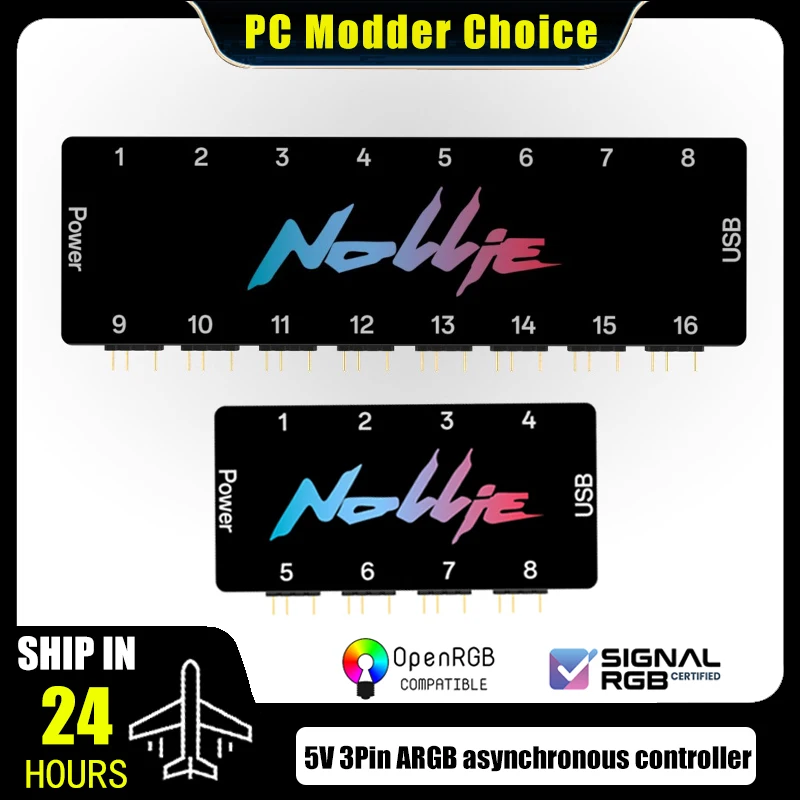
This controller acts as a central distribution point for 5V 3-pin ARGB devices within a PC build. It provides either 8 or 16 dedicated ARGB headers, depending on the chosen model, allowing for a significant increase in the number of individually addressable lighting elements a system can manage. The physical layout of the ports is clearly numbered, simplifying the connection process for multiple light strips, fans, and other ARGB accessories. Installation is straightforward.
For builders with numerous ARGB devices, the Nollie controller prevents the need for daisy-chaining or relying on limited motherboard headers. This dedicated hub ensures each connected component receives consistent power and data signals, crucial for smooth and synchronized lighting effects. It is a direct solution to header scarcity.
Compared to basic ARGB splitters that merely duplicate a single motherboard signal, this controller offers independent management capabilities. Generic splitters often lead to power delivery issues or signal degradation when too many devices are connected. The Nollie unit, by contrast, provides a robust, powered solution that maintains signal integrity across all ports, ensuring every LED performs as intended.
The controller draws power via a standard SATA power connector, a ubiquitous interface found in most modern power supply units. This ensures a stable and ample power supply for all connected ARGB devices, preventing voltage drops that can cause flickering or dimming. The power input is clearly labeled on the unit itself.
Utilizing SATA power is a significant advantage for system stability. Many budget ARGB hubs rely on less robust power methods, such as direct motherboard headers, which can strain the motherboard's power delivery system when multiple high-draw devices are attached. SATA power offers a dedicated and reliable power source.
This approach contrasts sharply with older or simpler ARGB solutions that might use a Molex connector or draw minimal power directly from the motherboard's ARGB header. Such methods often limit the total number of LEDs or devices that can be reliably powered. The Nollie controller's SATA power input provides a more robust foundation for extensive lighting setups.
A standout feature of the Nollie controller is its compatibility with both OpenRGB and SignalRGB software. These platforms are highly regarded in the PC modding community for their comprehensive control, extensive customization options, and ability to unify lighting across components from different manufacturers. The controller connects to the motherboard via an internal USB 2.0 header, providing the necessary data pathway for software communication. This USB connection is critical.
This broad software support liberates users from proprietary manufacturer-specific RGB applications, which often consume significant system resources and can conflict with each other. OpenRGB and SignalRGB provide a centralized, lightweight solution for managing all lighting effects, from static colors to complex dynamic patterns. System performance benefits from this consolidation.
Unlike controllers locked into a single brand's ecosystem, which can limit future upgrades or force users to run multiple, often clunky, software suites, the Nollie controller offers true interoperability. This flexibility is invaluable for builders who prioritize a clean software environment and maximum hardware compatibility. It simplifies the user experience.
The physical dimensions of the controller are compact, allowing for flexible mounting options within a PC case. Both the 8-port and 16-port versions maintain a relatively slim profile, making them suitable for placement in less conspicuous areas, such as behind the motherboard tray or in drive bays. Adhesive pads are included for secure mounting. Cable management becomes easier.
Careful consideration of the controller's placement is essential for optimal cable routing. Positioning it near the bulk of ARGB devices minimizes cable clutter and ensures a tidy build. The included USB header cable and SATA power cable offer sufficient length for most standard ATX and Micro-ATX cases. A clean build is achievable.
Many generic ARGB hubs can be bulky or lack proper mounting solutions, leading to loose components inside the case. The Nollie controller's compact design and included adhesive pads provide a more professional and secure installation. This attention to detail improves the overall aesthetic and longevity of the build.
The availability of both 8-port and 16-port variants allows builders to choose a controller that precisely matches their current and future lighting needs. For smaller, more focused builds, the 8-port version offers ample connectivity. Larger, more elaborate systems benefit significantly from the 16-port model, accommodating numerous fans, light strips, and custom ARGB elements. Expansion is simple.
Choosing the appropriate port count upfront can prevent the need for additional hubs later, streamlining the system and reducing potential points of failure. The modularity in size ensures that builders are not over-provisioned or under-equipped for their specific project. Future-proofing is a consideration.
Standard motherboards typically offer only one or two 5V 3-pin ARGB headers, severely limiting the scale of lighting effects. The Nollie controller bypasses this limitation, enabling truly ambitious and complex lighting designs that would otherwise be impossible without multiple, less integrated solutions. It unlocks creative potential.
This controller is explicitly marketed as a "PC Modder Choice," a designation that highlights its appeal to users who prioritize customization and performance. The asynchronous nature of the controller, combined with its software compatibility, empowers modders to create unique and dynamic lighting effects that go beyond basic synchronization. Control is precise.
For modders, the ability to fine-tune individual ARGB channels or create complex lighting sequences across a multitude of devices is paramount. The Nollie controller provides the granular control necessary to achieve these advanced effects, making it a valuable tool for showcasing custom builds. Creativity is encouraged.
Unlike entry-level ARGB solutions that offer limited control or rely on simple hardware buttons, this controller integrates deeply with powerful software. This allows for a level of artistic expression and technical customization that generic solutions simply cannot match. It offers true creative freedom.
Investing in a dedicated ARGB controller like the Nollie unit provides significant long-term value by protecting motherboard headers and simplifying future upgrades. It centralizes control, reduces cable clutter, and ensures consistent performance across all lighting components. The initial investment pays off in system stability and ease of management. It is a smart choice.
Imagine a PC build where every ARGB component, from the CPU cooler to the case fans and light strips, responds in perfect harmony to your commands, all managed through a single, intuitive software interface. Envision complex, reactive lighting profiles that enhance your gaming or productivity environment, without the frustration of conflicting software or insufficient headers. This controller delivers that seamless experience, transforming your PC into a visually stunning and perfectly synchronized machine, ready to impress and perform. The aesthetic impact is undeniable.
Centralized ARGB Command
This controller acts as a central distribution point for 5V 3-pin ARGB devices within a PC build. It provides either 8 or 16 dedicated ARGB headers, depending on the chosen model, allowing for a significant increase in the number of individually addressable lighting elements a system can manage. The physical layout of the ports is clearly numbered, simplifying the connection process for multiple light strips, fans, and other ARGB accessories. Installation is straightforward.
For builders with numerous ARGB devices, the Nollie controller prevents the need for daisy-chaining or relying on limited motherboard headers. This dedicated hub ensures each connected component receives consistent power and data signals, crucial for smooth and synchronized lighting effects. It is a direct solution to header scarcity.
Compared to basic ARGB splitters that merely duplicate a single motherboard signal, this controller offers independent management capabilities. Generic splitters often lead to power delivery issues or signal degradation when too many devices are connected. The Nollie unit, by contrast, provides a robust, powered solution that maintains signal integrity across all ports, ensuring every LED performs as intended.
Powering Your Light Show
The controller draws power via a standard SATA power connector, a ubiquitous interface found in most modern power supply units. This ensures a stable and ample power supply for all connected ARGB devices, preventing voltage drops that can cause flickering or dimming. The power input is clearly labeled on the unit itself.
Utilizing SATA power is a significant advantage for system stability. Many budget ARGB hubs rely on less robust power methods, such as direct motherboard headers, which can strain the motherboard's power delivery system when multiple high-draw devices are attached. SATA power offers a dedicated and reliable power source.
This approach contrasts sharply with older or simpler ARGB solutions that might use a Molex connector or draw minimal power directly from the motherboard's ARGB header. Such methods often limit the total number of LEDs or devices that can be reliably powered. The Nollie controller's SATA power input provides a more robust foundation for extensive lighting setups.
Seamless Software Integration
A standout feature of the Nollie controller is its compatibility with both OpenRGB and SignalRGB software. These platforms are highly regarded in the PC modding community for their comprehensive control, extensive customization options, and ability to unify lighting across components from different manufacturers. The controller connects to the motherboard via an internal USB 2.0 header, providing the necessary data pathway for software communication. This USB connection is critical.
This broad software support liberates users from proprietary manufacturer-specific RGB applications, which often consume significant system resources and can conflict with each other. OpenRGB and SignalRGB provide a centralized, lightweight solution for managing all lighting effects, from static colors to complex dynamic patterns. System performance benefits from this consolidation.
Unlike controllers locked into a single brand's ecosystem, which can limit future upgrades or force users to run multiple, often clunky, software suites, the Nollie controller offers true interoperability. This flexibility is invaluable for builders who prioritize a clean software environment and maximum hardware compatibility. It simplifies the user experience.
Installation and Case Integration
The physical dimensions of the controller are compact, allowing for flexible mounting options within a PC case. Both the 8-port and 16-port versions maintain a relatively slim profile, making them suitable for placement in less conspicuous areas, such as behind the motherboard tray or in drive bays. Adhesive pads are included for secure mounting. Cable management becomes easier.
Careful consideration of the controller's placement is essential for optimal cable routing. Positioning it near the bulk of ARGB devices minimizes cable clutter and ensures a tidy build. The included USB header cable and SATA power cable offer sufficient length for most standard ATX and Micro-ATX cases. A clean build is achievable.
Many generic ARGB hubs can be bulky or lack proper mounting solutions, leading to loose components inside the case. The Nollie controller's compact design and included adhesive pads provide a more professional and secure installation. This attention to detail improves the overall aesthetic and longevity of the build.
Scalability for Ambitious Builds
The availability of both 8-port and 16-port variants allows builders to choose a controller that precisely matches their current and future lighting needs. For smaller, more focused builds, the 8-port version offers ample connectivity. Larger, more elaborate systems benefit significantly from the 16-port model, accommodating numerous fans, light strips, and custom ARGB elements. Expansion is simple.
Choosing the appropriate port count upfront can prevent the need for additional hubs later, streamlining the system and reducing potential points of failure. The modularity in size ensures that builders are not over-provisioned or under-equipped for their specific project. Future-proofing is a consideration.
Standard motherboards typically offer only one or two 5V 3-pin ARGB headers, severely limiting the scale of lighting effects. The Nollie controller bypasses this limitation, enabling truly ambitious and complex lighting designs that would otherwise be impossible without multiple, less integrated solutions. It unlocks creative potential.
The Modder's Advantage
This controller is explicitly marketed as a "PC Modder Choice," a designation that highlights its appeal to users who prioritize customization and performance. The asynchronous nature of the controller, combined with its software compatibility, empowers modders to create unique and dynamic lighting effects that go beyond basic synchronization. Control is precise.
For modders, the ability to fine-tune individual ARGB channels or create complex lighting sequences across a multitude of devices is paramount. The Nollie controller provides the granular control necessary to achieve these advanced effects, making it a valuable tool for showcasing custom builds. Creativity is encouraged.
Unlike entry-level ARGB solutions that offer limited control or rely on simple hardware buttons, this controller integrates deeply with powerful software. This allows for a level of artistic expression and technical customization that generic solutions simply cannot match. It offers true creative freedom.
Long-Term Value and System Harmony
Investing in a dedicated ARGB controller like the Nollie unit provides significant long-term value by protecting motherboard headers and simplifying future upgrades. It centralizes control, reduces cable clutter, and ensures consistent performance across all lighting components. The initial investment pays off in system stability and ease of management. It is a smart choice.
Imagine a PC build where every ARGB component, from the CPU cooler to the case fans and light strips, responds in perfect harmony to your commands, all managed through a single, intuitive software interface. Envision complex, reactive lighting profiles that enhance your gaming or productivity environment, without the frustration of conflicting software or insufficient headers. This controller delivers that seamless experience, transforming your PC into a visually stunning and perfectly synchronized machine, ready to impress and perform. The aesthetic impact is undeniable.