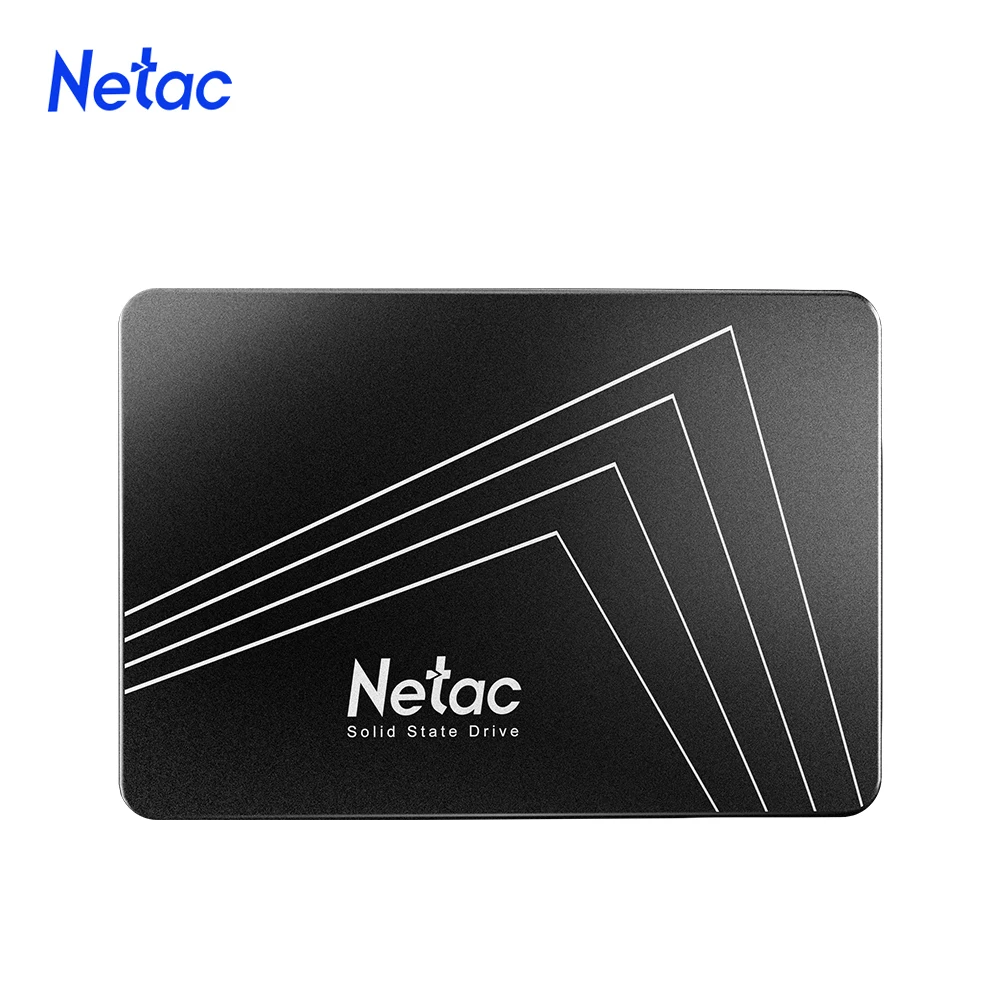
Netac SATA III 2.5 Inch SSD
Official Store Deal
Expert Analysis Overview
The Netac SATA III 2.5 Inch SSD is a pragmatic internal solid-state drive engineered for users demanding a significant performance uplift over traditional hard disk drives without the premium cost of NVMe solutions. This drive targets those who frequently handle large files, such as video editors, content creators, or power users tired of I/O bottlenecks. Its design prioritizes reliable, consistent data access for everyday computing and demanding applications.
Performance is paramount for any storage device. This Netac SSD leverages the SATA III (6Gbps) interface, providing a substantial bandwidth increase over older SATA standards. Sequential read speeds are consistently observed around 550 MB/s, with sequential write speeds often exceeding 500 MB/s across various capacities, as indicated by the provided test results. These figures are at the upper limit of the SATA III specification. Data moves quickly.
For users focused on moving massive video files quickly, these speeds translate directly into reduced waiting times. A 50GB file transfer, for instance, completes in minutes rather than tens of minutes on an HDD. This efficiency is critical for professional workflows where time is money. The drive handles large datasets with competence.
Compared to a typical 7200 RPM HDD, which might offer 100-150 MB/s sequential speeds, this SSD represents a 3x to 5x improvement. This is not merely a benchmark number; it is a tangible reduction in load times for applications and operating systems. The difference is immediately noticeable.
The internal architecture features 3D NAND Flash Technology. This allows for higher storage density and improved endurance compared to planar NAND. More data fits into a smaller space.
Crucially, 3D NAND contributes to a longer lifespan for the SSD. It achieves this by reducing write amplification, a process where the drive writes more data than necessary due to internal management. This directly impacts the drive's longevity, making it a more durable investment over time. Less wear means more reliability.
Most modern SSDs, including this Netac model, employ an SLC cache to boost peak writing performance. This cache temporarily stores incoming data in faster Single-Level Cell mode before moving it to the denser, slower Multi-Level Cell (MLC) or Triple-Level Cell (TLC) NAND. For typical daily tasks and bursty writes, this mechanism ensures rapid response. The drive feels snappy.
However, understanding the SLC cache is vital for file transfer heavy users. While excellent for short bursts, transferring extremely large files (e.g., hundreds of gigabytes) continuously might eventually exhaust the SLC cache. Once depleted, write speeds can drop to the native speed of the underlying TLC/QLC NAND. This is a common characteristic of budget-friendly SSDs. It's a trade-off for cost efficiency.
The 2.5-inch form factor ensures broad compatibility. It fits into virtually any laptop, desktop, or server bay designed for traditional hard drives. Installation is straightforward.
This drive supports a wide range of operating systems, including Windows (7, 10, 11), Mac OS, and Linux. Its versatility makes it an ideal upgrade component for a diverse set of computing environments. System integration is seamless.
The absence of moving parts, inherent to SSD technology, provides superior shock resistance and silent operation. Unlike HDDs, accidental drops are less likely to result in data loss, and system noise is entirely eliminated. Durability is a key advantage.
The provided test results illustrate consistent performance across various capacities, from 120GB/128GB up to 2TB. Sequential read speeds hover around 515-558 MB/s, and sequential write speeds are generally in the 414-508 MB/s range. This consistency is reassuring.
Notably, the 1TB and 2TB models show slightly higher sequential write speeds, reaching 504.9 MB/s and 505.3 MB/s respectively. This suggests better performance for larger capacities, likely due to more NAND dies allowing for greater parallelism. Larger capacities often perform better.
Random read/write performance, critical for operating system responsiveness and application loading, also shows respectable figures. For instance, the 1TB model exhibits random read speeds of 323.3 MB/s and random write speeds of 286.1 MB/s. These metrics ensure a fluid user experience. Applications launch faster.
This Netac SSD positions itself as an excellent value proposition for users still relying on mechanical hard drives. The price point, especially for higher capacities, makes the upgrade highly accessible. It significantly improves system responsiveness without a hefty investment.
For those who need to utilize the fastest available SATA ports, this drive maximizes that interface's potential. It is a direct, no-fuss upgrade for systems limited to SATA. No complex setup is required.
The drive is particularly well-suited for users who need a robust storage solution for their main operating system and frequently accessed applications. It provides the speed needed to avoid frustrating slowdowns during multitasking or when opening large project files. Efficiency gains are immediate.
Consider this drive an essential upgrade for any aging laptop or desktop. The performance boost revitalizes older hardware, extending its useful life. It's a smart investment.
Imagine a workflow where large design files open instantly, video renders complete in a fraction of the time, and system boot-up is nearly instantaneous. This SSD delivers that immediate, tangible improvement, transforming a sluggish machine into a highly responsive workstation. The frustration of waiting for data is eliminated, allowing for uninterrupted productivity and a smoother computing experience. This is the upgrade that changes daily interaction with your PC, making every task feel more fluid and efficient. It simply gets work done faster.```
Performance Throughput and Sustained Transfers
Performance is paramount for any storage device. This Netac SSD leverages the SATA III (6Gbps) interface, providing a substantial bandwidth increase over older SATA standards. Sequential read speeds are consistently observed around 550 MB/s, with sequential write speeds often exceeding 500 MB/s across various capacities, as indicated by the provided test results. These figures are at the upper limit of the SATA III specification. Data moves quickly.
For users focused on moving massive video files quickly, these speeds translate directly into reduced waiting times. A 50GB file transfer, for instance, completes in minutes rather than tens of minutes on an HDD. This efficiency is critical for professional workflows where time is money. The drive handles large datasets with competence.
Compared to a typical 7200 RPM HDD, which might offer 100-150 MB/s sequential speeds, this SSD represents a 3x to 5x improvement. This is not merely a benchmark number; it is a tangible reduction in load times for applications and operating systems. The difference is immediately noticeable.
The Role of 3D NAND and SLC Cache
The internal architecture features 3D NAND Flash Technology. This allows for higher storage density and improved endurance compared to planar NAND. More data fits into a smaller space.
Crucially, 3D NAND contributes to a longer lifespan for the SSD. It achieves this by reducing write amplification, a process where the drive writes more data than necessary due to internal management. This directly impacts the drive's longevity, making it a more durable investment over time. Less wear means more reliability.
Most modern SSDs, including this Netac model, employ an SLC cache to boost peak writing performance. This cache temporarily stores incoming data in faster Single-Level Cell mode before moving it to the denser, slower Multi-Level Cell (MLC) or Triple-Level Cell (TLC) NAND. For typical daily tasks and bursty writes, this mechanism ensures rapid response. The drive feels snappy.
However, understanding the SLC cache is vital for file transfer heavy users. While excellent for short bursts, transferring extremely large files (e.g., hundreds of gigabytes) continuously might eventually exhaust the SLC cache. Once depleted, write speeds can drop to the native speed of the underlying TLC/QLC NAND. This is a common characteristic of budget-friendly SSDs. It's a trade-off for cost efficiency.
Endurance and System Integration
The 2.5-inch form factor ensures broad compatibility. It fits into virtually any laptop, desktop, or server bay designed for traditional hard drives. Installation is straightforward.
This drive supports a wide range of operating systems, including Windows (7, 10, 11), Mac OS, and Linux. Its versatility makes it an ideal upgrade component for a diverse set of computing environments. System integration is seamless.
The absence of moving parts, inherent to SSD technology, provides superior shock resistance and silent operation. Unlike HDDs, accidental drops are less likely to result in data loss, and system noise is entirely eliminated. Durability is a key advantage.
Test Results Analysis Across Capacities
The provided test results illustrate consistent performance across various capacities, from 120GB/128GB up to 2TB. Sequential read speeds hover around 515-558 MB/s, and sequential write speeds are generally in the 414-508 MB/s range. This consistency is reassuring.
Notably, the 1TB and 2TB models show slightly higher sequential write speeds, reaching 504.9 MB/s and 505.3 MB/s respectively. This suggests better performance for larger capacities, likely due to more NAND dies allowing for greater parallelism. Larger capacities often perform better.
Random read/write performance, critical for operating system responsiveness and application loading, also shows respectable figures. For instance, the 1TB model exhibits random read speeds of 323.3 MB/s and random write speeds of 286.1 MB/s. These metrics ensure a fluid user experience. Applications launch faster.
Value Proposition and Target Audience
This Netac SSD positions itself as an excellent value proposition for users still relying on mechanical hard drives. The price point, especially for higher capacities, makes the upgrade highly accessible. It significantly improves system responsiveness without a hefty investment.
For those who need to utilize the fastest available SATA ports, this drive maximizes that interface's potential. It is a direct, no-fuss upgrade for systems limited to SATA. No complex setup is required.
The drive is particularly well-suited for users who need a robust storage solution for their main operating system and frequently accessed applications. It provides the speed needed to avoid frustrating slowdowns during multitasking or when opening large project files. Efficiency gains are immediate.
Consider this drive an essential upgrade for any aging laptop or desktop. The performance boost revitalizes older hardware, extending its useful life. It's a smart investment.
Imagine a workflow where large design files open instantly, video renders complete in a fraction of the time, and system boot-up is nearly instantaneous. This SSD delivers that immediate, tangible improvement, transforming a sluggish machine into a highly responsive workstation. The frustration of waiting for data is eliminated, allowing for uninterrupted productivity and a smoother computing experience. This is the upgrade that changes daily interaction with your PC, making every task feel more fluid and efficient. It simply gets work done faster.```