Nema17 Stepper Motors for 3D Printers and CNC Machines
Official Store Deal
Expert Analysis Overview
The Usongshine Nema17 Stepper Motors are a pragmatic choice for makers and tinkerers, offering a reliable backbone for motion control in 3D printers, CNC machines, and other automated projects. These units provide foundational performance essential for precise digital fabrication, standing as a testament to practical engineering. They are more than just components; they are enablers for creative machine building.
These Nema17 stepper motors, specifically the 17HS4023 and 17HS4401S models, feature a standard 1.8° step angle. This precise angular resolution is crucial. Each full rotation consists of 200 distinct steps. This granularity allows for very fine movements, which is indispensable for tasks like intricate 3D printing layers or detailed CNC engraving paths.
Consider a scenario where a machine requires smooth, almost imperceptible shifts in position. A 1.8° step angle provides the mechanical foundation for such control, especially when combined with micro-stepping capabilities offered by modern stepper drivers. Such precision minimizes visible layer lines in 3D prints. It also ensures accurate contouring in milling operations.
Compared to older, less precise stepper motors that might have larger step angles, these Nema17 units offer a significant advantage in output quality. Larger step angles can lead to choppier movements and less accurate reproductions, impacting the final product's finish. The consistent 1.8° step angle makes these motors a reliable upgrade for many existing setups, delivering better results.
The Nema17 form factor is an industry standard. This ensures broad compatibility. These motors seamlessly integrate into a vast array of existing 3D printer and CNC machine designs. This standardization reduces the headache of sourcing custom parts or designing bespoke mounting solutions, making them a go-to for many builds.
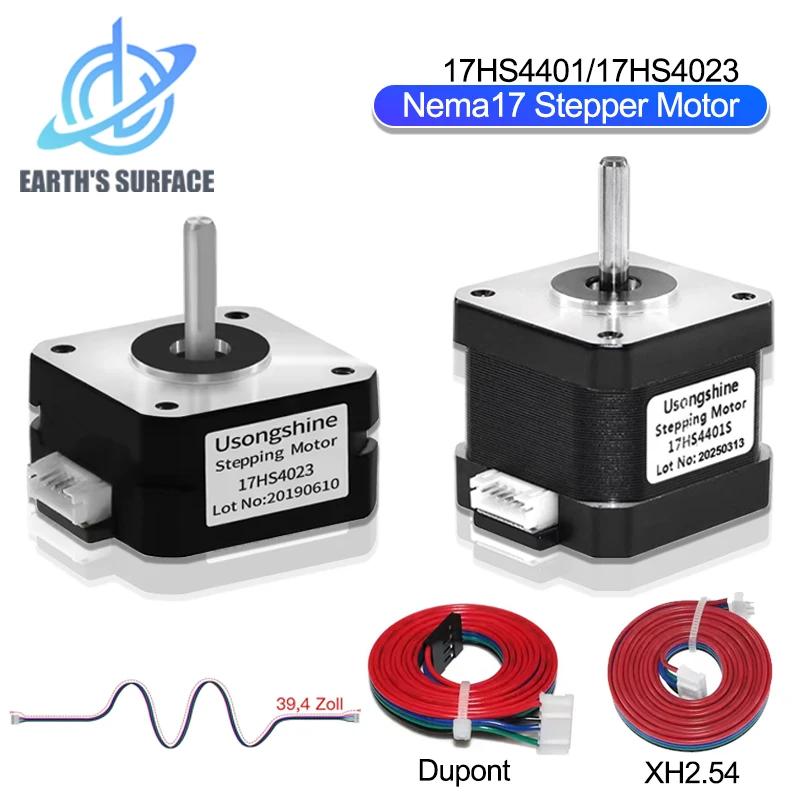
The inclusion of both XH2.54 and Dupont wiring harnesses is a thoughtful addition. This dual compatibility means users can connect the motors to a wide range of control boards without needing to splice wires or purchase additional connectors. This saves time and effort during assembly.
Many generic stepper motors often come without connectors, or with only one type, forcing users into extra purchases or tedious wire modifications. These Usongshine motors, by contrast, offer out-of-the-box flexibility. This simplifies the initial setup significantly. It also supports quick swapping for troubleshooting.
The availability of two distinct models, the 17HS4023 and the 17HS4401S, caters to different power requirements. The 17HS4023 model, with its 13 N.cm holding torque and 1.0 A/phase rated current, is suitable for lighter applications. This motor is a good fit for extrusion systems or smaller axes on a 3D printer.
For more demanding tasks, the 17HS4401S steps up significantly. It delivers 42 N.cm holding torque and requires 1.5 A/phase. This increased power makes it ideal for driving heavier gantry systems on larger CNC machines or for applications where greater force is needed to overcome resistance. Higher torque means fewer missed steps.
Choosing the right motor for the job prevents common issues like skipped steps or insufficient force. Underpowering an axis leads to poor performance. Overpowering, while less common, can result in unnecessary heat and energy consumption. These options allow for an optimized build.
These Nema17 stepper motors are inherently hackable. Their standard design encourages experimentation. Makers can easily swap these into custom builds or existing machines, leveraging the robust open-source community surrounding 3D printing and CNC. This community offers a wealth of shared knowledge.
When issues arise or modifications are desired, the vast online community is a valuable resource. Forums, wikis, and social groups frequently discuss Nema17 motors. Users can find troubleshooting tips, firmware adjustments, and even custom driver configurations. This collaborative environment accelerates problem-solving.
Unlike proprietary systems that limit user intervention, these motors invite modification. Their widespread adoption means a rich ecosystem of compatible drivers, brackets, and control boards. This allows for continuous machine improvement over time. It truly empowers the builder.
The construction of these stepper motors appears robust. Visible materials suggest a standard, reliable build. The metal casing and precisely machined shaft are designed for longevity. Such components are critical for machines operating for extended periods.
Continuous operation, common in 3D printing and CNC, places significant demands on motor components. A durable build helps mitigate wear and tear. This ensures consistent performance over thousands of hours of use. It represents a solid return on investment.
Flimsier motors often develop play in the shaft or suffer from premature bearing failure. These Usongshine motors, by adhering to Nema17 standards, imply a level of quality that resists such issues. This reduces maintenance frequency significantly.
The 4-lead configuration simplifies wiring. This is a common and straightforward setup. Four leads connect to the coils, making it easy to integrate with standard stepper motor drivers that support bipolar operation.
Complex wiring schemes can be a source of frustration for new builders. A simple 4-lead connection minimizes potential errors. This accelerates the assembly process. It gets projects up and running quicker.
Unlike 6or 8-lead motors that offer more wiring flexibility but can be confusing for beginners, the 4-lead design provides a direct path to functionality. This makes them highly accessible. It ensures reliable operation from the outset.
Upgrading to or incorporating these Nema17 motors offers a tangible improvement over generic, unbranded alternatives. The specified step angle and torque ratings provide clarity. This allows for informed decisions regarding machine capabilities.
Unspecified or inconsistent motor performance plagues many budget builds. Knowing the exact specifications of these Usongshine motors eliminates guesswork. This leads to more predictable and higher-quality machine output. It’s a smart investment in reliability.
This level of transparency and performance consistency is often lacking in the lowest-tier options. These motors deliver a dependable foundation for any project. They empower users to achieve consistent, professional results.
Imagine the precise movements of your 3D printer, laying down perfect layers with minimal vibration. Picture your CNC machine carving intricate details with unwavering accuracy, turning your digital designs into tangible realities. These Nema17 stepper motors are the unseen workhorses that bring such visions to life, providing the consistent, reliable motion control necessary for any ambitious project. They are ready to power your next creation, enabling smoother operation and more refined outputs, truly enhancing the capabilities of your workshop.
The Heartbeat of Motion: Precision in Every Step
These Nema17 stepper motors, specifically the 17HS4023 and 17HS4401S models, feature a standard 1.8° step angle. This precise angular resolution is crucial. Each full rotation consists of 200 distinct steps. This granularity allows for very fine movements, which is indispensable for tasks like intricate 3D printing layers or detailed CNC engraving paths.
Consider a scenario where a machine requires smooth, almost imperceptible shifts in position. A 1.8° step angle provides the mechanical foundation for such control, especially when combined with micro-stepping capabilities offered by modern stepper drivers. Such precision minimizes visible layer lines in 3D prints. It also ensures accurate contouring in milling operations.
Compared to older, less precise stepper motors that might have larger step angles, these Nema17 units offer a significant advantage in output quality. Larger step angles can lead to choppier movements and less accurate reproductions, impacting the final product's finish. The consistent 1.8° step angle makes these motors a reliable upgrade for many existing setups, delivering better results.
Building Blocks for the Digital Craftsperson: Compatibility and Connectivity
The Nema17 form factor is an industry standard. This ensures broad compatibility. These motors seamlessly integrate into a vast array of existing 3D printer and CNC machine designs. This standardization reduces the headache of sourcing custom parts or designing bespoke mounting solutions, making them a go-to for many builds.
The inclusion of both XH2.54 and Dupont wiring harnesses is a thoughtful addition. This dual compatibility means users can connect the motors to a wide range of control boards without needing to splice wires or purchase additional connectors. This saves time and effort during assembly.
Many generic stepper motors often come without connectors, or with only one type, forcing users into extra purchases or tedious wire modifications. These Usongshine motors, by contrast, offer out-of-the-box flexibility. This simplifies the initial setup significantly. It also supports quick swapping for troubleshooting.
Power Under the Hood: Torque and Current Considerations
The availability of two distinct models, the 17HS4023 and the 17HS4401S, caters to different power requirements. The 17HS4023 model, with its 13 N.cm holding torque and 1.0 A/phase rated current, is suitable for lighter applications. This motor is a good fit for extrusion systems or smaller axes on a 3D printer.
For more demanding tasks, the 17HS4401S steps up significantly. It delivers 42 N.cm holding torque and requires 1.5 A/phase. This increased power makes it ideal for driving heavier gantry systems on larger CNC machines or for applications where greater force is needed to overcome resistance. Higher torque means fewer missed steps.
Choosing the right motor for the job prevents common issues like skipped steps or insufficient force. Underpowering an axis leads to poor performance. Overpowering, while less common, can result in unnecessary heat and energy consumption. These options allow for an optimized build.
Beyond the Blueprint: Customization and Community
These Nema17 stepper motors are inherently hackable. Their standard design encourages experimentation. Makers can easily swap these into custom builds or existing machines, leveraging the robust open-source community surrounding 3D printing and CNC. This community offers a wealth of shared knowledge.
When issues arise or modifications are desired, the vast online community is a valuable resource. Forums, wikis, and social groups frequently discuss Nema17 motors. Users can find troubleshooting tips, firmware adjustments, and even custom driver configurations. This collaborative environment accelerates problem-solving.
Unlike proprietary systems that limit user intervention, these motors invite modification. Their widespread adoption means a rich ecosystem of compatible drivers, brackets, and control boards. This allows for continuous machine improvement over time. It truly empowers the builder.
The Long Haul: Durability and Operational Resilience
The construction of these stepper motors appears robust. Visible materials suggest a standard, reliable build. The metal casing and precisely machined shaft are designed for longevity. Such components are critical for machines operating for extended periods.
Continuous operation, common in 3D printing and CNC, places significant demands on motor components. A durable build helps mitigate wear and tear. This ensures consistent performance over thousands of hours of use. It represents a solid return on investment.
Flimsier motors often develop play in the shaft or suffer from premature bearing failure. These Usongshine motors, by adhering to Nema17 standards, imply a level of quality that resists such issues. This reduces maintenance frequency significantly.
Making the Connection: Simplified Integration
The 4-lead configuration simplifies wiring. This is a common and straightforward setup. Four leads connect to the coils, making it easy to integrate with standard stepper motor drivers that support bipolar operation.
Complex wiring schemes can be a source of frustration for new builders. A simple 4-lead connection minimizes potential errors. This accelerates the assembly process. It gets projects up and running quicker.
Unlike 6
The Maker's Edge: Why This Upgrade Matters
Upgrading to or incorporating these Nema17 motors offers a tangible improvement over generic, unbranded alternatives. The specified step angle and torque ratings provide clarity. This allows for informed decisions regarding machine capabilities.
Unspecified or inconsistent motor performance plagues many budget builds. Knowing the exact specifications of these Usongshine motors eliminates guesswork. This leads to more predictable and higher-quality machine output. It’s a smart investment in reliability.
This level of transparency and performance consistency is often lacking in the lowest-tier options. These motors deliver a dependable foundation for any project. They empower users to achieve consistent, professional results.
Final Thoughts: Empowering the Workshop
Imagine the precise movements of your 3D printer, laying down perfect layers with minimal vibration. Picture your CNC machine carving intricate details with unwavering accuracy, turning your digital designs into tangible realities. These Nema17 stepper motors are the unseen workhorses that bring such visions to life, providing the consistent, reliable motion control necessary for any ambitious project. They are ready to power your next creation, enabling smoother operation and more refined outputs, truly enhancing the capabilities of your workshop.