MK8 Brass Nozzle Kit for Ender 3 & CR-10 3D Printers
Official Store Deal
Expert Analysis Overview
The MK8 Brass Nozzle Kit is an essential consumable collection designed for 3D printing enthusiasts operating popular FDM machines like the Ender 3 and CR-10, seeking versatility in print resolution and speed. This comprehensive set provides a wide array of orifice sizes, allowing makers to fine-tune their machines for specific project demands. It's a fundamental upgrade for any workshop. The brass construction, a staple in 3D printing, ensures reliable thermal transfer and consistent extrusion, critical for successful prints across various filament types.
From a visual standpoint, the collection presents a uniform set of brass components. The variety of nozzle sizes ensures that a hobbyist or professional has the right tool for intricate designs or robust, functional prints. Print resolution is directly tied to nozzle size.
For example, a 0.2mm nozzle excels at producing extremely fine details and smooth surface finishes, ideal for miniatures or aesthetic parts where layer lines must be minimized. Conversely, larger nozzles, such as the 0.8mm or 1.0mm, enable significantly faster print times and stronger parts due to thicker extrusion lines and better layer adhesion, perfectly suited for large prototypes or structural components. This broad selection is a stark contrast to basic printer bundles that typically include only a single 0.4mm nozzle, severely limiting creative and functional output.
This material property is crucial for maintaining a consistent temperature at the nozzle tip, which directly impacts filament melting and extrusion uniformity. Effective heat transfer ensures that the filament reaches its optimal melting point just before exiting the nozzle, preventing issues like clogging or inconsistent flow. Poor thermal conductivity in a nozzle can lead to filament blockages or uneven extrusion, resulting in failed prints or compromised part quality. Brass conducts heat well.
Compared to more specialized nozzle materials like hardened steel or ruby-tipped nozzles, brass provides a cost-effective entry point for standard filament types such as PLA, PETG, and ABS. While hardened steel nozzles are preferred for abrasive filaments (e.g., carbon fiber-filled or glow-in-the-dark materials) due to their superior wear resistance, brass remains the go-to for general-purpose printing. The slight trade-off in wear resistance for abrasive materials is often acceptable given the significantly lower cost and excellent performance with non-abrasive plastics, making these nozzles a practical choice for most common printing tasks.
This standardization means direct compatibility with a vast ecosystem of popular 3D printers, including the ubiquitous Creality Ender 3 and CR-10 series. The M6 threading ensures a secure fit into the heater block, preventing leaks and ensuring a stable print head assembly. Proper seating is paramount. A universal fit minimizes the hassle of searching for specific brand-compatible parts, allowing makers to focus more on their projects rather than procurement.
Unlike proprietary nozzle designs that lock users into specific brands or limited aftermarket options, the MK8 standard promotes broad interchangeability. This open standard fosters a vibrant community of third-party accessory manufacturers and makes troubleshooting and part replacement straightforward. Users can confidently swap nozzles from various suppliers, knowing they will fit and function correctly, a significant advantage for those who frequently modify or upgrade their machines.
Their form factor ensures proper thermal mating with the heater block and heat break, facilitating efficient heat transfer to the filament while minimizing heat creep into the cold end. This thermal management is essential for preventing premature melting of the filament in the heat break, which could lead to clogs. A well-designed thermal path is a cornerstone of reliable extrusion.
When installing a new nozzle, it is critical to perform a proper hot tightening procedure. This involves heating the hot end to printing temperature, then tightening the nozzle to the specified torque. This ensures that the brass expands and seats correctly against the heat break and heater block, forming a leak-proof seal. Skipping this step, a common mistake, often leads to filament oozing from the hot end assembly, creating messy prints and potential damage. Adhering to these simple installation protocols ensures optimal performance and longevity, distinguishing a well-maintained printer from one plagued by extrusion issues.
During printing, small bits of burnt filament or impurities can accumulate inside the nozzle, leading to partial or complete clogs. A common maintenance practice involves performing
The Extrusion Arsenal: Precision in Brass
Dialing in Detail: A Spectrum of Orifice Sizes
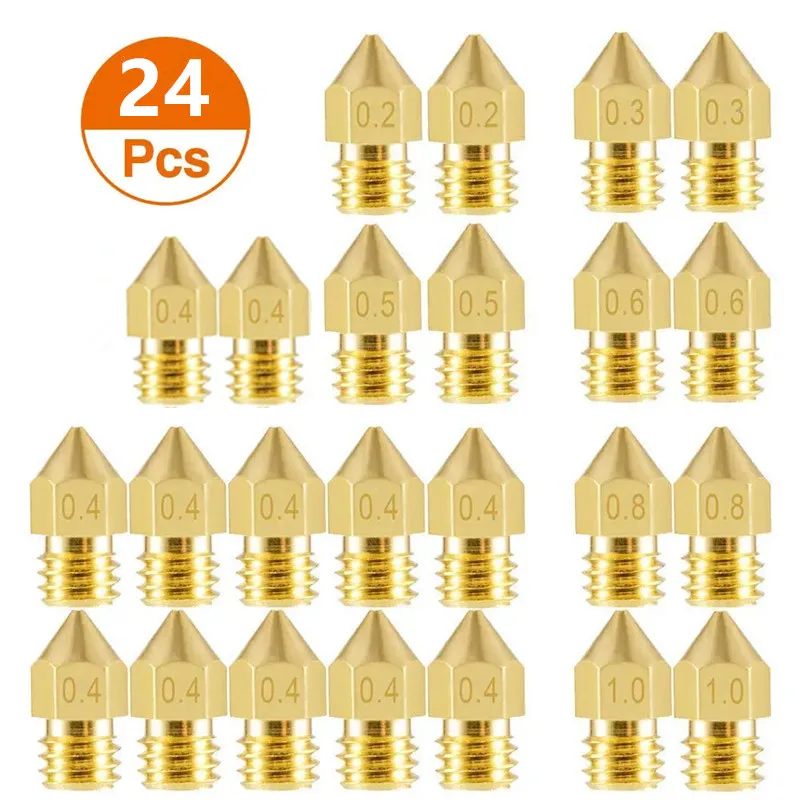
This kit delivers a substantial quantity of 24 MK8-style nozzles, offering a generous spread of outlet diameters: 0.2mm, 0.3mm, 0.4mm, 0.5mm, 0.6mm, 0.8mm, and 1.0mm. Each size is clearly marked. This range is particularly useful for makers who frequently switch between detailed models and rapid prototyping.From a visual standpoint, the collection presents a uniform set of brass components. The variety of nozzle sizes ensures that a hobbyist or professional has the right tool for intricate designs or robust, functional prints. Print resolution is directly tied to nozzle size.
For example, a 0.2mm nozzle excels at producing extremely fine details and smooth surface finishes, ideal for miniatures or aesthetic parts where layer lines must be minimized. Conversely, larger nozzles, such as the 0.8mm or 1.0mm, enable significantly faster print times and stronger parts due to thicker extrusion lines and better layer adhesion, perfectly suited for large prototypes or structural components. This broad selection is a stark contrast to basic printer bundles that typically include only a single 0.4mm nozzle, severely limiting creative and functional output.
The Metallurgy of Molten Plastic: Brass Performance
The visible material is brass, a well-established choice for 3D printer nozzles. Brass offers a balance of excellent thermal conductivity and machinability.This material property is crucial for maintaining a consistent temperature at the nozzle tip, which directly impacts filament melting and extrusion uniformity. Effective heat transfer ensures that the filament reaches its optimal melting point just before exiting the nozzle, preventing issues like clogging or inconsistent flow. Poor thermal conductivity in a nozzle can lead to filament blockages or uneven extrusion, resulting in failed prints or compromised part quality. Brass conducts heat well.
Compared to more specialized nozzle materials like hardened steel or ruby-tipped nozzles, brass provides a cost-effective entry point for standard filament types such as PLA, PETG, and ABS. While hardened steel nozzles are preferred for abrasive filaments (e.g., carbon fiber-filled or glow-in-the-dark materials) due to their superior wear resistance, brass remains the go-to for general-purpose printing. The slight trade-off in wear resistance for abrasive materials is often acceptable given the significantly lower cost and excellent performance with non-abrasive plastics, making these nozzles a practical choice for most common printing tasks.
Unlocking Print Horizons: Compatibility & Installation
Seamless Integration: The MK8 Standard
These nozzles adhere to the widely adopted MK8 standard, featuring M6 threading. The images clearly show the standard hexagonal head and threaded body.This standardization means direct compatibility with a vast ecosystem of popular 3D printers, including the ubiquitous Creality Ender 3 and CR-10 series. The M6 threading ensures a secure fit into the heater block, preventing leaks and ensuring a stable print head assembly. Proper seating is paramount. A universal fit minimizes the hassle of searching for specific brand-compatible parts, allowing makers to focus more on their projects rather than procurement.
Unlike proprietary nozzle designs that lock users into specific brands or limited aftermarket options, the MK8 standard promotes broad interchangeability. This open standard fosters a vibrant community of third-party accessory manufacturers and makes troubleshooting and part replacement straightforward. Users can confidently swap nozzles from various suppliers, knowing they will fit and function correctly, a significant advantage for those who frequently modify or upgrade their machines.
Hot End Harmony: Thermal Considerations
The design of these brass nozzles, with their specified dimensions (13mm height, 6mm hex width, 8mm thread length), is optimized for standard MK8 hot ends. The consistent dimensions are visible in the technical diagrams.Their form factor ensures proper thermal mating with the heater block and heat break, facilitating efficient heat transfer to the filament while minimizing heat creep into the cold end. This thermal management is essential for preventing premature melting of the filament in the heat break, which could lead to clogs. A well-designed thermal path is a cornerstone of reliable extrusion.
When installing a new nozzle, it is critical to perform a proper hot tightening procedure. This involves heating the hot end to printing temperature, then tightening the nozzle to the specified torque. This ensures that the brass expands and seats correctly against the heat break and heater block, forming a leak-proof seal. Skipping this step, a common mistake, often leads to filament oozing from the hot end assembly, creating messy prints and potential damage. Adhering to these simple installation protocols ensures optimal performance and longevity, distinguishing a well-maintained printer from one plagued by extrusion issues.
Sustaining the Flow: Longevity and Care
Keeping it Clean: Maintenance Protocols
Regular maintenance is crucial for extending the life and maintaining the performance of these brass nozzles. The fine orifices are susceptible to blockages.During printing, small bits of burnt filament or impurities can accumulate inside the nozzle, leading to partial or complete clogs. A common maintenance practice involves performing