Mini USB Wi-Fi 6 Adapter
Official Store Deal
Expert Analysis Overview
The Aic8800MC Wi-Fi 6 Adapter: A Micro-Footprint Network Upgrade
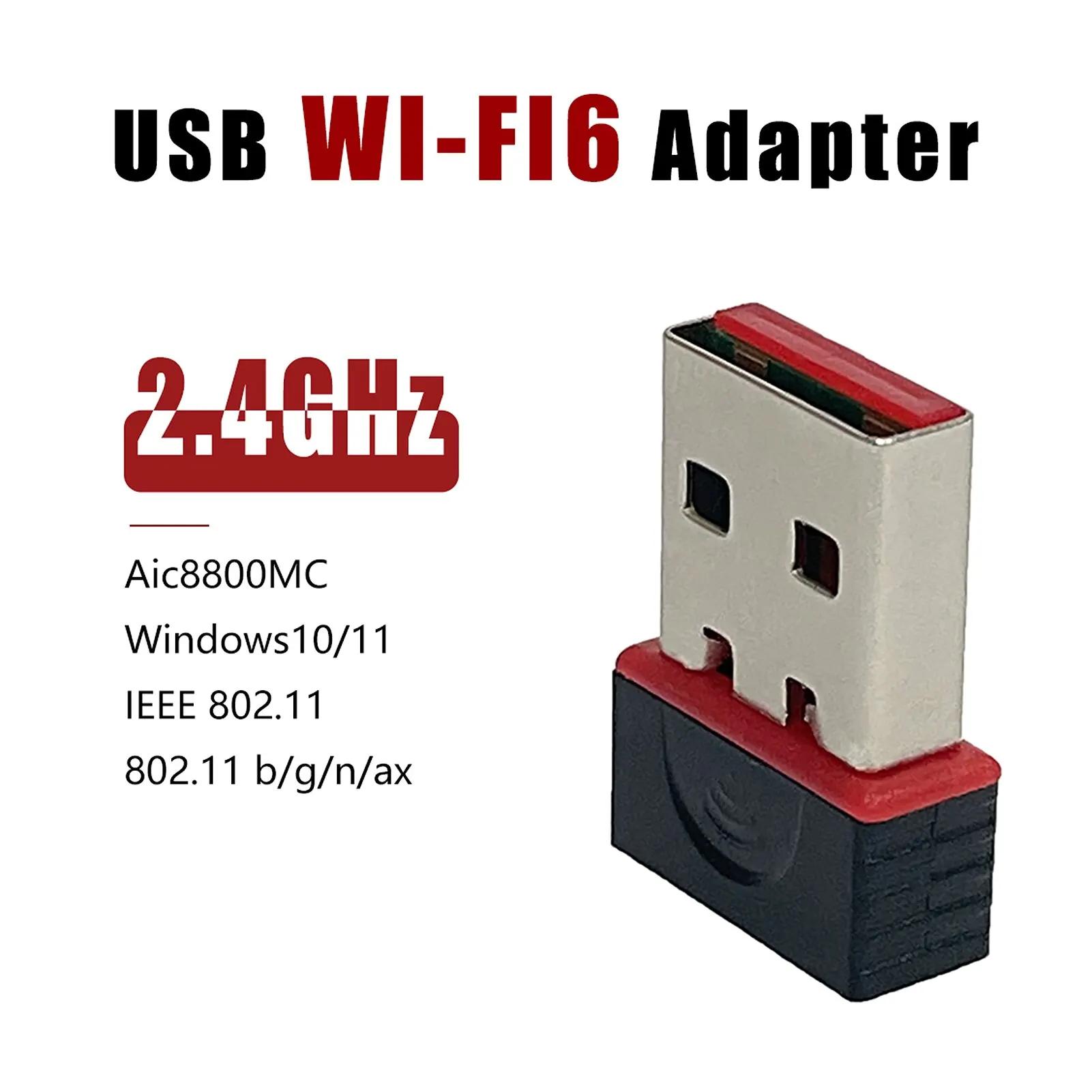
The Mini USB Wi-Fi 6 Adapter is a compact network interface controller designed for desktop and laptop systems requiring an upgrade to the 802.11ax standard on the 2.4 GHz band. This device targets users seeking enhanced wireless performance and efficiency without the complexities of driver installations or internal hardware modifications. Its diminutive form factor and plug-and-play functionality position it as a convenient solution for immediate network enhancements.
Architectural Foundation and Protocol Adherence
At its core, this adapter integrates the Aic8800MC chipset, a critical component dictating its operational capabilities and performance envelope. The Aic8800MC is engineered to support the IEEE 802.11ax standard, commonly known as Wi-Fi 6, specifically within the 2.4 GHz frequency spectrum. This adherence to 802.11ax brings several advancements over previous generations, including OFDMA (Orthogonal Frequency-Division Multiple Access) and MU-MIMO (Multi-User, Multiple-Input, Multiple-Output) technologies. These protocols are fundamental for improving network efficiency, particularly in environments with numerous connected devices. Data transmission is optimized. The chipset also maintains backward compatibility with 802.11 b/g/n standards, ensuring seamless integration with older wireless infrastructure. This broad compatibility is crucial for diverse network environments.
Consider a scenario where a legacy system, perhaps an older desktop PC, is bottlenecking network performance due to an outdated 802.11n adapter. Integrating this Wi-Fi 6 adapter immediately elevates its wireless capabilities, allowing it to participate more effectively in a modern Wi-Fi 6 network. The system can then benefit from the router's advanced traffic management. Compared to a standard 802.11n adapter, which typically offers theoretical maximums around 150-300 Mbps on 2.4 GHz, this Wi-Fi 6 device, rated at 286 Mbps, provides a more stable and efficient connection, especially under load. The efficiency gains are substantial.
Throughput and Operational Bandwidth
This adapter specifies a maximum theoretical throughput of 286 Mbps on the 2.4 GHz band. While this figure might appear modest compared to the multi-gigabit speeds often associated with Wi-Fi 6 on the 5 GHz band, it represents a significant improvement in real-world efficiency and stability for the 2.4 GHz spectrum. The 2.4 GHz band is inherently more susceptible to interference from other devices, such as microwaves and Bluetooth peripherals, and typically offers greater range but lower raw speed than 5 GHz. The 802.11ax standard mitigates some of these limitations through improved spectral efficiency and interference management techniques. This ensures a more consistent data stream.
For a user streaming high-definition content or engaging in online gaming, the 286 Mbps throughput, combined with Wi-Fi 6's efficiency features, translates into reduced latency and fewer dropped packets. The connection remains stable. Imagine a home office environment where multiple devices, including smart home gadgets and other computers, are all vying for bandwidth on the 2.4 GHz network. A standard 802.11n adapter would quickly become saturated, leading to noticeable lag and buffering. This Wi-Fi 6 adapter, with its OFDMA capabilities, allows the router to communicate with multiple devices simultaneously, allocating specific time and frequency resources to each, thereby optimizing overall network utilization. This contrasts sharply with older standards where devices had to wait their turn, creating bottlenecks.
Driver-Free Deployment and Operating System Integration
One of the most compelling features of this adapter is its driver-free operation on Windows 10 and Windows 11. This plug-and-play functionality simplifies deployment significantly, eliminating the need for manual driver downloads, installation CDs, or complex setup procedures. The operating system's native USB device recognition capabilities automatically identify and configure the adapter upon insertion. This streamlines the user experience. The device is immediately ready for use.
For IT administrators or users managing multiple systems, the driver-free aspect reduces deployment time and potential compatibility issues. It is a true convenience. Picture a scenario where a user needs to quickly establish a wireless connection on a newly installed Windows 11 machine without internet access. A traditional adapter would require pre-downloaded drivers or an alternative internet source. This adapter bypasses that hurdle entirely, providing instant connectivity. This ease of use stands in stark contrast to many older or more specialized network adapters that often demand specific driver packages, sometimes leading to frustrating troubleshooting sessions if the correct version is not readily available.
Physical Design and Ergonomics
The adapter's physical dimensions are remarkably compact: 20mm in length, 9mm in width, and 6mm in thickness. This miniature form factor ensures that the adapter protrudes minimally from the USB port, reducing the risk of accidental damage when installed in Laptops or desktop PCs situated in confined spaces. The housing appears to be constructed from a durable plastic, with a metallic USB connector. The mold precision is evident. The red accent on the black body provides a subtle visual distinction.
This compact design is particularly beneficial for laptop users who frequently transport their devices. A larger adapter could easily snag on bags or clothing, potentially damaging the USB port or the adapter itself. This device remains unobtrusive. Consider a user who frequently moves their laptop between a desk setup and a portable workstation. The low-profile design means the adapter can remain plugged in without concern for physical obstruction or damage. This is a distinct advantage over bulkier USB Wi-Fi dongles that can be cumbersome and prone to accidental dislodgement.
Network Management and Advanced Features
While marketed as a driver-free, plug-and-play solution, the underlying Wi-Fi 6 capabilities imply a certain level of network management potential, albeit largely handled by the host operating system and the connected router. The Aic8800MC chipset's support for 802.11ax means it can leverage features like Target Wake Time (TWT), which allows devices to negotiate when and how often they will wake up to send or receive data, thereby extending battery life for connected clients. This is a power-saving feature. The adapter's role is to communicate these capabilities to the access point.
For users aiming to build a robust, enterprise-grade network at home, this adapter integrates seamlessly into an existing Wi-Fi 6 ecosystem. It allows client devices to fully participate in the advanced traffic management schemes implemented by a Wi-Fi 6 router. This ensures efficient data flow. Imagine a scenario where a network engineer is optimizing a home network for IoT devices and high-bandwidth workstations. By ensuring all client devices, including those connected via this adapter, support Wi-Fi 6, the overall network efficiency and responsiveness are significantly improved. This contrasts with a mixed environment where older clients can force the entire network to operate at lower efficiency modes, impacting performance for all connected devices.
Value Proposition and Long-Term Utility
At its price point, this adapter offers a compelling value proposition for upgrading older systems to Wi-Fi 6 capabilities on the 2.4 GHz band. The investment is minimal. Its driver-free nature and compact design contribute to a low total cost of ownership by reducing setup time and potential support issues. The long-term value stems from its ability to extend the useful life of existing hardware by providing access to modern wireless standards.
This adapter is not merely a temporary fix; it is a strategic upgrade. It allows older PCs to remain relevant in a rapidly evolving wireless landscape. Picture a student with an aging laptop that still performs well but lacks modern Wi-Fi. This adapter provides a cost-effective way to bring that laptop up to current wireless standards, ensuring reliable connectivity for online classes and research. This avoids the immediate need for a costly full system replacement, offering a significant return on investment through extended hardware utility.
This compact Wi-Fi 6 adapter provides a streamlined pathway to enhanced wireless connectivity, ensuring stable and efficient data transfer for compatible Windows systems. Its robust protocol support and driver-free deployment make it an indispensable tool for modernizing network access. The user will experience consistent, high-quality wireless performance, free from the common frustrations of outdated network hardware.