M5Stack RFID 2 Reader/Writer Unit (WS1850S)
Official Store Deal
Expert Analysis Overview
The M5Stack RFID 2 Reader/Writer Unit (WS1850S) is a remarkably compact and elegantly designed RFID module, purpose-built for embedded projects where space is at a premium and aesthetic integration is paramount. This unit streamlines the addition of RFID capabilities into smart systems, offering a refined alternative to bulky, often visually disruptive, development boards. Its minimalist white housing and precise molding ensure it complements, rather than detracts from, a meticulously crafted build.
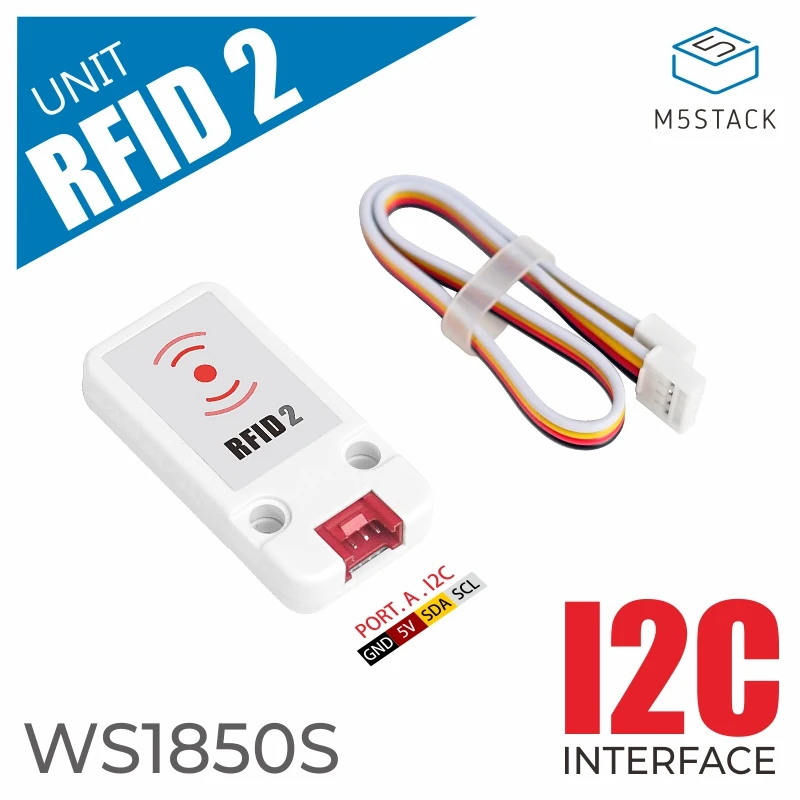
The M5Stack RFID 2 Unit presents a strikingly clean aesthetic, departing from the typical bare PCB appearance of many development modules. Its smooth, matte white plastic casing feels surprisingly dense and well-constructed, suggesting a thoughtful approach to industrial design. The vibrant red JST-style connector provides a subtle, yet effective, color accent against the pristine white, hinting at the energy and connectivity within.
This compact form factor, measuring just 48mm by 24mm, makes it ideal for integrating into enclosures or mounting directly onto project surfaces without dominating the visual landscape. Such dimensions are crucial for maintaining the sleek profile of an IoT device or a custom access control panel. Its presence is understated.
Compared to breadboard-bound RFID modules, which often expose numerous pins and components, the M5Stack unit offers a fully enclosed, finished look. This not only enhances durability but also elevates the overall visual coherence of any project. Imagine a smart home hub where every component contributes to a unified, modern aesthetic.
At its heart, the M5Stack RFID 2 Unit employs the WS1850S chip, a dedicated RFID controller optimized for reliable tag detection. This chip handles the low-level RF communication, abstracting away the complexities of antenna tuning and signal processing. The module operates by emitting a radio frequency field, which powers passive RFID tags and allows for data exchange.
In practical application, the WS1850S chip facilitates quick and accurate reading of compatible RFID tags. Placing a tag within the unit's effective range triggers an immediate response, allowing for identification, data retrieval, or even writing information back to the tag. This responsiveness is vital for applications requiring swift authentication or asset tracking. It performs its duty without fuss.
Unlike older or generic RFID modules that might struggle with interference or require extensive library support, the WS1850S-based M5Stack unit is designed for consistent performance. Its digital signal processing capabilities ensure a higher success rate in diverse environments, making it a dependable choice for mission-critical tasks.
The most significant advantage of the M5Stack RFID 2 Unit, from a developer's perspective, is its reliance on the I2C communication interface. This two-wire serial bus simplifies wiring dramatically, requiring only SDA (Serial Data Line) and SCL (Serial Clock Line) in addition to power and ground connections. The included Grove cable further streamlines this, providing a plug-and-play experience with M5Stack's ecosystem or other I2C-compatible microcontrollers.
When integrating this unit into a project, the minimal wiring translates directly into cleaner builds and reduced troubleshooting time. Imagine creating a compact access control system for a smart cabinet: the I2C interface means fewer tangled wires, allowing for a more elegant internal layout and easier maintenance. Fewer wires, less clutter.
Compared to SPI-based RFID modules, which typically demand four or more data lines, the I2C interface conserves valuable GPIO pins on your microcontroller. This allows developers to allocate more pins to other sensors, actuators, or visual indicators like RGB LEDs, contributing to a richer and more interactive final product. This modularity is a design dream.
For those who treat every electronic project as a canvas, the M5Stack RFID 2 Unit offers a distinct advantage. Its uniform white casing and compact size make it exceptionally easy to conceal or integrate into a color-themed build. The clean lines and minimal branding allow it to blend seamlessly into a monochrome aesthetic or serve as a neutral backdrop for a vibrant RGB lighting scheme.
Consider a custom PC build where every component is chosen for its visual harmony. A typical RFID reader might introduce an unsightly green PCB or exposed components. This unit, however, maintains the desired sleekness. Its understated form allows the focus to remain on illuminated fans, custom cables, or other visually striking elements. Aesthetics are paramount.
The ability to place this unit discretely, perhaps behind a panel or beneath a surface, means the RFID functionality can be present without being overtly visible. This enables designers to create interactive experiences that feel magical, where an object simply *knows* what it is, rather than requiring a clunky reader. The potential for visually stunning interactive displays becomes immense.
While the specific read/write distance will depend on the tag type and environmental factors, this unit is engineered for close-proximity interactions, typically within a few centimeters. This makes it perfect for applications like smart inventory management, access control for drawers or lockers, or interactive museum exhibits. The precision is excellent.
Its operating frequency, common for low-frequency RFID, ensures broad compatibility with a range of widely available tags. This means developers aren't locked into proprietary tag formats, offering flexibility in sourcing and deployment. The ability to read different tags expands its utility significantly.
For vehicle management systems, the compact size allows for discreet installation within a dashboard or console, reading identification tags from drivers or specific vehicle components. In smart bookshelves, each book could have a tag, allowing for automated inventory or personalized recommendations. The applications are broad.
The M5Stack ecosystem emphasizes ease of use and modularity. This RFID unit, being part of that family, benefits from well-documented libraries and example code, significantly reducing development time. Integrating it into an existing M5Stack project or even a standalone ESP32 or Arduino build is straightforward. It connects effortlessly.
This ease of integration means that even hobbyists can quickly add sophisticated RFID capabilities to their projects without a steep learning curve. Imagine a student building a smart attendance system; the quick setup of this unit allows more time to focus on the software logic and user interface. It accelerates innovation.
Compared to general-purpose modules requiring manual soldering and complex wiring, the M5Stack unit's Grove connector and robust casing offer a level of reliability and convenience that is hard to match. This translates to fewer potential points of failure and a more professional final product. Fewer failures, better results.
For creators obsessed with the visual impact and seamless functionality of their electronic projects, the M5Stack RFID 2 Reader/Writer Unit (WS1850S) is an indispensable tool. Its compact, elegant design ensures that advanced capabilities don't come at the expense of aesthetics. The precision molding and clean white finish provide a neutral canvas, allowing it to integrate effortlessly into any color scheme, from a stark monochrome workstation to a vibrant, RGB-infused gaming rig. Picture a sleek, custom-built desk with integrated RFID access, where the reader is completely hidden, providing a touch of magic as you unlock your workstation with a simple tap of your wristband. This unit helps bring such visions to life, making your creations not just functional, but genuinely Instagram-worthy. Its presence elevates the entire project's visual appeal, turning a functional component into a design asset that contributes to a cohesive, polished look. Your projects deserve this level of refinement.
Elegance in Miniaturization
The M5Stack RFID 2 Unit presents a strikingly clean aesthetic, departing from the typical bare PCB appearance of many development modules. Its smooth, matte white plastic casing feels surprisingly dense and well-constructed, suggesting a thoughtful approach to industrial design. The vibrant red JST-style connector provides a subtle, yet effective, color accent against the pristine white, hinting at the energy and connectivity within.
This compact form factor, measuring just 48mm by 24mm, makes it ideal for integrating into enclosures or mounting directly onto project surfaces without dominating the visual landscape. Such dimensions are crucial for maintaining the sleek profile of an IoT device or a custom access control panel. Its presence is understated.
Compared to breadboard-bound RFID modules, which often expose numerous pins and components, the M5Stack unit offers a fully enclosed, finished look. This not only enhances durability but also elevates the overall visual coherence of any project. Imagine a smart home hub where every component contributes to a unified, modern aesthetic.
Core Functionality: Precision RFID Interaction
At its heart, the M5Stack RFID 2 Unit employs the WS1850S chip, a dedicated RFID controller optimized for reliable tag detection. This chip handles the low-level RF communication, abstracting away the complexities of antenna tuning and signal processing. The module operates by emitting a radio frequency field, which powers passive RFID tags and allows for data exchange.
In practical application, the WS1850S chip facilitates quick and accurate reading of compatible RFID tags. Placing a tag within the unit's effective range triggers an immediate response, allowing for identification, data retrieval, or even writing information back to the tag. This responsiveness is vital for applications requiring swift authentication or asset tracking. It performs its duty without fuss.
Unlike older or generic RFID modules that might struggle with interference or require extensive library support, the WS1850S-based M5Stack unit is designed for consistent performance. Its digital signal processing capabilities ensure a higher success rate in diverse environments, making it a dependable choice for mission-critical tasks.
Seamless Integration with I2C
The most significant advantage of the M5Stack RFID 2 Unit, from a developer's perspective, is its reliance on the I2C communication interface. This two-wire serial bus simplifies wiring dramatically, requiring only SDA (Serial Data Line) and SCL (Serial Clock Line) in addition to power and ground connections. The included Grove cable further streamlines this, providing a plug-and-play experience with M5Stack's ecosystem or other I2C-compatible microcontrollers.
When integrating this unit into a project, the minimal wiring translates directly into cleaner builds and reduced troubleshooting time. Imagine creating a compact access control system for a smart cabinet: the I2C interface means fewer tangled wires, allowing for a more elegant internal layout and easier maintenance. Fewer wires, less clutter.
Compared to SPI-based RFID modules, which typically demand four or more data lines, the I2C interface conserves valuable GPIO pins on your microcontroller. This allows developers to allocate more pins to other sensors, actuators, or visual indicators like RGB LEDs, contributing to a richer and more interactive final product. This modularity is a design dream.
The Visual Modder's Edge
For those who treat every electronic project as a canvas, the M5Stack RFID 2 Unit offers a distinct advantage. Its uniform white casing and compact size make it exceptionally easy to conceal or integrate into a color-themed build. The clean lines and minimal branding allow it to blend seamlessly into a monochrome aesthetic or serve as a neutral backdrop for a vibrant RGB lighting scheme.
Consider a custom PC build where every component is chosen for its visual harmony. A typical RFID reader might introduce an unsightly green PCB or exposed components. This unit, however, maintains the desired sleekness. Its understated form allows the focus to remain on illuminated fans, custom cables, or other visually striking elements. Aesthetics are paramount.
The ability to place this unit discretely, perhaps behind a panel or beneath a surface, means the RFID functionality can be present without being overtly visible. This enables designers to create interactive experiences that feel magical, where an object simply *knows* what it is, rather than requiring a clunky reader. The potential for visually stunning interactive displays becomes immense.
Versatile Applications and Performance
While the specific read/write distance will depend on the tag type and environmental factors, this unit is engineered for close-proximity interactions, typically within a few centimeters. This makes it perfect for applications like smart inventory management, access control for drawers or lockers, or interactive museum exhibits. The precision is excellent.
Its operating frequency, common for low-frequency RFID, ensures broad compatibility with a range of widely available tags. This means developers aren't locked into proprietary tag formats, offering flexibility in sourcing and deployment. The ability to read different tags expands its utility significantly.
For vehicle management systems, the compact size allows for discreet installation within a dashboard or console, reading identification tags from drivers or specific vehicle components. In smart bookshelves, each book could have a tag, allowing for automated inventory or personalized recommendations. The applications are broad.
Building an Integrated Ecosystem
The M5Stack ecosystem emphasizes ease of use and modularity. This RFID unit, being part of that family, benefits from well-documented libraries and example code, significantly reducing development time. Integrating it into an existing M5Stack project or even a standalone ESP32 or Arduino build is straightforward. It connects effortlessly.
This ease of integration means that even hobbyists can quickly add sophisticated RFID capabilities to their projects without a steep learning curve. Imagine a student building a smart attendance system; the quick setup of this unit allows more time to focus on the software logic and user interface. It accelerates innovation.
Compared to general-purpose modules requiring manual soldering and complex wiring, the M5Stack unit's Grove connector and robust casing offer a level of reliability and convenience that is hard to match. This translates to fewer potential points of failure and a more professional final product. Fewer failures, better results.
The Final Polish
For creators obsessed with the visual impact and seamless functionality of their electronic projects, the M5Stack RFID 2 Reader/Writer Unit (WS1850S) is an indispensable tool. Its compact, elegant design ensures that advanced capabilities don't come at the expense of aesthetics. The precision molding and clean white finish provide a neutral canvas, allowing it to integrate effortlessly into any color scheme, from a stark monochrome workstation to a vibrant, RGB-infused gaming rig. Picture a sleek, custom-built desk with integrated RFID access, where the reader is completely hidden, providing a touch of magic as you unlock your workstation with a simple tap of your wristband. This unit helps bring such visions to life, making your creations not just functional, but genuinely Instagram-worthy. Its presence elevates the entire project's visual appeal, turning a functional component into a design asset that contributes to a cohesive, polished look. Your projects deserve this level of refinement.