iPistBit 3.5-inch SPI IPS Capacitive Touch Display Module
Official Store Deal
Expert Analysis Overview
Visual Fidelity for Embedded Systems
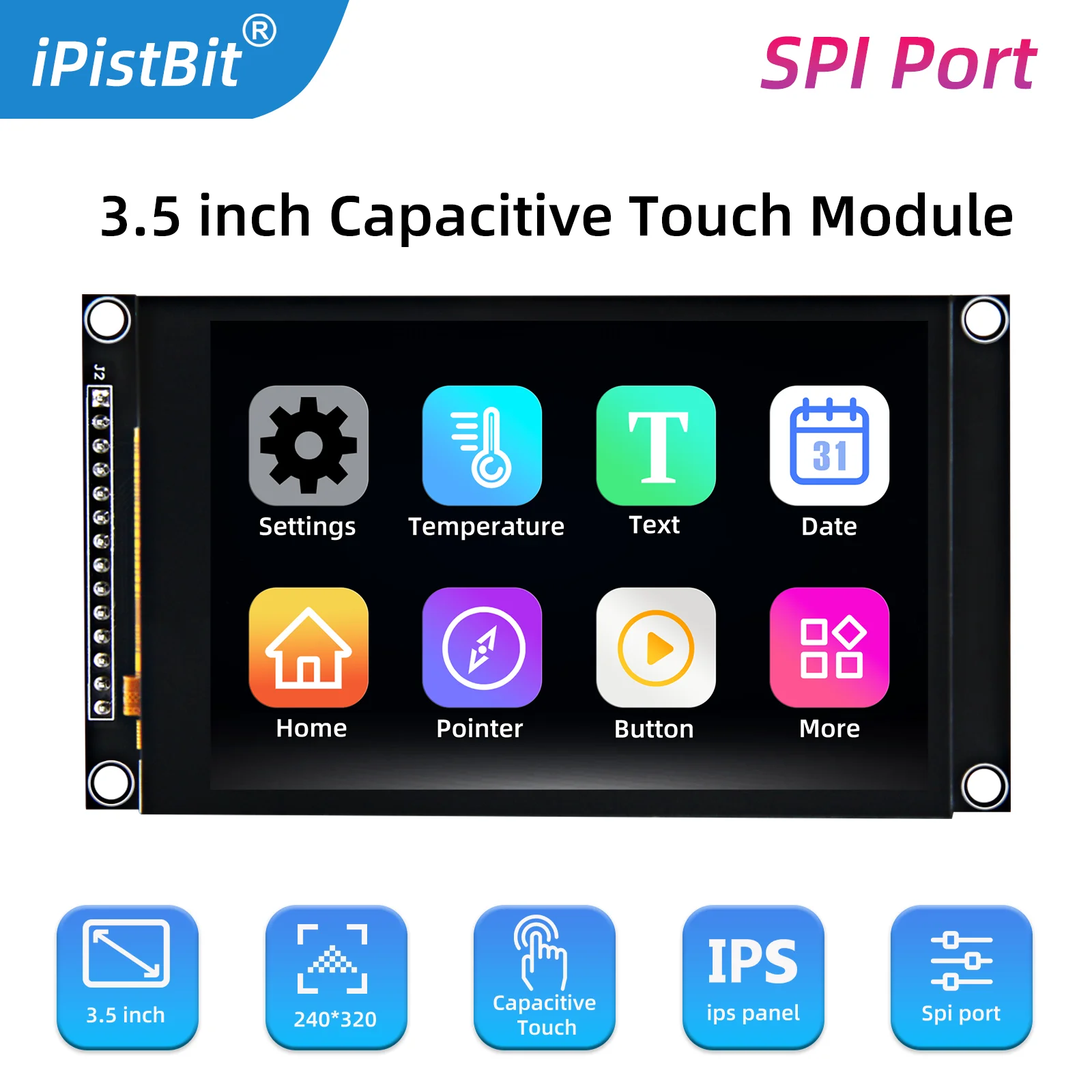
The iPistBit 3.5-inch SPI TFT LCD Module is a highly adaptable, compact display solution specifically engineered for embedded systems and DIY projects, offering a vibrant visual interface for microcontrollers like ESP32 and Arduino. This module transcends the limitations of basic character displays, providing a full-color, high-contrast experience crucial for complex data visualization or interactive control panels. Many hobbyists and developers often contend with the visual constraints of monochrome or low-resolution screens, which can severely limit the user experience and the clarity of presented information. This display directly addresses that pain point, offering a significant upgrade in visual quality and interactive potential.The core of this module's visual prowess lies in its IPS panel technology. Unlike standard TN panels that suffer from limited viewing angles and color shift, IPS technology ensures a 178° full viewing angle. This means that the display maintains consistent color accuracy and brightness, whether viewed directly or from extreme angles. For applications where the display might not always be viewed head-on, such as an integrated system monitor within a PC case or a wall-mounted smart home control panel, this wide viewing angle is indispensable. It prevents the washed-out or inverted colors often seen on lesser displays, ensuring that critical information remains legible and aesthetically pleasing from almost any perspective within a room or enclosure.
Furthermore, the display boasts a 72% high gamut and high color contrast. These specifications are not merely numbers; they translate directly into a richer, more vivid visual output. Colors appear more saturated and lifelike, while the contrast ratio ensures clear differentiation between light and dark elements on the screen. This is particularly beneficial for displaying graphical user interfaces (GUIs), custom dashboards, or even small multimedia elements. Compared to the often dull and limited color palettes of entry-level TFTs, this module offers a professional-grade visual experience, making it an ideal choice for projects that demand both functionality and a polished appearance. The resolution of 320x480 pixels on a 3.5-inch screen provides a respectable pixel density, ensuring that text and graphics are rendered with sufficient sharpness for its intended applications.
Interfacing with Precision: The SPI Advantage
The module utilizes a Serial Peripheral Interface (SPI) port for communication. SPI is a synchronous serial data protocol widely adopted in embedded systems due to its simplicity and efficiency for short-distance communication between microcontrollers and peripherals. This interface choice simplifies wiring compared to parallel interfaces, requiring fewer pins on the host microcontroller, which is a significant advantage for pin-constrained boards like many Arduino variants or smaller ESP32 development boards. The reduced pin count frees up valuable GPIOs for other sensors, actuators, or communication modules, streamlining the overall system design.While SPI is generally slower than parallel interfaces for high-bandwidth applications like full-motion video, it is perfectly adequate for updating static images, displaying sensor data, or rendering graphical user interfaces at typical refresh rates required for embedded projects. The ST7796 controller integrated into the module is a common and well-supported display driver, meaning there is a wealth of existing libraries and examples available for popular microcontrollers. This extensive community support significantly reduces the development time and learning curve for integrating the display into a project. Developers can quickly get their projects up and running without needing to write complex display drivers from scratch.
For PC builders considering custom system monitoring, the SPI interface allows for direct connection to microcontrollers that can then communicate with the PC via USB serial, providing a compact and efficient data pipeline. This avoids the bulk and complexity of integrating a full-fledged HDMI or DisplayPort connection for a small auxiliary display. The simplicity of the SPI connection makes it an attractive option for those looking to add a functional and visually appealing display without overcomplicating their build. It's a pragmatic choice for dedicated, low-overhead display tasks.
Capacitive Touch: An Interactive Edge
Crucially, this module offers an optional capacitive touch functionality, identified by the MSP3526 model. Capacitive touchscreens provide a far superior user experience compared to older resistive touch technology. Resistive screens require pressure and often lack sensitivity, leading to a less intuitive and sometimes frustrating interaction. Capacitive touch, conversely, responds to the electrical properties of a finger, offering a smooth, multi-touch capable, and highly responsive interface akin to modern smartphones. This responsiveness is key for creating intuitive graphical user interfaces.Integrating capacitive touch transforms the display from a passive information output device into an active input mechanism. Imagine controlling smart home devices, navigating menus for a custom media server, or interacting with a diagnostic tool directly on the screen. This level of interactivity significantly enhances the utility of any embedded project. For PC builders, a capacitive touch display can serve as an interactive control panel for fan speeds, temperature monitoring, or even custom macros, all accessible with a simple tap. The tactile feedback and precise input capability make it a compelling choice for any project requiring direct user interaction.
The availability of both touch (MSP3526) and no-touch (MSP3525) versions provides flexibility for different project requirements and budgets. If an application only requires visual output, the no-touch version offers a cost-effective solution. However, for any project where user interaction is desired, investing in the capacitive touch model is a clear upgrade. The difference in user experience is substantial, justifying the slight increase in complexity and cost. This choice allows developers to tailor the display to the exact needs of their application, ensuring optimal functionality and value.
Physical Integration and Power Considerations
When integrating any component into a PC build or an embedded system, physical dimensions and power requirements are paramount. The provided dimensional specifications are critical for ensuring proper fitment within custom enclosures or existing PC cases. The module's compact 3.5-inch form factor is ideal for auxiliary displays that need to fit into tight spaces, such as a 5.25-inch drive bay adapter, a custom cut-out on a case panel, or even mounted directly onto a motherboard tray. Careful measurement against available space is always recommended. The module's slim profile, as shown in the side views, further aids in integration where depth is a constraint.Powering the display module is typically straightforward for microcontrollers like ESP32 and Arduino, which often provide 3.3V or 5V rails. The module's low power draw, characteristic of small TFT displays, means it will not significantly burden the host microcontroller's power supply. However, for larger projects with many peripherals, always verify the total current draw against the microcontroller's voltage regulator capacity or an external power supply. A stable power source is essential for consistent display performance and to prevent flickering or data corruption. Ensuring adequate power delivery is a fundamental step in any successful embedded system integration.
Motherboard compatibility, in the context of a PC build, refers to the chosen microcontroller's ability to interface with the PC for data. Since this is an SPI display for microcontrollers, the