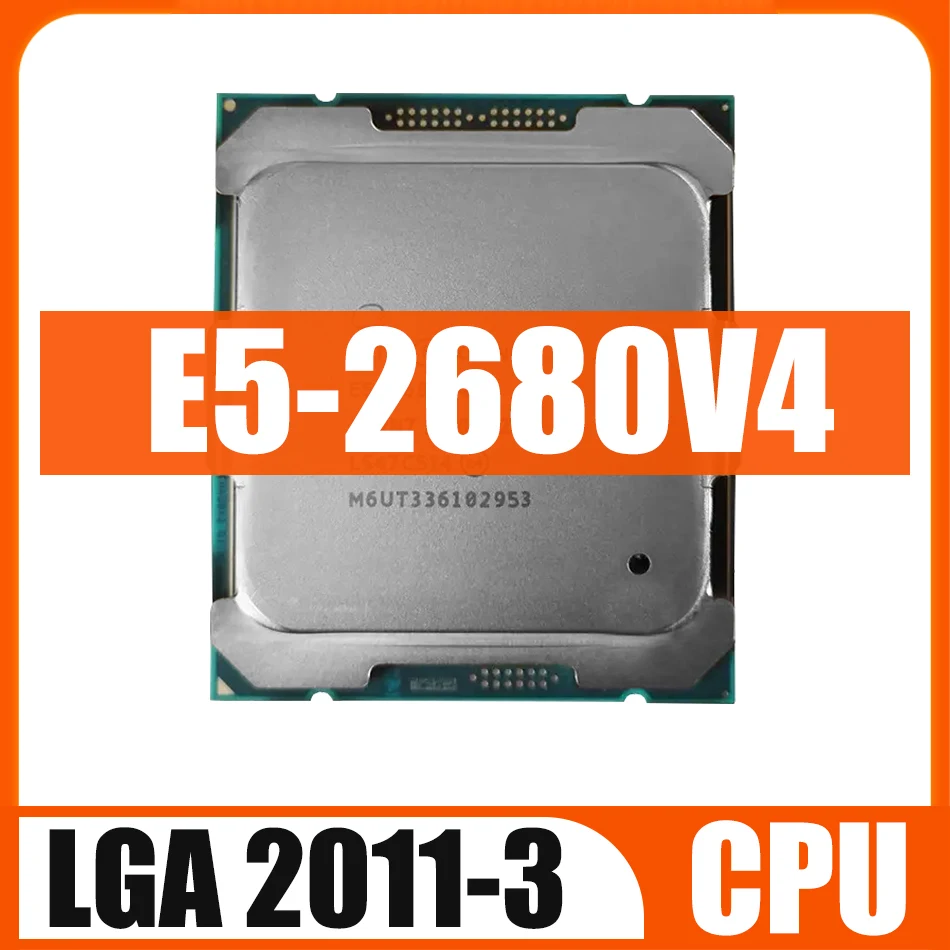
Intel Xeon E5-2680 V4 CPU Processor
Official Store Deal
Expert Analysis Overview
The Intel Xeon E5-2680 V4 is a formidable, albeit used, server-grade processor engineered for demanding multi-threaded workloads and enthusiasts seeking high core counts on a budget. This silicon offers significant potential for performance tuning within its platform constraints. For an overclocker, understanding the nuances of its architecture and the resilience of its platform is paramount for pushing boundaries.
This E5-2680 V4 unit features 14 physical cores, translating to 28 threads with Intel's Hyper-Threading technology. Its base clock speed sits at 2.40 GHz. A substantial 35MB L3 cache is integrated. This cache size is critical for data access. These specifications position the processor as a multi-tasking behemoth, designed to handle concurrent processes with efficiency.
In real-world scenarios, this core count is a game-changer for applications that thrive on parallelism. Think professional video rendering, complex scientific simulations, or running multiple virtual machines simultaneously. The large L3 cache minimizes latency when cores need to access frequently used data, preventing bottlenecks that can cripple performance in data-intensive operations. It's a workhorse, not a sprinter.
Compared to mainstream desktop processors of its era, or even some modern mid-range consumer CPUs, the E5-2680 V4's core and thread count remains highly competitive for specific workloads. Most contemporary consumer chips rarely exceed 8 or 10 cores. This Xeon provides a distinct advantage in raw parallel processing capability, making it a compelling option for those who prioritize multi-core performance above all else, especially when considering its current market price. It's a lot of silicon for the money.
Operating at a Thermal Design Power (TDP) of 120W, the E5-2680 V4 demands a robust power delivery system from its host motherboard. The SR2N7 stepping indicates a specific revision. This power figure is a baseline. For any serious performance tuning, the motherboard's Voltage Regulator Module (VRM) must be up to the task of delivering stable, clean power, especially under sustained heavy loads. Inadequate VRMs can lead to throttling, instability, and even component degradation.
An overclocker must scrutinize the X99 motherboard's VRM phases, heatsink design, and overall component quality before attempting any frequency adjustments or power limit increases. Insufficient cooling on the VRM itself will cause thermal throttling, negating any gains from increased CPU frequencies. A well-cooled, multi-phase VRM is non-negotiable for pushing this chip beyond its stock parameters. Stable power is key.
Many entry-level X99 motherboards feature basic VRM designs, often with minimal heatsinks. These are typically sufficient for stock operation but will quickly hit thermal limits when the CPU is stressed, particularly with higher-TDP Xeon chips. Unlike these budget boards, a premium X99 motherboard with 8+ phase VRMs and substantial heatsinks provides the necessary foundation for sustained performance and the headroom required for advanced tuning. This isn't a chip for a flimsy board.
As a server-grade processor, the E5-2680 V4 does not offer traditional multiplier-based overclocking. Its frequency scaling relies on Intel's Turbo Boost technology and Base Clock (BCLK) adjustments. The 'used' status introduces an element of the silicon lottery, where individual chip quality can vary. Some units might exhibit better voltage-frequency curves than others. This is inherent to used hardware.
Achieving stable, sustained boost clocks requires meticulous attention to BCLK tuning, which affects not only the CPU but also memory and PCIe frequencies. This intricate balance demands patience and a deep understanding of the X99 platform's clock generator capabilities. Even minor BCLK increments can yield significant performance uplifts across all cores, transforming a stock 2.40 GHz into a more potent, consistent performer. Every MHz counts.
Unlike consumer-grade 'K' series processors with unlocked multipliers, which offer straightforward overclocking, the Xeon E5-2680 V4's tuning potential is more nuanced. Its gains come from optimizing its existing boost algorithms and carefully manipulating the BCLK. This approach requires more specialized knowledge and a motherboard with robust BCLK tuning options, differentiating it from simple plug-and-play overclocking. It's a different kind of challenge.
The E5-2680 V4 utilizes the LGA 2011-3 socket, making it compatible with Intel X99 chipset motherboards. This platform supports DDR4 ECC or non-ECC memory in quad-channel configurations, offering immense memory bandwidth. The X99 platform also provides ample PCIe lanes, crucial for multi-GPU setups or numerous high-speed NVMe storage devices. This ecosystem is powerful.
Building a system around this CPU means tapping into a mature, high-performance platform that remains relevant for many demanding tasks. The quad-channel DDR4 memory support, for instance, significantly boosts performance in memory-intensive applications compared to typical dual-channel desktop systems. The extensive PCIe lane count allows for flexible expansion, accommodating professional-grade graphics cards or multiple storage arrays without bandwidth limitations. It offers serious expansion.
Compared to more modern consumer platforms, the X99 might lack the absolute latest PCIe 4.0/5.0 standards or USB 3.2 Gen 2x2. However, for sheer core count, memory bandwidth, and PCIe lane availability at its current price point, it offers an unparalleled value proposition. This platform provides a stable, proven foundation for a powerful workstation or a high-end gaming rig that prioritizes multi-threaded performance. It's a solid foundation.
The E5-2680 V4's quad-channel DDR4 memory controller is a cornerstone of its performance. Utilizing four or eight DIMMs (depending on motherboard slots) is essential to maximize memory bandwidth, directly impacting application performance. The choice between ECC (Error-Correcting Code) and non-ECC memory depends on the workload. ECC memory is vital for server stability and data integrity, while non-ECC can offer slightly lower latency for consumer applications. Proper memory configuration is vital.
For an overclocker, optimizing memory frequency and timings is as important as CPU tuning. Even though the CPU itself isn't traditionally overclocked, pushing the memory controller within its stable limits can yield significant gains in overall system responsiveness and application throughput. This requires a motherboard with robust memory overclocking features and a keen understanding of memory sub-timings. Memory tuning pays dividends.
Unlike dual-channel setups common in many mainstream desktop PCs, the X99's quad-channel architecture provides a theoretical doubling of memory bandwidth. This is a crucial differentiator for tasks like large dataset processing, virtualization, and high-resolution content creation, where data transfer speeds are paramount. Neglecting proper memory configuration means leaving significant performance on the table. Don't skimp on RAM.
The primary appeal of a used Xeon E5-2680 V4 lies in its exceptional performance-per-dollar ratio. For a fraction of the cost of a new, comparable core-count consumer CPU, this chip delivers server-grade multi-threaded horsepower. This makes it an attractive option for budget-conscious builders creating workstations, rendering farms, or high-core-count gaming machines. It's a smart economic choice.
Imagine a scenario where you're building a dedicated streaming PC or a machine for 3D modeling on a tight budget. The E5-2680 V4, paired with an affordable X99 motherboard and used DDR4 RAM, can outperform many newer, more expensive consumer platforms in these specific multi-threaded tasks. The initial investment is significantly lower, allowing more budget for other critical components like a powerful GPU or fast storage. Cost-effectiveness is undeniable.
Compared to buying a brand-new CPU with 14 cores, which would typically cost several hundred dollars, the E5-2680 V4 represents a massive saving. This allows builders to allocate funds to other areas of their system, achieving a balanced, high-performance build without breaking the bank. It's an upgrade in capability for a fraction of the cost, ensuring a superior return on investment for specific high-core-count applications. This is value engineering.
The 'used' nature of this processor introduces specific considerations. While generally robust, server CPUs can accumulate significant operational hours. Potential for electromigration or other forms of degradation exists, though Xeons are built for longevity. The lack of a manufacturer's warranty is also a factor. Buyers must be aware of these trade-offs.
Thorough testing upon receipt is crucial to verify stability and performance. Stress testing tools can help identify any latent issues before committing to a full build. While the vast majority of used server CPUs perform flawlessly, the occasional outlier can surface. This due diligence ensures the silicon meets expected performance metrics. Verification is essential.
Unlike purchasing a new CPU with a full warranty and guaranteed lifespan, a used chip requires a more hands-on approach to validation. This trade-off is often acceptable for the significant cost savings, but it's a risk that builders must be prepared to manage. The transparency of its used status is a deliberate choice, offering exceptional value for those willing to accept the minor inherent risks. It's a calculated risk.
For the dedicated overclocker, the E5-2680 V4 presents a unique challenge and opportunity. While traditional multiplier overclocking is absent, the pursuit of maximum stable BCLK, optimized memory timings, and fine-tuned power delivery remains. Extracting every last drop of performance from this 14-core beast requires patience, precise voltage adjustments, and an exceptional cooling solution. It's a rewarding endeavor.
Achieving peak performance means ensuring the CPU never throttles due to thermal limits. A high-performance air cooler or a 240mm/280mm All-in-One (AIO) liquid cooler is highly recommended. Monitoring core temperatures, VRM temperatures, and power draw under load provides critical feedback for tuning. Pushing hardware beyond stock limits is the goal. Every degree matters.
This isn't about setting world records on a single core. It's about maximizing sustained multi-core throughput, ensuring all 14 cores operate at their highest possible stable frequency for extended periods. The satisfaction comes from taking a server-grade chip, originally designed for conservative, long-term operation, and bending it to the will of high-performance desktop computing. This is true optimization.
Imagine your workstation effortlessly churning through complex renders, virtual machines running with zero lag, and compilation times drastically reduced, all powered by this meticulously tuned Xeon. The hum of the efficient cooling system is the only sound, a testament to stable power delivery and controlled thermals. Your projects complete faster. This chip, once a workhorse in a data center, now serves as the high-performance heart of your personal computing powerhouse, delivering unparalleled multi-threaded capability for every demanding task you throw its way. It's ready for your command.
The Core Crucible: Architecture and Native Frequencies
This E5-2680 V4 unit features 14 physical cores, translating to 28 threads with Intel's Hyper-Threading technology. Its base clock speed sits at 2.40 GHz. A substantial 35MB L3 cache is integrated. This cache size is critical for data access. These specifications position the processor as a multi-tasking behemoth, designed to handle concurrent processes with efficiency.
In real-world scenarios, this core count is a game-changer for applications that thrive on parallelism. Think professional video rendering, complex scientific simulations, or running multiple virtual machines simultaneously. The large L3 cache minimizes latency when cores need to access frequently used data, preventing bottlenecks that can cripple performance in data-intensive operations. It's a workhorse, not a sprinter.
Compared to mainstream desktop processors of its era, or even some modern mid-range consumer CPUs, the E5-2680 V4's core and thread count remains highly competitive for specific workloads. Most contemporary consumer chips rarely exceed 8 or 10 cores. This Xeon provides a distinct advantage in raw parallel processing capability, making it a compelling option for those who prioritize multi-core performance above all else, especially when considering its current market price. It's a lot of silicon for the money.
Power Delivery Demands: VRM Fortitude and Thermal Management
Operating at a Thermal Design Power (TDP) of 120W, the E5-2680 V4 demands a robust power delivery system from its host motherboard. The SR2N7 stepping indicates a specific revision. This power figure is a baseline. For any serious performance tuning, the motherboard's Voltage Regulator Module (VRM) must be up to the task of delivering stable, clean power, especially under sustained heavy loads. Inadequate VRMs can lead to throttling, instability, and even component degradation.
An overclocker must scrutinize the X99 motherboard's VRM phases, heatsink design, and overall component quality before attempting any frequency adjustments or power limit increases. Insufficient cooling on the VRM itself will cause thermal throttling, negating any gains from increased CPU frequencies. A well-cooled, multi-phase VRM is non-negotiable for pushing this chip beyond its stock parameters. Stable power is key.
Many entry-level X99 motherboards feature basic VRM designs, often with minimal heatsinks. These are typically sufficient for stock operation but will quickly hit thermal limits when the CPU is stressed, particularly with higher-TDP Xeon chips. Unlike these budget boards, a premium X99 motherboard with 8+ phase VRMs and substantial heatsinks provides the necessary foundation for sustained performance and the headroom required for advanced tuning. This isn't a chip for a flimsy board.
The Silicon Lottery: Overclocking Prospects and Stability
As a server-grade processor, the E5-2680 V4 does not offer traditional multiplier-based overclocking. Its frequency scaling relies on Intel's Turbo Boost technology and Base Clock (BCLK) adjustments. The 'used' status introduces an element of the silicon lottery, where individual chip quality can vary. Some units might exhibit better voltage-frequency curves than others. This is inherent to used hardware.
Achieving stable, sustained boost clocks requires meticulous attention to BCLK tuning, which affects not only the CPU but also memory and PCIe frequencies. This intricate balance demands patience and a deep understanding of the X99 platform's clock generator capabilities. Even minor BCLK increments can yield significant performance uplifts across all cores, transforming a stock 2.40 GHz into a more potent, consistent performer. Every MHz counts.
Unlike consumer-grade 'K' series processors with unlocked multipliers, which offer straightforward overclocking, the Xeon E5-2680 V4's tuning potential is more nuanced. Its gains come from optimizing its existing boost algorithms and carefully manipulating the BCLK. This approach requires more specialized knowledge and a motherboard with robust BCLK tuning options, differentiating it from simple plug-and-play overclocking. It's a different kind of challenge.
Platform Synergy: LGA 2011-3 and X99 Motherboard Ecosystem
The E5-2680 V4 utilizes the LGA 2011-3 socket, making it compatible with Intel X99 chipset motherboards. This platform supports DDR4 ECC or non-ECC memory in quad-channel configurations, offering immense memory bandwidth. The X99 platform also provides ample PCIe lanes, crucial for multi-GPU setups or numerous high-speed NVMe storage devices. This ecosystem is powerful.
Building a system around this CPU means tapping into a mature, high-performance platform that remains relevant for many demanding tasks. The quad-channel DDR4 memory support, for instance, significantly boosts performance in memory-intensive applications compared to typical dual-channel desktop systems. The extensive PCIe lane count allows for flexible expansion, accommodating professional-grade graphics cards or multiple storage arrays without bandwidth limitations. It offers serious expansion.
Compared to more modern consumer platforms, the X99 might lack the absolute latest PCIe 4.0/5.0 standards or USB 3.2 Gen 2x2. However, for sheer core count, memory bandwidth, and PCIe lane availability at its current price point, it offers an unparalleled value proposition. This platform provides a stable, proven foundation for a powerful workstation or a high-end gaming rig that prioritizes multi-threaded performance. It's a solid foundation.
Memory Optimization: Crucial for Performance Scaling
The E5-2680 V4's quad-channel DDR4 memory controller is a cornerstone of its performance. Utilizing four or eight DIMMs (depending on motherboard slots) is essential to maximize memory bandwidth, directly impacting application performance. The choice between ECC (Error-Correcting Code) and non-ECC memory depends on the workload. ECC memory is vital for server stability and data integrity, while non-ECC can offer slightly lower latency for consumer applications. Proper memory configuration is vital.
For an overclocker, optimizing memory frequency and timings is as important as CPU tuning. Even though the CPU itself isn't traditionally overclocked, pushing the memory controller within its stable limits can yield significant gains in overall system responsiveness and application throughput. This requires a motherboard with robust memory overclocking features and a keen understanding of memory sub-timings. Memory tuning pays dividends.
Unlike dual-channel setups common in many mainstream desktop PCs, the X99's quad-channel architecture provides a theoretical doubling of memory bandwidth. This is a crucial differentiator for tasks like large dataset processing, virtualization, and high-resolution content creation, where data transfer speeds are paramount. Neglecting proper memory configuration means leaving significant performance on the table. Don't skimp on RAM.
Value Proposition: Performance Per Dollar for the Discerning Builder
The primary appeal of a used Xeon E5-2680 V4 lies in its exceptional performance-per-dollar ratio. For a fraction of the cost of a new, comparable core-count consumer CPU, this chip delivers server-grade multi-threaded horsepower. This makes it an attractive option for budget-conscious builders creating workstations, rendering farms, or high-core-count gaming machines. It's a smart economic choice.
Imagine a scenario where you're building a dedicated streaming PC or a machine for 3D modeling on a tight budget. The E5-2680 V4, paired with an affordable X99 motherboard and used DDR4 RAM, can outperform many newer, more expensive consumer platforms in these specific multi-threaded tasks. The initial investment is significantly lower, allowing more budget for other critical components like a powerful GPU or fast storage. Cost-effectiveness is undeniable.
Compared to buying a brand-new CPU with 14 cores, which would typically cost several hundred dollars, the E5-2680 V4 represents a massive saving. This allows builders to allocate funds to other areas of their system, achieving a balanced, high-performance build without breaking the bank. It's an upgrade in capability for a fraction of the cost, ensuring a superior return on investment for specific high-core-count applications. This is value engineering.
Challenges and Considerations: Navigating the Used Hardware Landscape
The 'used' nature of this processor introduces specific considerations. While generally robust, server CPUs can accumulate significant operational hours. Potential for electromigration or other forms of degradation exists, though Xeons are built for longevity. The lack of a manufacturer's warranty is also a factor. Buyers must be aware of these trade-offs.
Thorough testing upon receipt is crucial to verify stability and performance. Stress testing tools can help identify any latent issues before committing to a full build. While the vast majority of used server CPUs perform flawlessly, the occasional outlier can surface. This due diligence ensures the silicon meets expected performance metrics. Verification is essential.
Unlike purchasing a new CPU with a full warranty and guaranteed lifespan, a used chip requires a more hands-on approach to validation. This trade-off is often acceptable for the significant cost savings, but it's a risk that builders must be prepared to manage. The transparency of its used status is a deliberate choice, offering exceptional value for those willing to accept the minor inherent risks. It's a calculated risk.
The Overclocker's Edge: Pushing the Envelope
For the dedicated overclocker, the E5-2680 V4 presents a unique challenge and opportunity. While traditional multiplier overclocking is absent, the pursuit of maximum stable BCLK, optimized memory timings, and fine-tuned power delivery remains. Extracting every last drop of performance from this 14-core beast requires patience, precise voltage adjustments, and an exceptional cooling solution. It's a rewarding endeavor.
Achieving peak performance means ensuring the CPU never throttles due to thermal limits. A high-performance air cooler or a 240mm/280mm All-in-One (AIO) liquid cooler is highly recommended. Monitoring core temperatures, VRM temperatures, and power draw under load provides critical feedback for tuning. Pushing hardware beyond stock limits is the goal. Every degree matters.
This isn't about setting world records on a single core. It's about maximizing sustained multi-core throughput, ensuring all 14 cores operate at their highest possible stable frequency for extended periods. The satisfaction comes from taking a server-grade chip, originally designed for conservative, long-term operation, and bending it to the will of high-performance desktop computing. This is true optimization.
Imagine your workstation effortlessly churning through complex renders, virtual machines running with zero lag, and compilation times drastically reduced, all powered by this meticulously tuned Xeon. The hum of the efficient cooling system is the only sound, a testament to stable power delivery and controlled thermals. Your projects complete faster. This chip, once a workhorse in a data center, now serves as the high-performance heart of your personal computing powerhouse, delivering unparalleled multi-threaded capability for every demanding task you throw its way. It's ready for your command.