Honeywell PTM7950 Phase-Change Thermal Pad
Official Store Deal
Expert Analysis Overview
The Honeywell PTM7950 is a high-performance phase-change thermal pad engineered for enthusiasts and professionals demanding superior thermal management in compact or high-power systems. This thermal solution stands apart from traditional thermal pastes and generic pads, offering a unique blend of convenience and efficiency.
The PTM7950 distinguishes itself with a robust thermal conductivity of 8.5 W/mK. This figure positions it firmly in the upper echelon of thermal interface materials, often rivaling or even surpassing many conventional thermal pastes in real-world applications. Its core strength lies in its phase-change nature; at operating temperatures, the pad softens and flows, effectively filling microscopic imperfections between the heat source (like a CPU or GPU die) and the heatsink. This crucial action minimizes air gaps, which are poor thermal conductors, ensuring maximum heat transfer efficiency. Once cooled, it solidifies again, maintaining consistent contact.
Unlike standard thermal pads that remain static, the PTM7950 dynamically adapts. This ensures optimal thermal coupling. The material's ability to conform under heat significantly reduces thermal resistance, a critical factor in maintaining lower component temperatures under load. This adaptability is key for sustained performance.
Compared to typical silicone-based thermal pads, which often have thermal conductivities ranging from 1-5 W/mK, the PTM7950 offers a substantial upgrade. Generic pads often struggle with long-term stability and can dry out or degrade, leading to diminished performance over time. The PTM7950's phase-change characteristic provides a more stable and enduring interface, reducing the need for frequent reapplication, a common chore with many thermal pastes.
The pad's thermal resistance is exceptionally low at 0.04 °C cm²/W. This metric is vital for PC builders, as it directly indicates how effectively heat can pass through the material. A lower thermal resistance means less heat is trapped at the component's surface, allowing it to dissipate more rapidly into the cooling solution. This translates directly into cooler operating temperatures for critical components.
For high-wattage CPUs and GPUs, every degree Celsius matters. Lower temperatures enable processors to maintain higher boost clocks for longer durations, preventing thermal throttling and ensuring consistent peak performance during demanding tasks like gaming, video rendering, or scientific computations. This pad directly supports stable system operation.
Many entry-level thermal solutions often present higher thermal resistance, creating a bottleneck in the cooling loop. The PTM7950 bypasses this limitation, acting as an efficient conduit for heat. This makes it an ideal choice for compact builds or laptops where space for elaborate cooling solutions is limited, forcing reliance on the efficiency of the thermal interface material itself.
Installation of the PTM7950 is straightforward, yet requires attention to detail. The pad is designed for a peel-and-stick application, simplifying the process compared to the often messy application of thermal paste. Users are advised to refrigerate the pad (0-4°C) for 10-15 minutes prior to application. This step facilitates easier removal of the protective films, preventing stretching or damage to the pad itself. Proper preparation ensures a clean install.
The phase-change material is shipped within a PP shell for protection, mitigating potential damage during transit. While the pad may appear to have bubbles or even slightly melt during high-temperature transit, this is considered normal and does not impact its performance. The material's properties are designed to handle such conditions, reverting to its intended state once installed and brought to operating temperature. This is a resilient material.
Unlike many thermal pastes that can dry out, crack, or suffer from pump-out over extended periods, the PTM7950's phase-change nature offers superior long-term stability. Once it undergoes its initial phase change, it maintains its integrity, providing consistent thermal performance for years. This reduces maintenance cycles and ensures sustained system reliability, a significant advantage for set-and-forget installations.
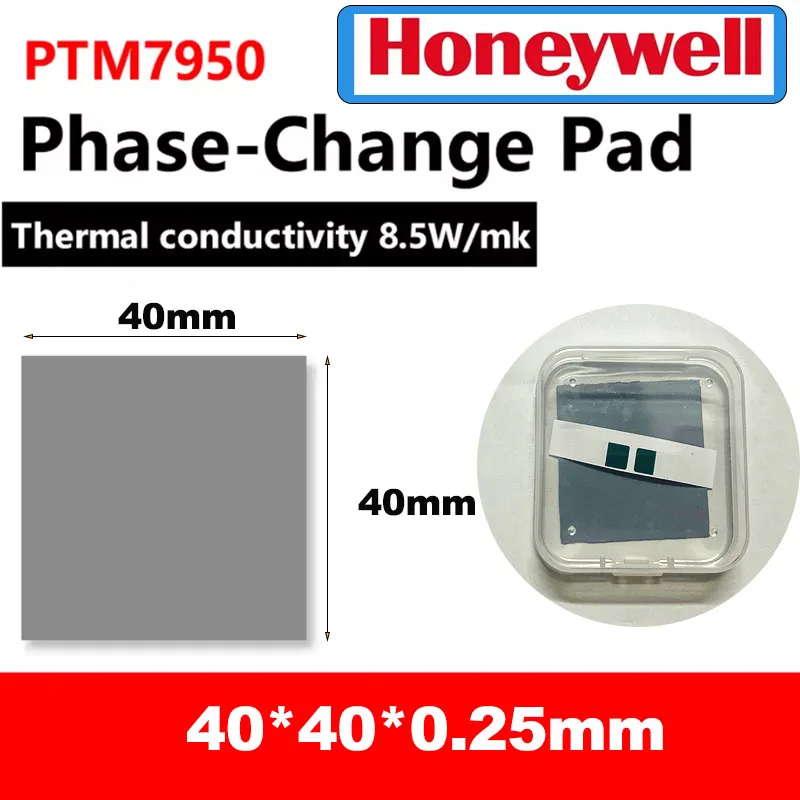
The PTM7950, with its 40x40x0.25mm dimensions, offers broad compatibility across various PC components. It is perfectly sized for many laptop CPUs and GPUs, ensuring full die coverage. Its thin profile of 0.25mm is critical for maintaining proper mounting pressure between the component and the heatsink, preventing any air gaps that could compromise thermal transfer. This ensures optimal contact.
Beyond CPUs and GPUs, the pad finds utility in other high-heat areas. It can be applied to M.2 NVMe SSD controllers, which often run hot under sustained loads, improving drive longevity and preventing performance throttling. It is also suitable for VRM (Voltage Regulator Module) components on motherboards and graphics cards, as well as certain memory modules that benefit from additional cooling. Its adaptability is a major asset.
Compared to the often-cumbersome process of applying thermal paste to smaller components or dealing with the varying thicknesses of generic thermal pads, the PTM7950 offers a consistent and reliable solution. Its pre-cut dimensions and uniform thickness remove much of the guesswork, making it a preferred choice for builders seeking both performance and ease of application across a range of hardware.
Performance comparisons, such as those against Thermal Grizzly Kryonaut on a Ryzen 9 5900hx, illustrate the PTM7950's effectiveness. The visual data indicates that the PTM7950 can maintain CPU temperatures at a consistently lower level under load. This suggests superior heat dissipation capabilities, allowing the processor to operate more efficiently without hitting thermal limits. Consistent temperatures are crucial.
Lower operating temperatures directly translate to a more stable and potentially longer lifespan for the component. Reduced thermal stress minimizes the risk of component degradation over time, protecting your investment. For users pushing their hardware to its limits, this thermal advantage is invaluable, ensuring that the system remains responsive and reliable even during extended heavy use. The PTM7950 delivers on this promise.
While high-end thermal pastes like Kryonaut are often considered the gold standard, the PTM7950 provides comparable performance with the added benefit of being a pad. This eliminates the mess and potential for inconsistent application associated with pastes, offering a cleaner and more user-friendly experience without a significant compromise in thermal efficiency. It bridges the gap between convenience and performance.
The Honeywell PTM7950 represents a significant upgrade for any PC builder or enthusiast looking to optimize their system's thermal performance. Its high thermal conductivity, low resistance, and phase-change properties ensure that heat is efficiently moved away from critical components, leading to cooler, more stable, and potentially faster operation. The ease of application and long-term stability add considerable value, reducing the need for frequent maintenance.
Imagine your high-performance laptop or desktop running quieter and cooler, sustaining peak boost clocks for longer periods during intense gaming sessions or demanding creative work. This thermal pad ensures your hardware operates at its full potential, providing a smoother, more reliable computing experience. The investment in superior thermal management pays dividends in system longevity and consistent performance, allowing you to focus on your tasks without worrying about thermal throttling or overheating. This is a smart upgrade for any serious builder.
Unpacking Thermal Dynamics
The PTM7950 distinguishes itself with a robust thermal conductivity of 8.5 W/mK. This figure positions it firmly in the upper echelon of thermal interface materials, often rivaling or even surpassing many conventional thermal pastes in real-world applications. Its core strength lies in its phase-change nature; at operating temperatures, the pad softens and flows, effectively filling microscopic imperfections between the heat source (like a CPU or GPU die) and the heatsink. This crucial action minimizes air gaps, which are poor thermal conductors, ensuring maximum heat transfer efficiency. Once cooled, it solidifies again, maintaining consistent contact.
Unlike standard thermal pads that remain static, the PTM7950 dynamically adapts. This ensures optimal thermal coupling. The material's ability to conform under heat significantly reduces thermal resistance, a critical factor in maintaining lower component temperatures under load. This adaptability is key for sustained performance.
Compared to typical silicone-based thermal pads, which often have thermal conductivities ranging from 1-5 W/mK, the PTM7950 offers a substantial upgrade. Generic pads often struggle with long-term stability and can dry out or degrade, leading to diminished performance over time. The PTM7950's phase-change characteristic provides a more stable and enduring interface, reducing the need for frequent reapplication, a common chore with many thermal pastes.
Engineering for Efficiency
The pad's thermal resistance is exceptionally low at 0.04 °C cm²/W. This metric is vital for PC builders, as it directly indicates how effectively heat can pass through the material. A lower thermal resistance means less heat is trapped at the component's surface, allowing it to dissipate more rapidly into the cooling solution. This translates directly into cooler operating temperatures for critical components.
For high-wattage CPUs and GPUs, every degree Celsius matters. Lower temperatures enable processors to maintain higher boost clocks for longer durations, preventing thermal throttling and ensuring consistent peak performance during demanding tasks like gaming, video rendering, or scientific computations. This pad directly supports stable system operation.
Many entry-level thermal solutions often present higher thermal resistance, creating a bottleneck in the cooling loop. The PTM7950 bypasses this limitation, acting as an efficient conduit for heat. This makes it an ideal choice for compact builds or laptops where space for elaborate cooling solutions is limited, forcing reliance on the efficiency of the thermal interface material itself.
Installation and Longevity
Installation of the PTM7950 is straightforward, yet requires attention to detail. The pad is designed for a peel-and-stick application, simplifying the process compared to the often messy application of thermal paste. Users are advised to refrigerate the pad (0-4°C) for 10-15 minutes prior to application. This step facilitates easier removal of the protective films, preventing stretching or damage to the pad itself. Proper preparation ensures a clean install.
The phase-change material is shipped within a PP shell for protection, mitigating potential damage during transit. While the pad may appear to have bubbles or even slightly melt during high-temperature transit, this is considered normal and does not impact its performance. The material's properties are designed to handle such conditions, reverting to its intended state once installed and brought to operating temperature. This is a resilient material.
Unlike many thermal pastes that can dry out, crack, or suffer from pump-out over extended periods, the PTM7950's phase-change nature offers superior long-term stability. Once it undergoes its initial phase change, it maintains its integrity, providing consistent thermal performance for years. This reduces maintenance cycles and ensures sustained system reliability, a significant advantage for set-and-forget installations.
Versatile Component Integration
The PTM7950, with its 40x40x0.25mm dimensions, offers broad compatibility across various PC components. It is perfectly sized for many laptop CPUs and GPUs, ensuring full die coverage. Its thin profile of 0.25mm is critical for maintaining proper mounting pressure between the component and the heatsink, preventing any air gaps that could compromise thermal transfer. This ensures optimal contact.
Beyond CPUs and GPUs, the pad finds utility in other high-heat areas. It can be applied to M.2 NVMe SSD controllers, which often run hot under sustained loads, improving drive longevity and preventing performance throttling. It is also suitable for VRM (Voltage Regulator Module) components on motherboards and graphics cards, as well as certain memory modules that benefit from additional cooling. Its adaptability is a major asset.
Compared to the often-cumbersome process of applying thermal paste to smaller components or dealing with the varying thicknesses of generic thermal pads, the PTM7950 offers a consistent and reliable solution. Its pre-cut dimensions and uniform thickness remove much of the guesswork, making it a preferred choice for builders seeking both performance and ease of application across a range of hardware.
Performance Benchmarking
Performance comparisons, such as those against Thermal Grizzly Kryonaut on a Ryzen 9 5900hx, illustrate the PTM7950's effectiveness. The visual data indicates that the PTM7950 can maintain CPU temperatures at a consistently lower level under load. This suggests superior heat dissipation capabilities, allowing the processor to operate more efficiently without hitting thermal limits. Consistent temperatures are crucial.
Lower operating temperatures directly translate to a more stable and potentially longer lifespan for the component. Reduced thermal stress minimizes the risk of component degradation over time, protecting your investment. For users pushing their hardware to its limits, this thermal advantage is invaluable, ensuring that the system remains responsive and reliable even during extended heavy use. The PTM7950 delivers on this promise.
While high-end thermal pastes like Kryonaut are often considered the gold standard, the PTM7950 provides comparable performance with the added benefit of being a pad. This eliminates the mess and potential for inconsistent application associated with pastes, offering a cleaner and more user-friendly experience without a significant compromise in thermal efficiency. It bridges the gap between convenience and performance.
Value Proposition for PC Builders
The Honeywell PTM7950 represents a significant upgrade for any PC builder or enthusiast looking to optimize their system's thermal performance. Its high thermal conductivity, low resistance, and phase-change properties ensure that heat is efficiently moved away from critical components, leading to cooler, more stable, and potentially faster operation. The ease of application and long-term stability add considerable value, reducing the need for frequent maintenance.
Imagine your high-performance laptop or desktop running quieter and cooler, sustaining peak boost clocks for longer periods during intense gaming sessions or demanding creative work. This thermal pad ensures your hardware operates at its full potential, providing a smoother, more reliable computing experience. The investment in superior thermal management pays dividends in system longevity and consistent performance, allowing you to focus on your tasks without worrying about thermal throttling or overheating. This is a smart upgrade for any serious builder.