Heltec V4 LoRa32 ESP32-S3 SX1262 Development Board
Official Store Deal
Expert Analysis Overview
Pushing the Wireless Envelope
The Heltec V4 LoRa32 ESP32-S3 SX1262 Development Board is a high-performance, compact platform engineered for advanced IoT and mesh networking applications, targeting developers who demand robust long-range communication and substantial processing power. This board is not for the faint of heart; it provides the raw capability to build truly resilient, self-sustaining wireless networks. Its integrated components and extensive expansion options position it as a formidable tool for pushing wireless boundaries far beyond conventional limits.
Core Processing Prowess
At its heart, the board features an ESP32-S3 dual-core Xtensa LX7 processor. This silicon provides significant computational headroom. It is a powerful chip for embedded applications. The dual-core architecture allows for parallel processing, enabling complex tasks like real-time data analysis, sophisticated sensor fusion, or even lightweight machine learning models directly at the edge. Unlike single-core microcontrollers, the ESP32-S3 can manage both communication stacks and application logic without significant bottlenecks, crucial for maintaining responsiveness in demanding environments. This processor is a substantial upgrade from older ESP32 variants, offering improved clock speeds and greater efficiency, which are critical when attempting to extract maximum performance from the hardware.
The integrated SX1262 LoRa transceiver is a cornerstone of its long-range communication capabilities. This dedicated LoRa chip handles the intricate radio frequency operations with exceptional efficiency. The SX1262 is renowned for its high sensitivity and low power consumption, making it ideal for battery-powered deployments where every milliwatt counts. Its ability to communicate over kilometers with minimal power makes it superior to typical short-range wireless modules. This transceiver ensures that data packets are transmitted and received reliably, even through challenging urban or natural landscapes, providing a robust backbone for any mesh network.
Unrivaled LoRa Transmission Power
One of the most striking features is the 28+1dBm LoRa transmission power. This output level is exceptionally high for a compact development board. It significantly extends the communication range and enhances signal penetration through obstacles. Standard LoRa modules typically operate at 14-20dBm, making this board's output a substantial leap forward for long-distance applications. Such power ensures that signals can traverse dense foliage, urban clutter, or even penetrate light building materials, maintaining connectivity where lower-power devices would fail. This raw power is a game-changer for critical mesh deployments.
The implications of this increased transmission power are profound for network architects. Longer communication distances mean fewer nodes are required to cover a given area, reducing deployment costs and complexity. Stronger signal penetration ensures greater reliability in non-line-of-sight scenarios, which are common in real-world IoT deployments. This capability translates directly into a more resilient and geographically expansive network. It is crucial for maintaining connectivity in adverse conditions.
Compared to generic LoRa modules, which often prioritize cost over raw output, the Heltec V4's 28+1dBm is a clear differentiator. This is not merely an incremental improvement; it represents a fundamental shift in the operational envelope of a compact LoRa node. For those building networks in remote areas, across large properties, or in environments with significant signal attenuation, this power output provides a distinct advantage, ensuring messages get through when they absolutely must.
Robust Power Management and Expansion
The board incorporates an integrated Power Management IC (PMIC). Stable power delivery is paramount for performance. This dedicated chip regulates incoming power and ensures consistent voltage and current to all components, especially the power-hungry LoRa transceiver and the ESP32-S3. Without a robust PMIC, fluctuations in battery voltage or external power sources could lead to instability, dropped packets, or even hardware damage, particularly when pushing the LoRa output to its maximum.
Reliable power management is critical for any long-term deployment. When operating from a battery or intermittent sources like solar panels, the PMIC efficiently handles charging and discharge cycles, preserving battery health and ensuring continuous operation. This design choice mitigates common issues found in boards that rely on simpler, less regulated power paths. It guarantees sustained operation under varying load conditions.
Many entry-level development boards omit a dedicated PMIC, relying instead on basic voltage regulators that are less efficient and less resilient to power fluctuations. The inclusion of a sophisticated PMIC in the Heltec V4 board signifies a commitment to stability and reliability, making it a more dependable choice for mission-critical IoT applications where uptime is non-negotiable. This is a significant engineering decision.
Extensive Hardware Expansion Interfaces
The Heltec V4 offers extensive hardware expansion interfaces, including a SH1.25-8Pin GNSS interface and a SH1.25-2P solar panel interface. These dedicated ports streamline the integration of external peripherals. The GNSS interface simplifies the addition of GPS/GLONASS modules for location-aware applications, a common requirement for tracking or geographically distributed sensor networks. Precise positioning is often vital.
These interfaces are not merely pin headers; they are purpose-built connectors that ensure reliable physical and electrical connections, reducing the risk of accidental disconnections or wiring errors common with general-purpose GPIO pins. This design choice significantly accelerates development and deployment, particularly for complex projects that require multiple external components. It simplifies the build process.
Compared to boards that require custom wiring or breakout boards for every peripheral, the Heltec V4's dedicated interfaces offer a cleaner, more robust, and more professional integration path. The solar panel interface, in particular, highlights its suitability for remote, off-grid deployments, allowing for direct connection to a solar charging solution without additional circuitry. This boosts autonomous operation capabilities.
Real-time Diagnostics and Durability
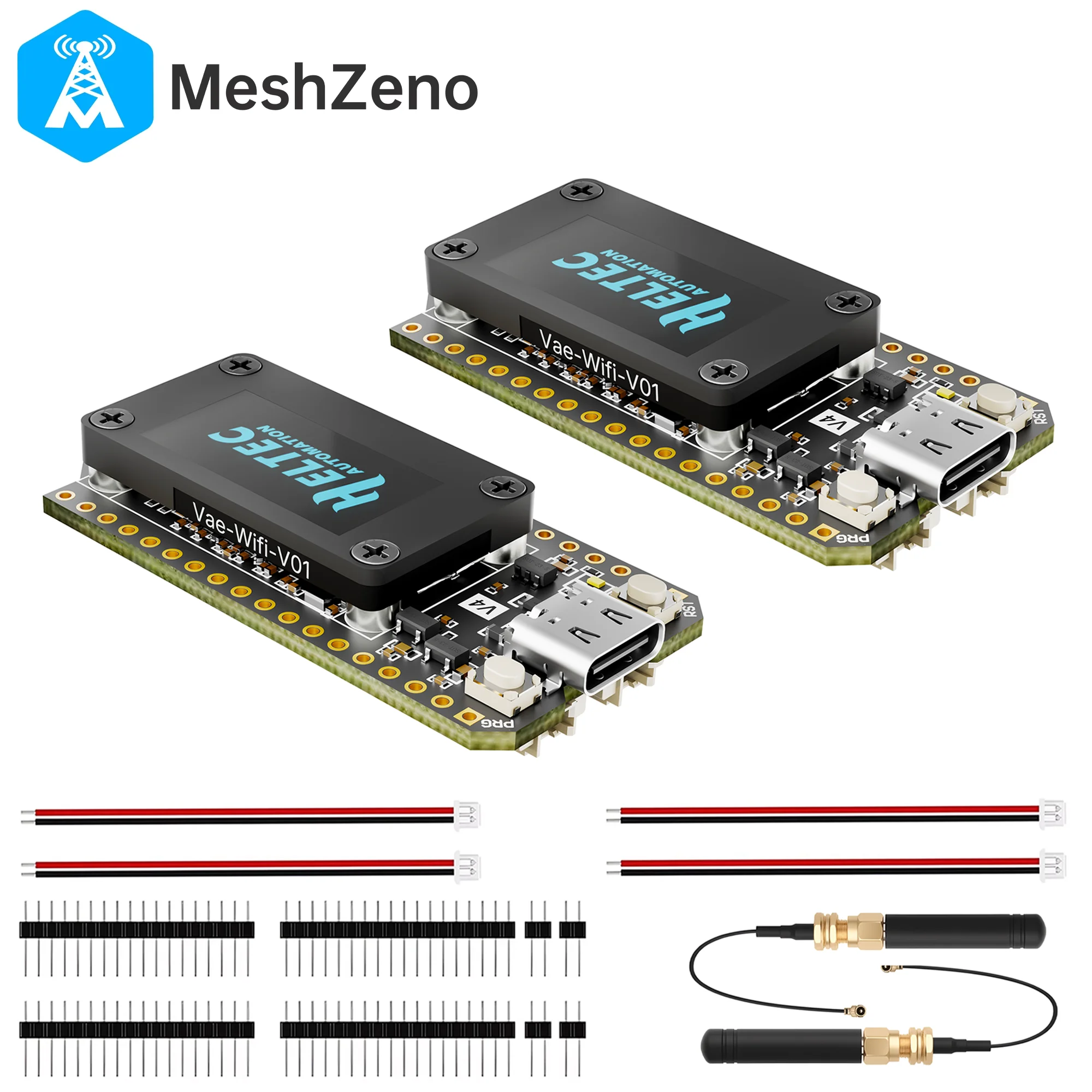
The 0.96-inch OLED display provides immediate visual feedback on device status, network connectivity, and sensor readings without requiring a connected computer. This small display is incredibly useful for debugging and monitoring field deployments. It allows for quick verification of critical parameters. Real-time data is essential for optimization.
For an overclocker, this display is invaluable for monitoring things like signal strength, packet transmission success, or even custom diagnostic messages, allowing for on-the-fly adjustments to network parameters or code behavior. It removes the guesswork from field testing. This diagnostic capability is not a luxury; it is a necessity for fine-tuning performance.
Many compact LoRa boards omit any form of integrated display to save space and cost. The Heltec V4's inclusion of an OLED provides a significant usability advantage, especially for developers who need to quickly assess the operational state of their nodes without carrying extra debugging equipment. This adds a layer of convenience and control.
Furthermore, the inclusion of a plastic protection bracket enhances the board's physical durability. This bracket safeguards the sensitive electronic components from accidental impacts, dust, and minor spills, which are common hazards in prototyping and field deployments. Physical protection is always a good idea.
This protective measure is particularly important for development boards that are frequently handled, modified, or deployed in environments that are not pristine laboratory conditions. It extends the lifespan of the hardware. The bracket helps prevent damage to the delicate LoRa module and other surface-mounted components.
Unlike bare PCB boards that are highly susceptible to damage from mishandling, the plastic bracket offers a degree of resilience, making the Heltec V4 a more robust option for iterative development and eventual deployment in less controlled settings. This thoughtful addition reduces the risk of costly replacements.
Seamless Meshtastic Integration
The board's compatibility with the Meshtastic App provides a powerful and user-friendly ecosystem for mesh networking. Meshtastic transforms these boards into off-grid communication devices, enabling secure, long-range messaging without reliance on traditional cellular or internet infrastructure. The app simplifies device flashing and configuration. It is a powerful software layer.
For users looking to deploy a robust mesh network, Meshtastic offers a pre-built, feature-rich solution that leverages the full capabilities of the LoRa hardware. Its open-source nature means continuous development and a strong community. This integration significantly lowers the barrier to entry for complex mesh network deployments. It provides a ready-to-use framework.
Many LoRa development boards require extensive custom firmware development to achieve basic mesh functionality. The Heltec V4's direct compatibility with Meshtastic provides an immediate, proven solution, allowing developers to focus on application-specific features rather than reinventing the core communication layer. This saves valuable development time.
Value Proposition for the Ambitious Developer
Offered as a 2PCS set, this package provides excellent value for building out a mesh network or for having a spare unit for experimentation and redundancy. Having two boards immediately enables peer-to-peer testing and network formation. It is cost-effective for initial setups. This dual offering is practical.
For the ambitious developer or overclocker, having two identical boards allows for direct comparison of performance under different configurations, stress testing power delivery, or experimenting with different antenna setups. This facilitates rapid iteration and optimization. It is ideal for A/B testing.
When considering the feature set—high-power LoRa, ESP32-S3 processing, dedicated PMIC, and extensive expansion—the dual-pack represents a compelling investment for anyone serious about long-range IoT or off-grid communication. This combination of features and quantity makes it a superior choice for advanced projects. It offers significant capabilities.
Imagine deploying a self-healing, long-range communication network across a remote property, collecting critical sensor data from distributed points, and receiving alerts directly to a smartphone, all powered by solar energy and operating independently of conventional infrastructure. These boards empower such ambitious projects, providing the processing muscle, wireless reach, and power stability needed to turn complex ideas into reliable, real-world solutions. The potential for innovation is immense.
Fine-Tuning the Edge
Connectivity and Interface Versatility
Beyond the core LoRa capabilities, the ESP32-S3 also integrates WiFi and BLE 5.0. These short-range wireless protocols are essential for local connectivity, configuration, and data offloading. WiFi allows for easy integration into existing local area networks, enabling data to be pushed to cloud services or local servers. BLE provides a low-power option for direct communication with smartphones or other BLE-enabled devices. This offers a flexible communication strategy.
This multi-protocol support means the board can act as a gateway, bridging long-range LoRa networks with local IP networks or personal devices. For instance, a LoRa node could collect data in a remote area, transmit it to a Heltec V4 acting as a gateway, which then uploads the data to the internet via WiFi. This versatility significantly expands potential use cases. It makes the board highly adaptable.
Compared to LoRa-only modules, the integrated WiFi and BLE of the ESP32-S3 provide a complete connectivity solution, allowing for seamless integration into diverse network architectures. This avoids the need for additional modules or complex inter-board communication. It streamlines the design process for hybrid network solutions. This is a comprehensive package.
Display for On-Device Feedback
The 0.96-inch OLED display is a critical component for on-device feedback. This small screen allows for the display of vital information directly on the board. It can show network status, sensor readings, or debugging messages. For an overclocker, this means immediate access to performance metrics. This is invaluable for field diagnostics.
During development, the OLED can be programmed to show real-time packet loss, signal-to-noise ratio (SNR), or battery voltage, allowing developers to fine-tune antenna placement or power settings without needing to connect to a computer. This accelerates the optimization process. It is a powerful visual aid.
Many compact development boards lack any integrated display, forcing developers to rely on serial monitors or external debugging tools. The Heltec V4's OLED provides a self-contained diagnostic capability, making it easier to deploy and troubleshoot nodes in remote or inaccessible locations. This enhances user autonomy.
Physical Robustness
The plastic protection bracket is a thoughtful addition that enhances the board's durability. It shields the sensitive components from environmental factors and accidental damage. This protection is crucial for boards intended for outdoor or industrial deployment. It ensures longevity in harsh conditions.
For prototyping, where boards are frequently handled, connected, and disconnected, the bracket prevents damage to delicate components like the LoRa module's shielding or the OLED display. This reduces the likelihood of premature failure. It prolongs the board's operational life.
Unlike bare PCBs, which are vulnerable to short circuits from conductive debris or physical stress, the bracket provides an essential layer of insulation and mechanical support. This makes the Heltec V4 a more resilient option for projects that require a degree of ruggedness. It is a practical design choice.
Software Agility with Meshtastic
The Meshtastic App compatibility transforms these development boards into powerful communication devices with minimal setup. The app provides a user-friendly interface for flashing firmware and configuring network parameters. This significantly simplifies the deployment of mesh networks. It democratizes advanced communication.
Meshtastic enables secure, encrypted messaging over LoRa, creating a resilient communication channel independent of traditional infrastructure. This is particularly appealing for off-grid communication, disaster preparedness, or secure private networks. The app's features extend the hardware's capabilities. It provides a complete solution.
Without such robust software support, users would need to develop their own firmware and communication protocols, a task that requires significant expertise and time. Meshtastic provides a ready-to-use, community-supported ecosystem that allows users to immediately leverage the board's long-range capabilities. This accelerates project timelines substantially.
Operational Stability and Thermal Management
Effective thermal management is crucial for sustained performance, especially when pushing the LoRa module to its maximum 28+1dBm output. While the board is compact, the ESP32-S3 and SX1262 are designed for efficiency. The black casing on the LoRa module likely acts as a heatsink, aiding in heat dissipation. Monitoring temperatures during high-power transmission is advisable. Stable operation requires thermal control.
The board's design, including the placement of components and the use of a dedicated PMIC, contributes to overall operational stability. When operating at peak performance, consistent power delivery and efficient heat dissipation prevent thermal throttling or unexpected shutdowns. This ensures the network remains online. It is engineered for reliability.
For overclockers, understanding the thermal limits and ensuring proper airflow or additional passive cooling might be necessary when running the ESP32-S3 at its highest clock speeds or continuously transmitting at maximum LoRa power. The robust design provides a solid foundation for such experimentation. It offers a stable platform.
The Future of Decentralized Communication
The Heltec V4 LoRa32 ESP32-S3 SX1262 development board empowers users to build resilient, long-range communication networks that operate independently of traditional infrastructure. Its high transmission power, advanced processing, and robust power management make it an ideal choice for ambitious IoT projects, emergency communication systems, and remote sensing applications. The seamless integration with the Meshtastic ecosystem further simplifies deployment, allowing innovators to focus on their unique solutions rather than reinventing the wheel. This board is a gateway to truly decentralized and robust connectivity, enabling a new generation of autonomous devices and networks. The potential for secure, far-reaching communication is now within reach, ready for those who dare to build it. This is a powerful enabler.