GMKtec M8 Mini PC
Official Store Deal
Expert Analysis Overview
Engineering for Uninterrupted Operation
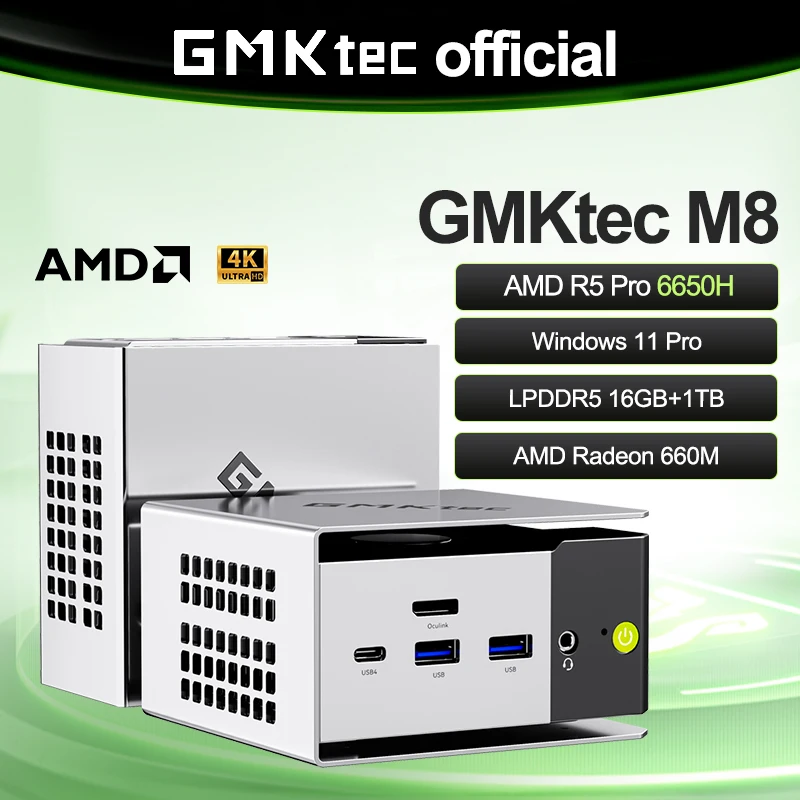
The GMKtec M8 Mini PC is a compact, high-performance computing solution engineered for demanding digital signage applications and robust workstation tasks. Its design prioritizes silent operation and reliable 24/7 uptime, crucial for professional environments. This device represents a significant departure from consumer-grade mini PCs, offering features tailored for continuous, unattended operation.
The core of this system is the AMD Ryzen 5 Pro 6650H processor. This CPU features 6 cores and 12 threads, capable of boosting up to 4.5 GHz. This architecture provides substantial processing headroom. The visible performance charts indicate strong single-core and multi-core Geekbench scores, positioning it well above many standard embedded processors.
For a digital signage installer, this processing power translates directly into capability. The system can effortlessly manage complex content schedules, run multiple simultaneous applications, and render high-resolution media without stuttering. Unlike basic media players that struggle with dynamic content or interactive elements, the Ryzen 5 Pro 6650H ensures a fluid and responsive user experience, even when pushing multiple 4K displays. This is a powerful chip.
Visual Fidelity and Multi-Display Mastery
Visual output is handled by the integrated AMD Radeon 660M graphics. Built on the RDNA 2 architecture, this GPU is far from a basic integrated solution. It offers a significant leap in graphical performance compared to older integrated graphics, supporting hardware-accelerated 4K video decoding and encoding. The promotional materials highlight its ability to drive triple 4K displays simultaneously.
The implication for digital signage is clear: crisp, vibrant visuals across expansive display configurations. Whether deploying a single large-format 4K screen or a multi-monitor video wall, the Radeon 660M provides the necessary horsepower. This eliminates the need for discrete graphics cards in many scenarios, simplifying installation and reducing overall system footprint. Standard office mini PCs often lack this multi-display 4K capability.
This graphical prowess extends beyond static images. Interactive kiosks, live data feeds, and demanding video loops will run smoothly. The ability to support multiple high-resolution displays from a single, small device streamlines cabling and power requirements, a critical consideration for clean and professional installations. It handles visuals well.
Data Throughput and System Responsiveness
System memory is provided by 16GB of LPDDR5 RAM. This is a high-speed, low-power variant of DDR5 memory, operating at frequencies significantly higher than previous generations. The inclusion of LPDDR5 ensures rapid data access for the CPU and GPU.
The real-world benefit is immediate system responsiveness. Applications launch quickly, large files transfer efficiently, and multitasking remains fluid, even with numerous browser tabs or background processes. For digital signage, this means faster content updates and seamless transitions between different media types. This memory is fast.
Compared to systems still utilizing DDR4 or slower LPDDR4 memory, the LPDDR5 in the GMKtec M8 offers a tangible performance uplift. This translates to less waiting and more consistent performance over extended periods, which is vital for systems operating 24/7. It's a key component for longevity.
Storage is handled by a 500GB or 1TB M.2 2280 NVMe SSD. NVMe technology leverages the PCIe interface, offering vastly superior read and write speeds compared to traditional SATA SSDs. This ensures the operating system boots in seconds and applications load almost instantly.
For digital signage content, which can often involve large video files or high-resolution images, the fast SSD is indispensable. Content updates can be pushed and deployed quickly, minimizing downtime. The system remains snappy.
Many entry-level mini PCs still rely on slower SATA SSDs or even eMMC storage, which can become a bottleneck for system performance. The NVMe SSD in the GMKtec M8 provides a robust foundation for demanding applications, ensuring the system never feels sluggish due to storage limitations.
Connectivity and Expansion Horizons
The GMKtec M8 is well-equipped with modern connectivity options. It features WiFi 6E and Bluetooth 5.2. WiFi 6E extends wireless connectivity into the 6GHz band, offering higher speeds, lower latency, and reduced interference in congested wireless environments. Bluetooth 5.2 provides stable, efficient connections for wireless peripherals.
For digital signage, reliable wireless connectivity is paramount for remote content management and system monitoring. WiFi 6E ensures that even large content files can be downloaded quickly and efficiently, minimizing the time required for updates. Bluetooth 5.2 allows for connection of wireless keyboards, mice, or other IoT devices without cluttering physical ports. Wireless is robust.
Physical ports include multiple USB-A and USB-C ports, along with HDMI and DisplayPort for video output. The inclusion of Gigabit Ethernet provides a stable wired network connection, often preferred for critical signage applications. These diverse ports ensure compatibility with a wide range of peripherals and display technologies.
A standout feature is the OCuLink (PCIe Gen 4 x4) port. This dedicated external GPU interface allows the connection of a desktop-class graphics card, such as an RTX 4060, via an external enclosure. This is a unique offering in the mini PC segment.
This expansion capability provides an unprecedented upgrade path. Should future digital signage applications require even more extreme graphical performance, or if the system is repurposed for high-end gaming or professional rendering, the OCuLink port offers a seamless upgrade. It future-proofs the investment. Most mini PCs are closed systems with no such expansion.
Sustained Performance and Installation Flexibility
Maintaining performance under continuous load is critical for digital signage. The GMKtec M8 employs a dual fan cooling system. This active cooling solution is designed to dissipate heat efficiently, preventing thermal throttling that can degrade performance over extended periods of operation.
The implication is consistent, peak performance, even when running resource-intensive applications for hours on end. Unlike passively cooled systems that might struggle in warmer environments or under heavy load, the active cooling ensures the CPU and GPU operate within optimal temperature ranges. This keeps it cool.
For an installer, this means fewer service calls due to performance degradation and greater confidence in the system's ability to run reliably 24/7. The cooling system is engineered for endurance, a hallmark of professional-grade hardware.
The physical design of the GMKtec M8 is inherently suited for discreet installations. Its compact, NUC-like form factor allows it to be easily hidden behind large displays, inside kiosks, or within control cabinets. This minimizes visual clutter, maintaining a clean aesthetic for the digital signage installation.
The ability to conceal the PC is a significant advantage. It protects the hardware from tampering and contributes to a more professional appearance. While VESA mounting brackets are not explicitly pictured, the mini PC form factor strongly implies compatibility, a standard feature for this category. This form factor is ideal.
Unlike traditional desktop towers, which are bulky and difficult to integrate seamlessly into modern display setups, the GMKtec M8 offers a streamlined solution. Its small footprint simplifies cable management and reduces the overall space required for the computing hardware.
Reliability and Automated Operation
For digital signage deployments, the ability for a system to operate autonomously and recover from power interruptions is paramount. While not explicitly detailed in the marketing images, business-oriented mini PCs like the GMKtec M8 typically feature BIOS settings for "Auto Power On" or "AC Power Loss Recovery." These features are essential.
These settings allow the mini PC to automatically power on and resume operation after a power outage, without manual intervention. This ensures that digital signage displays come back online quickly and reliably, minimizing downtime and the need for on-site technician visits. The system recovers itself.
This capability is a cornerstone of a "set-and-forget" installation. It reduces operational overhead and provides peace of mind that the signage will continue to function even after unforeseen power events. Consumer-grade PCs often lack these critical BIOS options, making them unsuitable for continuous commercial operation.
Furthermore, the robust components and active cooling contribute to the system's overall 24/7 durability. The selection of a Pro series AMD processor and efficient memory suggests a design intended for sustained workloads, not just intermittent use. This ensures a long operational lifespan.
The GMKtec M8 is built to run uninterrupted for years, a key requirement for any digital signage infrastructure. Its reliability minimizes maintenance costs and maximizes the return on investment for the display network. It's built to last.
The Strategic Advantage for Digital Signage
The GMKtec M8 Mini PC stands out as a highly capable and strategically advantageous solution for digital signage installers. Its combination of a powerful AMD Ryzen 5 Pro 6650H processor, capable Radeon 660M graphics, and high-speed LPDDR5 memory provides a robust platform for any content requirement, from static images to dynamic 4K video walls. The compact, concealable form factor simplifies installation, allowing the hardware to disappear behind the display, maintaining a clean and professional aesthetic.
Crucially, features like potential VESA mounting, robust cooling for 24/7 operation, and the expected BIOS options for automatic power-on after an outage ensure that once installed, the system will run reliably and autonomously for extended periods. This minimizes the need for costly on-site interventions and maximizes uptime. The unique OCuLink port also offers a future-proof upgrade path, allowing for external GPU expansion if graphical demands intensify. This mini PC is not just a component; it is an investment in reliable, high-performance digital communication.
Imagine a scenario where every display in your network consistently delivers flawless 4K content, day in and day out, without a single manual restart after a power fluctuation. Picture installations where the computing hardware is completely invisible, leaving only the impactful visuals for your audience. This mini PC delivers that level of seamless integration and dependable performance, freeing up resources and enhancing the overall professionalism of your digital signage deployments.