GL.iNet GL-BE9300 Flint 3 Tri-Band WiFi 7 Router
Official Store Deal
Expert Analysis Overview
The GL.iNet GL-BE9300 Flint 3 is a high-performance tri-band WiFi 7 router engineered for demanding home and small office network environments. This device represents a significant leap in consumer-grade networking hardware, integrating the latest wireless and wired standards to deliver unparalleled throughput and control.
Unlike previous generations, WiFi 7 introduces Multi-Link Operation (MLO), allowing client devices to simultaneously transmit and receive data across different frequency bands (2.4GHz, 5GHz, and 6GHz). This aggregation significantly boosts effective throughput and reduces latency, which is paramount for real-time applications like cloud gaming and virtual reality.
Standard WiFi 6/6E routers, while capable, lack the MLO capability. The Flint 3's implementation of 4096-QAM modulation further enhances data density, packing more information into each signal. This translates directly to faster downloads and uploads.
It provides dedicated wireless channels, mitigating congestion in high-density device environments. The 2.4GHz band offers wider coverage, while the 5GHz and 6GHz bands provide higher speeds and lower interference for compatible devices. This is a strategic advantage.
Dual-band routers often struggle to segment traffic effectively, leading to performance degradation when numerous devices compete for bandwidth. The GL-BE9300's tri-band architecture allows for intelligent device steering, ensuring optimal performance for each connected client.
Specifically, it includes one 2.5G WAN port, one 2.5G WAN/LAN port, and three 2.5G LAN ports. This configuration provides a robust multi-gigabit wired backbone, essential for modern high-speed internet connections and local network transfers. Users can connect NAS devices, gaming consoles, or high-performance workstations directly to the router at speeds exceeding standard Gigabit Ethernet.
Many routers still ship with only 1 Gigabit Ethernet ports, creating a bottleneck for internet connections exceeding 1Gbps or for rapid local file transfers. The Flint 3 eliminates this constraint, future-proofing the wired network infrastructure.
In a scenario requiring link aggregation or failover for internet connectivity, this flexibility is invaluable. It allows for advanced network configurations that are typically reserved for enterprise-grade equipment. The router adapts to diverse network topologies.
Generic consumer routers rarely offer such granular control over port assignments, limiting their utility in complex networking scenarios. The GL-BE9300's design caters to users who demand more than basic plug-and-play functionality.
OpenWrt is an open-source Linux-based operating system for embedded devices, offering unparalleled customization, advanced routing features, and access to a vast repository of packages. Network engineers can implement complex VLAN configurations, fine-tune QoS settings, or deploy custom scripts directly on the router. Control is absolute.
Proprietary router firmware often restricts users to basic settings, limiting the ability to optimize network performance or integrate specialized services. The OpenWrt platform transforms the router into a highly adaptable network appliance.
Users can configure the router to connect to a VPN service, encrypting all network traffic for every connected device without individual client setup. Alternatively, it can act as a VPN server, allowing secure remote access to the home network. This is crucial for privacy and remote work.
Many consumer routers offer limited or no VPN support, forcing users to rely on less secure or more complex individual device VPN configurations. The GL-BE9300 centralizes VPN management, simplifying network-wide security.
AdGuard Home operates at the DNS level, blocking advertisements and trackers across the entire network, improving browsing speed and privacy. Parental controls allow administrators to filter content, set internet access schedules, and monitor usage for specific devices. This ensures a safer online environment.
Many routers offer rudimentary parental controls, and network-wide ad blocking is often absent, requiring third-party software or browser extensions. The Flint 3 integrates these functionalities directly, offering a comprehensive solution.
This robust hardware foundation is necessary to handle high concurrent connections, process encrypted VPN traffic, and manage advanced OpenWrt services without performance degradation. A powerful CPU ensures the router remains responsive even under heavy load.
Underpowered routers often become bottlenecks, especially when advanced features like VPNs or QoS are enabled, leading to frustrating slowdowns. The GL-BE9300's architecture is designed to prevent such scenarios.
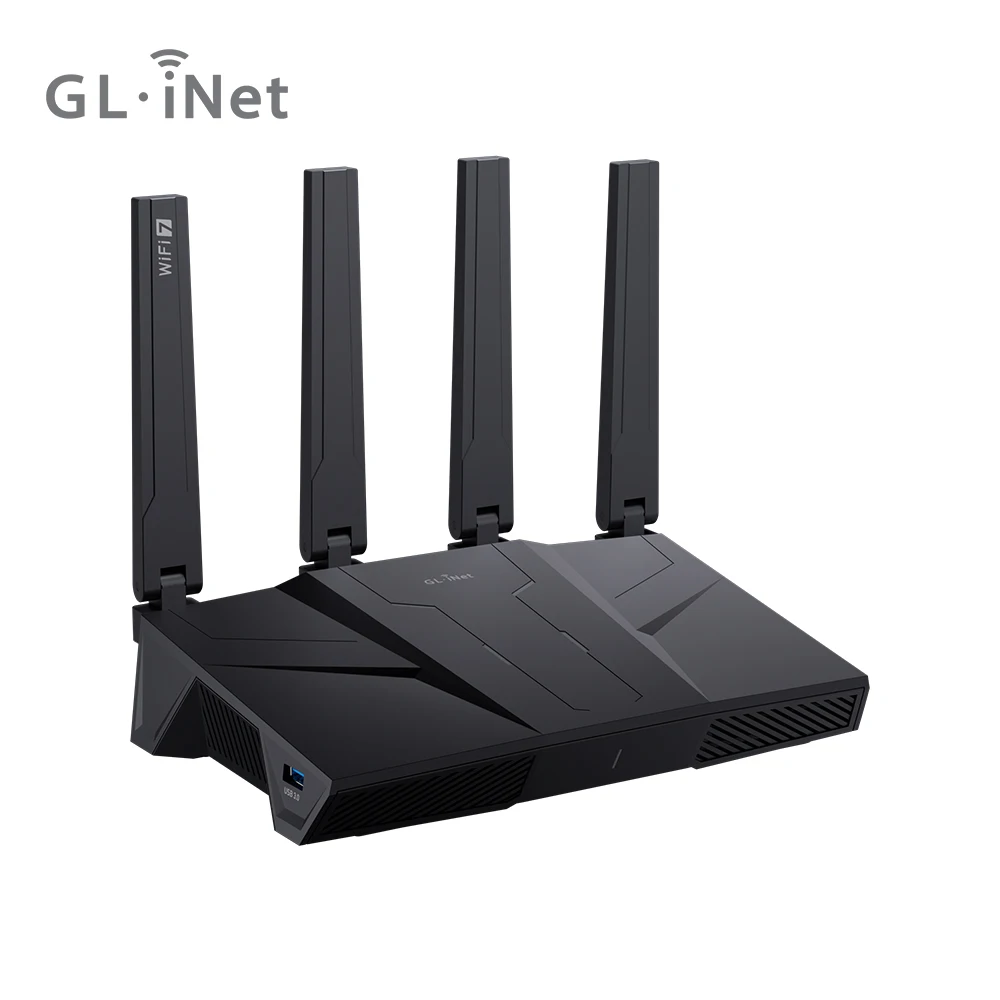
These adjustable antennas, combined with advanced technologies like beamforming, are designed to focus wireless signals towards client devices, improving coverage and reducing dead zones. This is essential for large homes or offices. Wireless reach is extended.
Routers with internal or fewer antennas may struggle to provide consistent coverage in challenging environments, leading to dropped connections and reduced speeds. The Flint 3's external array offers superior signal management.
The GL-BE9300's design, with its angular chassis and ventilation, suggests attention to heat dissipation. Proper airflow prevents thermal throttling, ensuring sustained performance during intensive operations. This maintains stability.
Overheating can lead to instability, reduced lifespan, and performance drops in less optimized devices. The Flint 3's physical design aims to mitigate these risks, supporting continuous operation.
This larger footprint is a direct consequence of accommodating powerful internal components, multiple 2.5G ports, and an effective antenna array. The angular, matte black aesthetic is functional and modern, designed to blend into contemporary tech setups. Form follows function.
Compact routers often compromise on port density, cooling, or antenna performance. The GL-BE9300 prioritizes capability, requiring adequate space for optimal placement and operation.
Imagine a home network where every device operates at its peak, where 4K streaming is buffer-free, online gaming is lag-less, and large file transfers complete in moments. Envision a secure digital perimeter, where your data is protected by integrated VPNs and unwanted ads are banished network-wide. Picture the freedom of customizing every aspect of your network, from VLANs to QoS, all managed through an intuitive OpenWrt interface. This router delivers that experience, transforming your connectivity from a utility into a powerful, controlled ecosystem.
Next-Generation Wireless Protocol Integration
The WiFi 7 Paradigm Shift
The GL-BE9300 Flint 3 incorporates the nascent WiFi 7 (802.11be) standard. This is a critical advancement.Unlike previous generations, WiFi 7 introduces Multi-Link Operation (MLO), allowing client devices to simultaneously transmit and receive data across different frequency bands (2.4GHz, 5GHz, and 6GHz). This aggregation significantly boosts effective throughput and reduces latency, which is paramount for real-time applications like cloud gaming and virtual reality.
Standard WiFi 6/6E routers, while capable, lack the MLO capability. The Flint 3's implementation of 4096-QAM modulation further enhances data density, packing more information into each signal. This translates directly to faster downloads and uploads.
Tri-Band Spectrum Allocation
This router operates across three distinct frequency bands: 2.4GHz, 5GHz, and 6GHz. Tri-band operation is not merely a marketing term.It provides dedicated wireless channels, mitigating congestion in high-density device environments. The 2.4GHz band offers wider coverage, while the 5GHz and 6GHz bands provide higher speeds and lower interference for compatible devices. This is a strategic advantage.
Dual-band routers often struggle to segment traffic effectively, leading to performance degradation when numerous devices compete for bandwidth. The GL-BE9300's tri-band architecture allows for intelligent device steering, ensuring optimal performance for each connected client.
Multi-Gigabit Wired Infrastructure
Ethernet Port Configuration
The GL-BE9300 features five 2.5 Gigabit Ethernet ports. This is a substantial upgrade.Specifically, it includes one 2.5G WAN port, one 2.5G WAN/LAN port, and three 2.5G LAN ports. This configuration provides a robust multi-gigabit wired backbone, essential for modern high-speed internet connections and local network transfers. Users can connect NAS devices, gaming consoles, or high-performance workstations directly to the router at speeds exceeding standard Gigabit Ethernet.
Many routers still ship with only 1 Gigabit Ethernet ports, creating a bottleneck for internet connections exceeding 1Gbps or for rapid local file transfers. The Flint 3 eliminates this constraint, future-proofing the wired network infrastructure.
WAN/LAN Flexibility
The inclusion of a switchable 2.5G WAN/LAN port offers deployment versatility. This port can function as either an additional LAN port or a secondary WAN port.In a scenario requiring link aggregation or failover for internet connectivity, this flexibility is invaluable. It allows for advanced network configurations that are typically reserved for enterprise-grade equipment. The router adapts to diverse network topologies.
Generic consumer routers rarely offer such granular control over port assignments, limiting their utility in complex networking scenarios. The GL-BE9300's design caters to users who demand more than basic plug-and-play functionality.
Advanced Network Management and Security
Open-Source Firmware Advantage
The GL-BE9300 comes with OpenWrt pre-installed. This is a significant differentiator.OpenWrt is an open-source Linux-based operating system for embedded devices, offering unparalleled customization, advanced routing features, and access to a vast repository of packages. Network engineers can implement complex VLAN configurations, fine-tune QoS settings, or deploy custom scripts directly on the router. Control is absolute.
Proprietary router firmware often restricts users to basic settings, limiting the ability to optimize network performance or integrate specialized services. The OpenWrt platform transforms the router into a highly adaptable network appliance.
Integrated VPN Capabilities
This router supports VPN client and server functionalities. Security is paramount.Users can configure the router to connect to a VPN service, encrypting all network traffic for every connected device without individual client setup. Alternatively, it can act as a VPN server, allowing secure remote access to the home network. This is crucial for privacy and remote work.
Many consumer routers offer limited or no VPN support, forcing users to rely on less secure or more complex individual device VPN configurations. The GL-BE9300 centralizes VPN management, simplifying network-wide security.
Parental Control and Ad Blocking
Integrated features like AdGuard Home and Parental Controls enhance network utility. These tools provide granular control.AdGuard Home operates at the DNS level, blocking advertisements and trackers across the entire network, improving browsing speed and privacy. Parental controls allow administrators to filter content, set internet access schedules, and monitor usage for specific devices. This ensures a safer online environment.
Many routers offer rudimentary parental controls, and network-wide ad blocking is often absent, requiring third-party software or browser extensions. The Flint 3 integrates these functionalities directly, offering a comprehensive solution.
Hardware Architecture and Throughput Potential
Processing Power and Memory
While specific chipset details are not explicitly listed, the demands of WiFi 7 and multi-gigabit routing imply a powerful quad-core ARM processor and ample RAM. Performance is critical.This robust hardware foundation is necessary to handle high concurrent connections, process encrypted VPN traffic, and manage advanced OpenWrt services without performance degradation. A powerful CPU ensures the router remains responsive even under heavy load.
Underpowered routers often become bottlenecks, especially when advanced features like VPNs or QoS are enabled, leading to frustrating slowdowns. The GL-BE9300's architecture is designed to prevent such scenarios.
Antenna Array and Signal Propagation
The router features four external high-gain antennas. Signal strength is optimized.These adjustable antennas, combined with advanced technologies like beamforming, are designed to focus wireless signals towards client devices, improving coverage and reducing dead zones. This is essential for large homes or offices. Wireless reach is extended.
Routers with internal or fewer antennas may struggle to provide consistent coverage in challenging environments, leading to dropped connections and reduced speeds. The Flint 3's external array offers superior signal management.
Operational Considerations and Deployment Scenarios
Power Consumption and Thermal Management
High-performance networking hardware inherently consumes more power than basic models. Efficient thermal management is therefore crucial.The GL-BE9300's design, with its angular chassis and ventilation, suggests attention to heat dissipation. Proper airflow prevents thermal throttling, ensuring sustained performance during intensive operations. This maintains stability.
Overheating can lead to instability, reduced lifespan, and performance drops in less optimized devices. The Flint 3's physical design aims to mitigate these risks, supporting continuous operation.
Physical Footprint and Aesthetics
The router's dimensions, approximately 240mm x 157mm x 74mm (excluding antennas), indicate a substantial device. Its presence is noticeable.This larger footprint is a direct consequence of accommodating powerful internal components, multiple 2.5G ports, and an effective antenna array. The angular, matte black aesthetic is functional and modern, designed to blend into contemporary tech setups. Form follows function.
Compact routers often compromise on port density, cooling, or antenna performance. The GL-BE9300 prioritizes capability, requiring adequate space for optimal placement and operation.
Imagine a home network where every device operates at its peak, where 4K streaming is buffer-free, online gaming is lag-less, and large file transfers complete in moments. Envision a secure digital perimeter, where your data is protected by integrated VPNs and unwanted ads are banished network-wide. Picture the freedom of customizing every aspect of your network, from VLANs to QoS, all managed through an intuitive OpenWrt interface. This router delivers that experience, transforming your connectivity from a utility into a powerful, controlled ecosystem.