Gdstime 5015 DC Blower Fan (2-Pack)
Official Store Deal
Expert Analysis Overview
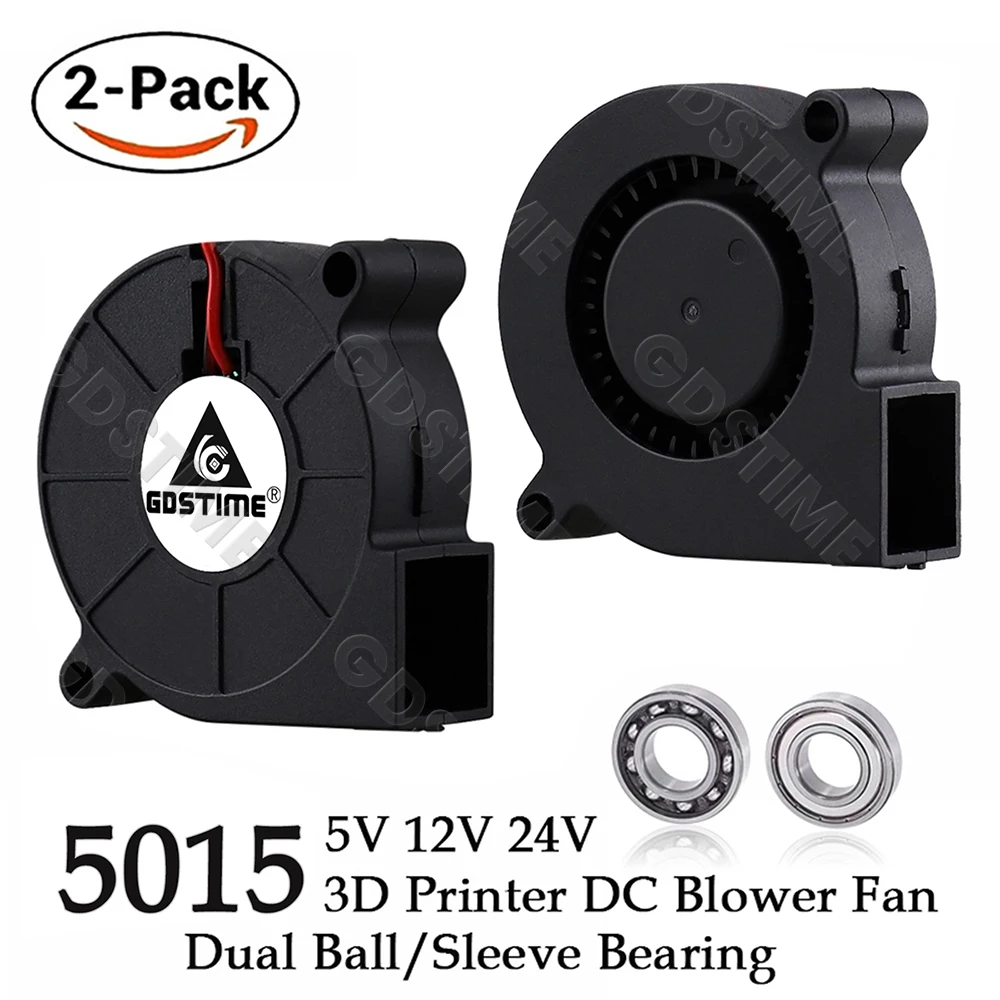
The Gdstime 5015 Blower Fan is a critical airflow component engineered for demanding thermal management in additive manufacturing systems. This dual-pack offering provides essential cooling capabilities for 3D printers, addressing common thermal challenges that impact print quality and machine longevity. Its versatile voltage options and robust bearing choices position it as a practical upgrade for various printer configurations.
These 5015 blower fans are designed to generate a focused stream of air, crucial for effective cooling in 3D printing applications. The centrifugal design pulls air in from the side and expels it at a 90-degree angle, creating higher static pressure compared to axial fans. This concentrated airflow is vital for cooling specific areas, such as the hotend or freshly extruded filament.
Consistent cooling prevents thermal creep. It ensures material solidifies rapidly.
Unlike standard axial fans that disperse air broadly, the blower fan's directed output is optimal for cooling print layers directly beneath the nozzle. This targeted approach is indispensable for achieving clean overhangs and bridges, which often suffer from insufficient cooling. Users seeking to produce dimensionally accurate engineering parts will find this focused airflow particularly beneficial, as it minimizes warping and deformation caused by uneven cooling.
The Gdstime 5015 fans offer broad electrical compatibility, available in 5V, 12V, and 24V configurations. This range allows for seamless integration into diverse 3D printer setups, from compact, USB-powered machines (5V) to more robust, standard desktop printers (12V or 24V). The ability to select the appropriate voltage simplifies installation and ensures optimal performance without the need for external voltage converters.
Voltage selection is critical. It matches printer power supplies.
For instance, a 24V fan is typically used in many modern 3D printers like Creality or Ender series, directly connecting to the mainboard's fan headers. Conversely, the 5V variant can be powered directly from a USB port, making it suitable for custom enclosures or portable setups where a dedicated power supply might be inconvenient. This adaptability minimizes potential electrical compatibility issues, a common frustration when upgrading or customizing printer components.
Compared to fans with a single voltage option, this multi-voltage availability significantly broadens the fan's applicability. It reduces the need for users to source specific voltage fans, streamlining the procurement process for various projects. This flexibility supports a wider array of printer models and custom builds, enhancing the overall utility of the product.
The choice between dual ball bearing and sleeve bearing types offers a trade-off between lifespan, noise, and cost. Dual ball bearings typically provide a longer operational life and can withstand higher temperatures, making them ideal for continuous, high-duty cycle applications common in 3D printing. They also offer greater resistance to mounting orientation, maintaining performance regardless of how the fan is positioned.
Bearings affect longevity. They influence operational noise.
Sleeve bearings, while generally quieter and more cost-effective initially, have a shorter lifespan, especially when exposed to high temperatures or non-vertical mounting orientations. For users who prioritize minimal noise in a less demanding environment, sleeve bearings might be acceptable. However, for critical cooling tasks that run for hundreds of hours, the durability of dual ball bearings is a significant advantage, reducing the frequency of fan replacements and associated downtime.
Unlike generic fans that often use basic sleeve bearings, the option for dual ball bearings represents an upgrade in reliability and sustained performance. This is particularly important when printing difficult materials reliably, such as ABS or Nylon, which require consistent and prolonged cooling to prevent warping and delamination. The enhanced durability of ball bearings ensures that the fan maintains its cooling efficiency throughout extended print jobs, directly contributing to minimized print failures.
The fan's housing appears to be constructed from a durable plastic, likely PBT or ABS, which offers good thermal stability and rigidity. The standard 50x50x15mm dimensions ensure compatibility with a vast array of existing 3D printer fan ducts and mounting brackets. The presence of mounting holes allows for secure attachment, preventing vibration and ensuring the fan remains in its optimal position during operation.
Secure mounting is essential. It prevents unwanted movement.
Proper installation is straightforward, typically involving a few screws to attach the fan to a cooling duct or printer frame. The wiring, often a simple two-pin connector, integrates directly into the printer's mainboard or a dedicated fan controller. This ease of installation minimizes the technical barrier for users looking to upgrade their cooling systems, making it accessible even for those with limited experience in printer modification.
Compared to custom-fabricated cooling solutions, these standardized blower fans offer a plug-and-play experience. Their consistent dimensions mean less time spent on design and more time on printing. This adherence to common form factors ensures that users can quickly replace or upgrade components without extensive modifications to their printer's existing infrastructure.
Effective cooling is paramount for preventing common 3D print failures. Issues like stringing, poor bridging, and layer delamination are often direct consequences of inadequate or inconsistent cooling. By providing a powerful and directed airflow, these Gdstime 5015 fans directly address these problems, leading to cleaner, stronger, and more aesthetically pleasing prints.
Good cooling improves quality. It reduces material waste.
When printing with PLA, for example, rapid cooling helps to prevent heat creep into the cold end, reducing the likelihood of clogs. For materials like PETG, which are prone to stringing, a focused blast of air can significantly improve surface finish. This capability to minimize print failures translates into less wasted filament, fewer failed prints, and ultimately, a more efficient and enjoyable 3D printing experience.
Unlike relying on ambient cooling or underpowered stock fans, integrating these dedicated blower fans provides a controlled thermal environment. This control is especially critical for intricate models with fine details or complex geometries where precise cooling is non-negotiable. The investment in robust cooling directly correlates with an increase in successful print outcomes and the ability to tackle more challenging projects.
Considering the relatively low cost, the Gdstime 5015 blower fans offer substantial value for 3D printer users. The ability to choose between different voltages and bearing types provides customization options that cater to specific needs and budgets, while the dual-pack ensures a spare or allows for multi-fan setups. This flexibility, combined with the performance benefits, makes it a compelling choice for both hobbyists and professionals.
This fan offers significant ROI. It enhances print reliability.
The long-term value stems from reduced print failures and extended component lifespan, particularly with the dual ball bearing option. Minimizing failed prints saves on filament costs and valuable printing time, making the initial investment quickly pay for itself. For those serious about achieving high-quality, consistent results, these fans are a cost-effective solution to common thermal challenges.
Imagine your 3D printer consistently producing flawless models, free from warping or stringing, even when tackling complex geometries with demanding materials. Picture the satisfaction of effortlessly achieving precise overhangs and perfectly smooth surfaces, knowing that your cooling system is performing optimally. Envision the confidence in starting long, multi-hour prints, assured that thermal management will not be the cause of failure. These Gdstime 5015 blower fans provide the foundational cooling capability to realize these aspirations, transforming your additive manufacturing workflow into a realm of consistent success and superior output.
Precision Airflow Engineering
These 5015 blower fans are designed to generate a focused stream of air, crucial for effective cooling in 3D printing applications. The centrifugal design pulls air in from the side and expels it at a 90-degree angle, creating higher static pressure compared to axial fans. This concentrated airflow is vital for cooling specific areas, such as the hotend or freshly extruded filament.
Consistent cooling prevents thermal creep. It ensures material solidifies rapidly.
Unlike standard axial fans that disperse air broadly, the blower fan's directed output is optimal for cooling print layers directly beneath the nozzle. This targeted approach is indispensable for achieving clean overhangs and bridges, which often suffer from insufficient cooling. Users seeking to produce dimensionally accurate engineering parts will find this focused airflow particularly beneficial, as it minimizes warping and deformation caused by uneven cooling.
Powering Precision: Electrical Versatility
The Gdstime 5015 fans offer broad electrical compatibility, available in 5V, 12V, and 24V configurations. This range allows for seamless integration into diverse 3D printer setups, from compact, USB-powered machines (5V) to more robust, standard desktop printers (12V or 24V). The ability to select the appropriate voltage simplifies installation and ensures optimal performance without the need for external voltage converters.
Voltage selection is critical. It matches printer power supplies.
For instance, a 24V fan is typically used in many modern 3D printers like Creality or Ender series, directly connecting to the mainboard's fan headers. Conversely, the 5V variant can be powered directly from a USB port, making it suitable for custom enclosures or portable setups where a dedicated power supply might be inconvenient. This adaptability minimizes potential electrical compatibility issues, a common frustration when upgrading or customizing printer components.
Compared to fans with a single voltage option, this multi-voltage availability significantly broadens the fan's applicability. It reduces the need for users to source specific voltage fans, streamlining the procurement process for various projects. This flexibility supports a wider array of printer models and custom builds, enhancing the overall utility of the product.
Enduring Performance: Bearing Technology
The choice between dual ball bearing and sleeve bearing types offers a trade-off between lifespan, noise, and cost. Dual ball bearings typically provide a longer operational life and can withstand higher temperatures, making them ideal for continuous, high-duty cycle applications common in 3D printing. They also offer greater resistance to mounting orientation, maintaining performance regardless of how the fan is positioned.
Bearings affect longevity. They influence operational noise.
Sleeve bearings, while generally quieter and more cost-effective initially, have a shorter lifespan, especially when exposed to high temperatures or non-vertical mounting orientations. For users who prioritize minimal noise in a less demanding environment, sleeve bearings might be acceptable. However, for critical cooling tasks that run for hundreds of hours, the durability of dual ball bearings is a significant advantage, reducing the frequency of fan replacements and associated downtime.
Unlike generic fans that often use basic sleeve bearings, the option for dual ball bearings represents an upgrade in reliability and sustained performance. This is particularly important when printing difficult materials reliably, such as ABS or Nylon, which require consistent and prolonged cooling to prevent warping and delamination. The enhanced durability of ball bearings ensures that the fan maintains its cooling efficiency throughout extended print jobs, directly contributing to minimized print failures.
Structural Integrity and Installation
The fan's housing appears to be constructed from a durable plastic, likely PBT or ABS, which offers good thermal stability and rigidity. The standard 50x50x15mm dimensions ensure compatibility with a vast array of existing 3D printer fan ducts and mounting brackets. The presence of mounting holes allows for secure attachment, preventing vibration and ensuring the fan remains in its optimal position during operation.
Secure mounting is essential. It prevents unwanted movement.
Proper installation is straightforward, typically involving a few screws to attach the fan to a cooling duct or printer frame. The wiring, often a simple two-pin connector, integrates directly into the printer's mainboard or a dedicated fan controller. This ease of installation minimizes the technical barrier for users looking to upgrade their cooling systems, making it accessible even for those with limited experience in printer modification.
Compared to custom-fabricated cooling solutions, these standardized blower fans offer a plug-and-play experience. Their consistent dimensions mean less time spent on design and more time on printing. This adherence to common form factors ensures that users can quickly replace or upgrade components without extensive modifications to their printer's existing infrastructure.
Mitigating Print Failures
Effective cooling is paramount for preventing common 3D print failures. Issues like stringing, poor bridging, and layer delamination are often direct consequences of inadequate or inconsistent cooling. By providing a powerful and directed airflow, these Gdstime 5015 fans directly address these problems, leading to cleaner, stronger, and more aesthetically pleasing prints.
Good cooling improves quality. It reduces material waste.
When printing with PLA, for example, rapid cooling helps to prevent heat creep into the cold end, reducing the likelihood of clogs. For materials like PETG, which are prone to stringing, a focused blast of air can significantly improve surface finish. This capability to minimize print failures translates into less wasted filament, fewer failed prints, and ultimately, a more efficient and enjoyable 3D printing experience.
Unlike relying on ambient cooling or underpowered stock fans, integrating these dedicated blower fans provides a controlled thermal environment. This control is especially critical for intricate models with fine details or complex geometries where precise cooling is non-negotiable. The investment in robust cooling directly correlates with an increase in successful print outcomes and the ability to tackle more challenging projects.
The Value Proposition in Additive Manufacturing
Considering the relatively low cost, the Gdstime 5015 blower fans offer substantial value for 3D printer users. The ability to choose between different voltages and bearing types provides customization options that cater to specific needs and budgets, while the dual-pack ensures a spare or allows for multi-fan setups. This flexibility, combined with the performance benefits, makes it a compelling choice for both hobbyists and professionals.
This fan offers significant ROI. It enhances print reliability.
The long-term value stems from reduced print failures and extended component lifespan, particularly with the dual ball bearing option. Minimizing failed prints saves on filament costs and valuable printing time, making the initial investment quickly pay for itself. For those serious about achieving high-quality, consistent results, these fans are a cost-effective solution to common thermal challenges.
Imagine your 3D printer consistently producing flawless models, free from warping or stringing, even when tackling complex geometries with demanding materials. Picture the satisfaction of effortlessly achieving precise overhangs and perfectly smooth surfaces, knowing that your cooling system is performing optimally. Envision the confidence in starting long, multi-hour prints, assured that thermal management will not be the cause of failure. These Gdstime 5015 blower fans provide the foundational cooling capability to realize these aspirations, transforming your additive manufacturing workflow into a realm of consistent success and superior output.