Flashforge Adventurer 5M LED Light Strip
Official Store Deal
Expert Analysis Overview
The Flashforge Adventurer 5M LED Light Strip is a crucial illumination upgrade designed for Flashforge Adventurer 5M and 5M Pro owners seeking superior visibility within their print chambers. This focused accessory directly addresses common visibility challenges, transforming the monitoring experience from adequate to exceptional. It allows for precise observation of the first layer adhesion, filament extrusion, and overall print quality, which is critical for successful 3D printing. For makers and tinkerers, this component represents more than just a light; it is a foundational element for optimizing their machine's operational feedback and opening avenues for further customization. Its straightforward purpose belies its significant impact on print success.
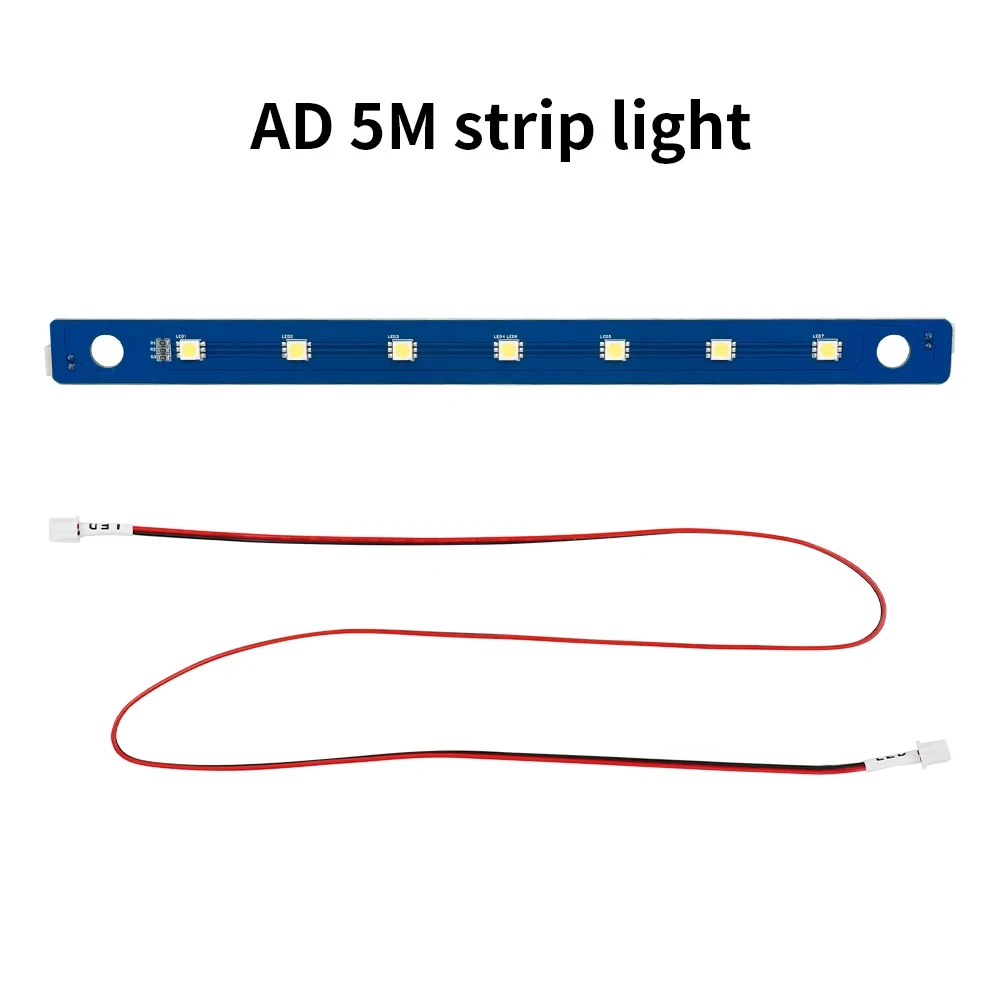
The product features a robust blue circuit board, housing multiple high-brightness LED chips along its 23 cm (9.06 inches) length. This vibrant blue serves as a clear indicator of its electronic nature. A generous power cable, measuring 71.5 cm (28.15 inches), extends from one end, terminating in a white 2-pin connector, a common interface for low-voltage accessories. Small, pre-drilled holes are visible on the PCB, strategically placed for secure mounting within the printer's chassis, suggesting a non-adhesive, more permanent installation. The entire assembly appears designed for durability and resilience within the enclosed, often heated, and sometimes vibrating environment of a 3D printer. It is a simple, effective design. This attention to mechanical integration is paramount for long-term reliability in a manufacturing context.
This specific design implies a direct-fit solution for the Flashforge Adventurer 5M series, ensuring hassle-free integration for users. The specified dimensions suggest it integrates seamlessly into the printer's existing internal structure without interfering with crucial moving parts like the print head or the build plate. The ample, extended cable length offers significant flexibility for routing within the chassis, allowing for clean cable management and reducing strain on the connection points. This careful consideration for fitment minimizes installation guesswork for the end-user, making it an appealing upgrade for those who prefer straightforward modifications. Installation should be straightforward. The ability to properly route cables is often overlooked but critical for machine longevity and safety, preventing snags or crimps that could lead to electrical issues or mechanical failures.
Unlike generic LED strips that might require extensive modification, cutting, and custom wiring, this unit provides a tailored experience, specifically engineered for the target Flashforge models. Many stock 3D printers offer minimal internal lighting, often relying on ambient room light or a flashlight for monitoring, leading to inconsistent visibility. This dedicated light strip offers a consistent, powerful light source, eliminating shadows and providing an unobstructed view of the print bed from various angles, crucial for remote monitoring via a printer's camera. It’s a definite upgrade. The integration with existing printer infrastructure also means that community-developed modifications or enhancements for this specific light strip are more likely to emerge, fostering a collaborative upgrade path among Flashforge enthusiasts. This supports a culture of continuous improvement.
Operating at a precise 24V, the light strip is equipped with a standard 2-pin connector, a common and reliable electrical interface. This voltage is universally recognized within the Flashforge Adventurer 5M and 5M Pro ecosystem, ensuring direct compatibility. The power cable itself is a simple red-sheathed pair, indicating a straightforward positive and negative connection, which simplifies wiring for even novice tinkerers. The LEDs themselves appear to be surface-mounted devices (SMD), compact and efficient in their light output, chosen for their longevity and brightness. These components are chosen for reliability. The choice of 24V is a standard for many industrial and hobbyist electronics, reflecting thoughtful engineering for integration.
The 24V specification is paramount, aligning perfectly with the typical power architecture of modern Flashforge printers. This voltage ensures direct compatibility with the printer's internal power supply, avoiding the need for external power converters, voltage regulators, or complex wiring schematics. Users can expect a clean power draw from the printer's existing supply without overloading circuits or introducing electrical noise that could interfere with sensitive stepper motors or sensors. This engineered compatibility significantly reduces the risk of damaging sensitive printer electronics during installation or operation, a common concern for tinkerers venturing into internal modifications. This minimizes potential pitfalls. Understanding the electrical system is key for any successful modification.
Many third-party LED solutions often necessitate external power bricks, intricate wiring into the printer's mainboard, or even custom firmware adjustments, all of which carry inherent risks of electrical complications and potentially voiding warranties. This strip bypasses such complexities, providing a direct, low-risk upgrade path that respects the printer's original design and electrical integrity. It simplifies the modification process considerably. The ability to leverage the printer's existing power infrastructure also means that the light strip's operation can be integrated with the printer's power cycle, turning on and off automatically with the machine, enhancing user convenience. This thoughtful design choice makes the upgrade feel native rather than an afterthought.
The strip's primary function is to cast bright, even light onto the print area, a critical need for any serious 3D printing enthusiast. The "high brightness LED chip" designation suggests a focused effort on maximizing lumen output, ensuring the build plate and the printed object are exceptionally well-illuminated from all angles. The uniform spacing of the LEDs along the strip ensures even light distribution, preventing problematic hotspots or dark zones that could obscure critical details during a print. This design facilitates optimal observation. The quality of illumination directly correlates with the ability to detect subtle flaws.
A well-lit print chamber significantly aids in diagnosing print failures early, such as stringing, warping, layer shifts, nozzle clogs, or even minor adhesion issues on the first layer. This clarity is especially valuable during long prints, when observing intricate details, or when using dark and difficult-to-see filaments that absorb ambient light, making visual inspection challenging. Visual inspection becomes far more effective, allowing users to make real-time adjustments or pause prints before significant material is wasted. This immediate feedback loop is invaluable for optimizing print settings and achieving higher success rates, ultimately saving both time and expensive filament. It empowers proactive problem-solving.
Standard 3D printers often leave users squinting through tinted enclosures or relying on inadequate built-in lights, which can be frustrating and lead to undetected print errors. This dedicated strip provides the necessary intensity and coverage for detailed observation, transforming the monitoring experience from a chore into an effortless task. It’s an obvious visual improvement. For those who frequently record time-lapse videos of their prints, the consistent and bright illumination ensures high-quality footage, making the entire process more visually engaging and professional, suitable for sharing with online communities. The ability to capture clear video also aids in post-print analysis.
The clear visibility of the blue PCB and discrete LED chips suggests an accessible design, inviting closer inspection and understanding of its components. The overall assembly appears robust enough for integration into an active printer environment, where vibrations, temperature fluctuations, and continuous operation are common. The connection points are simple and accessible, further facilitating user interaction and potential modification. This encourages hands-on modification. Its construction speaks to an understanding of the demands placed on 3D printer components.
For the dedicated tinkerer, the inherent simplicity and direct integration of this strip present numerous opportunities beyond its primary function. While designed as a direct replacement, its fundamental components – a 24V input and standard LEDs – allow for potential experimentation with current limiting resistors, diffusers, or even alternative color temperatures if one were to delve into more advanced electronics. The defined voltage and connector type offer a stable baseline for custom lighting projects within the Flashforge ecosystem, such as adding diffused light panels or integrating additional aesthetic lighting synchronized with print status. This opens doors for creative enhancements. Such modifications, though advanced, are part of the maker ethos.
Compared to fully enclosed, proprietary lighting systems that offer little room for user intervention, this modular strip encourages a community-driven approach to upgrades and troubleshooting. Users can readily share installation tips, discuss alternative mounting strategies (perhaps using 3D-printed brackets designed for specific aesthetic or functional needs), or even explore integrating it with smart home systems if they possess the necessary electronics skills. This fosters creative problem-solving and knowledge sharing among Flashforge owners. The shared experience builds a stronger community. Such open-ended design elements are highly valued by those who enjoy customizing their equipment and pushing its capabilities.
The strip's physical length of 23 cm (9.06 inches) and the power cable's length of 71.5 cm (28.15 inches) are explicitly provided, offering critical information for pre-installation planning. The presence of mounting holes suggests a non-adhesive, screw-in installation method, which is often preferred for long-term stability in dynamic environments. This ensures a secure fit. Mechanical fastening is crucial where heat and vibration are factors.
These precise dimensions are crucial for ensuring the strip fits without obstructing the print head's movement, the build plate's travel, or any other critical internal components of the printer. The ample cable length minimizes strain on the connector and allows for tidy cable management, preventing cables from snagging or interfering with moving parts, which could lead to print failures or damage. A secure, screw-based mount is generally far more reliable than adhesive in a heated chamber, where high temperatures can cause adhesives to degrade and fail over time. This contributes to printer longevity. Careful cable routing is essential for both safety and aesthetics.
Many aftermarket light solutions, particularly generic ones, rely on double-sided tape or less secure attachment methods, which can fail under the sustained heat and vibrations of a 3D printer enclosure. A mechanically fastened strip, as this appears to be, offers superior long-term stability and peace of mind, ensuring the light remains in its intended position throughout countless print hours. This is a practical design choice for a component expected to perform reliably over countless print hours. It minimizes maintenance needs. The stability also ensures consistent light positioning, preventing shadows from shifting during a print, which could be distracting or misleading for monitoring.
The item is presented as a singular, functional light strip with an attached power cable. Its design is utilitarian and functional, prioritizing performance and direct compatibility over aesthetic flourishes. The entire focus is clearly on its illuminating capability and ease of integration into an existing system. This straightforward approach is often appreciated by those who prioritize function and efficiency in their workshop.
The true value of this upgrade lies in the enhanced print monitoring and the potential reduction of failed prints due to obscured visibility, which can be a significant source of frustration and waste. For users who frequently print complex models, utilize exotic filaments, or need to observe fine details for quality control, this strip offers a significant return on investment in terms of time and material saved. It truly improves workflow efficiency. The ability to quickly identify and address issues can prevent hours of wasted print time and expensive filament. This direct impact on productivity is a strong selling point.
Considering the cumulative cost of failed prints and wasted filament, a relatively inexpensive lighting upgrade like this can easily pay for itself within a few print cycles, especially for users engaged in high-volume or critical printing tasks. It transforms a minor inconvenience into a clear operational advantage, allowing for more confident and consistent printing outcomes. This is an intelligent investment for any Flashforge Adventurer 5M or 5M Pro owner serious about their print quality and the overall efficiency of their setup. It ensures a clearer path to successful outcomes. The ability to see clearly fosters better decision-making during the printing process.
Imagine the satisfaction of initiating a print and watching every intricate detail come to life under crisp, consistent illumination, free from shadows or guesswork. Envision effortlessly spotting a potential issue within seconds, allowing for immediate intervention and saving hours of print time and precious filament. This light strip provides the clarity needed to confidently monitor long print jobs, capture stunning time-lapse videos, and truly understand the intricacies of each layer as it forms. It elevates the entire 3D printing process, moving beyond guesswork to precise, informed observation, empowering users to push the boundaries of their creative projects with unparalleled visual feedback. This is the future of informed 3D printing.
Illuminating the Build Chamber for Precision
The product features a robust blue circuit board, housing multiple high-brightness LED chips along its 23 cm (9.06 inches) length. This vibrant blue serves as a clear indicator of its electronic nature. A generous power cable, measuring 71.5 cm (28.15 inches), extends from one end, terminating in a white 2-pin connector, a common interface for low-voltage accessories. Small, pre-drilled holes are visible on the PCB, strategically placed for secure mounting within the printer's chassis, suggesting a non-adhesive, more permanent installation. The entire assembly appears designed for durability and resilience within the enclosed, often heated, and sometimes vibrating environment of a 3D printer. It is a simple, effective design. This attention to mechanical integration is paramount for long-term reliability in a manufacturing context.
This specific design implies a direct-fit solution for the Flashforge Adventurer 5M series, ensuring hassle-free integration for users. The specified dimensions suggest it integrates seamlessly into the printer's existing internal structure without interfering with crucial moving parts like the print head or the build plate. The ample, extended cable length offers significant flexibility for routing within the chassis, allowing for clean cable management and reducing strain on the connection points. This careful consideration for fitment minimizes installation guesswork for the end-user, making it an appealing upgrade for those who prefer straightforward modifications. Installation should be straightforward. The ability to properly route cables is often overlooked but critical for machine longevity and safety, preventing snags or crimps that could lead to electrical issues or mechanical failures.
Unlike generic LED strips that might require extensive modification, cutting, and custom wiring, this unit provides a tailored experience, specifically engineered for the target Flashforge models. Many stock 3D printers offer minimal internal lighting, often relying on ambient room light or a flashlight for monitoring, leading to inconsistent visibility. This dedicated light strip offers a consistent, powerful light source, eliminating shadows and providing an unobstructed view of the print bed from various angles, crucial for remote monitoring via a printer's camera. It’s a definite upgrade. The integration with existing printer infrastructure also means that community-developed modifications or enhancements for this specific light strip are more likely to emerge, fostering a collaborative upgrade path among Flashforge enthusiasts. This supports a culture of continuous improvement.
Powering the Vision: A Seamless Electrical Integration
Operating at a precise 24V, the light strip is equipped with a standard 2-pin connector, a common and reliable electrical interface. This voltage is universally recognized within the Flashforge Adventurer 5M and 5M Pro ecosystem, ensuring direct compatibility. The power cable itself is a simple red-sheathed pair, indicating a straightforward positive and negative connection, which simplifies wiring for even novice tinkerers. The LEDs themselves appear to be surface-mounted devices (SMD), compact and efficient in their light output, chosen for their longevity and brightness. These components are chosen for reliability. The choice of 24V is a standard for many industrial and hobbyist electronics, reflecting thoughtful engineering for integration.
The 24V specification is paramount, aligning perfectly with the typical power architecture of modern Flashforge printers. This voltage ensures direct compatibility with the printer's internal power supply, avoiding the need for external power converters, voltage regulators, or complex wiring schematics. Users can expect a clean power draw from the printer's existing supply without overloading circuits or introducing electrical noise that could interfere with sensitive stepper motors or sensors. This engineered compatibility significantly reduces the risk of damaging sensitive printer electronics during installation or operation, a common concern for tinkerers venturing into internal modifications. This minimizes potential pitfalls. Understanding the electrical system is key for any successful modification.
Many third-party LED solutions often necessitate external power bricks, intricate wiring into the printer's mainboard, or even custom firmware adjustments, all of which carry inherent risks of electrical complications and potentially voiding warranties. This strip bypasses such complexities, providing a direct, low-risk upgrade path that respects the printer's original design and electrical integrity. It simplifies the modification process considerably. The ability to leverage the printer's existing power infrastructure also means that the light strip's operation can be integrated with the printer's power cycle, turning on and off automatically with the machine, enhancing user convenience. This thoughtful design choice makes the upgrade feel native rather than an afterthought.
Crafting a Clearer View of Print Progress
The strip's primary function is to cast bright, even light onto the print area, a critical need for any serious 3D printing enthusiast. The "high brightness LED chip" designation suggests a focused effort on maximizing lumen output, ensuring the build plate and the printed object are exceptionally well-illuminated from all angles. The uniform spacing of the LEDs along the strip ensures even light distribution, preventing problematic hotspots or dark zones that could obscure critical details during a print. This design facilitates optimal observation. The quality of illumination directly correlates with the ability to detect subtle flaws.
A well-lit print chamber significantly aids in diagnosing print failures early, such as stringing, warping, layer shifts, nozzle clogs, or even minor adhesion issues on the first layer. This clarity is especially valuable during long prints, when observing intricate details, or when using dark and difficult-to-see filaments that absorb ambient light, making visual inspection challenging. Visual inspection becomes far more effective, allowing users to make real-time adjustments or pause prints before significant material is wasted. This immediate feedback loop is invaluable for optimizing print settings and achieving higher success rates, ultimately saving both time and expensive filament. It empowers proactive problem-solving.
Standard 3D printers often leave users squinting through tinted enclosures or relying on inadequate built-in lights, which can be frustrating and lead to undetected print errors. This dedicated strip provides the necessary intensity and coverage for detailed observation, transforming the monitoring experience from a chore into an effortless task. It’s an obvious visual improvement. For those who frequently record time-lapse videos of their prints, the consistent and bright illumination ensures high-quality footage, making the entire process more visually engaging and professional, suitable for sharing with online communities. The ability to capture clear video also aids in post-print analysis.
The Maker's Advantage: Modifiability and Community Engagement
The clear visibility of the blue PCB and discrete LED chips suggests an accessible design, inviting closer inspection and understanding of its components. The overall assembly appears robust enough for integration into an active printer environment, where vibrations, temperature fluctuations, and continuous operation are common. The connection points are simple and accessible, further facilitating user interaction and potential modification. This encourages hands-on modification. Its construction speaks to an understanding of the demands placed on 3D printer components.
For the dedicated tinkerer, the inherent simplicity and direct integration of this strip present numerous opportunities beyond its primary function. While designed as a direct replacement, its fundamental components – a 24V input and standard LEDs – allow for potential experimentation with current limiting resistors, diffusers, or even alternative color temperatures if one were to delve into more advanced electronics. The defined voltage and connector type offer a stable baseline for custom lighting projects within the Flashforge ecosystem, such as adding diffused light panels or integrating additional aesthetic lighting synchronized with print status. This opens doors for creative enhancements. Such modifications, though advanced, are part of the maker ethos.
Compared to fully enclosed, proprietary lighting systems that offer little room for user intervention, this modular strip encourages a community-driven approach to upgrades and troubleshooting. Users can readily share installation tips, discuss alternative mounting strategies (perhaps using 3D-printed brackets designed for specific aesthetic or functional needs), or even explore integrating it with smart home systems if they possess the necessary electronics skills. This fosters creative problem-solving and knowledge sharing among Flashforge owners. The shared experience builds a stronger community. Such open-ended design elements are highly valued by those who enjoy customizing their equipment and pushing its capabilities.
Installation and Practicality for Print Perfection
The strip's physical length of 23 cm (9.06 inches) and the power cable's length of 71.5 cm (28.15 inches) are explicitly provided, offering critical information for pre-installation planning. The presence of mounting holes suggests a non-adhesive, screw-in installation method, which is often preferred for long-term stability in dynamic environments. This ensures a secure fit. Mechanical fastening is crucial where heat and vibration are factors.
These precise dimensions are crucial for ensuring the strip fits without obstructing the print head's movement, the build plate's travel, or any other critical internal components of the printer. The ample cable length minimizes strain on the connector and allows for tidy cable management, preventing cables from snagging or interfering with moving parts, which could lead to print failures or damage. A secure, screw-based mount is generally far more reliable than adhesive in a heated chamber, where high temperatures can cause adhesives to degrade and fail over time. This contributes to printer longevity. Careful cable routing is essential for both safety and aesthetics.
Many aftermarket light solutions, particularly generic ones, rely on double-sided tape or less secure attachment methods, which can fail under the sustained heat and vibrations of a 3D printer enclosure. A mechanically fastened strip, as this appears to be, offers superior long-term stability and peace of mind, ensuring the light remains in its intended position throughout countless print hours. This is a practical design choice for a component expected to perform reliably over countless print hours. It minimizes maintenance needs. The stability also ensures consistent light positioning, preventing shadows from shifting during a print, which could be distracting or misleading for monitoring.
Value for the Dedicated User and the Future of Printing
The item is presented as a singular, functional light strip with an attached power cable. Its design is utilitarian and functional, prioritizing performance and direct compatibility over aesthetic flourishes. The entire focus is clearly on its illuminating capability and ease of integration into an existing system. This straightforward approach is often appreciated by those who prioritize function and efficiency in their workshop.
The true value of this upgrade lies in the enhanced print monitoring and the potential reduction of failed prints due to obscured visibility, which can be a significant source of frustration and waste. For users who frequently print complex models, utilize exotic filaments, or need to observe fine details for quality control, this strip offers a significant return on investment in terms of time and material saved. It truly improves workflow efficiency. The ability to quickly identify and address issues can prevent hours of wasted print time and expensive filament. This direct impact on productivity is a strong selling point.
Considering the cumulative cost of failed prints and wasted filament, a relatively inexpensive lighting upgrade like this can easily pay for itself within a few print cycles, especially for users engaged in high-volume or critical printing tasks. It transforms a minor inconvenience into a clear operational advantage, allowing for more confident and consistent printing outcomes. This is an intelligent investment for any Flashforge Adventurer 5M or 5M Pro owner serious about their print quality and the overall efficiency of their setup. It ensures a clearer path to successful outcomes. The ability to see clearly fosters better decision-making during the printing process.
Imagine the satisfaction of initiating a print and watching every intricate detail come to life under crisp, consistent illumination, free from shadows or guesswork. Envision effortlessly spotting a potential issue within seconds, allowing for immediate intervention and saving hours of print time and precious filament. This light strip provides the clarity needed to confidently monitor long print jobs, capture stunning time-lapse videos, and truly understand the intricacies of each layer as it forms. It elevates the entire 3D printing process, moving beyond guesswork to precise, informed observation, empowering users to push the boundaries of their creative projects with unparalleled visual feedback. This is the future of informed 3D printing.