Fanxiang S500 Pro M.2 NVMe SSD
Official Store Deal
Expert Analysis Overview
The Fanxiang S500 Pro M.2 NVMe SSD is a high-speed internal storage solution designed for users demanding rapid data transfer and system responsiveness. This drive positions itself as a formidable upgrade, specifically targeting the bottlenecks inherent in older storage architectures, providing a tangible performance uplift for file transfer heavy workloads.
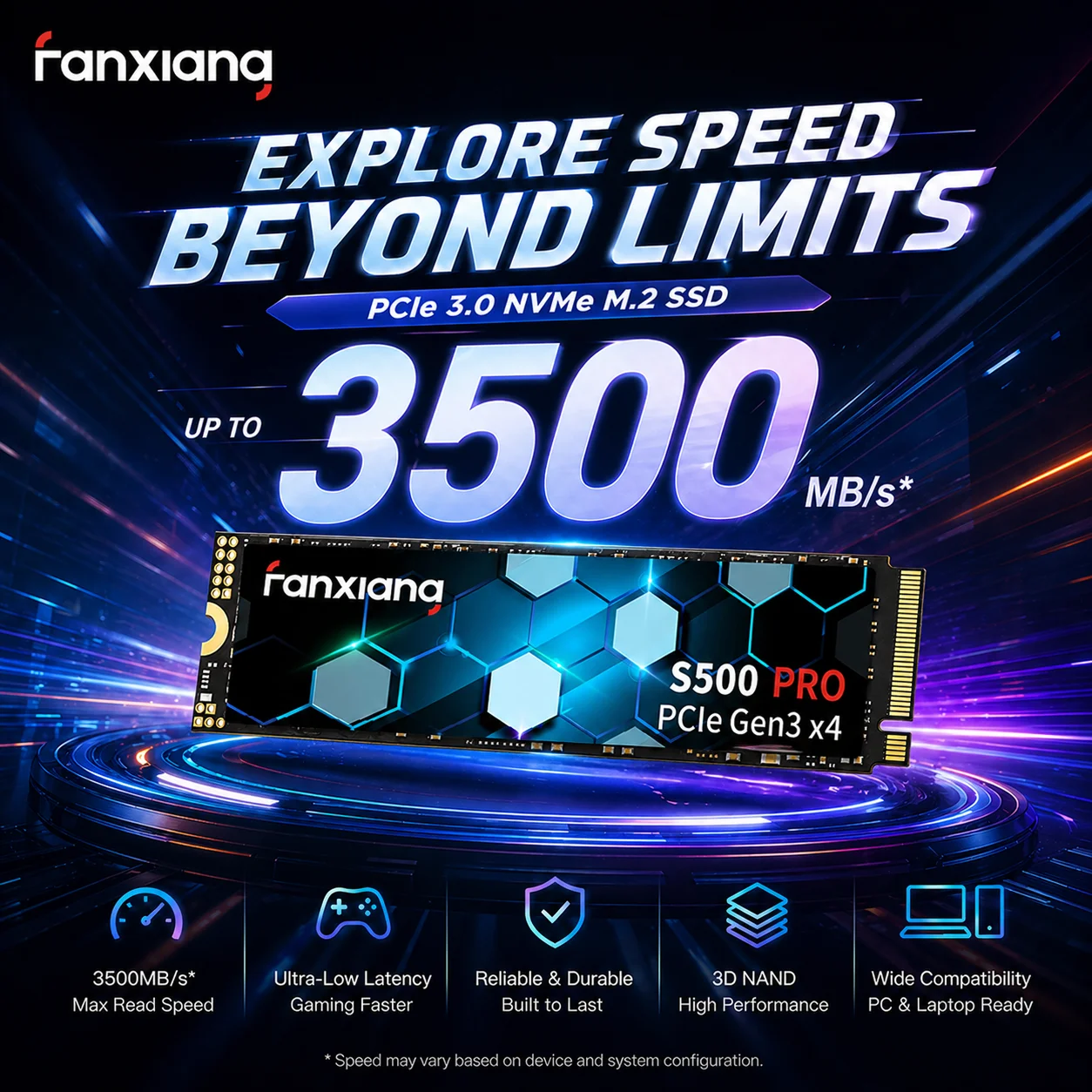
This SSD utilizes the PCIe Gen3 x4 interface, a critical specification for its performance envelope. The 'x4' denotes four lanes of PCIe bandwidth, allowing for a theoretical maximum throughput significantly higher than SATA-based drives. This is not merely an incremental bump; it represents a fundamental shift in how data moves between the storage device and the CPU.
For users accustomed to the limitations of SATA III, which maxes out around 600MB/s, the leap to PCIe Gen3's potential 3500MB/s read and 3000MB/s write speeds is transformative. Imagine moving multi-gigabyte video projects or large game installations in a fraction of the time. This drive specifically targets the frustration of waiting for files to copy, a common pain point for content creators, gamers, and power users.
Compared to entry-level NVMe drives that might only hit 1500-2000MB/s, the S500 Pro pushes the Gen3 standard near its theoretical limits. It delivers a performance profile that, while not matching the bleeding edge of PCIe Gen4 or Gen5, offers exceptional value and speed for the vast majority of existing systems.
Performance isn't just about peak numbers; sustained throughput matters. The S500 Pro integrates HMB (Host Memory Buffer) and SLC (Single-Level Cell) Cache technology. HMB allows the SSD to utilize a small portion of the host system's DRAM for mapping tables, eliminating the need for a dedicated DRAM chip on the SSD itself, which helps reduce cost.
The SLC cache, on the other hand, is a portion of the drive's 3D TLC NAND that operates in a faster, single-bit-per-cell mode. This temporary high-speed buffer absorbs incoming write data at peak speeds before it's eventually moved to the slower, higher-density TLC (Triple-Level Cell) storage. This mechanism is crucial for maintaining responsiveness during burst workloads, such as application launches or short, intense file transfers.
Without these caching mechanisms, a drive relying solely on TLC NAND would quickly hit its slower native write speeds, leading to noticeable slowdowns during larger file operations. The HMB and SLC cache work in tandem to ensure that typical daily tasks, and even many heavy workloads, experience consistent high performance. This drive is engineered to minimize those frustrating moments where a system suddenly bogs down during a file save.
The Fanxiang S500 Pro is available in 256GB, 512GB, 1TB, and 2TB capacities, offering flexibility for various storage needs. This range ensures that whether a user needs a fast boot drive, a dedicated game library, or ample space for large media projects, there is an option available. The use of 3D TLC NAND Technology is fundamental to achieving these capacities and ensuring drive longevity.
3D NAND stacks memory cells vertically, allowing for much higher storage density within the compact M.2 2280 form factor. This vertical stacking also generally improves endurance and power efficiency compared to older 2D NAND designs. TLC (Triple-Level Cell) stores three bits per cell, striking a balance between cost, capacity, and performance, which is then optimized by the SLC cache layer.
For a user upgrading from a traditional hard disk drive (HDD), the difference in responsiveness and loading times will be profound, regardless of the chosen capacity. Even migrating from an older SATA SSD, the NVMe interface provides a significant upgrade path, especially for applications that frequently access storage. The drive’s design focuses on delivering a modern storage experience without unnecessary complexity.
The S500 Pro is widely compatible with Windows 7, 8, 10, and 11, provided the computer motherboard is equipped with an M.2 interface that supports NVMe PCIe Gen3 x4. This M.2 2280 form factor is standard for modern laptops and desktops, making it a straightforward upgrade for many systems. Installation is generally simple, often requiring just a single screw.
However, it's crucial for users to verify their system's compatibility. Not all M.2 slots are created equal; some may be SATA-only, while others might support NVMe but at a slower PCIe Gen2 speed. Checking the motherboard manual is a necessary step to ensure the drive can operate at its advertised speeds. This drive ensures that a system with the correct slot can fully capitalize on its performance.
Unlike external drives or 2.5-inch SATA SSDs, the M.2 form factor integrates directly onto the motherboard, reducing cable clutter and improving airflow within the chassis. The inclusion of a small screwdriver and mounting screws, as indicated in the product images, simplifies the installation process for users who might not have these tools readily available. This attention to user experience minimizes friction during setup.
Considering its performance metrics and feature set, the Fanxiang S500 Pro offers a compelling value proposition. It provides near-peak PCIe Gen3 performance, which is more than sufficient for the vast majority of users and applications today. The blend of HMB, SLC cache, and 3D TLC NAND ensures a responsive and efficient storage experience.
This drive is not attempting to compete with the absolute fastest PCIe Gen5 drives, which come at a significantly higher premium and require the latest hardware. Instead, it focuses on delivering excellent performance within the widely adopted PCIe Gen3 ecosystem. It represents a smart investment for extending the life and boosting the speed of compatible systems.
Imagine your operating system booting in mere seconds, applications launching instantly, and large files transferring with a speed that makes previous waits feel like ancient history. This SSD is about reclaiming your time and eliminating the storage bottlenecks that hinder productivity and enjoyment. It’s an upgrade that fundamentally changes how your computer feels and responds, making every interaction snappier and more efficient.
The Need for Speed: PCIe Gen3 Performance
This SSD utilizes the PCIe Gen3 x4 interface, a critical specification for its performance envelope. The 'x4' denotes four lanes of PCIe bandwidth, allowing for a theoretical maximum throughput significantly higher than SATA-based drives. This is not merely an incremental bump; it represents a fundamental shift in how data moves between the storage device and the CPU.
For users accustomed to the limitations of SATA III, which maxes out around 600MB/s, the leap to PCIe Gen3's potential 3500MB/s read and 3000MB/s write speeds is transformative. Imagine moving multi-gigabyte video projects or large game installations in a fraction of the time. This drive specifically targets the frustration of waiting for files to copy, a common pain point for content creators, gamers, and power users.
Compared to entry-level NVMe drives that might only hit 1500-2000MB/s, the S500 Pro pushes the Gen3 standard near its theoretical limits. It delivers a performance profile that, while not matching the bleeding edge of PCIe Gen4 or Gen5, offers exceptional value and speed for the vast majority of existing systems.
Sustained Performance: HMB and SLC Cache
Performance isn't just about peak numbers; sustained throughput matters. The S500 Pro integrates HMB (Host Memory Buffer) and SLC (Single-Level Cell) Cache technology. HMB allows the SSD to utilize a small portion of the host system's DRAM for mapping tables, eliminating the need for a dedicated DRAM chip on the SSD itself, which helps reduce cost.
The SLC cache, on the other hand, is a portion of the drive's 3D TLC NAND that operates in a faster, single-bit-per-cell mode. This temporary high-speed buffer absorbs incoming write data at peak speeds before it's eventually moved to the slower, higher-density TLC (Triple-Level Cell) storage. This mechanism is crucial for maintaining responsiveness during burst workloads, such as application launches or short, intense file transfers.
Without these caching mechanisms, a drive relying solely on TLC NAND would quickly hit its slower native write speeds, leading to noticeable slowdowns during larger file operations. The HMB and SLC cache work in tandem to ensure that typical daily tasks, and even many heavy workloads, experience consistent high performance. This drive is engineered to minimize those frustrating moments where a system suddenly bogs down during a file save.
Storage Diversity and Endurance: 3D TLC NAND
The Fanxiang S500 Pro is available in 256GB, 512GB, 1TB, and 2TB capacities, offering flexibility for various storage needs. This range ensures that whether a user needs a fast boot drive, a dedicated game library, or ample space for large media projects, there is an option available. The use of 3D TLC NAND Technology is fundamental to achieving these capacities and ensuring drive longevity.
3D NAND stacks memory cells vertically, allowing for much higher storage density within the compact M.2 2280 form factor. This vertical stacking also generally improves endurance and power efficiency compared to older 2D NAND designs. TLC (Triple-Level Cell) stores three bits per cell, striking a balance between cost, capacity, and performance, which is then optimized by the SLC cache layer.
For a user upgrading from a traditional hard disk drive (HDD), the difference in responsiveness and loading times will be profound, regardless of the chosen capacity. Even migrating from an older SATA SSD, the NVMe interface provides a significant upgrade path, especially for applications that frequently access storage. The drive’s design focuses on delivering a modern storage experience without unnecessary complexity.
Compatibility and Installation Considerations
The S500 Pro is widely compatible with Windows 7, 8, 10, and 11, provided the computer motherboard is equipped with an M.2 interface that supports NVMe PCIe Gen3 x4. This M.2 2280 form factor is standard for modern laptops and desktops, making it a straightforward upgrade for many systems. Installation is generally simple, often requiring just a single screw.
However, it's crucial for users to verify their system's compatibility. Not all M.2 slots are created equal; some may be SATA-only, while others might support NVMe but at a slower PCIe Gen2 speed. Checking the motherboard manual is a necessary step to ensure the drive can operate at its advertised speeds. This drive ensures that a system with the correct slot can fully capitalize on its performance.
Unlike external drives or 2.5-inch SATA SSDs, the M.2 form factor integrates directly onto the motherboard, reducing cable clutter and improving airflow within the chassis. The inclusion of a small screwdriver and mounting screws, as indicated in the product images, simplifies the installation process for users who might not have these tools readily available. This attention to user experience minimizes friction during setup.
The Verdict on Value
Considering its performance metrics and feature set, the Fanxiang S500 Pro offers a compelling value proposition. It provides near-peak PCIe Gen3 performance, which is more than sufficient for the vast majority of users and applications today. The blend of HMB, SLC cache, and 3D TLC NAND ensures a responsive and efficient storage experience.
This drive is not attempting to compete with the absolute fastest PCIe Gen5 drives, which come at a significantly higher premium and require the latest hardware. Instead, it focuses on delivering excellent performance within the widely adopted PCIe Gen3 ecosystem. It represents a smart investment for extending the life and boosting the speed of compatible systems.
Imagine your operating system booting in mere seconds, applications launching instantly, and large files transferring with a speed that makes previous waits feel like ancient history. This SSD is about reclaiming your time and eliminating the storage bottlenecks that hinder productivity and enjoyment. It’s an upgrade that fundamentally changes how your computer feels and responds, making every interaction snappier and more efficient.