DeepFox Multi-Function HDD Docking Station
Official Store Deal
Expert Analysis Overview
The DeepFox Multi-Function HDD Docking Station is a versatile data management hub designed for mobile professionals and IT enthusiasts requiring broad compatibility and efficient data transfer on the go. This device consolidates multiple functionalities, addressing the common frustrations of managing diverse storage media with disparate adapters. Its thoughtful design aims to streamline workflows for those who frequently interact with various hard drive types and memory cards.
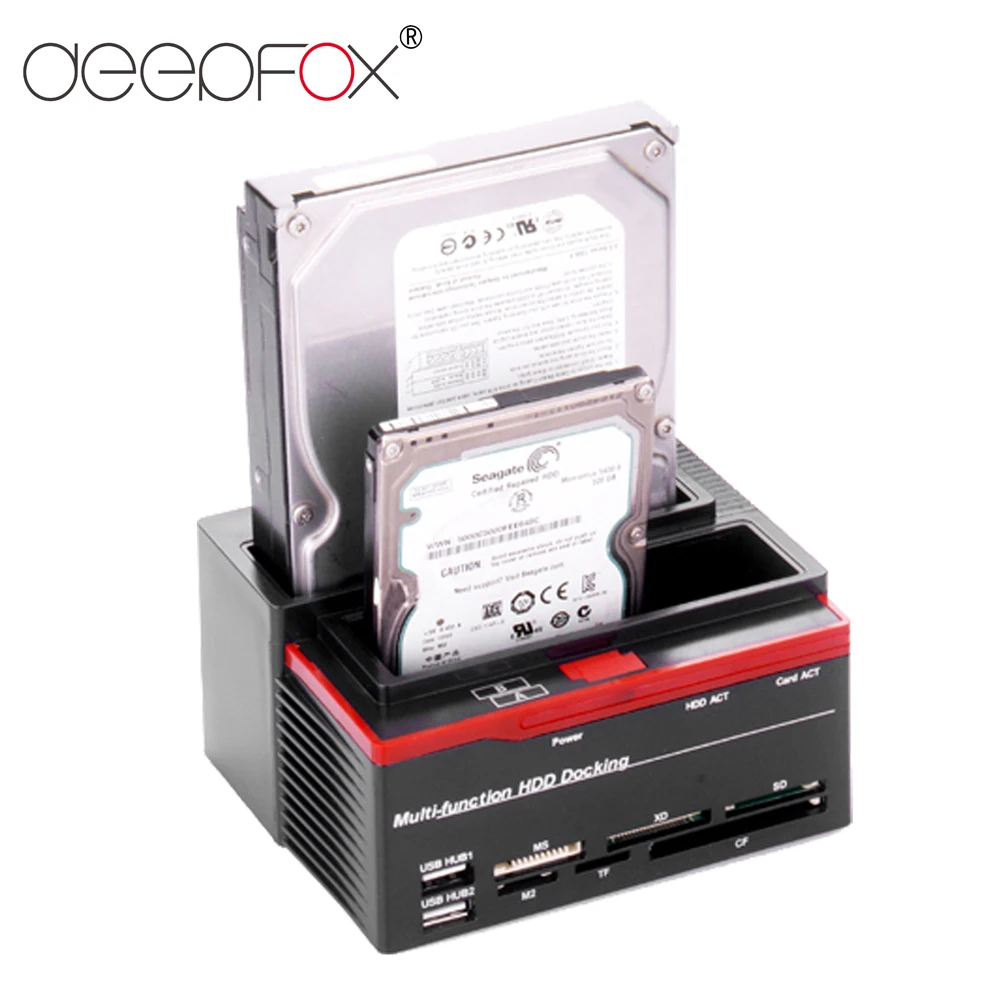
The DeepFox docking station visibly accommodates both 2.5-inch and 3.5-inch form factors, featuring dedicated slots for SATA drives and both 3.5-inch and 2.5-inch IDE interfaces. These interfaces are clearly marked and physically distinct, allowing for vertical insertion of drives. The physical layout ensures stable placement for both larger desktop drives and smaller laptop drives.
This broad physical compatibility means users are not limited to modern SATA SSDs or HDDs. It provides a crucial bridge for accessing data from older IDE hard drives, which are still prevalent in legacy systems or older backup archives. For professionals dealing with data recovery, system upgrades, or forensic analysis, this eliminates the need for multiple, specialized adapters, saving valuable time and reducing the complexity of their toolkit.
Unlike many contemporary docking stations that focus solely on SATA connectivity, this unit's inclusion of IDE support stands out. Generic USB-to-SATA adapters are common, but a single device handling both major drive architectures significantly streamlines a professional's toolkit, reducing cable spaghetti and setup time. This is a considerable advantage.
The front panel of the DeepFox docking station presents a rich array of card reader slots, including MS, M2, TF (Micro SD), XD, CF, and SD. Additionally, it offers two USB 2.0 hub ports for connecting other peripherals. The rear panel features the main USB 2.0 data transfer port for connection to a computer and a separate USB Type-C port for modern laptop integration.
This extensive range of interfaces transforms the docking station into a central hub for various digital media. Users can simultaneously access data from different memory card formats, transfer files between them, and connect other USB devices without needing additional dongles or external hubs. The inclusion of a Type-C port ensures compatibility with newer laptops that often lack traditional USB-A ports, making it highly relevant for mobile professionals.
Many users often carry a separate USB hub and several card readers to manage their diverse digital assets. This integrated design significantly reduces the number of peripherals required, making the professional's bag lighter and setup quicker. It simplifies the process of offloading camera cards, accessing phone storage, or reading specialized industrial memory formats, all from one compact unit.
The device incorporates a prominent One-Touch Backup (OTB) button, designed to simplify data backup processes. While the product title mentions "Clone HDD Enclosure," implying offline cloning capabilities, the visible controls primarily highlight the OTB function. The power switch and DC 12V power port are located on the rear, indicating external power is required for operation.
For mobile professionals, the OTB function can be a lifesaver, allowing for quick and routine backups of critical data with minimal interaction. This feature, when configured with appropriate software, automates a task that might otherwise be overlooked in a busy schedule. The external power requirement ensures stable operation, especially when dealing with multiple high-power drives.
Compared to manual drag-and-drop backup methods, the OTB button offers a more efficient and less error-prone solution. While the absence of an explicit offline clone button might require software-based cloning, the core functionality of easy data transfer and backup remains a strong draw. Many generic enclosures offer only basic read/write capabilities.
The DeepFox docking station features a black and red aesthetic, with a robust-looking plastic enclosure. Its vertical drive insertion design contributes to a relatively small footprint on a desk. The overall dimensions, though not explicitly stated, appear to be compact enough for occasional transport, especially given its multi-functionality.
For a mobile professional, the ability to consolidate multiple functions into a single, relatively portable unit is invaluable. This design helps in maintaining a tidy workspace, whether in a client's office or a temporary setup. The robust casing suggests it can withstand the rigors of being moved between locations, protecting the internal components.
Unlike an array of individual adapters and readers, which create a tangled mess of cables and devices, this integrated docking station offers a much cleaner and more organized solution. Its design prioritizes functionality without sacrificing too much desk real estate. This is a practical choice.
The primary data transfer interface is USB 2.0, which offers broad compatibility across older and newer systems alike. The device is specified to be compatible with a wide range of operating systems, including Windows 98SE/ME/2000/XP/Vista/7/8/10, and Mac OS 9.X or higher. This ensures nearly universal plug-and-play functionality.
For tasks like data recovery, system diagnostics, or accessing archival data, USB 2.0 speeds are often sufficient. While not the fastest for transferring massive, multi-gigabyte files, it provides reliable connectivity for most professional data management needs. The broad OS support means professionals can use this device with virtually any client's computer, regardless of its age or operating system.
Many modern peripherals now exclusively feature USB 3.0 or higher, limiting their use with older systems. This docking station's adherence to USB 2.0 for its main data port, while including a Type-C connector, strikes a balance between legacy support and modern integration. It ensures a professional is never caught off guard by an incompatible system.
This DeepFox Multi-Function HDD Docking Station is more than just a simple drive reader; it is a comprehensive data management ecosystem. Imagine arriving at a client site with a single, compact device that can access any of their hard drives—be it an old IDE or a modern SATA—and read any memory card they hand you, all while providing convenient USB hub functionality. This level of preparedness and efficiency allows mobile professionals to focus on the task at hand rather than wrestling with compatibility issues or a bag full of dongles. The ability to quickly back up data with a single button press adds another layer of confidence and productivity. This device ensures that data access and management are always within reach, regardless of the storage medium's age or format, empowering seamless operations and reducing downtime.
Universal Drive Access and Legacy Support
The DeepFox docking station visibly accommodates both 2.5-inch and 3.5-inch form factors, featuring dedicated slots for SATA drives and both 3.5-inch and 2.5-inch IDE interfaces. These interfaces are clearly marked and physically distinct, allowing for vertical insertion of drives. The physical layout ensures stable placement for both larger desktop drives and smaller laptop drives.
This broad physical compatibility means users are not limited to modern SATA SSDs or HDDs. It provides a crucial bridge for accessing data from older IDE hard drives, which are still prevalent in legacy systems or older backup archives. For professionals dealing with data recovery, system upgrades, or forensic analysis, this eliminates the need for multiple, specialized adapters, saving valuable time and reducing the complexity of their toolkit.
Unlike many contemporary docking stations that focus solely on SATA connectivity, this unit's inclusion of IDE support stands out. Generic USB-to-SATA adapters are common, but a single device handling both major drive architectures significantly streamlines a professional's toolkit, reducing cable spaghetti and setup time. This is a considerable advantage.
Comprehensive Connectivity Hub
The front panel of the DeepFox docking station presents a rich array of card reader slots, including MS, M2, TF (Micro SD), XD, CF, and SD. Additionally, it offers two USB 2.0 hub ports for connecting other peripherals. The rear panel features the main USB 2.0 data transfer port for connection to a computer and a separate USB Type-C port for modern laptop integration.
This extensive range of interfaces transforms the docking station into a central hub for various digital media. Users can simultaneously access data from different memory card formats, transfer files between them, and connect other USB devices without needing additional dongles or external hubs. The inclusion of a Type-C port ensures compatibility with newer laptops that often lack traditional USB-A ports, making it highly relevant for mobile professionals.
Many users often carry a separate USB hub and several card readers to manage their diverse digital assets. This integrated design significantly reduces the number of peripherals required, making the professional's bag lighter and setup quicker. It simplifies the process of offloading camera cards, accessing phone storage, or reading specialized industrial memory formats, all from one compact unit.
Streamlined Data Management Features
The device incorporates a prominent One-Touch Backup (OTB) button, designed to simplify data backup processes. While the product title mentions "Clone HDD Enclosure," implying offline cloning capabilities, the visible controls primarily highlight the OTB function. The power switch and DC 12V power port are located on the rear, indicating external power is required for operation.
For mobile professionals, the OTB function can be a lifesaver, allowing for quick and routine backups of critical data with minimal interaction. This feature, when configured with appropriate software, automates a task that might otherwise be overlooked in a busy schedule. The external power requirement ensures stable operation, especially when dealing with multiple high-power drives.
Compared to manual drag-and-drop backup methods, the OTB button offers a more efficient and less error-prone solution. While the absence of an explicit offline clone button might require software-based cloning, the core functionality of easy data transfer and backup remains a strong draw. Many generic enclosures offer only basic read/write capabilities.
Design and Portability Considerations
The DeepFox docking station features a black and red aesthetic, with a robust-looking plastic enclosure. Its vertical drive insertion design contributes to a relatively small footprint on a desk. The overall dimensions, though not explicitly stated, appear to be compact enough for occasional transport, especially given its multi-functionality.
For a mobile professional, the ability to consolidate multiple functions into a single, relatively portable unit is invaluable. This design helps in maintaining a tidy workspace, whether in a client's office or a temporary setup. The robust casing suggests it can withstand the rigors of being moved between locations, protecting the internal components.
Unlike an array of individual adapters and readers, which create a tangled mess of cables and devices, this integrated docking station offers a much cleaner and more organized solution. Its design prioritizes functionality without sacrificing too much desk real estate. This is a practical choice.
Performance and System Compatibility
The primary data transfer interface is USB 2.0, which offers broad compatibility across older and newer systems alike. The device is specified to be compatible with a wide range of operating systems, including Windows 98SE/ME/2000/XP/Vista/7/8/10, and Mac OS 9.X or higher. This ensures nearly universal plug-and-play functionality.
For tasks like data recovery, system diagnostics, or accessing archival data, USB 2.0 speeds are often sufficient. While not the fastest for transferring massive, multi-gigabyte files, it provides reliable connectivity for most professional data management needs. The broad OS support means professionals can use this device with virtually any client's computer, regardless of its age or operating system.
Many modern peripherals now exclusively feature USB 3.0 or higher, limiting their use with older systems. This docking station's adherence to USB 2.0 for its main data port, while including a Type-C connector, strikes a balance between legacy support and modern integration. It ensures a professional is never caught off guard by an incompatible system.
Conclusion: A Professional's Data Hub
This DeepFox Multi-Function HDD Docking Station is more than just a simple drive reader; it is a comprehensive data management ecosystem. Imagine arriving at a client site with a single, compact device that can access any of their hard drives—be it an old IDE or a modern SATA—and read any memory card they hand you, all while providing convenient USB hub functionality. This level of preparedness and efficiency allows mobile professionals to focus on the task at hand rather than wrestling with compatibility issues or a bag full of dongles. The ability to quickly back up data with a single button press adds another layer of confidence and productivity. This device ensures that data access and management are always within reach, regardless of the storage medium's age or format, empowering seamless operations and reducing downtime.