Crucial DDR3 Desktop RAM
Official Store Deal
Expert Analysis Overview
Crucial DDR3 Desktop RAM is a pragmatic memory solution engineered for upgrading or maintaining legacy desktop systems. This offering from Crucial, a brand under Micron, emphasizes reliability and broad compatibility over extreme performance metrics, making it a sensible choice for users seeking stable operation within the confines of older hardware architectures.
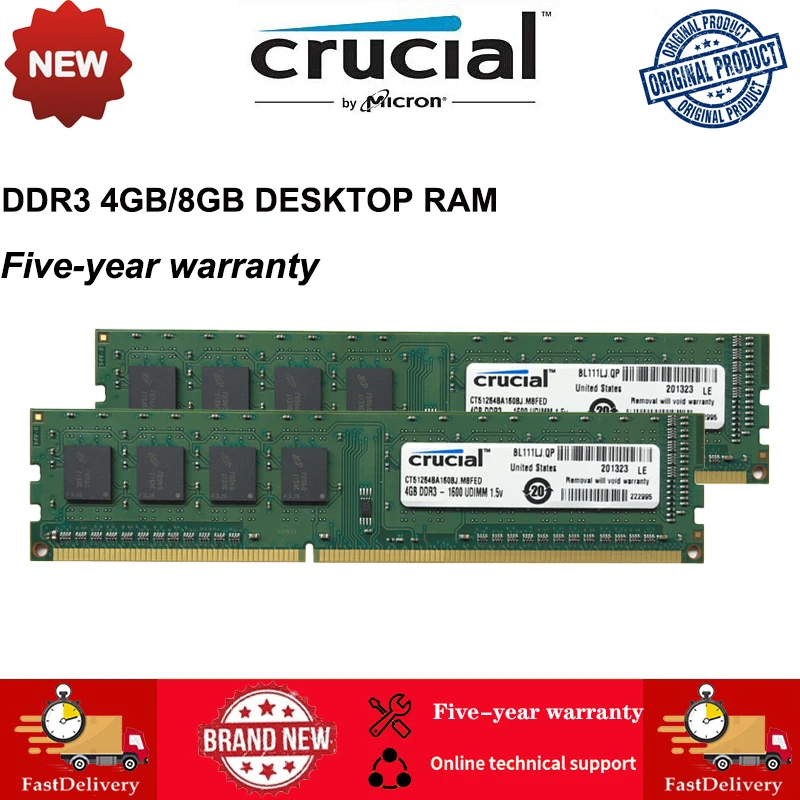
DDR3, or Double Data Rate 3 Synchronous Dynamic Random-Access Memory, represents a generation of RAM that significantly improved upon its DDR2 predecessor by doubling the data transfer rate and reducing power consumption. These modules, available in 4GB and 8GB capacities, operate at speeds of 1333MHz (PC3-10600) and 1600MHz (PC3-12800), which were standard high-performance benchmarks for their era. The visible green PCB and exposed memory chips are characteristic of standard, non-ECC unbuffered DIMMs, designed for consumer desktop motherboards. No integrated heat spreaders are present.
For an overclocker, the absence of dedicated heat sinks immediately signals a thermal ceiling. Pushing voltage or clock speeds significantly beyond stock requires meticulous thermal management, which these bare modules do not inherently provide. The stability of such an upgrade hinges entirely on the motherboard's power delivery and cooling capabilities, rather than the RAM itself.
Compared to enthusiast-grade DDR3 modules of the past, which often featured elaborate heat spreaders and tighter timings, these Crucial sticks are foundational. They are built for consistent operation at their rated specifications, not for breaking world records. This ensures a wider compatibility window across various chipsets and CPU generations that supported DDR3.
The 1333MHz and 1600MHz clock speeds represent the sweet spot for many older Intel and AMD platforms. A 1600MHz module, for instance, provides a bandwidth of 12.8GB/s, which is ample for general computing tasks, light gaming, and productivity applications on systems designed for DDR3. The latency figures, while not explicitly stated, are typically standard for Crucial's value-oriented modules, prioritizing stability over aggressive timing profiles.
From an overclocker's perspective, these modules offer minimal headroom for pushing beyond XMP or SPD profiles. The standard 1.5V operating voltage is typical for DDR3. Any attempt to increase voltage for higher clock speeds or tighter timings would necessitate active cooling due to the lack of passive heat dissipation on the chips. This makes them less attractive for users aiming for extreme benchmarks but perfectly adequate for reliable daily use.
Many older motherboards had limited BIOS options for memory tuning. This RAM is designed to slot in and run at its advertised speed via SPD (Serial Presence Detect), offering a plug-and-play experience. Users with compatible systems will find a noticeable improvement if upgrading from slower or less capacious DDR3 modules.
The bare PCB design, without any metal heat spreaders, means heat generated by the memory chips dissipates directly into the ambient case air. For systems running at stock speeds and voltages, this is generally not an issue, as DDR3 typically runs cool enough under normal loads. However, in poorly ventilated cases or during extended periods of high memory utilization, temperatures could rise.
Managing heat output is critical for component longevity. While these modules are robust at their rated speeds, an overclocker attempting to push them would need to consider direct airflow from case fans or even dedicated RAM coolers. The five-year warranty from Crucial suggests confidence in their components' ability to withstand typical operating conditions over an extended period.
Unlike modules with bulky heat spreaders, these compact DIMMs offer excellent compatibility with large CPU coolers, which often overhang memory slots. This practical consideration is a significant advantage for many older builds where space around the CPU socket can be limited.
Crucial explicitly highlights compatibility with both Intel and AMD mainstream platforms, a crucial factor for DDR3 memory. This broad compatibility stems from adherence to JEDEC (Joint Electron Device Engineering Council) standards, ensuring the modules will function correctly across a wide array of chipsets. The images show standard 240-pin DIMMs, confirming their desktop form factor.
System integration for these modules is straightforward. Users must ensure their motherboard supports DDR3 memory and the specific capacity per slot. Mixing modules from different manufacturers or with disparate speeds can sometimes lead to instability, though Crucial's adherence to standards often mitigates this risk.
Compared to the troubleshooting headaches often associated with non-standard or highly aggressive memory kits, these Crucial modules are designed for minimal fuss. They are a direct replacement or expansion option for systems where stability is paramount, and the user prioritizes a smooth upgrade path over complex configuration.
The price point for these DDR3 modules positions them as an economical upgrade. For users clinging to an older, but still functional, desktop, investing in modern DDR4 or DDR5 platforms is not always feasible or desirable. These Crucial sticks offer a cost-effective way to extend the life and improve the responsiveness of an existing DDR3 system.
The five-year warranty provided by Crucial is a significant value add. It offers peace of mind, assuring users of the product's durability and the manufacturer's backing. This extended warranty period is competitive, especially for a memory standard that is no longer cutting-edge.
This robust warranty distinguishes Crucial from many generic, unbranded memory options prevalent in the market. While the latter might offer a lower initial sticker price, the long-term value, reliability, and support from a reputable brand like Crucial often prove to be more cost-effective. The investment in quality components pays dividends in system stability and reduced troubleshooting time.
While this specific Crucial DDR3 RAM is not an overclocker's dream module for pushing extreme frequencies, it represents a critical component for maintaining and optimizing legacy systems. For an overclocker, understanding the limitations and strengths of such basic modules is as important as knowing how to push premium hardware. These sticks provide a stable baseline, freeing up the enthusiast to focus on CPU or GPU overclocking without memory instability becoming a bottleneck. Their compatibility and reliability are key for older test benches or retro gaming rigs.
Imagine the satisfaction of breathing new life into a trusty older desktop, transforming its sluggish performance into a responsive workhorse. With these Crucial DDR3 modules, tasks that once caused frustrating delays—like running multiple applications or loading larger files—become fluid and efficient. This upgrade allows continued use of familiar software and games, deferring the significant expense of a complete system overhaul, all while benefiting from Crucial's renowned stability and Micron's underlying quality. It's about optimizing what you have, making every megahertz count for a smoother, more enjoyable computing experience without unnecessary complications.
The Architecture of Stability: DDR3 Fundamentals
DDR3, or Double Data Rate 3 Synchronous Dynamic Random-Access Memory, represents a generation of RAM that significantly improved upon its DDR2 predecessor by doubling the data transfer rate and reducing power consumption. These modules, available in 4GB and 8GB capacities, operate at speeds of 1333MHz (PC3-10600) and 1600MHz (PC3-12800), which were standard high-performance benchmarks for their era. The visible green PCB and exposed memory chips are characteristic of standard, non-ECC unbuffered DIMMs, designed for consumer desktop motherboards. No integrated heat spreaders are present.
For an overclocker, the absence of dedicated heat sinks immediately signals a thermal ceiling. Pushing voltage or clock speeds significantly beyond stock requires meticulous thermal management, which these bare modules do not inherently provide. The stability of such an upgrade hinges entirely on the motherboard's power delivery and cooling capabilities, rather than the RAM itself.
Compared to enthusiast-grade DDR3 modules of the past, which often featured elaborate heat spreaders and tighter timings, these Crucial sticks are foundational. They are built for consistent operation at their rated specifications, not for breaking world records. This ensures a wider compatibility window across various chipsets and CPU generations that supported DDR3.
Performance Ceiling and Overclocking Realities
The 1333MHz and 1600MHz clock speeds represent the sweet spot for many older Intel and AMD platforms. A 1600MHz module, for instance, provides a bandwidth of 12.8GB/s, which is ample for general computing tasks, light gaming, and productivity applications on systems designed for DDR3. The latency figures, while not explicitly stated, are typically standard for Crucial's value-oriented modules, prioritizing stability over aggressive timing profiles.
From an overclocker's perspective, these modules offer minimal headroom for pushing beyond XMP or SPD profiles. The standard 1.5V operating voltage is typical for DDR3. Any attempt to increase voltage for higher clock speeds or tighter timings would necessitate active cooling due to the lack of passive heat dissipation on the chips. This makes them less attractive for users aiming for extreme benchmarks but perfectly adequate for reliable daily use.
Many older motherboards had limited BIOS options for memory tuning. This RAM is designed to slot in and run at its advertised speed via SPD (Serial Presence Detect), offering a plug-and-play experience. Users with compatible systems will find a noticeable improvement if upgrading from slower or less capacious DDR3 modules.
Thermal Management and Longevity
The bare PCB design, without any metal heat spreaders, means heat generated by the memory chips dissipates directly into the ambient case air. For systems running at stock speeds and voltages, this is generally not an issue, as DDR3 typically runs cool enough under normal loads. However, in poorly ventilated cases or during extended periods of high memory utilization, temperatures could rise.
Managing heat output is critical for component longevity. While these modules are robust at their rated speeds, an overclocker attempting to push them would need to consider direct airflow from case fans or even dedicated RAM coolers. The five-year warranty from Crucial suggests confidence in their components' ability to withstand typical operating conditions over an extended period.
Unlike modules with bulky heat spreaders, these compact DIMMs offer excellent compatibility with large CPU coolers, which often overhang memory slots. This practical consideration is a significant advantage for many older builds where space around the CPU socket can be limited.
Platform Compatibility and System Integration
Crucial explicitly highlights compatibility with both Intel and AMD mainstream platforms, a crucial factor for DDR3 memory. This broad compatibility stems from adherence to JEDEC (Joint Electron Device Engineering Council) standards, ensuring the modules will function correctly across a wide array of chipsets. The images show standard 240-pin DIMMs, confirming their desktop form factor.
System integration for these modules is straightforward. Users must ensure their motherboard supports DDR3 memory and the specific capacity per slot. Mixing modules from different manufacturers or with disparate speeds can sometimes lead to instability, though Crucial's adherence to standards often mitigates this risk.
Compared to the troubleshooting headaches often associated with non-standard or highly aggressive memory kits, these Crucial modules are designed for minimal fuss. They are a direct replacement or expansion option for systems where stability is paramount, and the user prioritizes a smooth upgrade path over complex configuration.
Value Proposition and Warranty Assurance
The price point for these DDR3 modules positions them as an economical upgrade. For users clinging to an older, but still functional, desktop, investing in modern DDR4 or DDR5 platforms is not always feasible or desirable. These Crucial sticks offer a cost-effective way to extend the life and improve the responsiveness of an existing DDR3 system.
The five-year warranty provided by Crucial is a significant value add. It offers peace of mind, assuring users of the product's durability and the manufacturer's backing. This extended warranty period is competitive, especially for a memory standard that is no longer cutting-edge.
This robust warranty distinguishes Crucial from many generic, unbranded memory options prevalent in the market. While the latter might offer a lower initial sticker price, the long-term value, reliability, and support from a reputable brand like Crucial often prove to be more cost-effective. The investment in quality components pays dividends in system stability and reduced troubleshooting time.
The Overclocker's Perspective on Legacy Hardware
While this specific Crucial DDR3 RAM is not an overclocker's dream module for pushing extreme frequencies, it represents a critical component for maintaining and optimizing legacy systems. For an overclocker, understanding the limitations and strengths of such basic modules is as important as knowing how to push premium hardware. These sticks provide a stable baseline, freeing up the enthusiast to focus on CPU or GPU overclocking without memory instability becoming a bottleneck. Their compatibility and reliability are key for older test benches or retro gaming rigs.
Imagine the satisfaction of breathing new life into a trusty older desktop, transforming its sluggish performance into a responsive workhorse. With these Crucial DDR3 modules, tasks that once caused frustrating delays—like running multiple applications or loading larger files—become fluid and efficient. This upgrade allows continued use of familiar software and games, deferring the significant expense of a complete system overhaul, all while benefiting from Crucial's renowned stability and Micron's underlying quality. It's about optimizing what you have, making every megahertz count for a smoother, more enjoyable computing experience without unnecessary complications.