Creality Ender-3 V3 SE 3D Printer
Official Store Deal
Expert Analysis Overview
Precision Prototyping with the Creality Ender-3 V3 SE
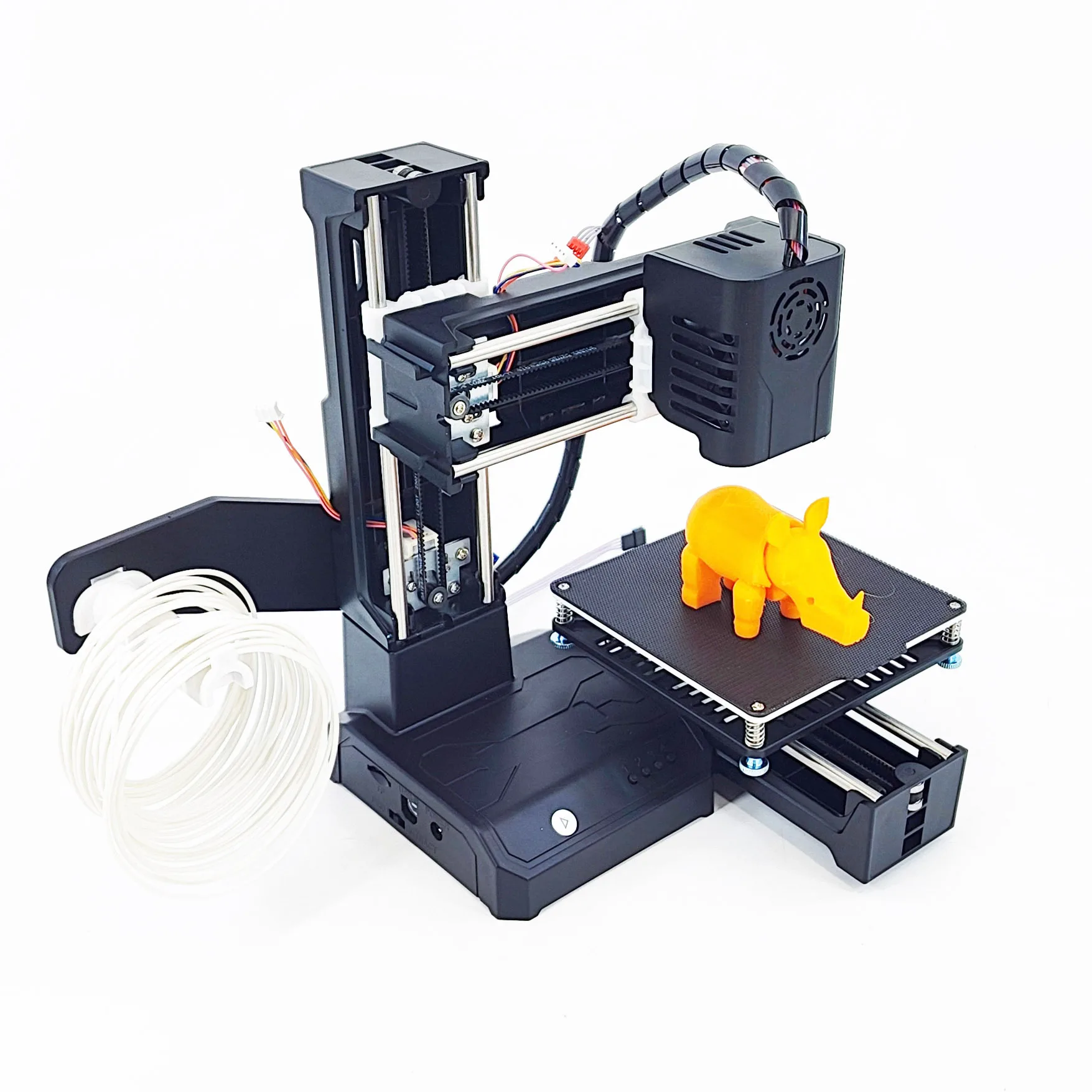
The Creality Ender-3 V3 SE is a streamlined desktop FDM 3D printer engineered for both novice users and experienced hobbyists seeking reliable performance and ease of operation. This machine addresses common frustrations in entry-level 3D printing, primarily focusing on simplified setup, consistent print quality, and broad material compatibility. It stands as a significant upgrade over its predecessors, offering a more refined and automated printing experience.
The Core of Extrusion: Sprite Direct Drive
At the heart of the Ender-3 V3 SE lies the Sprite Direct Extruder. This integrated system positions the motor directly above the hotend, minimizing the distance filament travels. This is a critical design choice.
Unlike traditional Bowden setups where the extruder motor is mounted remotely, the direct drive system provides superior control over filament feeding. This direct path significantly reduces the likelihood of filament buckling, especially with softer, more flexible materials. The short filament path ensures precise extrusion and retraction, which translates directly into cleaner prints with less stringing and blobbing.
Compared to older Bowden-style extruders, the Sprite Direct Extruder offers a tangible advantage in material versatility. Users can confidently print flexible filaments like TPU that often prove challenging for Bowden systems due to their tendency to compress and jam within the longer tube. This direct drive system enhances print reliability across a wider range of thermoplastics.
Effortless Calibration: CR Touch Auto-Leveling
Manual bed leveling remains a significant hurdle for many 3D printing enthusiasts. The Ender-3 V3 SE eliminates this with its CR Touch auto-leveling system. This sensor precisely maps the print surface.
The CR Touch probe deploys automatically before each print, measuring multiple points across the build plate. It then generates a mesh compensation map, allowing the printer's firmware to adjust the Z-axis height dynamically during printing. This ensures optimal first-layer adhesion, a crucial factor for print success.
This automated process dramatically reduces print failures caused by uneven beds, a common issue with less sophisticated machines. It saves considerable time and frustration, particularly for beginners. Compared to printers requiring manual adjustment of bed screws, the CR Touch system offers a set-it-and-forget-it convenience that is invaluable.
Structural Integrity: Rigid Dual Z-axis
Print stability is paramount for achieving high-quality, dimensionally accurate parts. The Ender-3 V3 SE incorporates a rigid dual Z-axis design. This configuration provides enhanced structural support for the gantry.
Two independent lead screws and motors synchronize to move the X-axis gantry vertically. This dual support minimizes wobble and ensures consistent layer height throughout the print, even for taller objects. The gantry remains level and stable.
Single Z-axis printers often exhibit cantilevered motion, leading to potential Z-wobble or ghosting artifacts on prints, especially at higher speeds. The dual Z-axis mitigates these issues, contributing to smoother vertical surfaces and improved overall print precision. This robust design is a clear indicator of the printer's commitment to consistent output.
Generous Build Volume for Diverse Projects
The printer offers a build volume of 220x220x250mm. This size is well-suited for a vast array of projects, from functional prototypes to decorative models.
This print area allows for the creation of moderately sized parts without requiring excessive segmentation. Imagine printing a full-sized cosplay helmet component or a complex mechanical enclosure. The volume accommodates many common design needs.
While not the largest on the market, this build volume is standard for desktop FDM printers in its class and offers ample space for most hobbyist and small-scale professional applications. It provides a practical balance between footprint and capability. Users will find this sufficient for most daily tasks.
Intuitive Interaction: User Interface Comes to Life
The user interface (UI) on the Ender-3 V3 SE is designed for clarity and ease of use. It features motion graphics to display the leveling process and other parameters. This visual feedback simplifies operation.
The interactive display provides real-time information, guiding users through setup, filament loading, and print monitoring. The graphical representation of the CR Touch leveling process, for instance, makes understanding the printer's calibration much clearer than simple text prompts. Navigation is straightforward.
This modern UI is a significant improvement over the often-cryptic monochrome screens found on many budget 3D printers. It reduces the learning curve and enhances the overall user experience, making the printer more accessible to a broader audience. The visual cues are helpful.
Swift Deployment: Get Printing Started in 20 Minutes
One of the most appealing aspects for new users is the quick assembly time, allowing printing to start within 20 minutes. This rapid deployment minimizes downtime.
The printer arrives largely pre-assembled, requiring only a few simple steps to connect the gantry to the base and secure a few cables. Clear instructions guide the process. Filament loading is also streamlined, taking only a couple of minutes.
This ease of setup contrasts sharply with older 3D printer kits that could take hours to assemble and calibrate. The Ender-3 V3 SE's quick start means users can transition from unboxing to printing their first model almost immediately. It's truly plug-and-play.
Print Quality and Precision
The combination of the Sprite Direct Extruder, CR Touch auto-leveling, and dual Z-axis contributes to impressive print quality for its price point. Layer consistency is notable.
Prints exhibit smooth surface finishes and accurate dimensional tolerances, crucial for engineering parts or interlocking components. The precise filament control minimizes artifacts like zits and blobs, resulting in cleaner models. Fine details are rendered well.
Compared to other printers in the entry-level segment, the Ender-3 V3 SE consistently produces prints with fewer defects and better overall aesthetic appeal. This reliability reduces wasted filament and time, making it a cost-effective solution in the long run. The output is consistently good.
Material Versatility and Performance
The direct drive system inherently expands the range of materials the Ender-3 V3 SE can handle effectively. It excels with PLA, PETG, and especially flexible TPU. This versatility is a key advantage.
Printing with TPU, for example, allows for the creation of soft, rubber-like parts suitable for gaskets, phone cases, or vibration dampeners. The extruder's robust design handles these challenging materials without issue. PETG also prints reliably.
While it lacks a fully enclosed build chamber for high-temperature materials like ABS or Nylon without warping, its performance with common filaments is exceptional. For most users, the ability to print flexible materials reliably is a significant capability. It opens up new project possibilities.
The Value Proposition
The Creality Ender-3 V3 SE offers a compelling value proposition by integrating premium features typically found in more expensive machines into an accessible package. Its user-friendly design and consistent performance make it an attractive investment.
Considering its price, the inclusion of a direct drive extruder, auto-leveling, and dual Z-axis positions it favorably against competitors. The time saved on setup and troubleshooting alone justifies the cost for many users. It's an efficient machine.
This printer represents an excellent return on investment for anyone looking to enter 3D printing or upgrade from a more basic model. It minimizes the common pain points of 3D printing, allowing users to focus on creation rather than calibration. The long-term savings in failed prints are substantial.
Imagine the satisfaction of effortlessly bringing your digital designs to life, from intricate prototypes to durable functional parts, all with minimal fuss. Picture a workflow where calibration is automated, filament changes are smooth, and print failures become a rare occurrence. This machine empowers creators to focus on innovation, providing a reliable platform for turning ideas into tangible realities with precision and speed. The possibilities are endless.