Creality 4010 24V Silent Brushless 3D Printer Fan
Official Store Deal
Expert Analysis Overview
Optimizing 3D Printer Thermal Management
The Creality 4010 24V Silent Brushless 3D Printer Fan is a purpose-built cooling solution designed for 3D printer enthusiasts seeking to optimize thermal management and minimize operational noise. This component provides essential airflow for critical printer parts, directly impacting print quality and machine longevity. It's a small but vital upgrade.
The fan's compact 40x40x10mm dimensions make it a direct replacement for many stock cooling units, particularly within the Creality ecosystem. Its 24V operating voltage is standard for modern 3D printers, ensuring broad compatibility without requiring additional power conversion. The oil bearing design is a deliberate choice.
Unlike the often noisy and less efficient stock fans found in many entry-level 3D printers, this Creality 4010 fan utilizes a brushless motor and oil bearing for quieter operation. This design prioritizes acoustic performance, a common pain point for users operating printers in shared spaces. The airflow generated helps prevent heat creep, a frequent cause of filament jams.
Engineering for Acoustic Comfort
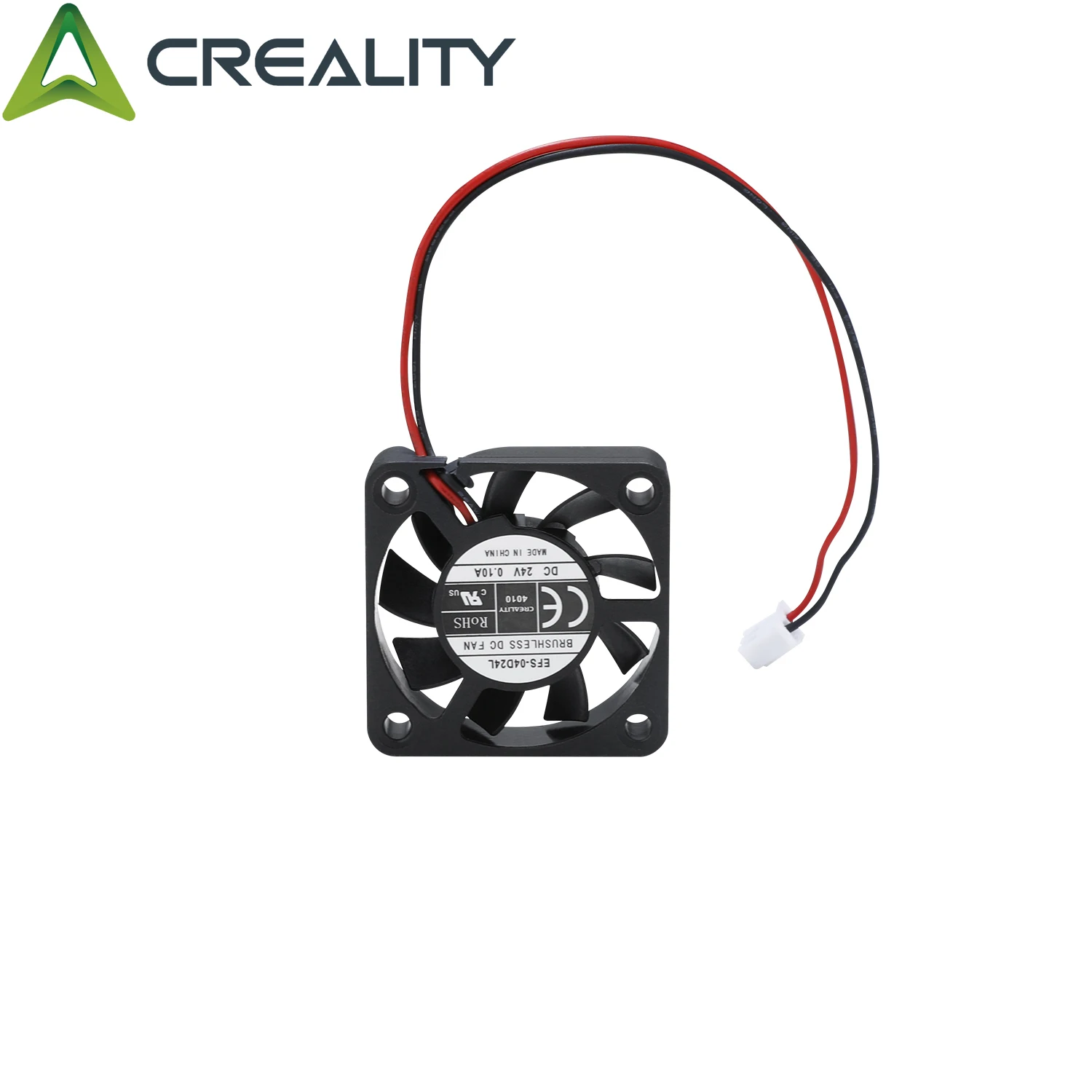
The fan visible in the images features a standard axial design with multiple blades, optimized for moving air directly through a component. The black plastic housing is typical for such small form-factor cooling solutions, providing structural integrity while remaining lightweight. Its construction is straightforward.
This design implies a focus on straightforward installation and reliable, consistent airflow. The brushless motor technology minimizes friction and electrical noise compared to brushed alternatives. Users often find that stock fans are the first components to degrade or become excessively loud.
Compared to generic sleeve bearing fans, the oil bearing offers a balance of cost-effectiveness and improved acoustic performance. While ball bearings might offer superior longevity, the oil bearing often provides a quieter initial operation, which is a significant factor for many users. It's a practical compromise.
Seamless Integration and Modding Potential
The 300mm cable length with a small white JST-style connector is clearly visible, indicating a plug-and-play replacement for many Creality models. This length offers sufficient reach for most hotend or mainboard cooling applications without needing extensions. Cable management is simplified.
This specific cable length and connector type are critical for users performing direct component swaps. The standardized connection reduces the need for custom wiring or adapters, making the upgrade accessible even for beginners. It's designed for convenience.
For makers who enjoy modifying their machines, the standardized size and connection mean this fan integrates well into custom fan shrouds or duct designs. The community around 3D printing frequently shares designs for improved cooling solutions, and this fan fits seamlessly into many of those projects. Experimentation is encouraged.
Durability and Maintenance Considerations
The fan's label, though small, indicates typical electrical specifications and certifications, suggesting adherence to manufacturing standards. The “oil bearing” designation implies a specific type of lubrication that impacts both noise and lifespan. Regular checks are advised.
An oil bearing fan typically offers a quieter operation initially, as the oil dampens vibrations more effectively than some other bearing types. However, over extended periods, the oil can dry out, potentially leading to increased noise or reduced performance. This is a common characteristic of the design.
In contrast to sealed ball bearing fans which are often maintenance-free for their lifespan, an oil bearing might benefit from occasional lubrication to extend its quiet operation and overall service life. This trade-off is often acceptable given the lower cost and quieter profile. Users can take action.
Enhancing Print Quality Through Consistent Cooling
Effective cooling is paramount for achieving high-quality 3D prints, especially with materials that require rapid solidification. This fan provides the necessary airflow to cool hotend heatsinks, preventing heat creep into the cold end of the extruder. Consistent cooling prevents many common print defects.
Without adequate cooling, filament can soften prematurely in the heat break, leading to clogs, inconsistent extrusion, and failed prints. The consistent air movement from a reliable fan ensures the filament remains solid until it reaches the nozzle. This is a crucial function.
Compared to an underperforming or failing stock fan, this replacement offers a renewed ability to maintain optimal thermal gradients within the hotend assembly. This directly translates to more reliable and aesthetically pleasing prints, saving time and wasted filament. The investment is worthwhile.
Power Efficiency and System Compatibility
Operating at 24V, this fan is designed to integrate directly into the power systems of popular 3D printers like the Ender-3 and Ender-3 V2. Its low current draw, typically in the range of 0.06A to 0.1A, means it won't unduly burden the printer's power supply. System stability is maintained.
The specified voltage and current ensure that the fan operates within the safe parameters of the printer's control board, reducing the risk of overloads or damage. Compatibility is a key design consideration for replacement parts. It just works.
Generic fans with incorrect voltage or excessive current draw can cause instability, unexpected shutdowns, or even damage to the printer's electronics. This Creality fan, being an official or compatible part, provides assurance of proper electrical integration. It's a safer choice.
The Upgrade Advantage for Makers
For the maker constantly looking to refine their 3D printing setup, this fan represents a simple yet impactful upgrade. Its silent operation improves the workshop environment, making long print jobs less intrusive. The straightforward installation is a plus.
Beyond just noise reduction, consistent and effective cooling is a cornerstone of reliable 3D printing. This fan directly addresses a common bottleneck in many stock setups, providing a more stable thermal environment for the printer's critical components. It's a foundational improvement.
Imagine running extended print jobs in a quiet home office or workshop, free from the distracting whine of an inefficient fan. Picture consistently smooth prints, free from the tell-tale signs of heat creep or inadequate cooling. This fan contributes to a more enjoyable and productive 3D printing experience, allowing for greater focus on design and creation rather than troubleshooting. This is the peace of mind offered.