BIGTREETECH Panda Sense Environmental Sensor
Official Store Deal
Expert Analysis Overview
The BIGTREETECH Panda Sense is a critical environmental monitoring tool designed for precision 3D printing, specifically tailored for users who demand consistent print quality and seek to mitigate common issues stemming from environmental fluctuations. This compact sensor provides real-time temperature and humidity data, offering an invaluable layer of control over the printing environment, particularly for advanced materials.
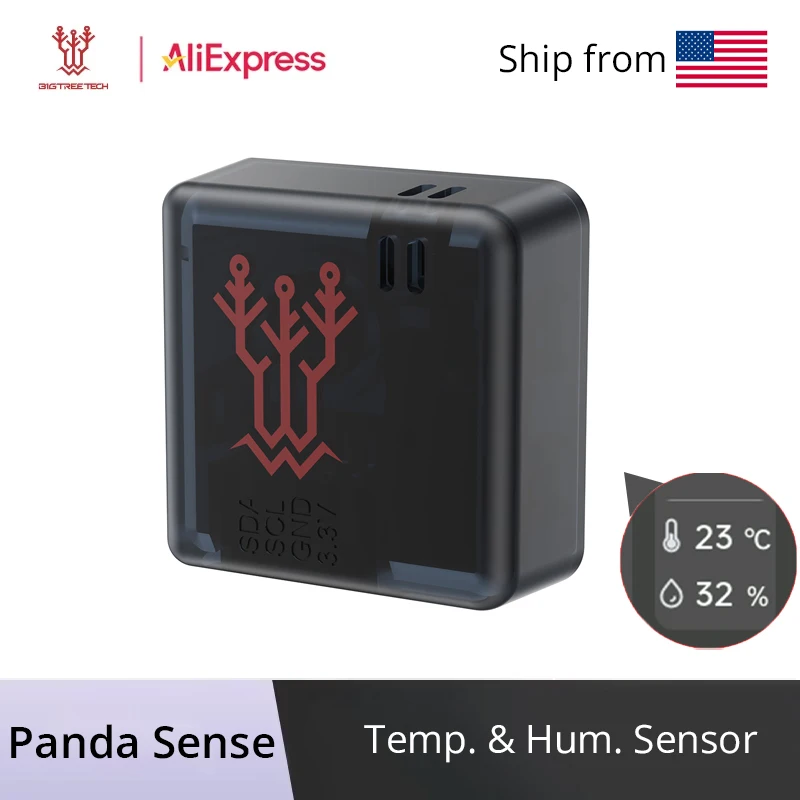
The Panda Sense sensor presents itself as a small, self-contained unit, featuring a robust, opaque black plastic enclosure with the distinctive red tree-like Panda Sense logo. Its compact dimensions, approximately 27.98mm by 27.95mm, allow for discreet placement within a 3D printer's enclosure. The visible design emphasizes functional simplicity, focusing on its core task of data acquisition.
This dedicated environmental monitoring directly impacts print quality, especially when working with hygroscopic filaments such as Nylon, PETG, or PVA, which readily absorb moisture from the air. High humidity can lead to issues like stringing, bubbling, poor layer adhesion, and weakened mechanical properties in printed parts. Similarly, inconsistent temperatures within the print chamber can cause warping, cracking, and delamination, particularly with materials like ABS or PC. The Panda Sense provides the necessary data to proactively address these challenges.
Unlike relying on general room thermometers or external hygrometers, which often provide readings irrelevant to the microclimate inside a printer enclosure, the Panda Sense offers localized, accurate data. Generic sensors fail to account for the heat generated by the printer's components or the specific humidity levels within a confined space. This specialized approach ensures that environmental adjustments are based on the actual conditions affecting the print, leading to a significant reduction in print failures and material waste.
One of the standout features of the Panda Sense is its intended compatibility with the BIGTREETECH Panda Touch display. The product images clearly show the sensor unit alongside the Panda Touch, with real-time temperature (23°C) and humidity (32%) readings prominently displayed on the screen. Connectivity is managed via an 800mm XH2.54 connecting cable, ensuring flexible placement options within the enclosure. The sensor also includes a dedicated Panda Sense Dock for secure mounting.
This integration means real-time environmental data is available at a glance, directly on a dedicated display unit that is often part of the printer's control interface. Users can monitor conditions during a print, identify trends, and make informed decisions about pre-drying filaments or adjusting enclosure ventilation. The ability to visualize this data immediately, without needing to consult a separate app or device, streamlines the printing workflow and enhances user control. It is highly convenient.
This integrated approach offers a superior user experience compared to standalone sensors that require separate applications, Bluetooth connections, or small, hard-to-read displays. The Panda Sense, when paired with the Panda Touch, creates a cohesive monitoring ecosystem. This eliminates the friction associated with fragmented data sources, allowing the user to focus more on the print itself and less on managing multiple monitoring devices. It's a significant upgrade for serious hobbyists and professionals.
The core purpose of a dedicated sensor like the Panda Sense is to provide actionable data that directly addresses common 3D printing failure modes. By continuously monitoring the temperature and humidity within the printing chamber, the sensor provides the necessary feedback to maintain optimal conditions for various filaments. This is especially critical for materials known to be sensitive to environmental shifts.
Directly addressing issues such as warping, stringing, and poor layer adhesion, the Panda Sense empowers users to prevent these problems before they ruin a print. For instance, if the humidity rises too high, the user can pause the print, remove the filament for drying, or activate a dehumidifier within the enclosure. If the temperature fluctuates, adjustments to enclosure heating or cooling can be made. This proactive management significantly reduces the incidence of failed prints, saving both time and expensive filament.
This level of environmental control represents a substantial upgrade from traditional trial-and-error troubleshooting or relying solely on generic room environmental controls. Instead of guessing why a print failed, the Panda Sense provides concrete data points. This shifts the process from reactive problem-solving to proactive prevention, allowing for more consistent and repeatable results. It transforms an unpredictable variable into a manageable parameter, enhancing overall print reliability.
The physical design of the Panda Sense suggests a focus on durability and ease of integration. The compact black enclosure appears robust, designed to withstand the typical conditions within a 3D printer's environment. The inclusion of a Panda Sense Dock, along with a comprehensive set of mounting hardware—including M3x5 screws, M2.5x5.5 screws, M2.5x8 screws, M3x8 screws, and heat-set inserts—indicates a thoughtful approach to installation flexibility. The 800mm XH2.54 cable provides ample length for optimal sensor placement.
This robust construction and comprehensive mounting kit imply that the sensor is built for longevity and secure placement within a dynamic workshop environment. The various screw sizes and heat-set inserts allow for installation on different surfaces and materials, whether it's a metal frame, a plastic panel, or a custom-printed mount. This flexibility ensures the sensor can be positioned precisely where it will gather the most relevant data, without interfering with printer mechanics. It's a practical design.
Compared to less integrated or DIY environmental monitoring solutions, the Panda Sense offers a more refined and secure installation. Generic sensors often require makeshift mounting solutions or external power, adding clutter and potential points of failure. The Panda Sense's dedicated dock and included hardware simplify the process, ensuring a stable and professional-looking setup. This attention to installation detail reflects a product designed for seamless integration into an existing 3D printing ecosystem.
At a price point of approximately 16.63 USD, the BIGTREETECH Panda Sense positions itself as an accessible yet highly specialized tool for 3D printing enthusiasts. This investment is minimal when considering the potential savings and improvements it offers. The cost of failed prints, especially with high-performance or exotic filaments, can quickly surpass the price of this sensor.
The long-term value derived from reduced material waste and fewer failed prints makes the Panda Sense a cost-effective upgrade. By providing the data needed to maintain optimal printing conditions, it directly contributes to a higher success rate for complex or lengthy prints. This translates into significant savings over time, not just in filament costs but also in wasted electricity and the invaluable time spent on reprinting. It pays for itself quickly.
This small investment is particularly compelling when contrasted with the overall cost of a high-performance 3D printer and specialized filaments. For users who have invested in advanced hardware and materials, neglecting environmental control is a false economy. The Panda Sense ensures that the full potential of these investments can be realized, transforming a variable into a controlled parameter. It is an essential component for achieving truly professional-grade 3D prints consistently.
Imagine the satisfaction of consistently producing dimensionally accurate engineering parts, free from warping or delamination, even with challenging materials like ASA or Nylon. Visualize the confidence of starting a multi-day print, knowing that the environmental conditions within your enclosure are precisely monitored and maintained, minimizing the risk of failure. This sensor empowers users to push the boundaries of their 3D printing capabilities, transforming frustrating failures into reliable successes, and ultimately enhancing the overall quality and consistency of every creation. The peace of mind it offers is invaluable for any serious maker. It is a smart addition to any advanced 3D printing setup.
Precision Environmental Monitoring
The Panda Sense sensor presents itself as a small, self-contained unit, featuring a robust, opaque black plastic enclosure with the distinctive red tree-like Panda Sense logo. Its compact dimensions, approximately 27.98mm by 27.95mm, allow for discreet placement within a 3D printer's enclosure. The visible design emphasizes functional simplicity, focusing on its core task of data acquisition.
This dedicated environmental monitoring directly impacts print quality, especially when working with hygroscopic filaments such as Nylon, PETG, or PVA, which readily absorb moisture from the air. High humidity can lead to issues like stringing, bubbling, poor layer adhesion, and weakened mechanical properties in printed parts. Similarly, inconsistent temperatures within the print chamber can cause warping, cracking, and delamination, particularly with materials like ABS or PC. The Panda Sense provides the necessary data to proactively address these challenges.
Unlike relying on general room thermometers or external hygrometers, which often provide readings irrelevant to the microclimate inside a printer enclosure, the Panda Sense offers localized, accurate data. Generic sensors fail to account for the heat generated by the printer's components or the specific humidity levels within a confined space. This specialized approach ensures that environmental adjustments are based on the actual conditions affecting the print, leading to a significant reduction in print failures and material waste.
Seamless Integration and Data Visualization
One of the standout features of the Panda Sense is its intended compatibility with the BIGTREETECH Panda Touch display. The product images clearly show the sensor unit alongside the Panda Touch, with real-time temperature (23°C) and humidity (32%) readings prominently displayed on the screen. Connectivity is managed via an 800mm XH2.54 connecting cable, ensuring flexible placement options within the enclosure. The sensor also includes a dedicated Panda Sense Dock for secure mounting.
This integration means real-time environmental data is available at a glance, directly on a dedicated display unit that is often part of the printer's control interface. Users can monitor conditions during a print, identify trends, and make informed decisions about pre-drying filaments or adjusting enclosure ventilation. The ability to visualize this data immediately, without needing to consult a separate app or device, streamlines the printing workflow and enhances user control. It is highly convenient.
This integrated approach offers a superior user experience compared to standalone sensors that require separate applications, Bluetooth connections, or small, hard-to-read displays. The Panda Sense, when paired with the Panda Touch, creates a cohesive monitoring ecosystem. This eliminates the friction associated with fragmented data sources, allowing the user to focus more on the print itself and less on managing multiple monitoring devices. It's a significant upgrade for serious hobbyists and professionals.
Mitigating Print Failures
The core purpose of a dedicated sensor like the Panda Sense is to provide actionable data that directly addresses common 3D printing failure modes. By continuously monitoring the temperature and humidity within the printing chamber, the sensor provides the necessary feedback to maintain optimal conditions for various filaments. This is especially critical for materials known to be sensitive to environmental shifts.
Directly addressing issues such as warping, stringing, and poor layer adhesion, the Panda Sense empowers users to prevent these problems before they ruin a print. For instance, if the humidity rises too high, the user can pause the print, remove the filament for drying, or activate a dehumidifier within the enclosure. If the temperature fluctuates, adjustments to enclosure heating or cooling can be made. This proactive management significantly reduces the incidence of failed prints, saving both time and expensive filament.
This level of environmental control represents a substantial upgrade from traditional trial-and-error troubleshooting or relying solely on generic room environmental controls. Instead of guessing why a print failed, the Panda Sense provides concrete data points. This shifts the process from reactive problem-solving to proactive prevention, allowing for more consistent and repeatable results. It transforms an unpredictable variable into a manageable parameter, enhancing overall print reliability.
Build Quality and Installation
The physical design of the Panda Sense suggests a focus on durability and ease of integration. The compact black enclosure appears robust, designed to withstand the typical conditions within a 3D printer's environment. The inclusion of a Panda Sense Dock, along with a comprehensive set of mounting hardware—including M3x5 screws, M2.5x5.5 screws, M2.5x8 screws, M3x8 screws, and heat-set inserts—indicates a thoughtful approach to installation flexibility. The 800mm XH2.54 cable provides ample length for optimal sensor placement.
This robust construction and comprehensive mounting kit imply that the sensor is built for longevity and secure placement within a dynamic workshop environment. The various screw sizes and heat-set inserts allow for installation on different surfaces and materials, whether it's a metal frame, a plastic panel, or a custom-printed mount. This flexibility ensures the sensor can be positioned precisely where it will gather the most relevant data, without interfering with printer mechanics. It's a practical design.
Compared to less integrated or DIY environmental monitoring solutions, the Panda Sense offers a more refined and secure installation. Generic sensors often require makeshift mounting solutions or external power, adding clutter and potential points of failure. The Panda Sense's dedicated dock and included hardware simplify the process, ensuring a stable and professional-looking setup. This attention to installation detail reflects a product designed for seamless integration into an existing 3D printing ecosystem.
Value Proposition for Advanced Printing
At a price point of approximately 16.63 USD, the BIGTREETECH Panda Sense positions itself as an accessible yet highly specialized tool for 3D printing enthusiasts. This investment is minimal when considering the potential savings and improvements it offers. The cost of failed prints, especially with high-performance or exotic filaments, can quickly surpass the price of this sensor.
The long-term value derived from reduced material waste and fewer failed prints makes the Panda Sense a cost-effective upgrade. By providing the data needed to maintain optimal printing conditions, it directly contributes to a higher success rate for complex or lengthy prints. This translates into significant savings over time, not just in filament costs but also in wasted electricity and the invaluable time spent on reprinting. It pays for itself quickly.
This small investment is particularly compelling when contrasted with the overall cost of a high-performance 3D printer and specialized filaments. For users who have invested in advanced hardware and materials, neglecting environmental control is a false economy. The Panda Sense ensures that the full potential of these investments can be realized, transforming a variable into a controlled parameter. It is an essential component for achieving truly professional-grade 3D prints consistently.
Imagine the satisfaction of consistently producing dimensionally accurate engineering parts, free from warping or delamination, even with challenging materials like ASA or Nylon. Visualize the confidence of starting a multi-day print, knowing that the environmental conditions within your enclosure are precisely monitored and maintained, minimizing the risk of failure. This sensor empowers users to push the boundaries of their 3D printing capabilities, transforming frustrating failures into reliable successes, and ultimately enhancing the overall quality and consistency of every creation. The peace of mind it offers is invaluable for any serious maker. It is a smart addition to any advanced 3D printing setup.