BIGTREETECH MicroProbe V2 Auto Leveling Sensor
Official Store Deal
Expert Analysis Overview
The BIGTREETECH MicroProbe V2 is a precise auto-leveling sensor engineered for the dedicated 3D printing enthusiast focused on enhancing print consistency and reducing manual calibration efforts. This component provides a significant upgrade path for popular FDM machines, offering a robust and repeatable solution for accurate bed topology mapping. Its design integrates seamlessly into existing extruder setups, particularly those found on Creality Ender-3 series printers, Voron 2.4 builds, and BIQU H2 extruders, thanks to the thoughtfully included mounting hardware.
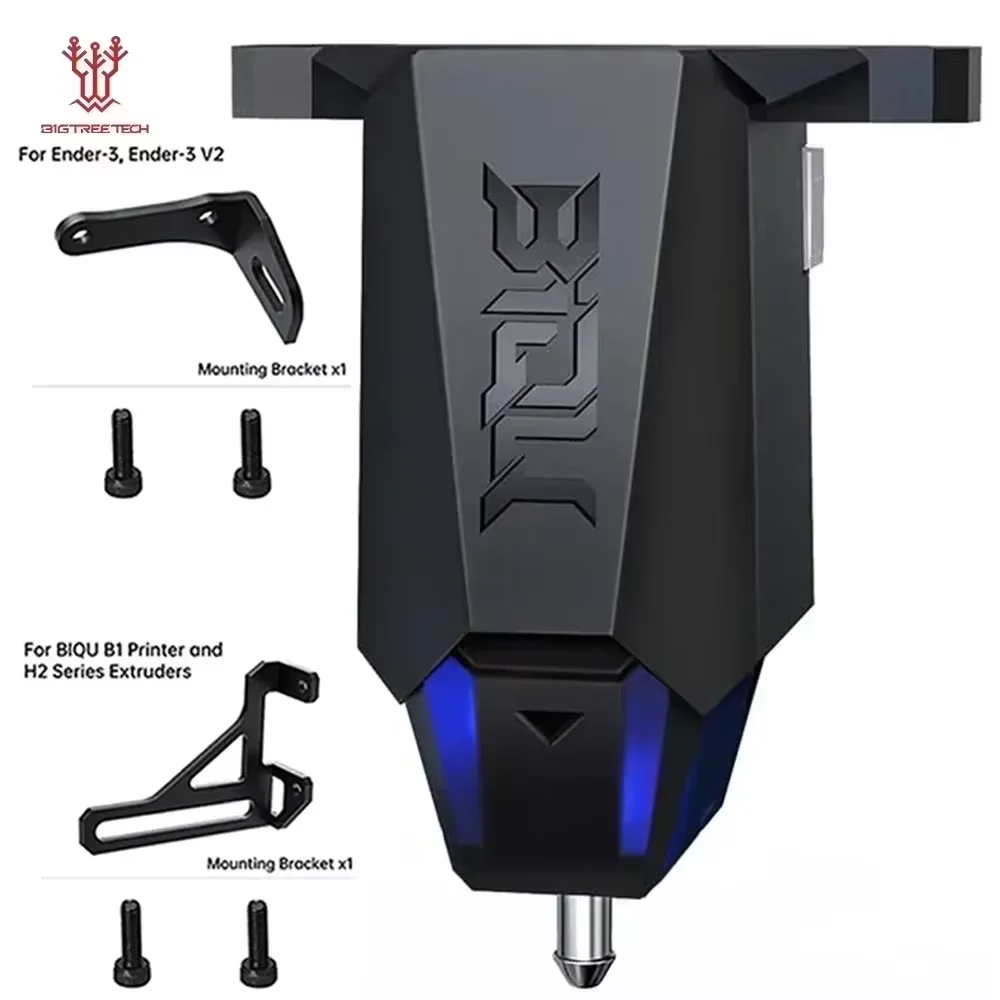
At its core, the MicroProbe V2 functions by deploying a small metallic pin that physically contacts the print bed. This direct contact mechanism is highly reliable. The sensor's compact form factor is immediately noticeable, minimizing impact on print volume or hotend carriage dynamics. A sleek black housing encases the internal components.
This physical probing method ensures that variations in bed material, such as glass, PEI, or flexible build plates, do not affect the sensor's reading, unlike inductive or capacitive probes that react to different materials. Consistent Z-height readings are paramount. Such reliability translates directly into superior first-layer adhesion, which is often the most critical factor in a successful 3D print. Many print failures stem from poor first layers.
Compared to manual bed leveling, which relies on subjective feel and often leads to uneven adhesion across the print surface, a precise auto-leveling sensor like the MicroProbe V2 removes much of the guesswork. It offers a standardized, data-driven approach. Unlike simpler mechanical switches that can suffer from repeatability issues over time due to wear, the magnetic retraction mechanism of this unit aims for long-term consistency.
The MicroProbe V2 utilizes a magnetic retraction system for its probe pin. This is a clever engineering choice. The pin deploys when needed and retracts cleanly when not in use.
This magnetic design minimizes mechanical wear points often associated with spring-loaded or servo-actuated probes, extending the lifespan of the sensor. The absence of complex moving parts reduces the likelihood of mechanical failure. Less maintenance is always welcome. A small blue LED indicator is visible, offering immediate visual feedback on the probe's status, such as when it's deployed or triggered.
Traditional mechanical probes often involve springs or levers that can degrade or become inconsistent with thousands of cycles. The magnetic approach offers a different paradigm. It is a more elegant solution for repetitive contact. This design choice speaks to durability.
One of the significant advantages of the MicroProbe V2 is its advertised compatibility with a range of popular 3D printers and extruders. Dedicated mounting brackets are supplied. These include specific brackets for the Creality Ender-3, Ender-3 V2, and also for BIQU B1 printers and H2 series extruders, as shown in the product images. Various M2.5 socket head cap screws and nuts are provided, simplifying the mounting process.
This broad, pre-engineered compatibility streamlines the upgrade process for a large segment of the 3D printing community, eliminating the need for users to design and print their own custom mounting solutions. Getting started is quicker. Custom mounts can be a hassle. The inclusion of these specific brackets demonstrates an understanding of the common upgrade paths for these machines. Users can typically integrate this directly into their existing hotend assembly with minimal fuss.
Many aftermarket probes often come as standalone units, requiring users to source or design custom brackets for their specific printer models. The MicroProbe V2, by providing these essential mounting options upfront, significantly lowers the barrier to entry for users looking to implement auto-bed leveling. This saves considerable time and effort. It also ensures a more secure and accurate installation compared to potentially weaker printed parts.
The sensor connects to the mainboard via a standard 3-pin connector, with clearly labeled GND, 5V, and signal pins on the PCB itself. Two different cable lengths (1000mm and 150mm) are included, providing flexibility for various printer sizes and wiring configurations. Proper wiring is essential.
Integrating the MicroProbe V2 typically requires firmware modifications, whether using Marlin, Klipper, or other 3D printer firmwares. This involves enabling ABL (Auto Bed Leveling) features, configuring the probe's specific offsets from the nozzle, and defining its deployment and retraction sequences. While this might seem daunting to a novice, the process is well-documented within the 3D printing community, and BIGTREETECH often provides guidance.
Unlike simple endstop switches, which are purely mechanical, integrating an auto-leveling probe demands a deeper dive into the printer's control software. This is part of the maker experience. The payoff, however, is a significantly more autonomous and reliable printing experience, reducing the constant need for manual bed adjustments. The included user manual assists with these steps.
For the maker and tinkerer, the BIGTREETECH MicroProbe V2 represents more than just a component; it's an opportunity for machine improvement. The 3D printing community thrives on modification and optimization. This sensor fits perfectly into that ethos.
Users frequently share their specific firmware configurations, mounting adaptations, and troubleshooting tips online for various printer models. This rich ecosystem means that even if a user encounters a niche compatibility issue, solutions are often readily available through forums, GitHub repositories, or social media groups. Community support is a huge asset. Experimentation is encouraged. This collective knowledge base makes complex upgrades more accessible.
Furthermore, the MicroProbe V2's straightforward design allows for potential custom modifications or alternative mounting solutions should a user desire to integrate it into a non-standard setup or a highly customized hotend. This flexibility is key for advanced users who push the boundaries of their machines. The ability to experiment with custom parts and settings ensures the probe can adapt to evolving printer configurations. It's not a closed system.
At its price point, the MicroProbe V2 presents a compelling value proposition as an upgrade. The initial investment in the sensor is quickly offset by the time saved on manual bed leveling, the reduction in failed prints due to poor first layers, and the overall improvement in print quality. Time is money in any workshop. Material waste is costly. This is a cost-effective enhancement for any serious enthusiast.
The long-term benefit extends beyond immediate savings. A printer equipped with reliable auto-bed leveling can run more consistently, requiring less supervision and intervention. This frees up the user to focus on design, material experimentation, or simply enjoying more successful prints. It enhances the machine's capability. The durability of the magnetic mechanism also implies a longer service life, making it a sound investment over time.
Imagine the satisfaction of initiating a print job with confidence, knowing that the first layer will adhere perfectly, every time. Visualize a future where print failures due to an uneven bed are a distant memory, allowing for more ambitious and intricate designs. This sensor transforms a tedious setup step into a reliable, automated process, allowing the focus to remain on creation rather than calibration.
Precision Bed Mapping
At its core, the MicroProbe V2 functions by deploying a small metallic pin that physically contacts the print bed. This direct contact mechanism is highly reliable. The sensor's compact form factor is immediately noticeable, minimizing impact on print volume or hotend carriage dynamics. A sleek black housing encases the internal components.
This physical probing method ensures that variations in bed material, such as glass, PEI, or flexible build plates, do not affect the sensor's reading, unlike inductive or capacitive probes that react to different materials. Consistent Z-height readings are paramount. Such reliability translates directly into superior first-layer adhesion, which is often the most critical factor in a successful 3D print. Many print failures stem from poor first layers.
Compared to manual bed leveling, which relies on subjective feel and often leads to uneven adhesion across the print surface, a precise auto-leveling sensor like the MicroProbe V2 removes much of the guesswork. It offers a standardized, data-driven approach. Unlike simpler mechanical switches that can suffer from repeatability issues over time due to wear, the magnetic retraction mechanism of this unit aims for long-term consistency.
Mechanical Integrity and Design Choices
The MicroProbe V2 utilizes a magnetic retraction system for its probe pin. This is a clever engineering choice. The pin deploys when needed and retracts cleanly when not in use.
This magnetic design minimizes mechanical wear points often associated with spring-loaded or servo-actuated probes, extending the lifespan of the sensor. The absence of complex moving parts reduces the likelihood of mechanical failure. Less maintenance is always welcome. A small blue LED indicator is visible, offering immediate visual feedback on the probe's status, such as when it's deployed or triggered.
Traditional mechanical probes often involve springs or levers that can degrade or become inconsistent with thousands of cycles. The magnetic approach offers a different paradigm. It is a more elegant solution for repetitive contact. This design choice speaks to durability.
Broad Compatibility and Installation
One of the significant advantages of the MicroProbe V2 is its advertised compatibility with a range of popular 3D printers and extruders. Dedicated mounting brackets are supplied. These include specific brackets for the Creality Ender-3, Ender-3 V2, and also for BIQU B1 printers and H2 series extruders, as shown in the product images. Various M2.5 socket head cap screws and nuts are provided, simplifying the mounting process.
This broad, pre-engineered compatibility streamlines the upgrade process for a large segment of the 3D printing community, eliminating the need for users to design and print their own custom mounting solutions. Getting started is quicker. Custom mounts can be a hassle. The inclusion of these specific brackets demonstrates an understanding of the common upgrade paths for these machines. Users can typically integrate this directly into their existing hotend assembly with minimal fuss.
Many aftermarket probes often come as standalone units, requiring users to source or design custom brackets for their specific printer models. The MicroProbe V2, by providing these essential mounting options upfront, significantly lowers the barrier to entry for users looking to implement auto-bed leveling. This saves considerable time and effort. It also ensures a more secure and accurate installation compared to potentially weaker printed parts.
Electrical Integration and Firmware Considerations
The sensor connects to the mainboard via a standard 3-pin connector, with clearly labeled GND, 5V, and signal pins on the PCB itself. Two different cable lengths (1000mm and 150mm) are included, providing flexibility for various printer sizes and wiring configurations. Proper wiring is essential.
Integrating the MicroProbe V2 typically requires firmware modifications, whether using Marlin, Klipper, or other 3D printer firmwares. This involves enabling ABL (Auto Bed Leveling) features, configuring the probe's specific offsets from the nozzle, and defining its deployment and retraction sequences. While this might seem daunting to a novice, the process is well-documented within the 3D printing community, and BIGTREETECH often provides guidance.
Unlike simple endstop switches, which are purely mechanical, integrating an auto-leveling probe demands a deeper dive into the printer's control software. This is part of the maker experience. The payoff, however, is a significantly more autonomous and reliable printing experience, reducing the constant need for manual bed adjustments. The included user manual assists with these steps.
The Tinker's Advantage: Community and Customization
For the maker and tinkerer, the BIGTREETECH MicroProbe V2 represents more than just a component; it's an opportunity for machine improvement. The 3D printing community thrives on modification and optimization. This sensor fits perfectly into that ethos.
Users frequently share their specific firmware configurations, mounting adaptations, and troubleshooting tips online for various printer models. This rich ecosystem means that even if a user encounters a niche compatibility issue, solutions are often readily available through forums, GitHub repositories, or social media groups. Community support is a huge asset. Experimentation is encouraged. This collective knowledge base makes complex upgrades more accessible.
Furthermore, the MicroProbe V2's straightforward design allows for potential custom modifications or alternative mounting solutions should a user desire to integrate it into a non-standard setup or a highly customized hotend. This flexibility is key for advanced users who push the boundaries of their machines. The ability to experiment with custom parts and settings ensures the probe can adapt to evolving printer configurations. It's not a closed system.
Value Proposition and Long-Term Benefits
At its price point, the MicroProbe V2 presents a compelling value proposition as an upgrade. The initial investment in the sensor is quickly offset by the time saved on manual bed leveling, the reduction in failed prints due to poor first layers, and the overall improvement in print quality. Time is money in any workshop. Material waste is costly. This is a cost-effective enhancement for any serious enthusiast.
The long-term benefit extends beyond immediate savings. A printer equipped with reliable auto-bed leveling can run more consistently, requiring less supervision and intervention. This frees up the user to focus on design, material experimentation, or simply enjoying more successful prints. It enhances the machine's capability. The durability of the magnetic mechanism also implies a longer service life, making it a sound investment over time.
Imagine the satisfaction of initiating a print job with confidence, knowing that the first layer will adhere perfectly, every time. Visualize a future where print failures due to an uneven bed are a distant memory, allowing for more ambitious and intricate designs. This sensor transforms a tedious setup step into a reliable, automated process, allowing the focus to remain on creation rather than calibration.