Bambu Lab Reusable Filament Spool for AMS
Official Store Deal
Expert Analysis Overview
The Bambu Lab Reusable Filament Spool is a pragmatic and environmentally conscious accessory designed for 3D printing enthusiasts and educational institutions utilizing Bambu Lab systems. This product addresses the pervasive issue of single-use plastic waste generated by filament spools, offering a durable and convenient solution for refilling.
The core of this product's appeal lies in its reusability, presenting a significant shift from the standard practice of discarding empty filament spools. The spools are designed in two halves, allowing users to easily load filament refills without needing to purchase an entirely new spool each time. This modular approach is not only economical but also aligns with sustainable practices, reducing the overall environmental footprint of 3D printing operations.
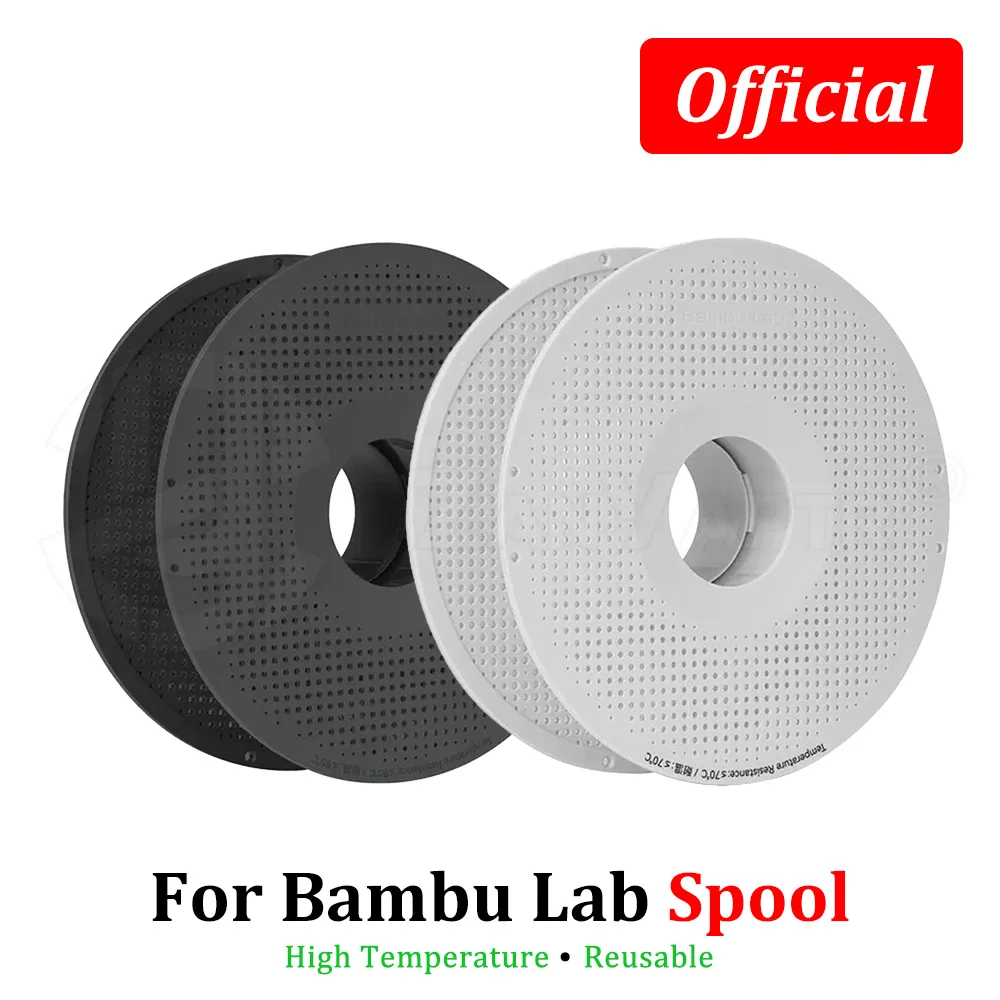
From a material science perspective, the spools are offered in two primary compositions to cater to different printing environments and filament types. The black version, engineered for high-temperature applications, is constructed from a robust ABS+PC blend. This composite material is specifically chosen for its enhanced heat resistance, capable of withstanding temperatures up to 90°C. Such a specification makes it suitable for use within enclosed 3D printers that maintain elevated internal temperatures, especially when printing engineering-grade filaments like ABS, ASA, or PC itself, which often require heated build chambers to prevent warping and improve layer adhesion. The structural integrity provided by ABS+PC ensures the spool maintains its form and function even under thermal stress, preventing deformation that could lead to filament feeding issues.
In contrast, the transparent or white versions are manufactured from ABS, offering a heat resistance of up to 70°C. While slightly less thermally robust than the ABS+PC variant, the ABS spool is perfectly adequate for the vast majority of common 3D printing filaments, including PLA, PETG, and standard ABS, which typically print at lower temperatures and do not necessitate extreme chamber heating. The choice between these materials allows users to select a spool that is optimized for their specific printing needs, ensuring both performance and cost-effectiveness. The random mixing of transparent and white low-temperature trays, as indicated by the manufacturer, is a minor aesthetic consideration that does not impact the functional performance of the spool.
The assembly process for these reusable spools is designed for simplicity, making them accessible even for novice users or students in a classroom setting. The visual instructions provided clearly outline a four-step method: placing one spool half flat, inserting an inner hub, aligning the second half, and snapping them firmly together. This intuitive design minimizes the learning curve and reduces the time spent on preparing filament, allowing more focus on the actual printing process. The precision engineering of the interlocking halves ensures a secure fit, preventing any wobbling or detachment during printing, which is crucial for maintaining consistent filament flow and print quality.
Integration with the Bambu Lab Automatic Material System (AMS) is a key feature of these spools. The AMS is a sophisticated multi-material system that allows Bambu Lab printers to automatically switch between different filaments during a print. For this system to operate flawlessly, filament spools must adhere to specific dimensions and tolerances. These reusable spools are explicitly designed to meet those requirements, ensuring smooth feeding and retraction within the AMS. This compatibility is a significant advantage for users who leverage the multi-color and multi-material capabilities of their Bambu Lab printers, as it eliminates the need to transfer filament from incompatible spools or use cumbersome adapters.
Compared to generic or non-AMS compatible spools, the engineered fit of these Bambu Lab specific reusable spools prevents common issues such as filament tangles, jams, or incorrect detection by the AMS sensors. This seamless integration enhances the overall reliability of the printing process, which is particularly beneficial in an educational environment where minimizing troubleshooting time allows for more hands-on learning and experimentation. The consistent performance within the AMS contributes directly to higher success rates for complex prints, fostering confidence in students as they explore advanced 3D printing techniques.
For STEM education, the adoption of reusable spools presents a valuable teaching moment about resource management and sustainable engineering. Students can learn firsthand about the lifecycle of materials, the impact of waste, and the benefits of circular economy principles. By actively participating in the refilling process, they gain a deeper understanding of the practical implications of design choices and the importance of considering environmental factors in manufacturing and consumption. This hands-on experience reinforces concepts of sustainability in a tangible way, moving beyond theoretical discussions to practical application.
Economically, the reusable spool offers substantial long-term savings. While there is an initial investment in the spool itself, the cost of filament refills is typically lower than purchasing pre-spooled filament. This cost reduction becomes particularly significant for high-volume users, such as educational institutions, makerspaces, or small businesses, where filament consumption can be substantial. The ability to purchase filament in bulk or in refill form translates directly into a lower cost per kilogram of material, optimizing operational budgets. Over time, these savings can offset the initial investment many times over, making the reusable spool a financially prudent choice.
Consider a scenario where a school's 3D printing lab goes through dozens of filament spools per month. Each discarded spool represents not only plastic waste but also a missed opportunity for cost savings. By switching to reusable spools, the school can drastically reduce its waste output and reallocate funds saved on filament purchases to other educational resources, such as new printer upgrades or specialized materials. This economic efficiency directly supports the broader mission of providing quality STEM education without incurring unnecessary expenses.
Safety in a 3D printing environment, especially in educational settings, is paramount. The robust construction of these spools from ABS or ABS+PC contributes to their overall safety. Unlike flimsy cardboard or poorly designed plastic spools, these are less prone to breaking or deforming, which could otherwise lead to filament snags or hazardous situations during printing. The smooth edges and secure interlocking mechanism also minimize the risk of cuts or pinches during handling and assembly. Proper assembly is critical; ensuring the two halves are firmly snapped together prevents accidental separation that could cause filament to unravel, leading to printer jams or even potential damage to the AMS or extruder.
Maintenance of the reusable spools is straightforward, primarily involving keeping them clean and free of filament dust or debris. A simple wipe-down with a dry cloth is usually sufficient. Users should regularly inspect the spools for any signs of wear, such as cracks or deformation, particularly if they are frequently used with high-temperature filaments or in heated enclosures. While designed for durability, extreme conditions or improper handling can eventually take a toll. Replacing a worn spool ensures continued reliable performance and prevents potential issues during printing.
When handling high-temperature filaments, it is crucial to match the spool type to the filament's requirements. Using a low-temperature ABS spool with a filament that requires a chamber temperature exceeding 70°C could lead to the spool softening and deforming, compromising print integrity and potentially damaging the printer. This highlights the importance of understanding material properties and selecting the correct tools for the task, a fundamental lesson in any STEM curriculum.
Imagine a 3D printing workflow where the frustration of constantly disposing of empty spools is a thing of the past. Picture a classroom where students effortlessly load filament refills, focusing their energy on design and innovation rather than material management. Envision a printing lab operating with reduced waste, contributing positively to environmental goals while simultaneously cutting operational costs. This reusable spool makes that vision a tangible reality, transforming the mundane task of filament handling into an efficient, sustainable, and educational experience. The streamlined process allows for more creative freedom and less logistical overhead, empowering users to push the boundaries of their 3D printing projects with confidence and ease.
Engineering for Sustainability: The Reusable Spool's Design
The core of this product's appeal lies in its reusability, presenting a significant shift from the standard practice of discarding empty filament spools. The spools are designed in two halves, allowing users to easily load filament refills without needing to purchase an entirely new spool each time. This modular approach is not only economical but also aligns with sustainable practices, reducing the overall environmental footprint of 3D printing operations.
From a material science perspective, the spools are offered in two primary compositions to cater to different printing environments and filament types. The black version, engineered for high-temperature applications, is constructed from a robust ABS+PC blend. This composite material is specifically chosen for its enhanced heat resistance, capable of withstanding temperatures up to 90°C. Such a specification makes it suitable for use within enclosed 3D printers that maintain elevated internal temperatures, especially when printing engineering-grade filaments like ABS, ASA, or PC itself, which often require heated build chambers to prevent warping and improve layer adhesion. The structural integrity provided by ABS+PC ensures the spool maintains its form and function even under thermal stress, preventing deformation that could lead to filament feeding issues.
In contrast, the transparent or white versions are manufactured from ABS, offering a heat resistance of up to 70°C. While slightly less thermally robust than the ABS+PC variant, the ABS spool is perfectly adequate for the vast majority of common 3D printing filaments, including PLA, PETG, and standard ABS, which typically print at lower temperatures and do not necessitate extreme chamber heating. The choice between these materials allows users to select a spool that is optimized for their specific printing needs, ensuring both performance and cost-effectiveness. The random mixing of transparent and white low-temperature trays, as indicated by the manufacturer, is a minor aesthetic consideration that does not impact the functional performance of the spool.
Streamlining the Workflow: Assembly and Integration
The assembly process for these reusable spools is designed for simplicity, making them accessible even for novice users or students in a classroom setting. The visual instructions provided clearly outline a four-step method: placing one spool half flat, inserting an inner hub, aligning the second half, and snapping them firmly together. This intuitive design minimizes the learning curve and reduces the time spent on preparing filament, allowing more focus on the actual printing process. The precision engineering of the interlocking halves ensures a secure fit, preventing any wobbling or detachment during printing, which is crucial for maintaining consistent filament flow and print quality.
Integration with the Bambu Lab Automatic Material System (AMS) is a key feature of these spools. The AMS is a sophisticated multi-material system that allows Bambu Lab printers to automatically switch between different filaments during a print. For this system to operate flawlessly, filament spools must adhere to specific dimensions and tolerances. These reusable spools are explicitly designed to meet those requirements, ensuring smooth feeding and retraction within the AMS. This compatibility is a significant advantage for users who leverage the multi-color and multi-material capabilities of their Bambu Lab printers, as it eliminates the need to transfer filament from incompatible spools or use cumbersome adapters.
Compared to generic or non-AMS compatible spools, the engineered fit of these Bambu Lab specific reusable spools prevents common issues such as filament tangles, jams, or incorrect detection by the AMS sensors. This seamless integration enhances the overall reliability of the printing process, which is particularly beneficial in an educational environment where minimizing troubleshooting time allows for more hands-on learning and experimentation. The consistent performance within the AMS contributes directly to higher success rates for complex prints, fostering confidence in students as they explore advanced 3D printing techniques.
The Educational and Economic Imperative of Reusability
For STEM education, the adoption of reusable spools presents a valuable teaching moment about resource management and sustainable engineering. Students can learn firsthand about the lifecycle of materials, the impact of waste, and the benefits of circular economy principles. By actively participating in the refilling process, they gain a deeper understanding of the practical implications of design choices and the importance of considering environmental factors in manufacturing and consumption. This hands-on experience reinforces concepts of sustainability in a tangible way, moving beyond theoretical discussions to practical application.
Economically, the reusable spool offers substantial long-term savings. While there is an initial investment in the spool itself, the cost of filament refills is typically lower than purchasing pre-spooled filament. This cost reduction becomes particularly significant for high-volume users, such as educational institutions, makerspaces, or small businesses, where filament consumption can be substantial. The ability to purchase filament in bulk or in refill form translates directly into a lower cost per kilogram of material, optimizing operational budgets. Over time, these savings can offset the initial investment many times over, making the reusable spool a financially prudent choice.
Consider a scenario where a school's 3D printing lab goes through dozens of filament spools per month. Each discarded spool represents not only plastic waste but also a missed opportunity for cost savings. By switching to reusable spools, the school can drastically reduce its waste output and reallocate funds saved on filament purchases to other educational resources, such as new printer upgrades or specialized materials. This economic efficiency directly supports the broader mission of providing quality STEM education without incurring unnecessary expenses.
Safety and Maintenance Considerations
Safety in a 3D printing environment, especially in educational settings, is paramount. The robust construction of these spools from ABS or ABS+PC contributes to their overall safety. Unlike flimsy cardboard or poorly designed plastic spools, these are less prone to breaking or deforming, which could otherwise lead to filament snags or hazardous situations during printing. The smooth edges and secure interlocking mechanism also minimize the risk of cuts or pinches during handling and assembly. Proper assembly is critical; ensuring the two halves are firmly snapped together prevents accidental separation that could cause filament to unravel, leading to printer jams or even potential damage to the AMS or extruder.
Maintenance of the reusable spools is straightforward, primarily involving keeping them clean and free of filament dust or debris. A simple wipe-down with a dry cloth is usually sufficient. Users should regularly inspect the spools for any signs of wear, such as cracks or deformation, particularly if they are frequently used with high-temperature filaments or in heated enclosures. While designed for durability, extreme conditions or improper handling can eventually take a toll. Replacing a worn spool ensures continued reliable performance and prevents potential issues during printing.
When handling high-temperature filaments, it is crucial to match the spool type to the filament's requirements. Using a low-temperature ABS spool with a filament that requires a chamber temperature exceeding 70°C could lead to the spool softening and deforming, compromising print integrity and potentially damaging the printer. This highlights the importance of understanding material properties and selecting the correct tools for the task, a fundamental lesson in any STEM curriculum.
Visualizing the Future of Printing
Imagine a 3D printing workflow where the frustration of constantly disposing of empty spools is a thing of the past. Picture a classroom where students effortlessly load filament refills, focusing their energy on design and innovation rather than material management. Envision a printing lab operating with reduced waste, contributing positively to environmental goals while simultaneously cutting operational costs. This reusable spool makes that vision a tangible reality, transforming the mundane task of filament handling into an efficient, sustainable, and educational experience. The streamlined process allows for more creative freedom and less logistical overhead, empowering users to push the boundaries of their 3D printing projects with confidence and ease.