Bambu Lab LED Lamp Kit 001 for DIY 3D Printed Shades
Official Store Deal
Expert Analysis Overview
The Bambu Lab LED Lamp Kit 001: A Gateway to Applied 3D Printing
The Bambu Lab LED Lamp Kit 001 is an accessible, hands-on electronics and 3D printing project designed for makers, educators, and students. This kit provides the essential lighting components for creating custom, functional lamps, with the critical distinction that users must 3D print the lampshade themselves. It bridges the gap between digital design and tangible creation. This approach fosters a deeper understanding of both additive manufacturing and basic electrical assembly.
Effortless Integration and Assembly
The assembly process for this LED lamp kit is notably straightforward, detailed across four clear steps. It begins with threading the USB line from top to bottom through the user-designed lampshade. This initial step is simple. The design prioritizes user-friendliness.
Following the cable routing, the LED light panel presses into its housing. This is a secure fit. The next stage involves pressing the entire assembly into the trunking, or the base of the 3D-printed lampshade. Finally, a rotation secures the components with an audible 'snap'. This ensures a firm connection. The entire process requires no specialized tools, making it ideal for beginners.
Unlike many DIY electronics kits that demand intricate soldering or complex wiring diagrams, this kit simplifies the electrical connection to a single USB plug. This reduces potential points of failure. It also minimizes safety concerns associated with higher voltages. The design emphasizes quick setup over advanced electrical engineering, perfect for classroom environments or casual hobbyists.
Core Components and Modularity
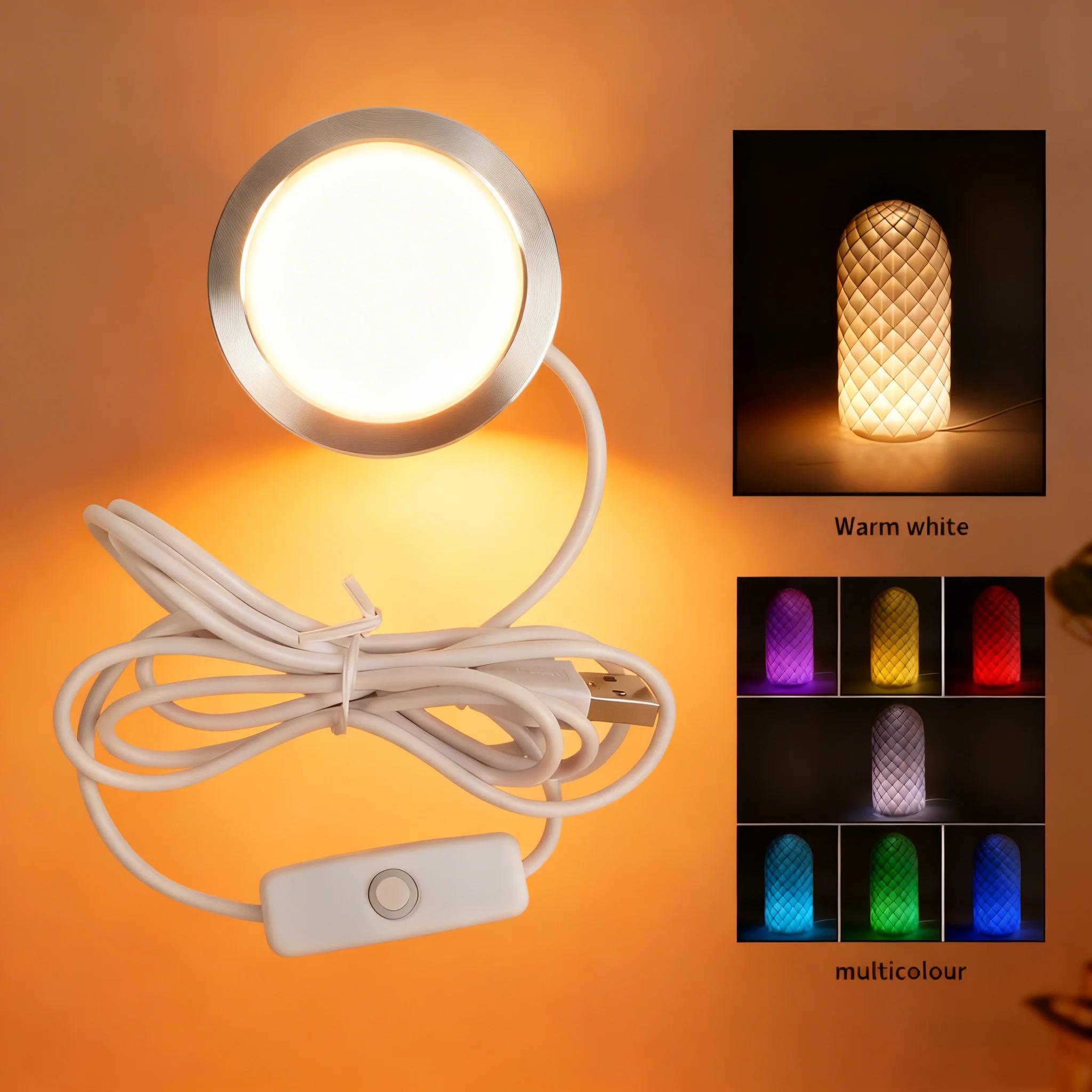
The kit includes several key components: a 3M VHB adhesive pad, an adjustable power switch, a standard USB power plug, and an aluminum alloy model lamp module. Each part serves a specific function. The adhesive pad allows for flexible mounting options.
The aluminum alloy lamp module houses the LEDs, providing a robust and aesthetically pleasing core for the lamp. Its metallic finish offers a premium feel. The inline adjustable power switch offers convenient control over the light, eliminating the need to unplug the unit to turn it off. This enhances daily usability. The USB power plug ensures broad compatibility with existing power adapters.
This modular design encourages experimentation. Users can design and print multiple lampshade models. The kit focuses on the light source. This allows for endless creative possibilities. It promotes iterative design and rapid prototyping, core principles of 3D printing education.
Versatile Lighting Performance
The LED module supports both warm white and multicolor lighting options. This versatility is a significant advantage. Warm white light creates a cozy and inviting ambiance. It is suitable for bedside tables or study desks.
The multicolor options, including purple, yellow, red, cyan, green, and blue, allow for dynamic mood lighting. Users can adjust the color to match their decor or current mood. This feature adds a layer of personalization. It transforms a simple lamp into an interactive design element. The visual input clearly demonstrates these distinct color outputs.
For a STEM educator, this feature offers a practical lesson in light spectrum and color mixing. Students can explore how different colored lampshades interact with the various LED outputs. It's a tangible way to teach optics. The brightness, while not specified in lumens, appears sufficient for accent lighting or task lighting in a small area. It is not intended for illuminating an entire room.
Safety and Educational Implications
Operating on a low-voltage USB power supply, this kit inherently offers a safer learning environment compared to mains-powered DIY projects. This is a crucial safety aspect. The risk of electrical shock is significantly reduced. This makes it suitable for younger students or those new to electronics.
For educators, this kit provides a practical platform for teaching fundamental concepts in electronics, design, and manufacturing. Students gain experience in CAD software for lampshade design. They also learn about the physical assembly of electronic components. It's a complete project cycle. The hands-on experience reinforces theoretical knowledge.
Furthermore, the requirement to 3D print the lampshade encourages problem-solving. Students must consider factors like light diffusion, heat dissipation, and structural integrity in their designs. This fosters critical thinking. It moves beyond just printing pre-made models. The kit acts as a catalyst for genuine innovation.
Value Proposition and Long-Term Engagement
At its price point, the Bambu Lab LED Lamp Kit 001 represents an affordable entry into functional 3D printing projects. The cost is minimal. It provides significant educational value. The investment is in the learning experience.
This kit offers a high return on investment in terms of skill development. Users acquire practical skills in design, assembly, and basic electronics. These are valuable skills. The ability to customize the lampshade means the lamp can evolve with the user's design preferences or skill level. It's not a static product. This ensures long-term engagement.
Imagine the satisfaction of illuminating a space with a lamp you not only assembled but also designed and 3D printed the housing for. The soft glow of warm white light or the vibrant hues of a multicolor setting, all emanating from your unique creation, transforms a simple kit into a personal statement. This kit empowers individuals to move beyond consumption to active creation, fostering a sense of accomplishment with every custom lamp brought to life. It's more than just a light; it's a testament to personal ingenuity and practical application of modern manufacturing techniques.
STEM Educator's Perspective
From a STEM educator's standpoint, this kit excels as a teaching tool. Its simplicity reduces the barrier to entry for complex topics. Students can focus on design principles. The tangible outcome motivates learners. It connects abstract concepts to real-world applications.
Unlike generic 3D printing projects that might lack a functional purpose, this kit culminates in a usable product. This provides immediate gratification. It demonstrates the utility of 3D printing beyond mere aesthetics. The kit effectively combines art, engineering, and technology. It's a multidisciplinary learning opportunity. The low voltage operation ensures classroom safety protocols are easily met.
Customization and Creativity Unleashed
The explicit instruction to 3D print the lampshade is a core feature, not a limitation. This empowers users. It transforms them from consumers into designers. The images showcase various lampshade models that can be printed, from geometric patterns to more organic shapes. This highlights the kit's versatility. It encourages personal expression.
This approach fosters a deeper understanding of material properties and light interaction. Students learn how different infill patterns or wall thicknesses affect light diffusion. It's a practical lesson in optics. The ability to iterate on designs quickly is a hallmark of 3D printing. It allows for continuous improvement. This kit makes that process accessible and rewarding.
Durability and Build Quality
The visible components suggest a reasonable level of durability for its intended use. The aluminum alloy model lamp base implies a sturdy construction. This is a robust material. The USB cable and inline switch appear standard. They should withstand regular use. The 3M VHB adhesive pad offers a strong, reliable bond for mounting.
Compared to kits that rely on flimsy plastic components, the metallic base provides a more premium feel and better heat dissipation for the LEDs. This enhances longevity. The simplicity of assembly also means fewer fragile connection points. It reduces the chance of accidental damage during setup. The design is practical. It focuses on functional reliability.
Ease of Maintenance and Troubleshooting
Maintaining this lamp kit is straightforward. The LED module is self-contained. There are no user-serviceable parts inside. Cleaning involves wiping down the 3D printed lampshade. Use a dry or slightly damp cloth. Avoid harsh chemicals. If the light stops working, the first step is always to check the USB power connection and the inline switch. These are common points of failure. The USB connection is universal. It simplifies power sourcing. The modular design means individual components could potentially be replaced if damaged, though the kit is sold as a unit.
Conclusion: A Creative Catalyst for Makers
This Bambu Lab LED Lamp Kit 001 stands out as an exceptional tool for anyone interested in combining 3D printing with functional electronics. Its ease of assembly, safe low-voltage operation, and encouragement of creative design make it a standout product. It's an ideal educational resource. The ability to personalize the lampshade ensures each lamp is unique. This fosters a strong sense of ownership. The kit offers a tangible pathway to understanding modern manufacturing. It allows users to bring their digital designs into the physical world, illuminating their spaces with their own ingenuity. Imagine the pride of gifting a custom-designed and printed lamp, a true fusion of technology and personal artistry.