Bambu Lab 257x257mm Multi-Surface Spring Steel Build Plates
Official Store Deal
Expert Analysis Overview
The Print Surface Arsenal: Enhancing Bambu Lab Workflows
These 257x257mm build plates for Bambu Lab X1C, P1S, P1P, and A1 printers are a critical upgrade for any serious maker. They represent a significant leap beyond standard build surfaces, offering specialized textures and materials that cater to a broader range of filaments and desired print finishes.
The core of these plates is a robust spring steel sheet, providing an unyielding foundation for consistent print beds. This steel core ensures the plate remains perfectly flat even after repeated heating and cooling cycles. A flat bed is non-negotiable for quality prints. Unlike thinner, less durable alternatives, this steel offers exceptional resilience.
Surface Engineering: A Plate for Every Filament
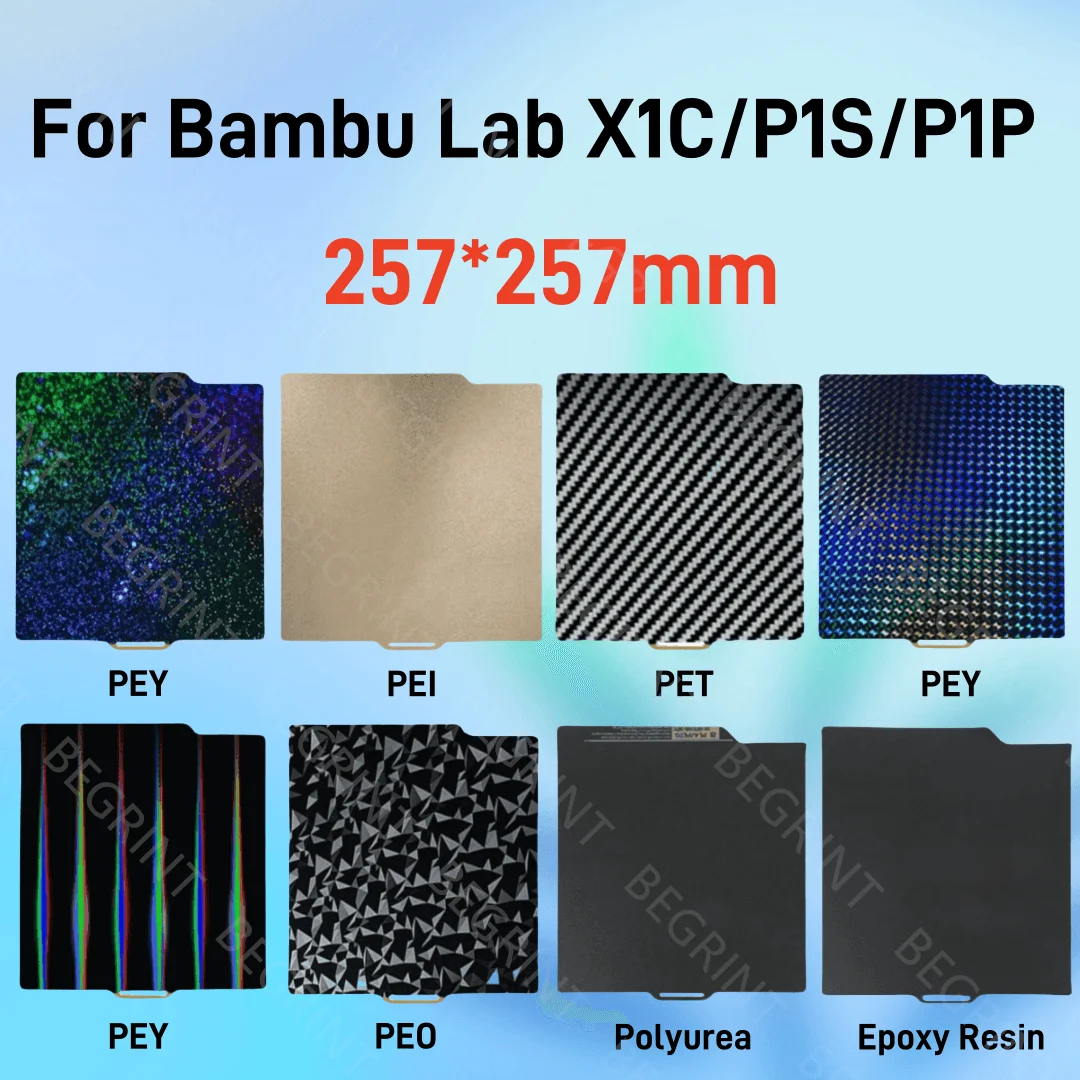
The offerings include a variety of surface treatments: PEY (Light Column and Phantom), PEO (Smooth), PET (Smooth), PEI (Textured), Polyurea, and Epoxy Resin. Each material is engineered for specific adhesion properties and aesthetic outcomes.
The PEY (Light Column) surface, for instance, produces a vibrant, iridescent, columnar pattern on the first layer of prints. This is a purely aesthetic choice. It transforms ordinary prints into something visually striking. This surface works well with PLA, PETG, and TPU, typically requiring a bed temperature between 30-90°C. Users seeking unique visual flair will appreciate this option.
Similarly, the PEY (Phantom) surface imparts a distinct, holographic, grid-like pattern to the print's base. This effect is subtle yet eye-catching. It provides another avenue for creative expression. Optimal printing with PLA, PETG, and TPU falls within the 30-90°C bed temperature range. Both PEY surfaces are smooth. Adhesion is reliable.
The PEO (Smooth) surface is specifically designed for excellent adhesion with PLA, PETG, TPU, and ABS filaments. Its smooth finish provides a pristine, glass-like bottom layer on prints. A bed temperature range of 50-120°C is recommended for optimal performance. This surface offers versatility.
Complementing PEO, the PET (Smooth) surface also targets PLA, PETG, TPU, and ABS, with a similar bed temperature recommendation of 50-120°C. The smooth PET finish ensures prints release cleanly. It's ideal for parts where surface finish is paramount. Consistent results are achievable.
For those working with more demanding materials, the PEI (Textured) plate is an industry standard. It provides exceptional adhesion for a wide array of filaments, including PLA, PLA+, PETG, TPU, PEEK, PC, and ABS. The textured surface creates a visually appealing matte finish on the print's base and helps hide minor imperfections. This surface can withstand higher temperatures, up to 300°C. It is incredibly durable.
Polyurea and Epoxy Resin surfaces are also available, though specific details on their unique properties are less visually evident. These likely offer specialized adhesion characteristics for niche materials or specific industrial applications. Their inclusion broadens the toolkit. Experimentation is encouraged.
Streamlined Workflow and Print Liberation
One of the most significant advantages of a flexible spring steel plate is the ease of print removal. Once the print bed cools, the plate can be gently flexed, causing the print to pop off with minimal effort. This eliminates the need for scrapers, spatulas, or excessive force, which can damage both the print and the bed. It saves considerable time. Print removal is effortless.
The ability to easily remove prints without tools reduces the risk of damaging delicate models. It preserves intricate details. This also extends the lifespan of the build plate itself, as it avoids scratches and gouges often associated with aggressive removal methods. The workflow becomes smoother.
Furthermore, the multiple surface options mean a user can quickly swap plates to accommodate different filament types or desired surface finishes. This hot-swappable design enhances productivity. It removes bottlenecks. Instead of waiting for a single plate to cool and then cleaning it, a fresh plate can be loaded immediately for the next print. This is a huge time-saver for batch printing or experimenting with various materials.
Durability and Maintenance
These build plates are designed for longevity. The spring steel core resists deformation. Each surface layer is applied to withstand repeated heating and cooling cycles. Proper maintenance involves simple cleaning. A quick wipe-down with isopropyl alcohol between prints typically suffices to maintain optimal adhesion. For more stubborn residues, mild soap and water can be used.
It is crucial to allow the plate to cool down before attempting print removal. Forcing a print off a hot bed can damage the surface or warp the print itself. Patience yields better results. The plates are durable. They withstand heavy use.
Compared to adhesive-backed sheets or glass beds, these spring steel plates offer superior convenience and durability. Adhesive sheets wear out and require frequent replacement, while glass beds can be brittle and require clamping. The magnetic adhesion of these plates to the heated bed is strong. It holds securely throughout the print.
Enabling the Tinkerer's Spirit
For the maker and tinkerer, these plates are more than just printing surfaces; they are tools for exploration. The variety of surfaces encourages experimentation with different filaments and their unique properties. Want to see how a holographic pattern looks on an ABS print? Swap the plate. Need a perfectly smooth base for a functional part? There is a surface for that. This flexibility fuels creativity.
The community around Bambu Lab printers is vibrant and highly engaged. Discussions frequently cover optimal print settings for specific build plates and filaments. Users share their experiences and tips, creating a valuable resource for troubleshooting and refining techniques. This collaborative environment supports new users. It helps advanced users push boundaries.
These plates support the iterative design process inherent in 3D printing. Rapid prototyping benefits from quick print removal and surface versatility. The ability to achieve different bottom finishes on prints opens up new aesthetic possibilities for custom parts and prototypes. It truly empowers the user.
Imagine easily switching between a textured base for a rugged enclosure and a smooth, reflective finish for a display piece, all within minutes. The tactile satisfaction of flexing the plate and seeing a perfect print effortlessly release is significant. This level of control over the first layer transforms the entire printing experience, making it more efficient, more enjoyable, and ultimately, more productive for any maker dedicated to their craft.
Technical Specifications at a Glance
These build plates offer robust specifications, ensuring performance and compatibility. The uniform 257x257mm dimension ensures perfect fitment for specified Bambu Lab models. Material choices cater to diverse printing needs.
Adhesion and Thermal Performance
Each surface type is optimized for specific filament adhesion. The PEY surfaces excel with PLA, PETG, and TPU, operating efficiently at bed temperatures from 30-90°C. This lower range is energy efficient. It suits common filaments.
PEO and PET surfaces extend compatibility to ABS, maintaining strong adhesion within a 50-120°C range. This broader thermal window supports more engineering-grade plastics. Print quality remains high.
The PEI textured surface is the most thermally resilient, capable of handling up to 300°C. This high-temperature capability makes it suitable for advanced materials like PEEK and PC. It offers unmatched versatility. The spring steel core underneath ensures thermal stability across all surfaces. This prevents warping.
Surface Finishes and Aesthetic Options
The range includes both smooth and textured finishes. PEY (Light Column) provides a striking linear holographic effect. PEY (Phantom) offers a distinct grid-like holographic pattern. These visual elements are embedded directly into the print's first layer. They create unique aesthetics. Smooth PEO and PET provide a flawless, glossy bottom surface, ideal for transparent or high-detail prints. The PEI textured surface imparts a subtle, professional matte finish. This variety allows for creative control.
Effortless Print Removal and Cleaning
Removing prints is a simple, non-destructive process. The flexibility of the spring steel plate allows for easy part separation once cool. This eliminates the need for tools. It prevents damage to prints. Cleaning is minimal; isopropyl alcohol is usually sufficient. This maintains surface integrity. The plates are designed for durability.
Longevity and Reliability
Constructed from high-quality spring steel, these plates resist deformation and maintain flatness over extended use. The specialized coatings are designed for wear resistance and consistent performance. This ensures a long service life. Investing in these plates provides lasting value. They are a reliable asset.
Troubleshooting Common Print Bed Issues
Even with premium build plates, occasional issues can arise. Understanding basic troubleshooting steps helps maintain optimal performance. Consistent print quality is the goal.
Adhesion Challenges
If prints are not sticking, the first check should be the bed temperature. Ensure it aligns with the filament manufacturer's recommendations and the plate's suggested range. A dirty surface is another common culprit. Clean the plate thoroughly with isopropyl alcohol. For PEI, a light scrub with fine steel wool can sometimes rejuvenate its texture and adhesion. Leveling the bed is also crucial. An uneven bed causes issues. Re-calibrate Z-offset if needed.
Print Warping
Warping, where corners lift from the bed, often indicates insufficient bed adhesion or uneven cooling. For filaments prone to warping like ABS, increasing the bed temperature slightly or using a brim can help. Ensure the printer enclosure is closed if available. Drafts cause warping. Proper cooling is important.
Surface Damage
Avoid using metal scrapers directly on the PEY, PEO, or PET surfaces. These can scratch the delicate coatings. Always wait for the plate to cool before flexing for print removal. Forcing hot prints can leave impressions. Inspect the surface regularly for wear. Replace if necessary.
Frequently Asked Questions for Makers
Users often have questions regarding compatibility, maintenance, and optimal use of these specialized build plates. Clear answers empower better printing.
Plate Compatibility
These plates are specifically sized for Bambu Lab X1C, P1S, P1P, and A1 printers. Using them on other printer models with different bed dimensions is not recommended. Verify printer model before purchase.
Cleaning Best Practices
For routine cleaning, wipe the surface with isopropyl alcohol (IPA) after each print. For deeper cleaning or stubborn residue, use mild dish soap and warm water, then rinse thoroughly and dry completely. Avoid harsh chemicals. This preserves the surface.
Achieving Holographic Effects
The holographic effects from PEY Light Column and Phantom surfaces are inherent to the plate's texture. Simply print on these surfaces to achieve the effect on the first layer. No special filament is required. It's an automatic aesthetic.
Optimal Temperatures
Refer to the recommended temperature ranges for each specific surface material (e.g., PEY 30-90°C, PEI up to 300°C). Adjust these slightly based on your specific filament brand and environmental conditions. Experimentation helps find sweet spots.
When to Replace a Plate
A plate should be replaced if adhesion significantly degrades despite proper cleaning and maintenance, or if the surface shows deep scratches, gouges, or permanent deformation. Visible damage impacts print quality. Consistent results require a good surface.