AVC DBTB0428B2G 40mm High-Speed Server Cooling Fan
Official Store Deal
Expert Analysis Overview
Unpacking the Thermal Powerhouse
The Compact Core: Dimensions and Build
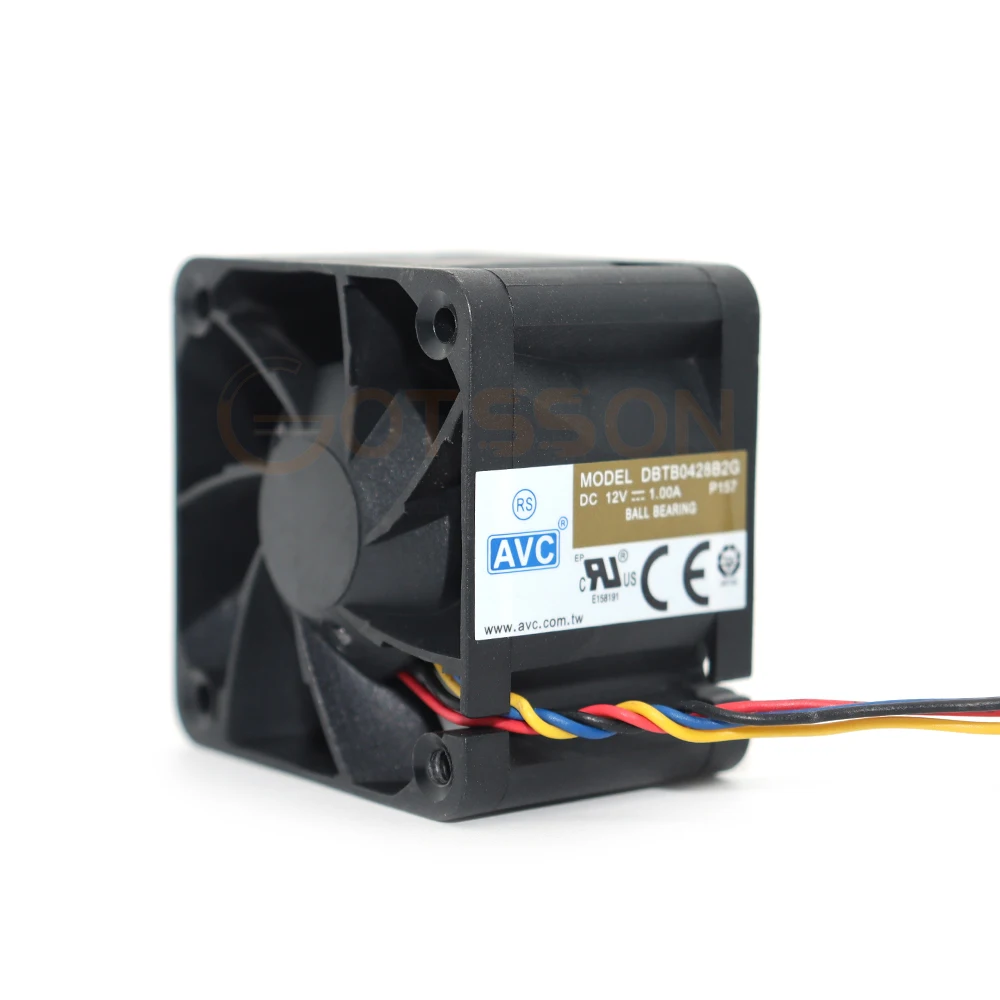
The visual evidence confirms a compact, square form factor, measuring 40mm x 40mm x 28mm. Its construction appears to be a robust, injection-molded plastic, typical for industrial-grade cooling solutions. The black finish is standard, blending into most server chassis without drawing undue attention.This specific dimension implies a primary application in tightly packed enclosures where space is at a premium. Think of 1U or 2U rackmount servers, network switches, or specialized embedded systems that require focused airflow in confined areas. The 28mm thickness, while greater than standard 40x10mm or 40x20mm fans, indicates a design choice for increased static pressure and airflow volume.
Compared to thinner, more common 40mm fans, this AVC unit sacrifices a small amount of clearance for a significant boost in performance. Generic 40x10mm fans often struggle to push air through dense heatsinks or component arrays, making this thicker variant a necessary upgrade for critical thermal loads.
Powering the Vortex: Electrical Specifications
The product label explicitly states a 12V DC operating voltage and a 1A current draw. This translates to a substantial 12 watts of power consumption for a fan of this size. The multi-colored wires, terminating in a 4-pin connector, indicate a PWM (Pulse Width Modulation) control capability.Such a high power draw for a 40mm fan is a clear indicator of its performance intent. It is designed to move a significant volume of air at high speeds, generating the necessary static pressure to overcome resistance from heatsink fins or drive cages. The 4-pin PWM functionality is crucial, allowing the system to dynamically adjust fan speed based on thermal requirements, preventing constant full-speed operation and offering a degree of noise management.
Unlike basic 2-wire or 3-wire fans that run at a fixed speed or offer limited voltage-based control, the 4-pin PWM interface provides granular control. This is a vital feature for server environments where precise thermal regulation can extend component lifespan and optimize energy efficiency, even if the primary goal is raw cooling power.
The Heart of Durability: Dual Ball Bearings
The specification highlights a "Dual Ball Bearing" design. This type of bearing system is visible in the product's robust construction, implying a focus on longevity and reliability. Ball bearings are known for their ability to withstand higher temperatures and operate effectively in various orientations.The implication of dual ball bearings is a significantly extended operational lifespan compared to sleeve bearing fans. In a server or industrial setting, fans often run continuously for years. The reduced friction and improved stability of ball bearings ensure consistent performance over thousands of hours, minimizing the need for maintenance or replacement. This translates directly into a lower total cost of ownership.
Standard sleeve bearing fans, while quieter and cheaper initially, are prone to lubricant dry-out and increased friction over time, leading to premature failure. The dual ball bearing system in this AVC fan represents a strategic investment in long-term system stability, a critical factor for mission-critical hardware.
Performance and Integration
Airflow Dynamics: High-Speed Operation
The "High Speed" descriptor in the product title is not merely marketing; it is a direct consequence of the fan's design and power input. This fan is engineered to generate a powerful airflow, essential for dissipating heat from high-performance components. The seven-blade impeller design, visible in the images, is optimized for moving air efficiently.The real-world result of this high-speed operation is effective heat removal from components like CPU heatsinks, GPU VRMs, or even dense storage arrays. In scenarios where processors are under constant load, or network equipment generates substantial heat, this fan provides the necessary thermal headroom to prevent throttling and maintain peak performance. It is a workhorse for thermal management.
Compared to consumer-grade fans that prioritize silence, this AVC unit prioritizes raw cooling capability. While it will be audible, its purpose is to ensure hardware operates within safe temperature limits, a non-negotiable requirement for server-grade reliability.
Compatibility Considerations: Fitting into the Ecosystem
Integrating this fan into an existing system requires careful attention to dimensions, power, and control. The 40x40x28mm footprint means it will fit standard 40mm fan mounts, but the 28mm thickness demands extra clearance. The 12V 1A power draw necessitates a power supply capable of delivering sufficient current to all connected fans and components.For PC builders, verifying internal chassis clearance is paramount. A 28mm thick fan might interfere with adjacent components, especially in compact Mini-ITX builds or dense server blades. The power supply must have adequate 12V rail capacity; while 1A for one fan is minor, multiple such fans can quickly add up, potentially straining a weaker PSU. Motherboard compatibility for the 4-pin PWM header is generally universal, but specific fan control software or BIOS settings might vary.
Unlike simpler 12V fans that draw minimal current, this unit's 1A rating means a system with several of these fans could draw 5A or more from the 12V rail. This is a critical distinction for power budgeting, especially in custom server builds or industrial PCs where every watt counts.
The PWM Advantage: Dynamic Thermal Control
The 4-wire, 4-pin PWM connector is a significant feature, offering intelligent control over fan speed. This allows the system's firmware or operating system to modulate the fan's RPM based on real-time temperature readings. The visible wiring, with its distinct color coding, confirms this functionality.This dynamic control capability ensures that the fan only spins as fast as necessary to maintain optimal temperatures. During periods of low load, the fan can slow down, reducing noise and power consumption. When temperatures rise under heavy computational tasks, the fan can ramp up to full speed, providing maximum cooling. This balance is crucial for both energy efficiency and component longevity in a server environment.
Many older or cheaper fans operate at a fixed speed, leading to either insufficient cooling during peak loads or unnecessary noise and power consumption during idle periods. The PWM implementation of this AVC fan represents a modern approach to thermal management, offering a level of sophistication that is expected in professional-grade hardware.
Value and Application
The Server Fan Distinction: Why It Matters
This fan is explicitly marketed for "High Speed Server Fans." This designation is not arbitrary; it signifies a design optimized for continuous, high-performance operation in environments where reliability and thermal efficiency are paramount. The robust construction and dual ball bearings are direct reflections of this focus.The implication for users is a product built to withstand the rigors of 24/7 operation in data centers or industrial settings. Server components often run hotter and for longer durations than typical desktop hardware. This fan's design ensures it can handle those sustained demands without premature failure, safeguarding expensive server hardware from thermal damage. It's a critical investment.
Generic desktop fans, while suitable for intermittent use, often lack the durability and sustained performance required for server applications. The AVC DBTB0428B2G is an upgrade from such consumer-grade options, offering the peace of mind that comes with purpose-built server hardware.
Strategic Transparency: The Acoustic Trade-off
While the fan offers exceptional cooling, its "high speed" nature inherently means a higher acoustic output, especially at full RPM. This is a logical trade-off for the performance it delivers. The images do not suggest any specific noise-dampening features, reinforcing its performance-first design.This acoustic characteristic is not a flaw but a design compromise. For server racks located in dedicated data centers or machine rooms, fan noise is largely irrelevant. The priority is maintaining optimal operating temperatures for hundreds or thousands of dollars worth of hardware. Users must understand that this fan is designed for utility, not for quiet contemplation.
Unlike silent computing solutions that employ larger, slower-spinning fans or passive cooling, this AVC fan embraces active, high-velocity airflow. The user considering this fan should be aware of its operational sound profile and plan its deployment accordingly, perhaps in a location where noise is not a concern.
Long-Term Value: Beyond the Price Tag
At its price point, this fan offers significant long-term value, especially when considering its intended application. The dual ball bearing design and robust construction contribute directly to its extended lifespan, minimizing replacement costs and system downtime.Framing the value proposition, this fan is an investment in system stability and longevity. A failed fan in a server can lead to overheating, component damage, and costly downtime. The reliability offered by this AVC unit helps mitigate these risks, making its initial cost a small fraction of the potential savings in repairs and lost productivity. It's an operational insurance policy.
Compared to cheaper, less durable fans that might fail within a year or two, this AVC fan is designed for years of continuous service. The "cost-per-use" over its lifespan is significantly lower, making it a more economical choice for professional or industrial applications despite a potentially higher upfront cost than entry-level alternatives.
Imagine a server rack humming with efficient, targeted cooling, where every critical component operates within its ideal temperature range, day in and day out. This fan ensures your high-density systems run without thermal compromise, delivering consistent performance and reliability for years to come. It’s the silent guardian of your digital infrastructure, working tirelessly to protect your valuable hardware.