AMD Ryzen 7 8700F AM5 Processor
Official Store Deal
Expert Analysis Overview
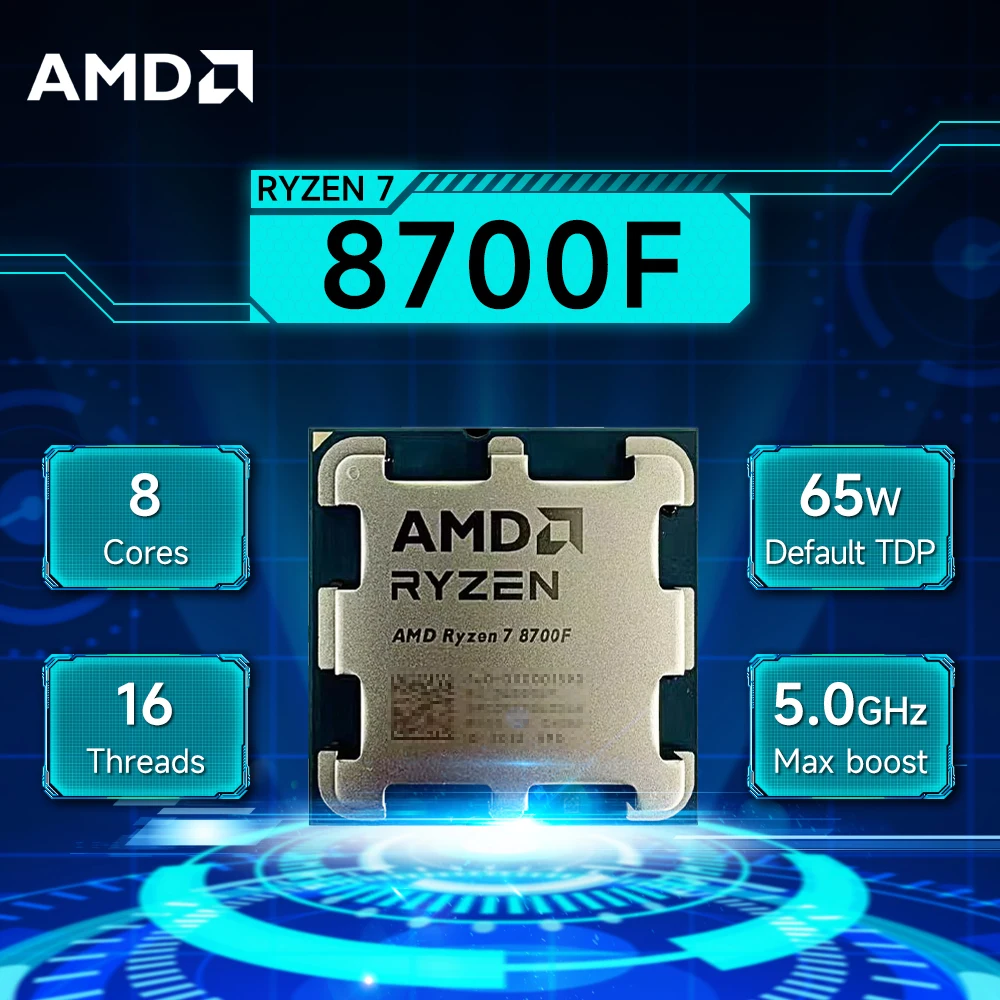
The AMD Ryzen 7 8700F is a formidable 8-core, 16-thread processor, strategically positioned for builders seeking a powerful AM5 platform entry point without integrated graphics. This CPU caters directly to the performance enthusiast who prioritizes raw compute power and plans for a dedicated GPU from the outset. Its 65W default TDP presents an intriguing challenge for overclockers, hinting at both efficiency and potential thermal headroom for aggressive tuning.
The Ryzen 7 8700F is fabricated on an advanced 4nm process node. This refined manufacturing technology is crucial for achieving higher transistor density and improved power efficiency. Smaller process nodes inherently allow for lower operating voltages at given frequencies, or higher frequencies at specific power targets. This directly impacts the thermal characteristics and, critically, the overclocking potential of the silicon.
This 4nm architecture translates into a more compact and thermally manageable die. For the overclocker, this means less heat generated per clock cycle, offering a wider margin before thermal throttling becomes a limiting factor. It's a solid foundation.
Compared to older 7nm or 10nm processes, the 4nm node represents a significant leap. This allows the 8700F to deliver its 8 cores and 16 threads with a comparatively low 65W TDP, a metric that would have been far higher on previous generations for similar core counts. This efficiency is a key advantage for sustained performance under load.
Operating with a base clock of 4.1GHz, the Ryzen 7 8700F is advertised with a maximum boost frequency of 5.0GHz. This 5.0GHz ceiling is a critical target for single-threaded performance in applications and games. Achieving and maintaining this frequency, or even surpassing it, is the hallmark of a well-tuned system.
The processor's ability to reach 5.0GHz on demand ensures snappy responsiveness in burst workloads. High clock speeds are essential.
Unlike CPUs with lower boost clocks that quickly fall back, the 8700F's advertised 5.0GHz provides a strong baseline for consistent high-frequency operation. The challenge lies in ensuring adequate power delivery and thermal management to keep it there, preventing any performance degradation under sustained heavy loads typical of intense gaming or rendering tasks. This is where an overclocker's expertise truly shines.
The 65W default TDP of the Ryzen 7 8700F is a double-edged sword. On one hand, it signifies an efficient design, making it suitable for a wide range of cooling solutions. On the other, for an overclocker, it implies a certain level of factory optimization, meaning that pushing significantly beyond this power envelope will demand serious thermal management.
This TDP suggests a manageable heat output for its core count. Proper cooling is paramount.
While a 65W TDP can be handled by many air coolers, an overclocker will immediately recognize the necessity of a high-performance air cooler or, ideally, an AIO liquid cooler. The absence of an included stock cooler is not a drawback but an invitation to install superior thermal hardware from day one, allowing for greater frequency and voltage adjustments without hitting thermal limits. This approach maximizes the chip's potential.
The Ryzen 7 8700F utilizes the AM5 socket, AMD's latest mainstream platform. This ensures compatibility with current-generation motherboards and offers a clear upgrade path for future CPU releases. The AM5 platform also exclusively supports DDR5 memory, which offers significantly higher bandwidth and lower latencies compared to previous DDR4 standards.
AM5 provides a future-proof foundation. It supports cutting-edge components.
The move to DDR5 memory is a substantial performance uplift, particularly for CPU-intensive tasks and gaming where memory bandwidth can be a bottleneck. Overclocking DDR5 memory in conjunction with the CPU allows for a synergistic performance gain, unlocking even more frames per second or faster computation times. This combined approach is critical for squeezing every last drop of performance from the system.
Compared to older AM4 systems, the AM5 platform with DDR5 memory offers a substantial upgrade in overall system responsiveness and data throughput. This is not merely an incremental improvement; it is a generational leap that directly benefits high-performance computing. The investment in AM5 is an investment in longevity and peak performance.
The processor features an L3 cache of 16MB, complemented by an 8MB L2 cache. This cache hierarchy is vital for rapid data access, reducing the latency associated with fetching data from slower main memory. A larger and more efficient cache directly contributes to faster execution of instructions and improved overall system performance.
Ample cache reduces data bottlenecks. Fast access is key.
For demanding applications and games, the cache size plays a crucial role in maintaining high frame rates and quick load times. The 16MB L3 cache ensures that frequently accessed data remains close to the CPU cores, minimizing stalls and maximizing throughput. This is particularly beneficial in scenarios where the CPU is constantly processing large datasets or complex game environments.
Unlike CPUs with smaller cache allocations that can suffer from 'cache misses' and subsequent performance dips, the 8700F's 16MB L3 cache provides a robust buffer. This design choice contributes significantly to its consistent performance profile, making it a reliable choice for users who cannot tolerate micro-stutters or slowdowns during critical operations.
For the dedicated overclocker, the Ryzen 7 8700F presents a compelling opportunity. Its 65W TDP, while efficient, suggests that with superior cooling and careful voltage adjustments, there is substantial headroom to push core frequencies beyond the advertised 5.0GHz boost. The 'F' designation, indicating no integrated graphics, means the entire chip's power budget and thermal capacity are dedicated solely to the CPU cores, which is ideal for maximizing raw compute performance.
This chip is a blank canvas. It demands expert tuning.
The absence of an integrated GPU simplifies the power delivery requirements on the motherboard and allows for a more focused approach to CPU-centric overclocking. Overclockers can focus their efforts on optimizing core clocks, memory timings, and fabric speeds without contending with iGPU power draw or thermal dissipation. This streamlined approach often yields better and more stable overclocks for the CPU itself.
Unlike CPUs with active iGPUs that share the power and thermal budget, the 8700F allows for a singular focus on core performance. This makes it an excellent choice for users building a system exclusively around a high-end discrete graphics card, where every watt and every degree of thermal headroom can be allocated to the primary processing unit. It is an ideal platform for pushing limits.
Imagine the seamless execution of your most demanding tasks, from compiling complex code to rendering intricate 3D scenes, all powered by a meticulously tuned Ryzen 7 8700F. Picture yourself dominating competitive online gaming, where every frame counts, and your system responds with instantaneous precision. This processor, when paired with a robust motherboard, high-speed DDR5 memory, and a formidable cooling solution, forms the bedrock of an uncompromising performance machine. Envision a system that not only meets today's demands but also provides a strong foundation for future upgrades, ensuring your investment continues to deliver top-tier performance for years to come. This is the core of a truly optimized build.
Silicon Foundation: The 4nm Core Blueprint
The Ryzen 7 8700F is fabricated on an advanced 4nm process node. This refined manufacturing technology is crucial for achieving higher transistor density and improved power efficiency. Smaller process nodes inherently allow for lower operating voltages at given frequencies, or higher frequencies at specific power targets. This directly impacts the thermal characteristics and, critically, the overclocking potential of the silicon.
This 4nm architecture translates into a more compact and thermally manageable die. For the overclocker, this means less heat generated per clock cycle, offering a wider margin before thermal throttling becomes a limiting factor. It's a solid foundation.
Compared to older 7nm or 10nm processes, the 4nm node represents a significant leap. This allows the 8700F to deliver its 8 cores and 16 threads with a comparatively low 65W TDP, a metric that would have been far higher on previous generations for similar core counts. This efficiency is a key advantage for sustained performance under load.
Clockwork Precision: Pushing the 5.0GHz Barrier
Operating with a base clock of 4.1GHz, the Ryzen 7 8700F is advertised with a maximum boost frequency of 5.0GHz. This 5.0GHz ceiling is a critical target for single-threaded performance in applications and games. Achieving and maintaining this frequency, or even surpassing it, is the hallmark of a well-tuned system.
The processor's ability to reach 5.0GHz on demand ensures snappy responsiveness in burst workloads. High clock speeds are essential.
Unlike CPUs with lower boost clocks that quickly fall back, the 8700F's advertised 5.0GHz provides a strong baseline for consistent high-frequency operation. The challenge lies in ensuring adequate power delivery and thermal management to keep it there, preventing any performance degradation under sustained heavy loads typical of intense gaming or rendering tasks. This is where an overclocker's expertise truly shines.
Thermal Dynamics: Managing the 65W Envelope
The 65W default TDP of the Ryzen 7 8700F is a double-edged sword. On one hand, it signifies an efficient design, making it suitable for a wide range of cooling solutions. On the other, for an overclocker, it implies a certain level of factory optimization, meaning that pushing significantly beyond this power envelope will demand serious thermal management.
This TDP suggests a manageable heat output for its core count. Proper cooling is paramount.
While a 65W TDP can be handled by many air coolers, an overclocker will immediately recognize the necessity of a high-performance air cooler or, ideally, an AIO liquid cooler. The absence of an included stock cooler is not a drawback but an invitation to install superior thermal hardware from day one, allowing for greater frequency and voltage adjustments without hitting thermal limits. This approach maximizes the chip's potential.
Platform Prowess: AM5 and DDR5 Synergy
The Ryzen 7 8700F utilizes the AM5 socket, AMD's latest mainstream platform. This ensures compatibility with current-generation motherboards and offers a clear upgrade path for future CPU releases. The AM5 platform also exclusively supports DDR5 memory, which offers significantly higher bandwidth and lower latencies compared to previous DDR4 standards.
AM5 provides a future-proof foundation. It supports cutting-edge components.
The move to DDR5 memory is a substantial performance uplift, particularly for CPU-intensive tasks and gaming where memory bandwidth can be a bottleneck. Overclocking DDR5 memory in conjunction with the CPU allows for a synergistic performance gain, unlocking even more frames per second or faster computation times. This combined approach is critical for squeezing every last drop of performance from the system.
Compared to older AM4 systems, the AM5 platform with DDR5 memory offers a substantial upgrade in overall system responsiveness and data throughput. This is not merely an incremental improvement; it is a generational leap that directly benefits high-performance computing. The investment in AM5 is an investment in longevity and peak performance.
Cache Configuration: Speeding Data Access
The processor features an L3 cache of 16MB, complemented by an 8MB L2 cache. This cache hierarchy is vital for rapid data access, reducing the latency associated with fetching data from slower main memory. A larger and more efficient cache directly contributes to faster execution of instructions and improved overall system performance.
Ample cache reduces data bottlenecks. Fast access is key.
For demanding applications and games, the cache size plays a crucial role in maintaining high frame rates and quick load times. The 16MB L3 cache ensures that frequently accessed data remains close to the CPU cores, minimizing stalls and maximizing throughput. This is particularly beneficial in scenarios where the CPU is constantly processing large datasets or complex game environments.
Unlike CPUs with smaller cache allocations that can suffer from 'cache misses' and subsequent performance dips, the 8700F's 16MB L3 cache provides a robust buffer. This design choice contributes significantly to its consistent performance profile, making it a reliable choice for users who cannot tolerate micro-stutters or slowdowns during critical operations.
The Overclocker's Edge: Unlocked Potential
For the dedicated overclocker, the Ryzen 7 8700F presents a compelling opportunity. Its 65W TDP, while efficient, suggests that with superior cooling and careful voltage adjustments, there is substantial headroom to push core frequencies beyond the advertised 5.0GHz boost. The 'F' designation, indicating no integrated graphics, means the entire chip's power budget and thermal capacity are dedicated solely to the CPU cores, which is ideal for maximizing raw compute performance.
This chip is a blank canvas. It demands expert tuning.
The absence of an integrated GPU simplifies the power delivery requirements on the motherboard and allows for a more focused approach to CPU-centric overclocking. Overclockers can focus their efforts on optimizing core clocks, memory timings, and fabric speeds without contending with iGPU power draw or thermal dissipation. This streamlined approach often yields better and more stable overclocks for the CPU itself.
Unlike CPUs with active iGPUs that share the power and thermal budget, the 8700F allows for a singular focus on core performance. This makes it an excellent choice for users building a system exclusively around a high-end discrete graphics card, where every watt and every degree of thermal headroom can be allocated to the primary processing unit. It is an ideal platform for pushing limits.
Endgame Performance: Crafting Your Ultimate Rig
Imagine the seamless execution of your most demanding tasks, from compiling complex code to rendering intricate 3D scenes, all powered by a meticulously tuned Ryzen 7 8700F. Picture yourself dominating competitive online gaming, where every frame counts, and your system responds with instantaneous precision. This processor, when paired with a robust motherboard, high-speed DDR5 memory, and a formidable cooling solution, forms the bedrock of an uncompromising performance machine. Envision a system that not only meets today's demands but also provides a strong foundation for future upgrades, ensuring your investment continues to deliver top-tier performance for years to come. This is the core of a truly optimized build.