AMD Ryzen 7 7800X3D Desktop Processor
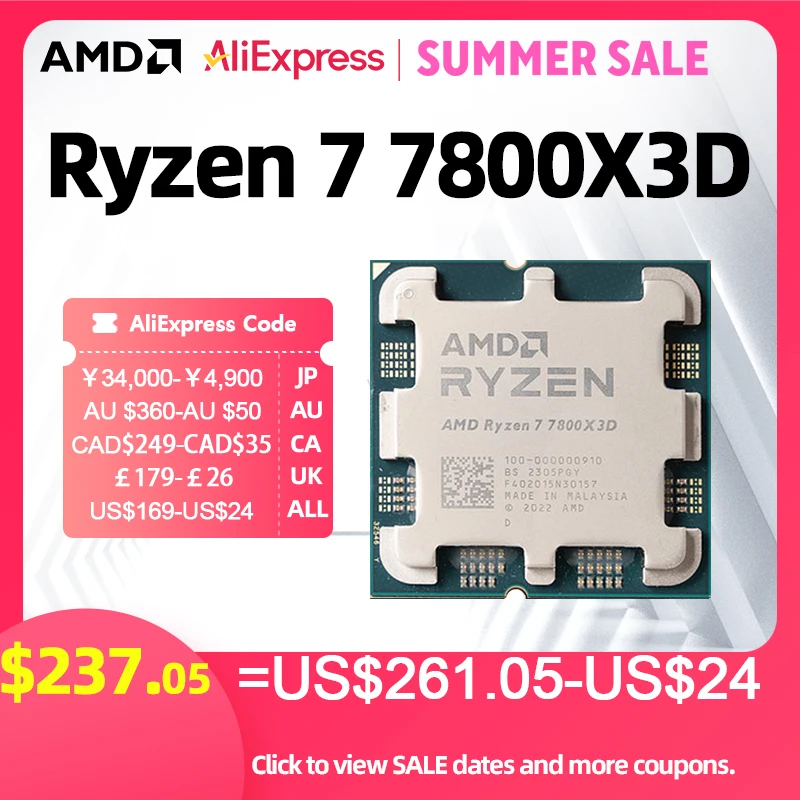
Official Store Deal
Expert Analysis Overview
The AMD Ryzen 7 7800X3D is a purpose-built gaming processor engineered for enthusiasts demanding peak frame rates and low latency on the AM5 platform. Many PC builders face the dilemma of balancing raw core count with gaming-specific performance. Traditional CPUs often necessitate a compromise, either excelling in multi-threaded tasks at the expense of gaming fluidity or vice-versa. This processor directly addresses that challenge. Unlike standard high-core-count CPUs that prioritize brute force, the 7800X3D leverages AMD's innovative 3D V-Cache technology. This specialized cache stacking significantly expands the available L3 cache, directly translating to superior in-game performance. It minimizes the data bottlenecks that often plague even powerful systems. The result is a smoother, more responsive gaming experience.
The AMD Ryzen 7 7800X3D features an 8-core, 16-thread configuration. This core count provides a solid foundation. It handles demanding applications effectively. The processor operates with a base clock of 4.2 GHz, boosting up to 5.0 GHz. These clock speeds ensure responsiveness.
This core and thread count is ideal for modern gaming, where titles increasingly utilize multiple threads, but often benefit more from high single-core performance and rapid data access. For users engaging in simultaneous gaming and streaming, or running background applications, the 16 threads prevent system slowdowns. It maintains a fluid user experience.
Compared to processors without 3D V-Cache, the raw clock speeds might appear similar. However, the architectural advantage here is not solely about frequency. It is about how efficiently the cores access data. This design reduces the need for cores to wait for information from slower system memory.
A defining characteristic of this processor is its 96MB L3 Cache, augmented by AMD's 3D V-Cache technology. This substantial cache is physically stacked on top of the CPU die. This proximity dramatically reduces latency. Data access is almost instantaneous.
In practical terms, this massive L3 cache acts as a high-speed buffer for frequently accessed game data. For competitive gamers, this means quicker asset loading, reduced stuttering, and more consistent frame delivery. Imagine navigating complex game worlds with fewer hitches. This translates directly to a competitive edge.
Standard processors typically feature smaller L3 caches, often in the range of 32MB to 64MB for similar core counts. The 3D V-Cache effectively triples or doubles this capacity. This difference is particularly pronounced in games that are "cache-sensitive," where the CPU constantly re-accesses large datasets. It's a significant upgrade for gaming.
The Ryzen 7 7800X3D maintains a 120W TDP (Thermal Design Power). This figure indicates the maximum heat generated by the CPU under typical workloads. It is a relatively efficient power envelope. This allows for powerful performance without excessive heat output.
For PC builders, this TDP is a critical specification. It dictates the required cooling solution and influences overall system power draw. A 120W TDP means that while a high-performance cooler is necessary (as none is included), it won't demand extreme cooling solutions typically associated with higher-wattage processors. This can simplify cooler selection.
Many high-performance desktop CPUs often exceed 150W or even 200W TDP, requiring substantial cooling investments. The 7800X3D's efficiency means less strain on the power supply and potentially quieter operation. This contributes to a more balanced system build. It's a smart choice for efficiency.
The processor utilizes the Socket AM5 interface. This is AMD's latest desktop platform. It brings a host of modern technologies. This socket ensures forward compatibility.
Building on the AM5 platform means investing in a system that supports future generations of AMD processors. This offers a clear upgrade path, protecting the initial investment in the motherboard and DDR5 RAM. For builders, this means the core components of the system will remain relevant for years. It's a long-term strategy.
Older platforms, such as AM4, are now at the end of their lifecycle. Choosing AM5 positions a system at the forefront of PC technology. It provides access to PCIe 5.0 and DDR5 memory. This is a significant generational leap.
Compatibility with DDR5-5200MHz RAM is a core feature of the AM5 platform. DDR5 memory offers significantly higher bandwidth and improved efficiency. It processes data faster. This enhances overall system responsiveness.
For high-performance applications and gaming, faster memory directly impacts frame rates and load times. The increased bandwidth allows the CPU to feed data to its cores more rapidly. This reduces bottlenecks. Users will experience snappier application launches.
Compared to the previous generation's DDR4, DDR5 provides a substantial performance uplift. While DDR5 modules currently carry a premium, their performance benefits are undeniable. This is an essential component for a modern build.
Selecting an appropriate AM5 motherboard is paramount. Chipsets like B650 or X670 are designed for this socket. They provide the necessary power delivery and features. Compatibility is non-negotiable.
PC builders must ensure the chosen motherboard's BIOS is up-to-date to fully support the Ryzen 7 7800X3D. Early AM5 boards might require a BIOS flash. This is a common practice. Many boards offer a "BIOS Flashback" feature for this.
Unlike older platforms where a CPU might fit multiple sockets with varying compatibility, AM5 is a new standard. Verifying the motherboard's specific support for the 7800X3D before purchase prevents installation headaches. It ensures a smooth build process.
The 120W TDP of the 7800X3D, while efficient, still requires a sufficiently powerful PSU. A quality power supply with adequate wattage and the necessary 8-pin EPS CPU power connectors is crucial. Stable power delivery is key.
A system built around this CPU will likely include a high-end discrete graphics card. The combined power draw of the CPU, GPU, and other components necessitates careful PSU selection. Underpowering a system can lead to instability or component damage. It's a critical safety measure.
Many entry-level PSUs might lack the robust power delivery or specific connectors required for a modern high-performance system. Investing in a reputable 750W or 850W PSU provides ample headroom. This ensures system stability under load.
Physical dimensions are always a concern for PC builders. While the CPU itself is standard size for its socket, the required high-performance cooler needs adequate case clearance. This includes both height and fan dimensions. Proper airflow is essential.
Before purchasing a CPU cooler, builders must check its dimensions against their PC case's maximum cooler height specification. An oversized cooler will simply not fit. This can lead to frustrating returns. Compatibility checks save time.
Unlike smaller, integrated systems, a high-performance desktop build offers flexibility. However, this flexibility demands attention to detail regarding component sizing. Ensuring proper clearance prevents thermal throttling. It optimizes performance.
The initial investment in an AM5 platform, including the Ryzen 7 7800X3D, might seem higher than older generations. However, this processor offers exceptional performance per watt and a clear upgrade path. This extends the system's lifespan.
Framing the cost as a long-term investment highlights its value. Instead of frequent, minor upgrades, users can expect several years of top-tier gaming performance. This reduces the overall cost of ownership. It's a smart financial decision.
Generic, budget-oriented CPUs often require more frequent upgrades to keep pace with evolving game requirements. The 7800X3D's performance ceiling is significantly higher. This delays the need for a full platform overhaul.
The 7800X3D is specifically optimized for gaming workloads. Its 3D V-Cache architecture provides tangible benefits in frame rates and 1% lows. This translates to a smoother, more immersive gaming experience. It's a gamer's dream.
For competitive gamers, every frame matters. This processor delivers those crucial frames. It minimizes micro-stutters. This ensures a consistent visual flow. The focus on gaming performance sets it apart.
While other processors might offer higher theoretical multi-core scores, they often fall short in real-world gaming scenarios. The 7800X3D prioritizes the gaming experience. This makes it a standout choice.
The AMD Ryzen 7 7800X3D Desktop Processor stands as a formidable component for any high-end gaming PC build. Its innovative 3D V-Cache technology, combined with a robust 8-core, 16-thread design, delivers unparalleled gaming performance. This processor ensures that even the most demanding titles run with exceptional fluidity and responsiveness. The AM5 platform provides a modern foundation, ready for future technological advancements, making this an intelligent investment for years of gaming enjoyment. Imagine launching your favorite titles, experiencing buttery-smooth frame rates and instantaneous reactions, knowing your system is built on a foundation of advanced performance. This CPU empowers you to conquer virtual worlds with confidence and precision.
Gaming Dominance Through Cache Innovation
The Core Configuration
The AMD Ryzen 7 7800X3D features an 8-core, 16-thread configuration. This core count provides a solid foundation. It handles demanding applications effectively. The processor operates with a base clock of 4.2 GHz, boosting up to 5.0 GHz. These clock speeds ensure responsiveness.
This core and thread count is ideal for modern gaming, where titles increasingly utilize multiple threads, but often benefit more from high single-core performance and rapid data access. For users engaging in simultaneous gaming and streaming, or running background applications, the 16 threads prevent system slowdowns. It maintains a fluid user experience.
Compared to processors without 3D V-Cache, the raw clock speeds might appear similar. However, the architectural advantage here is not solely about frequency. It is about how efficiently the cores access data. This design reduces the need for cores to wait for information from slower system memory.
The 3D V-Cache Advantage
A defining characteristic of this processor is its 96MB L3 Cache, augmented by AMD's 3D V-Cache technology. This substantial cache is physically stacked on top of the CPU die. This proximity dramatically reduces latency. Data access is almost instantaneous.
In practical terms, this massive L3 cache acts as a high-speed buffer for frequently accessed game data. For competitive gamers, this means quicker asset loading, reduced stuttering, and more consistent frame delivery. Imagine navigating complex game worlds with fewer hitches. This translates directly to a competitive edge.
Standard processors typically feature smaller L3 caches, often in the range of 32MB to 64MB for similar core counts. The 3D V-Cache effectively triples or doubles this capacity. This difference is particularly pronounced in games that are "cache-sensitive," where the CPU constantly re-accesses large datasets. It's a significant upgrade for gaming.
Power Efficiency and Thermal Considerations
The Ryzen 7 7800X3D maintains a 120W TDP (Thermal Design Power). This figure indicates the maximum heat generated by the CPU under typical workloads. It is a relatively efficient power envelope. This allows for powerful performance without excessive heat output.
For PC builders, this TDP is a critical specification. It dictates the required cooling solution and influences overall system power draw. A 120W TDP means that while a high-performance cooler is necessary (as none is included), it won't demand extreme cooling solutions typically associated with higher-wattage processors. This can simplify cooler selection.
Many high-performance desktop CPUs often exceed 150W or even 200W TDP, requiring substantial cooling investments. The 7800X3D's efficiency means less strain on the power supply and potentially quieter operation. This contributes to a more balanced system build. It's a smart choice for efficiency.
The AM5 Ecosystem: Platform Longevity
Socket AM5 Integration
The processor utilizes the Socket AM5 interface. This is AMD's latest desktop platform. It brings a host of modern technologies. This socket ensures forward compatibility.
Building on the AM5 platform means investing in a system that supports future generations of AMD processors. This offers a clear upgrade path, protecting the initial investment in the motherboard and DDR5 RAM. For builders, this means the core components of the system will remain relevant for years. It's a long-term strategy.
Older platforms, such as AM4, are now at the end of their lifecycle. Choosing AM5 positions a system at the forefront of PC technology. It provides access to PCIe 5.0 and DDR5 memory. This is a significant generational leap.
DDR5 Memory Support
Compatibility with DDR5-5200MHz RAM is a core feature of the AM5 platform. DDR5 memory offers significantly higher bandwidth and improved efficiency. It processes data faster. This enhances overall system responsiveness.
For high-performance applications and gaming, faster memory directly impacts frame rates and load times. The increased bandwidth allows the CPU to feed data to its cores more rapidly. This reduces bottlenecks. Users will experience snappier application launches.
Compared to the previous generation's DDR4, DDR5 provides a substantial performance uplift. While DDR5 modules currently carry a premium, their performance benefits are undeniable. This is an essential component for a modern build.
Building Considerations: Ensuring a Seamless Integration
Motherboard Compatibility
Selecting an appropriate AM5 motherboard is paramount. Chipsets like B650 or X670 are designed for this socket. They provide the necessary power delivery and features. Compatibility is non-negotiable.
PC builders must ensure the chosen motherboard's BIOS is up-to-date to fully support the Ryzen 7 7800X3D. Early AM5 boards might require a BIOS flash. This is a common practice. Many boards offer a "BIOS Flashback" feature for this.
Unlike older platforms where a CPU might fit multiple sockets with varying compatibility, AM5 is a new standard. Verifying the motherboard's specific support for the 7800X3D before purchase prevents installation headaches. It ensures a smooth build process.
Power Supply Requirements
The 120W TDP of the 7800X3D, while efficient, still requires a sufficiently powerful PSU. A quality power supply with adequate wattage and the necessary 8-pin EPS CPU power connectors is crucial. Stable power delivery is key.
A system built around this CPU will likely include a high-end discrete graphics card. The combined power draw of the CPU, GPU, and other components necessitates careful PSU selection. Underpowering a system can lead to instability or component damage. It's a critical safety measure.
Many entry-level PSUs might lack the robust power delivery or specific connectors required for a modern high-performance system. Investing in a reputable 750W or 850W PSU provides ample headroom. This ensures system stability under load.
Case and Cooling Clearance
Physical dimensions are always a concern for PC builders. While the CPU itself is standard size for its socket, the required high-performance cooler needs adequate case clearance. This includes both height and fan dimensions. Proper airflow is essential.
Before purchasing a CPU cooler, builders must check its dimensions against their PC case's maximum cooler height specification. An oversized cooler will simply not fit. This can lead to frustrating returns. Compatibility checks save time.
Unlike smaller, integrated systems, a high-performance desktop build offers flexibility. However, this flexibility demands attention to detail regarding component sizing. Ensuring proper clearance prevents thermal throttling. It optimizes performance.
The Value Proposition: Performance Per Dollar
Long-Term Investment
The initial investment in an AM5 platform, including the Ryzen 7 7800X3D, might seem higher than older generations. However, this processor offers exceptional performance per watt and a clear upgrade path. This extends the system's lifespan.
Framing the cost as a long-term investment highlights its value. Instead of frequent, minor upgrades, users can expect several years of top-tier gaming performance. This reduces the overall cost of ownership. It's a smart financial decision.
Generic, budget-oriented CPUs often require more frequent upgrades to keep pace with evolving game requirements. The 7800X3D's performance ceiling is significantly higher. This delays the need for a full platform overhaul.
Gaming Optimization
The 7800X3D is specifically optimized for gaming workloads. Its 3D V-Cache architecture provides tangible benefits in frame rates and 1% lows. This translates to a smoother, more immersive gaming experience. It's a gamer's dream.
For competitive gamers, every frame matters. This processor delivers those crucial frames. It minimizes micro-stutters. This ensures a consistent visual flow. The focus on gaming performance sets it apart.
While other processors might offer higher theoretical multi-core scores, they often fall short in real-world gaming scenarios. The 7800X3D prioritizes the gaming experience. This makes it a standout choice.
The AMD Ryzen 7 7800X3D Desktop Processor stands as a formidable component for any high-end gaming PC build. Its innovative 3D V-Cache technology, combined with a robust 8-core, 16-thread design, delivers unparalleled gaming performance. This processor ensures that even the most demanding titles run with exceptional fluidity and responsiveness. The AM5 platform provides a modern foundation, ready for future technological advancements, making this an intelligent investment for years of gaming enjoyment. Imagine launching your favorite titles, experiencing buttery-smooth frame rates and instantaneous reactions, knowing your system is built on a foundation of advanced performance. This CPU empowers you to conquer virtual worlds with confidence and precision.