AMD Ryzen 7 5700X 8-Core AM4 Gaming Processor
Official Store Deal
Expert Analysis Overview
The AMD Ryzen 7 5700X is a formidable 8-core, 16-thread processor engineered for enthusiasts demanding high-caliber gaming and productivity within the established AM4 ecosystem. This CPU is a potent upgrade for users seeking to maximize performance on their existing B550 or X570 motherboards, delivering a significant leap over previous generations without necessitating a full platform overhaul. Its Zen 3 architecture, combined with a conservative 65W TDP, positions it as an ideal candidate for pushing clocks beyond stock limits, provided adequate thermal management is in place. Unlike less capable CPUs that quickly hit thermal ceilings, the 5700X offers a solid foundation for aggressive tuning.
At its core, the Ryzen 7 5700X leverages AMD's mature Zen 3 architecture. This design is critical for single-threaded performance, directly translating to higher frame rates in games and snappier responsiveness in demanding applications. The unified CCX (Core Complex) design in Zen 3 significantly reduces latency compared to earlier Zen iterations, ensuring that data moves efficiently between cores and cache. This architectural refinement means the processor can execute instructions more rapidly, a crucial factor for competitive gaming where every millisecond counts.
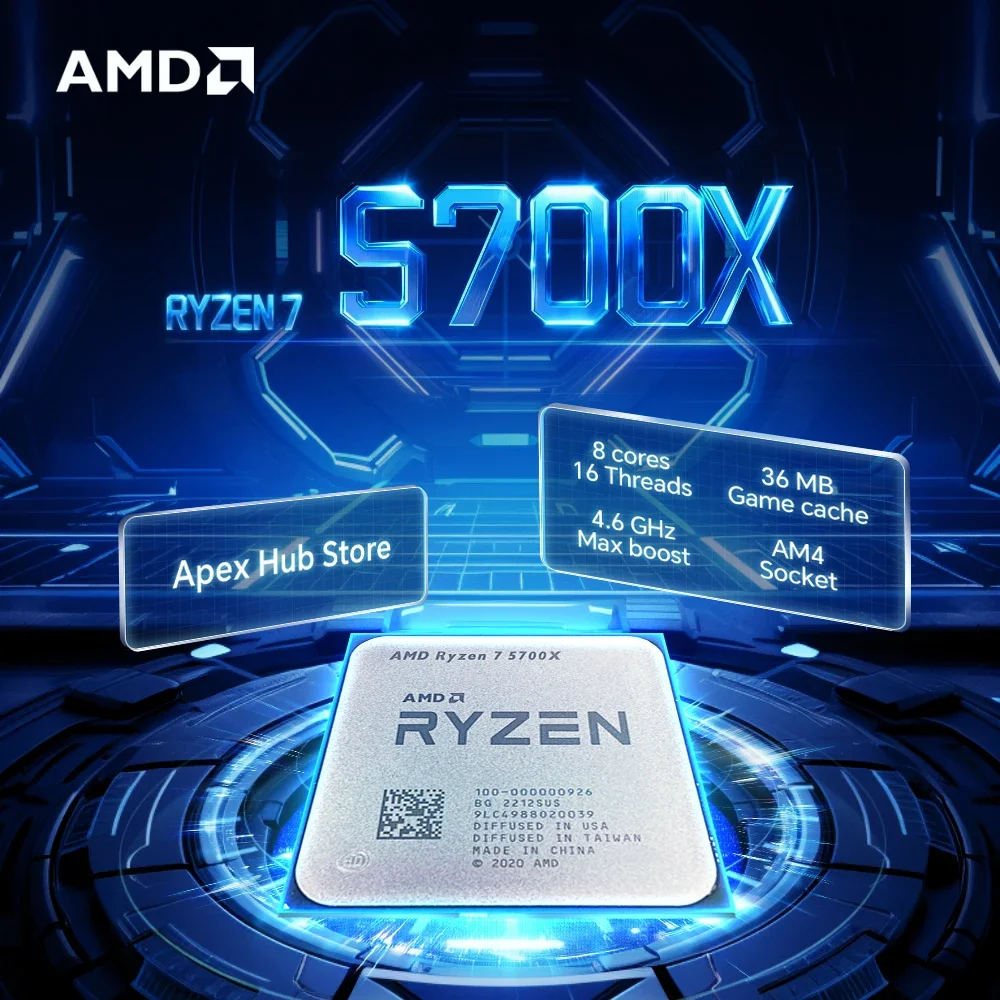
With 8 cores and 16 threads, the 5700X provides substantial parallel processing power. This configuration is a sweet spot for modern gaming, which increasingly utilizes multiple threads, while also excelling in tasks like video editing, 3D rendering, and complex software compilation. The ability to handle multiple intensive workloads simultaneously prevents bottlenecks, ensuring a smooth user experience even under heavy load. This core count offers a clear advantage over 6-core alternatives, particularly when multitasking or streaming while gaming.
Operating at a base clock of 3.4GHz and boosting up to 4.6GHz, the 5700X provides strong out-of-the-box performance. However, for the dedicated overclocker, these figures represent a starting point. The 65W TDP suggests considerable thermal headroom for manual voltage and frequency adjustments, allowing for sustained higher clock speeds across all cores. Achieving a stable all-core frequency near its maximum boost clock, or even surpassing it with optimal cooling, is the true objective for maximizing this chip's potential. Every megahertz matters.
Its 32MB of L3 Game cache is a significant asset, particularly for gaming workloads. A larger L3 cache reduces the need for the CPU to access slower system RAM, directly impacting load times and in-game performance stability. This substantial cache size is a hallmark of the Zen 3 architecture, providing a buffer that keeps frequently accessed data closer to the processing cores. This translates to fewer stalls and a more fluid gaming experience, especially in titles sensitive to memory latency. This cache is a performance multiplier.
The 65W Thermal Design Power (TDP) rating of the Ryzen 7 5700X is a key indicator of its efficiency and overclocking potential. A lower TDP generally means less heat generated at stock speeds, leaving more thermal budget for aggressive voltage and frequency tuning. This makes the 5700X a more forgiving chip to overclock compared to its higher-TDP siblings, requiring less extreme cooling solutions to achieve respectable gains. However, this doesn't imply a stock cooler will suffice for serious overclocking; a robust aftermarket solution is mandatory for stability.
For optimal overclocking stability, the motherboard's VRM (Voltage Regulator Module) phases are paramount. A B550 or X570 board with a strong VRM design, featuring ample power phases and effective heatsinks, is essential to deliver clean, consistent power to the CPU under increased loads. Inadequate VRM can lead to instability, throttling, and even component degradation when pushing the chip beyond its factory specifications. Investing in a quality motherboard ensures the processor receives the stable power it needs to reach its full potential. Don't skimp on the board.
Managing heat output is the ultimate challenge for any overclocker. While the 5700X's 65W TDP is favorable, pushing its clock speeds and voltages will inevitably generate more heat. A high-performance air cooler or, ideally, an AIO (All-In-One) liquid cooler with a large radiator is recommended to maintain optimal operating temperatures. Effective cooling prevents thermal throttling, allowing the CPU to sustain its higher frequencies for extended periods, crucial during long gaming sessions or intensive benchmarks. Without proper cooling, any overclocking effort is futile.
Designed for the AM4 socket, the Ryzen 7 5700X offers broad compatibility with existing 500-series motherboards, specifically B550 and X570 chipsets. This allows users to upgrade their CPU without replacing their entire system, making it a cost-effective performance boost. The AM4 platform has matured significantly, offering stable firmware and robust features that support high-speed DDR4 memory and PCIe 4.0 connectivity. This ensures a well-rounded and high-performance system foundation.
The processor supports DDR4 memory, with performance scaling significantly with memory speed and timings. For overclockers and performance enthusiasts, pairing the 5700X with high-frequency DDR4 RAM (e.g., 3600MHz or 3800MHz with tight timings) is crucial. The Infinity Fabric clock (FCLK) is directly tied to memory speed, and optimizing this synchronization can yield substantial performance improvements, particularly in gaming. Fine-tuning memory settings is as important as CPU overclocking for squeezing out every last frame. Memory tuning pays dividends.
Unlike older Ryzen generations that sometimes struggled with single-core performance in certain applications, the Zen 3 architecture in the 5700X delivers a substantial uplift, making it competitive with rival offerings. This iteration effectively addresses previous limitations, providing a more balanced performance profile across diverse workloads. Users upgrading from Zen 1 or Zen 2 processors will immediately notice the improved responsiveness and higher frame rates, especially in CPU-intensive games. The architectural improvements are undeniable.
For those currently running a 6-core Ryzen or an older Intel i5/i7, the 5700X represents a compelling upgrade path. It offers more cores, higher IPC (Instructions Per Cycle), and a more efficient design, all while retaining compatibility with the AM4 platform. This means a significant performance boost can be achieved by simply swapping the CPU and potentially optimizing memory, rather than a full motherboard and RAM replacement. This targeted upgrade minimizes downtime and maximizes performance per dollar spent. It's an intelligent performance investment.
The Ryzen 7 5700X is not merely a plug-and-play component; it is a piece of silicon ripe for optimization. Its efficient 7nm manufacturing process provides a solid foundation for achieving higher clocks with reasonable voltages, indicating good silicon quality potential. While individual chip lottery always plays a role, the 5700X generally offers a favorable balance between stock performance and overclocking headroom. Enthusiasts will find joy in extracting every last ounce of performance from this chip through careful tuning.
Imagine the satisfaction of seeing consistently higher benchmark scores and smoother gameplay, knowing that every megahertz and every optimized memory timing was a result of your meticulous efforts. The Ryzen 7 5700X empowers you to transcend stock limitations, transforming your system into a finely tuned machine that responds instantly to every command. This processor is a gateway to a world where performance is not just a specification, but a tangible, exhilarating experience, pushing the boundaries of what your AM4 system can achieve. Your system will thank you.
The Silicon Heartbeat: Architecture and Core Configuration
At its core, the Ryzen 7 5700X leverages AMD's mature Zen 3 architecture. This design is critical for single-threaded performance, directly translating to higher frame rates in games and snappier responsiveness in demanding applications. The unified CCX (Core Complex) design in Zen 3 significantly reduces latency compared to earlier Zen iterations, ensuring that data moves efficiently between cores and cache. This architectural refinement means the processor can execute instructions more rapidly, a crucial factor for competitive gaming where every millisecond counts.
With 8 cores and 16 threads, the 5700X provides substantial parallel processing power. This configuration is a sweet spot for modern gaming, which increasingly utilizes multiple threads, while also excelling in tasks like video editing, 3D rendering, and complex software compilation. The ability to handle multiple intensive workloads simultaneously prevents bottlenecks, ensuring a smooth user experience even under heavy load. This core count offers a clear advantage over 6-core alternatives, particularly when multitasking or streaming while gaming.
Clock Speeds and Cache Dominance
Operating at a base clock of 3.4GHz and boosting up to 4.6GHz, the 5700X provides strong out-of-the-box performance. However, for the dedicated overclocker, these figures represent a starting point. The 65W TDP suggests considerable thermal headroom for manual voltage and frequency adjustments, allowing for sustained higher clock speeds across all cores. Achieving a stable all-core frequency near its maximum boost clock, or even surpassing it with optimal cooling, is the true objective for maximizing this chip's potential. Every megahertz matters.
Its 32MB of L3 Game cache is a significant asset, particularly for gaming workloads. A larger L3 cache reduces the need for the CPU to access slower system RAM, directly impacting load times and in-game performance stability. This substantial cache size is a hallmark of the Zen 3 architecture, providing a buffer that keeps frequently accessed data closer to the processing cores. This translates to fewer stalls and a more fluid gaming experience, especially in titles sensitive to memory latency. This cache is a performance multiplier.
Power Delivery and Thermal Headroom for Overclocking
The 65W Thermal Design Power (TDP) rating of the Ryzen 7 5700X is a key indicator of its efficiency and overclocking potential. A lower TDP generally means less heat generated at stock speeds, leaving more thermal budget for aggressive voltage and frequency tuning. This makes the 5700X a more forgiving chip to overclock compared to its higher-TDP siblings, requiring less extreme cooling solutions to achieve respectable gains. However, this doesn't imply a stock cooler will suffice for serious overclocking; a robust aftermarket solution is mandatory for stability.
For optimal overclocking stability, the motherboard's VRM (Voltage Regulator Module) phases are paramount. A B550 or X570 board with a strong VRM design, featuring ample power phases and effective heatsinks, is essential to deliver clean, consistent power to the CPU under increased loads. Inadequate VRM can lead to instability, throttling, and even component degradation when pushing the chip beyond its factory specifications. Investing in a quality motherboard ensures the processor receives the stable power it needs to reach its full potential. Don't skimp on the board.
Managing heat output is the ultimate challenge for any overclocker. While the 5700X's 65W TDP is favorable, pushing its clock speeds and voltages will inevitably generate more heat. A high-performance air cooler or, ideally, an AIO (All-In-One) liquid cooler with a large radiator is recommended to maintain optimal operating temperatures. Effective cooling prevents thermal throttling, allowing the CPU to sustain its higher frequencies for extended periods, crucial during long gaming sessions or intensive benchmarks. Without proper cooling, any overclocking effort is futile.
Platform Compatibility and Memory Performance
Designed for the AM4 socket, the Ryzen 7 5700X offers broad compatibility with existing 500-series motherboards, specifically B550 and X570 chipsets. This allows users to upgrade their CPU without replacing their entire system, making it a cost-effective performance boost. The AM4 platform has matured significantly, offering stable firmware and robust features that support high-speed DDR4 memory and PCIe 4.0 connectivity. This ensures a well-rounded and high-performance system foundation.
The processor supports DDR4 memory, with performance scaling significantly with memory speed and timings. For overclockers and performance enthusiasts, pairing the 5700X with high-frequency DDR4 RAM (e.g., 3600MHz or 3800MHz with tight timings) is crucial. The Infinity Fabric clock (FCLK) is directly tied to memory speed, and optimizing this synchronization can yield substantial performance improvements, particularly in gaming. Fine-tuning memory settings is as important as CPU overclocking for squeezing out every last frame. Memory tuning pays dividends.
The Upgrade Frame: Why the 5700X Excels
Unlike older Ryzen generations that sometimes struggled with single-core performance in certain applications, the Zen 3 architecture in the 5700X delivers a substantial uplift, making it competitive with rival offerings. This iteration effectively addresses previous limitations, providing a more balanced performance profile across diverse workloads. Users upgrading from Zen 1 or Zen 2 processors will immediately notice the improved responsiveness and higher frame rates, especially in CPU-intensive games. The architectural improvements are undeniable.
For those currently running a 6-core Ryzen or an older Intel i5/i7, the 5700X represents a compelling upgrade path. It offers more cores, higher IPC (Instructions Per Cycle), and a more efficient design, all while retaining compatibility with the AM4 platform. This means a significant performance boost can be achieved by simply swapping the CPU and potentially optimizing memory, rather than a full motherboard and RAM replacement. This targeted upgrade minimizes downtime and maximizes performance per dollar spent. It's an intelligent performance investment.
The Overclocker's Verdict: Pushing the Limits
The Ryzen 7 5700X is not merely a plug-and-play component; it is a piece of silicon ripe for optimization. Its efficient 7nm manufacturing process provides a solid foundation for achieving higher clocks with reasonable voltages, indicating good silicon quality potential. While individual chip lottery always plays a role, the 5700X generally offers a favorable balance between stock performance and overclocking headroom. Enthusiasts will find joy in extracting every last ounce of performance from this chip through careful tuning.
Imagine the satisfaction of seeing consistently higher benchmark scores and smoother gameplay, knowing that every megahertz and every optimized memory timing was a result of your meticulous efforts. The Ryzen 7 5700X empowers you to transcend stock limitations, transforming your system into a finely tuned machine that responds instantly to every command. This processor is a gateway to a world where performance is not just a specification, but a tangible, exhilarating experience, pushing the boundaries of what your AM4 system can achieve. Your system will thank you.