7-inch Capacitive Touch Display with Integrated Stand
Official Store Deal
Expert Analysis Overview
The 7-inch Capacitive Touch Display with Integrated Stand is a compact, highly versatile portable monitor designed for hobbyists, developers, and mobile professionals requiring an interactive visual interface for single-board computers or secondary screen applications. This unit distinguishes itself through its integrated protective case, which doubles as a multi-angle stand, offering immediate utility and portability right out of the box. Its focus on broad compatibility and touch input positions it as a practical solution for a range of embedded and on-the-go computing needs.
This display presents a 7-inch visual area with a native resolution of 1024x600 pixels. The title advertises an IPS LCD panel, suggesting superior color reproduction and wide viewing angles, which is a significant advantage for shared viewing or off-axis interaction. However, promotional imagery also references a "TN Full HD Viewing Angle" of 178 degrees, a claim that typically contradicts the inherent limitations of standard TN panels regarding color shift and angle dependence. This apparent discrepancy warrants careful consideration for users prioritizing absolute color accuracy or specific panel characteristics.
The capacitive touch technology integrated into the display provides a responsive and intuitive user experience. Unlike resistive touchscreens that rely on pressure, capacitive screens respond to the electrical properties of a finger, allowing for smoother gestures and multi-touch capabilities. This makes interaction with operating systems or custom interfaces significantly more fluid, enhancing the utility for applications requiring direct manipulation.
Compared to generic displays that often omit touch functionality or require external digitizers, this integrated solution simplifies setup and reduces clutter. The direct touch interface transforms the monitor from a passive output device into an active input peripheral, which is crucial for interacting with compact systems like the Raspberry Pi without needing a separate mouse. The immediate responsiveness is a notable benefit.
Connectivity options are streamlined for straightforward integration. A single HDMI port handles video input, making it compatible with a vast array of devices from desktop PCs and laptops to gaming consoles and, critically, single-board computers like the Raspberry Pi. This universal standard ensures that the display can quickly become part of many existing setups.
Touch functionality and power are delivered via a single USB connection, simplifying cable management. This dual-purpose USB port means fewer cables cluttering the workspace, a desirable trait for any portable setup. An additional 3.5mm earphone jack provides a convenient audio output, allowing for private listening without relying on the host device's often-limited audio solutions.
Standard entry-level displays frequently require separate power bricks and often lack integrated audio or touch input. This display's consolidated cabling and built-in features offer a more polished and user-friendly experience. The physical buttons for power and brightness adjustment are tactile. Direct control over brightness levels is a practical feature, especially when adapting to varying ambient light conditions.
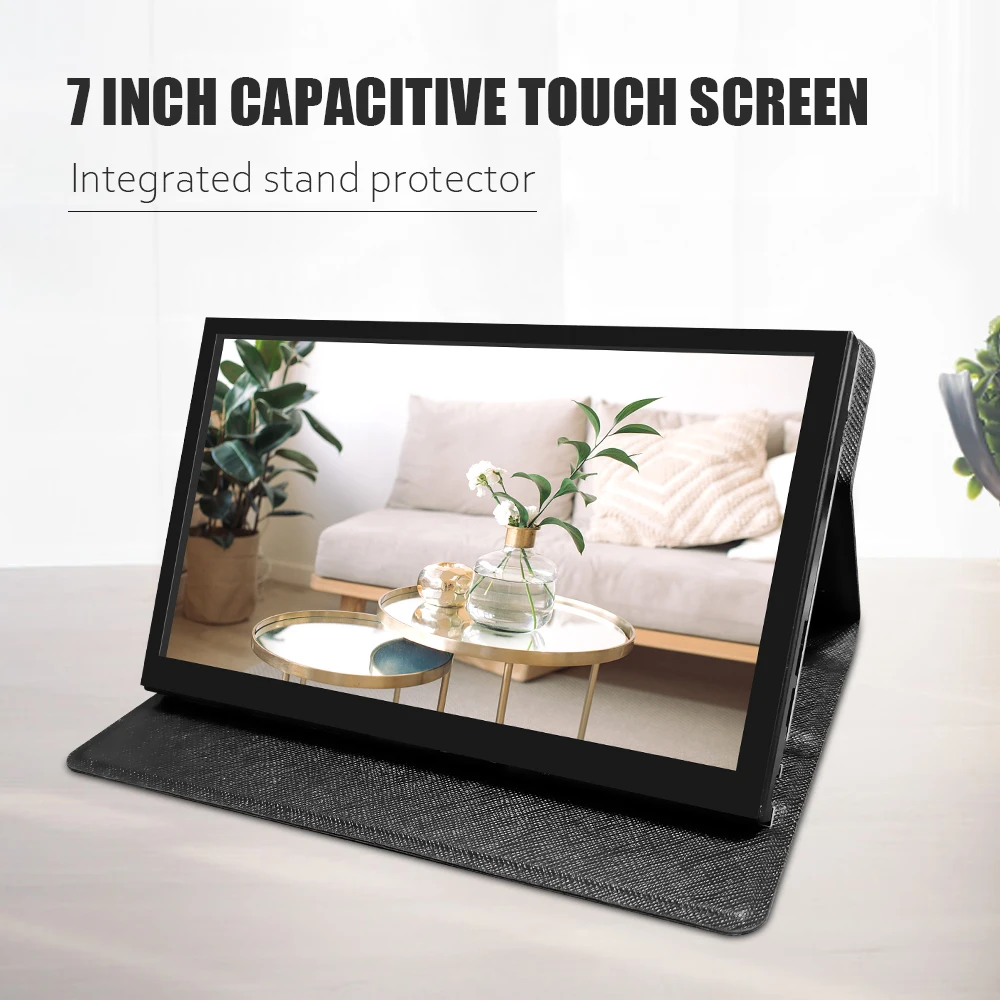
The most striking physical characteristic is the integrated protective case. This enclosure not only safeguards the display during transport but intelligently folds into a robust, adjustable stand. This eliminates the need for external stands or props, streamlining the setup process in dynamic environments.
The overall compact and lightweight design makes this display exceptionally easy to transport. It slips into bags or backpacks with minimal added bulk. This focus on mobility is paramount for users who need to take their projects or secondary screen with them, whether to a workshop, a client meeting, or simply between different rooms.
Generic portable monitors often ship without adequate protection, necessitating additional purchases of cases or stands. This integrated solution provides immediate utility and peace of mind. The non-slip grained leather texture of the case further enhances stability when used as a stand, preventing accidental shifts during touch interactions. Its engineering serves a purpose.
This display significantly expands the capabilities of devices like the Raspberry Pi. For embedded projects, it provides a direct, interactive window into the system's operation, facilitating development and debugging. Imagine fine-tuning a custom smart home interface directly on the device it controls.
As a secondary screen for laptops or compact PCs, it offers valuable screen real estate for multitasking. A programmer could dedicate this smaller screen to documentation or monitoring system logs, freeing up the main display for coding. This enhances productivity in constrained environments.
Unlike relying solely on remote access for headless systems, this display offers immediate, physical interaction. This direct connection simplifies initial setup and troubleshooting, especially when network access is unavailable or unstable. The tactile interaction is invaluable.
This 7-inch display carves out a distinct niche for itself. It is not designed to replace a primary desktop monitor but to augment specific workflows where space, portability, and touch interaction are critical. Its value proposition is centered around enablement.
For educational settings or DIY electronics enthusiasts, this monitor provides an accessible entry point into interactive computing projects. The cost-effectiveness of pairing it with a single-board computer creates a powerful, yet affordable, development platform. It democratizes interactive displays.
Compared to larger, higher-resolution portable monitors, this unit prioritizes compactness and specific functionality over expansive screen real estate. The trade-off in resolution is justified by its intended use cases, where a smaller, interactive window is often more practical than a sprawling, passive display. It is a focused tool.
The 7-inch Capacitive Touch Display with Integrated Stand offers a compelling package for a specific audience. Its thoughtful design, combining a protective case with stand functionality, underscores its portability and practical application. The responsive touch interface and broad compatibility with devices like the Raspberry Pi make it an invaluable tool for hobbyists and professionals alike. While the resolution is modest and the panel type marketing is slightly ambiguous, these are acceptable trade-offs for the convenience and capability it provides. Imagine seamlessly interacting with your latest Raspberry Pi project on a train, or quickly deploying a diagnostic display in a server rack, all thanks to a monitor designed for maximum utility and minimal fuss. This display empowers users to bring their digital interfaces into more compact and dynamic spaces, truly enhancing the versatility of their computing endeavors.
Visual Fidelity and Interactive Canvas
This display presents a 7-inch visual area with a native resolution of 1024x600 pixels. The title advertises an IPS LCD panel, suggesting superior color reproduction and wide viewing angles, which is a significant advantage for shared viewing or off-axis interaction. However, promotional imagery also references a "TN Full HD Viewing Angle" of 178 degrees, a claim that typically contradicts the inherent limitations of standard TN panels regarding color shift and angle dependence. This apparent discrepancy warrants careful consideration for users prioritizing absolute color accuracy or specific panel characteristics.
The capacitive touch technology integrated into the display provides a responsive and intuitive user experience. Unlike resistive touchscreens that rely on pressure, capacitive screens respond to the electrical properties of a finger, allowing for smoother gestures and multi-touch capabilities. This makes interaction with operating systems or custom interfaces significantly more fluid, enhancing the utility for applications requiring direct manipulation.
Compared to generic displays that often omit touch functionality or require external digitizers, this integrated solution simplifies setup and reduces clutter. The direct touch interface transforms the monitor from a passive output device into an active input peripheral, which is crucial for interacting with compact systems like the Raspberry Pi without needing a separate mouse. The immediate responsiveness is a notable benefit.
Seamless Connectivity and Operational Simplicity
Connectivity options are streamlined for straightforward integration. A single HDMI port handles video input, making it compatible with a vast array of devices from desktop PCs and laptops to gaming consoles and, critically, single-board computers like the Raspberry Pi. This universal standard ensures that the display can quickly become part of many existing setups.
Touch functionality and power are delivered via a single USB connection, simplifying cable management. This dual-purpose USB port means fewer cables cluttering the workspace, a desirable trait for any portable setup. An additional 3.5mm earphone jack provides a convenient audio output, allowing for private listening without relying on the host device's often-limited audio solutions.
Standard entry-level displays frequently require separate power bricks and often lack integrated audio or touch input. This display's consolidated cabling and built-in features offer a more polished and user-friendly experience. The physical buttons for power and brightness adjustment are tactile. Direct control over brightness levels is a practical feature, especially when adapting to varying ambient light conditions.
Engineered Portability and Protection
The most striking physical characteristic is the integrated protective case. This enclosure not only safeguards the display during transport but intelligently folds into a robust, adjustable stand. This eliminates the need for external stands or props, streamlining the setup process in dynamic environments.
The overall compact and lightweight design makes this display exceptionally easy to transport. It slips into bags or backpacks with minimal added bulk. This focus on mobility is paramount for users who need to take their projects or secondary screen with them, whether to a workshop, a client meeting, or simply between different rooms.
Generic portable monitors often ship without adequate protection, necessitating additional purchases of cases or stands. This integrated solution provides immediate utility and peace of mind. The non-slip grained leather texture of the case further enhances stability when used as a stand, preventing accidental shifts during touch interactions. Its engineering serves a purpose.
Expanding the Digital Horizon
This display significantly expands the capabilities of devices like the Raspberry Pi. For embedded projects, it provides a direct, interactive window into the system's operation, facilitating development and debugging. Imagine fine-tuning a custom smart home interface directly on the device it controls.
As a secondary screen for laptops or compact PCs, it offers valuable screen real estate for multitasking. A programmer could dedicate this smaller screen to documentation or monitoring system logs, freeing up the main display for coding. This enhances productivity in constrained environments.
Unlike relying solely on remote access for headless systems, this display offers immediate, physical interaction. This direct connection simplifies initial setup and troubleshooting, especially when network access is unavailable or unstable. The tactile interaction is invaluable.
The Niche Advantage
This 7-inch display carves out a distinct niche for itself. It is not designed to replace a primary desktop monitor but to augment specific workflows where space, portability, and touch interaction are critical. Its value proposition is centered around enablement.
For educational settings or DIY electronics enthusiasts, this monitor provides an accessible entry point into interactive computing projects. The cost-effectiveness of pairing it with a single-board computer creates a powerful, yet affordable, development platform. It democratizes interactive displays.
Compared to larger, higher-resolution portable monitors, this unit prioritizes compactness and specific functionality over expansive screen real estate. The trade-off in resolution is justified by its intended use cases, where a smaller, interactive window is often more practical than a sprawling, passive display. It is a focused tool.
Final Contemplations
The 7-inch Capacitive Touch Display with Integrated Stand offers a compelling package for a specific audience. Its thoughtful design, combining a protective case with stand functionality, underscores its portability and practical application. The responsive touch interface and broad compatibility with devices like the Raspberry Pi make it an invaluable tool for hobbyists and professionals alike. While the resolution is modest and the panel type marketing is slightly ambiguous, these are acceptable trade-offs for the convenience and capability it provides. Imagine seamlessly interacting with your latest Raspberry Pi project on a train, or quickly deploying a diagnostic display in a server rack, all thanks to a monitor designed for maximum utility and minimal fuss. This display empowers users to bring their digital interfaces into more compact and dynamic spaces, truly enhancing the versatility of their computing endeavors.