4K HDMI Virtual Display Adapter
Official Store Deal
Expert Analysis Overview
Headless Computing Unleashed
The HDMI Virtual Display Adapter is an essential utility device designed for headless server management and optimized remote desktop environments. This compact hardware component functions as an EDID emulator, tricking a graphics processing unit (GPU) into detecting a connected display. Its primary purpose is to ensure the graphics card renders a desktop at a specified resolution and refresh rate, even when no physical monitor is present. This is a crucial distinction for server administrators and power users.
Without a connected display, many graphics cards enter a low-power, low-performance state. This often results in a limited resolution output or even a complete lack of display signal, creating significant hurdles for remote access. Such a scenario frequently leads to frustrating black screens or unresponsive graphical interfaces when attempting to manage a system remotely. This adapter prevents such issues.
Compared to operating a system without any display emulation, this adapter provides a tangible upgrade. Generic headless setups often default to minimal resolutions like 800x600, severely hindering usability. The adapter ensures robust, high-resolution rendering, making remote work practical. This device is a game-changer for digital workspaces.
Engineering for Stability
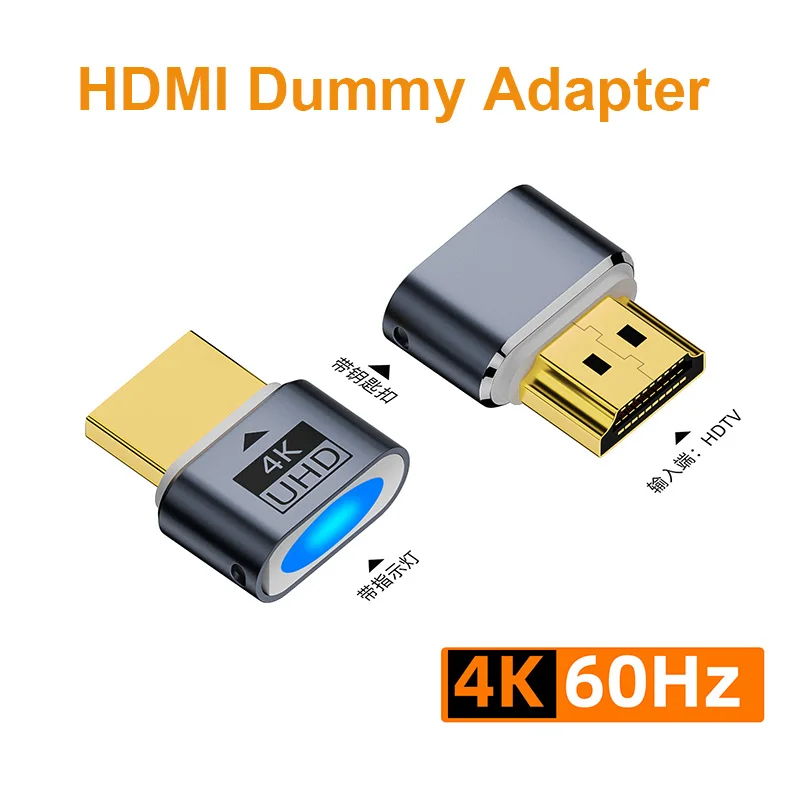
The physical construction of this HDMI dummy plug emphasizes both durability and signal integrity. It features a gold-plated HDMI connector, a standard choice in premium video interfaces. Gold plating significantly resists corrosion, which is vital for maintaining consistent signal quality over extended periods, especially in environments with fluctuating humidity. Signal degradation can be a silent killer.
Encased in a durable metal housing, the internal circuitry receives substantial protection from physical impacts and electromagnetic interference. The robust casing ensures longevity, a critical factor for devices that might be left plugged in for years in server racks or behind desks. This small device is built to last.
Unlike many flimsy plastic alternatives, the metal construction provides a reassuring heft and rigidity. This superior build quality translates directly into enhanced reliability, minimizing the risk of accidental damage or signal interruptions. A solid connection remains paramount. Users benefit from a stable, consistent link.
Beyond the Physical Screen
The applications for this virtual display adapter extend across various professional and enthusiast domains. It is indispensable for headless servers, where a physical monitor is impractical or unnecessary. Cryptocurrency mining rigs, often operated without dedicated displays, similarly benefit from the GPU rendering a full desktop, ensuring optimal performance for compute tasks. Virtual machines also thrive with this.
Imagine managing a remote workstation from home, experiencing fluid, high-resolution graphics as if you were sitting directly in front of it. This adapter makes that vision a reality, ensuring your remote desktop connection (via tools like TeamViewer, AnyDesk, or RDP) consistently delivers a crisp, responsive display. Lag and pixelation become distant memories. Productivity sees a direct boost.
This device fundamentally upgrades the remote computing experience. Instead of struggling with low-resolution, stuttering remote interfaces, users gain access to their full desktop environment with proper scaling and GPU acceleration. It removes a significant barrier to effective remote system administration. Efficiency is greatly enhanced.
Seamless Digital Integration
Compatibility is a strong suit of this HDMI virtual display adapter. It offers broad support across major operating systems, including Windows XP, Vista, 7, 8, and 10 (both 32-bit and 64-bit versions), Linux, and macOS. This extensive compatibility ensures that a wide array of systems, from legacy servers to modern workstations, can leverage its benefits. Most systems are supported.
The plug-and-play nature of the adapter means installation is remarkably straightforward. No drivers or complex software configurations are typically required. Simply insert the device into an available HDMI port on your graphics card, and the system should recognize a virtual display almost instantly. Setup is quick and simple.
This simplicity stands in stark contrast to the convoluted workarounds often employed to achieve similar results, such as connecting a physical monitor and then disconnecting it, or manipulating obscure display settings. The adapter provides an elegant, direct solution. Time saved is immense.
Navigating the Digital Void
While highly effective for its intended purpose, it is crucial to understand the limitations of this device. This adapter is not a wireless HDMI transmitter or receiver. It does not enable wireless display functionality. Its role is strictly to emulate a physical display connection. Misunderstanding this function can lead to disappointment.
Achieving the advertised 4K@60Hz resolution requires specific hardware conditions. The graphics card must possess an HDMI 2.0 compliant port and be a dedicated GPU, such as an NVIDIA GTX 1050 or AMD RX 460 or newer. Integrated graphics solutions often lack the necessary bandwidth or processing power for high-resolution emulation. System requirements are strict.
This device is designed for the desktop host side, specifically plugging into the graphics card output, not into a display device. Recognizing its precise role prevents incorrect usage. It is a specialized tool. Understanding its niche is key.
Performance and Resolution Mastery
The adapter boasts support for resolutions up to 4096x2160 at 60Hz, providing a high-fidelity virtual display. While the default emulated resolution often starts at 1920x1080@60Hz, users can typically adjust it within their operating system's display settings to leverage the full 4K capability. High resolution is a core feature.
To unlock these higher resolutions and refresh rates, the system's graphics card must be robust. A dedicated GPU with HDMI 2.0 support is non-negotiable for 4K@60Hz. Integrated graphics, while sometimes capable of lower resolutions, generally cannot sustain this level of performance for virtual displays. Hardware matters significantly.
The tangible difference this makes for remote tasks is profound. Imagine conducting graphic-intensive design work or monitoring complex data visualizations remotely, with every detail rendered sharply and smoothly. This level of clarity significantly enhances precision and reduces eye strain during extended remote sessions. Visual fidelity is paramount for professionals.
The Ultimate Remote Access Companion
This 4K HDMI Virtual Display Adapter stands as a testament to specialized utility, offering a precise solution to common headless computing challenges. Its robust build, extensive compatibility, and high-resolution emulation capabilities make it an indispensable tool for IT professionals, server administrators, and power users. No more grappling with low-resolution remote desktops or underperforming GPUs simply because a physical monitor is absent. With this adapter, your remote systems will always present a full, crisp, and responsive desktop, ready for any task. Picture seamless remote management, consistent GPU performance, and an end to frustrating display glitches, allowing you to maximize productivity from any location. This small device delivers significant impact, enabling a truly uncompromised remote computing experience.